

Summary
A 14/14-style rotation, 21/21 rotation or another long-shift roster does not by itself set module quantities for oilfield crew rotation accommodation. It tells the buyer which building families should be considered: protected dormitory zones, sanitary/ablution, dining/kitchen, laundry or workwear support, crew-change reception and project office, plus first-aid, security and storage where required. Extra sleeping capacity is needed only when incoming and outgoing crews both require beds on the same night. At the pre-RFQ stage, KUBO can map maximum concurrent residents, shift pattern, room standard, required facility families and first occupancy date to suitable modular building families and a phased project-specific module schedule.
Start the oilfield camp building list with concurrent residents, not the roster headline
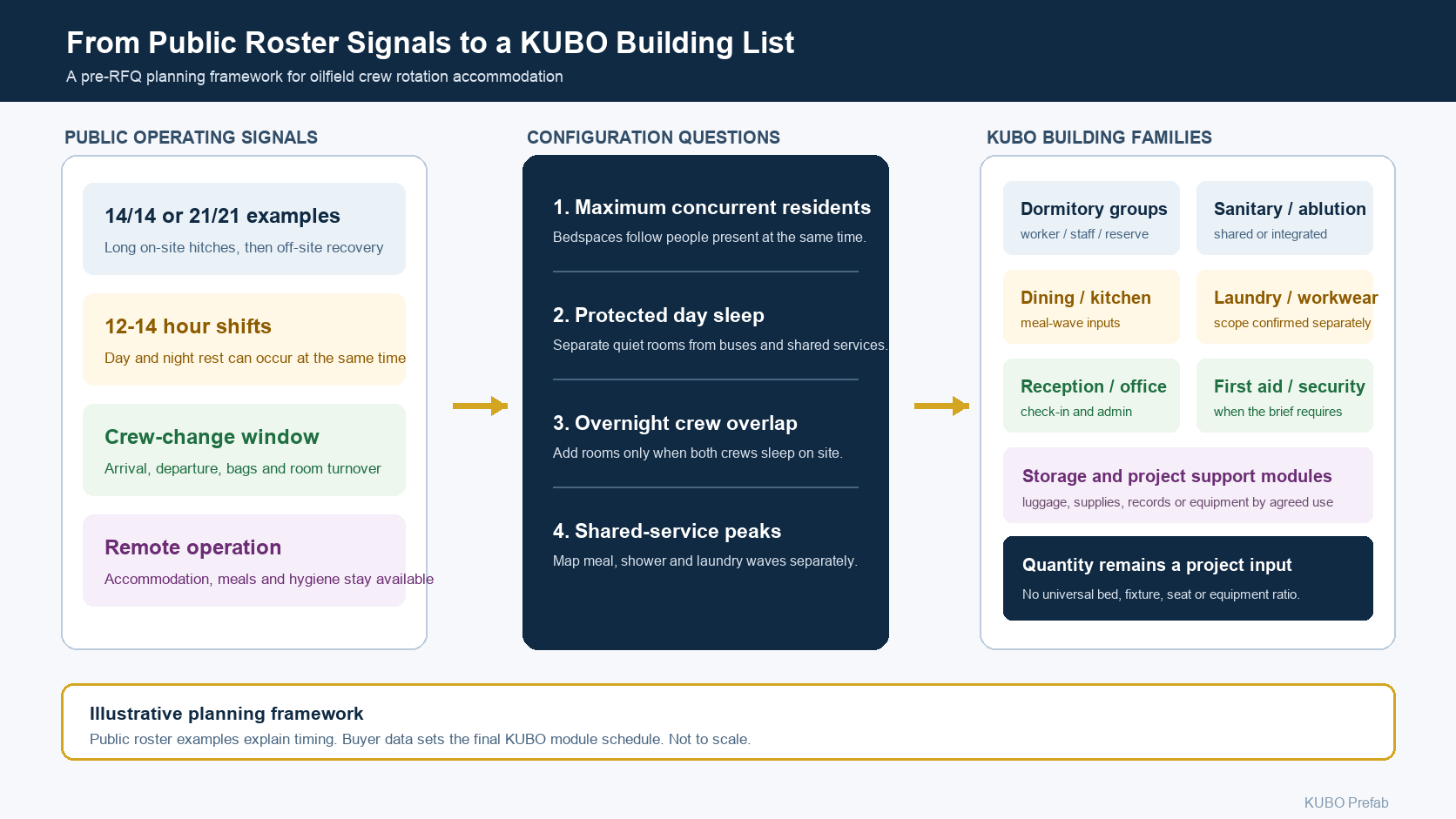
When a buyer searches for a 14 on 14 off oilfield camp or oil rig work schedule lodging, public examples often make the roster label look like the main design input. It is not. The roster tells us how people cycle through the site. The building list still depends on how many people are physically resident at the same time, which groups sleep during the day, whether changeover creates overnight overlap, and when shared facilities experience their own peaks.
Corporate Hospitality Services publishes 14 days on / 14 days off and 21 days on / 21 days off as examples and describes 12-14-hour workdays, rotating crews, privacy, rest, laundry, dining and lodging continuity around crew changes. These are useful public operating examples, not universal oilfield rules and not customer data for a KUBO project.
The implication for pre-RFQ procurement is practical: a roster should be translated into space demand before anyone turns it into a module count. A 14/14 label alone cannot tell us whether 120, 300 or 900 beds are required. It cannot tell us whether a crew-change day is only a transport and reception peak or also an accommodation peak. It also cannot tell us whether the same group uses showers, dining and laundry at the same time.
OSHA’s guidance on long work hours and irregular shifts notes that extended or irregular work can disrupt sleep and increase fatigue, and it identifies oil field workers among affected populations. For a building-list exercise, that makes protected day sleep an operational input: night-shift residents should not be placed in a zone where routine daytime arrivals, office traffic or service activity are assumed to pass their doors. A camp building cannot eliminate fatigue, but the accommodation brief can avoid creating obvious sleep disruption through zoning.
A third-party scale example also shows why bed count is not the same thing as total building scope. ATCO Frontec’s Shell Blue Sky Lodge project page describes a 1,200-person workforce housing facility near an oil-sands project, while separately describing a 200-person open-plan office, wastewater treatment capacity for 1,500 people, individual room thermostats and blackout blinds. This is not a KUBO project and should not be copied as a standard design. Its procurement lesson is narrower: accommodation, offices, utilities and sleep-supporting features are separate scope decisions, even when they belong to one camp.
Four configuration variables turn public roster examples into a procurement brief
| Configuration variable | Question to freeze before RFQ | Why it changes the building list |
|---|---|---|
| Maximum concurrent residents | What is the highest number of people who need accommodation at the same time, by resident group if possible? | This is the starting point for bedspace demand. Total employees assigned across a 14/14 or 21/21 rotation can be much higher than the number resident on one night. |
| Protected day sleep | Which residents finish night shift and need uninterrupted daytime sleep? | It affects dormitory grouping and circulation. The procurement brief can separate day-sleep rooms from arrival, office, dining and other daytime traffic. |
| Overnight crew overlap | Do incoming and outgoing crews both require beds on the same night? | Only an overnight overlap creates additional simultaneous sleeping demand. A same-day handover without two crews sleeping on site may create reception and meal peaks without creating a second full bed bank. |
| Separate shared-facility peaks | When do meals, showers and laundry/workwear activity peak for each shift? | Dining, sanitary and laundry-related functions should not be multiplied from one universal camp peak factor. Each service has its own usage window and scope input. |
Translate the roster into a concrete KUBO oilfield camp building list
Once those four variables are stated, the buyer can prepare an oilfield camp building list without pretending that the final roster is already known. The aim is to identify which building families are core, which are conditional, and which quantity input must be supplied later. This is more useful than asking a manufacturer for “a 14/14 camp” because it separates accommodation demand from service demand and from changeover-only functions.
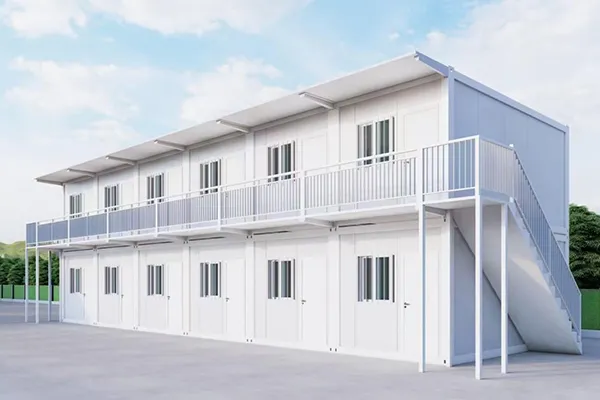
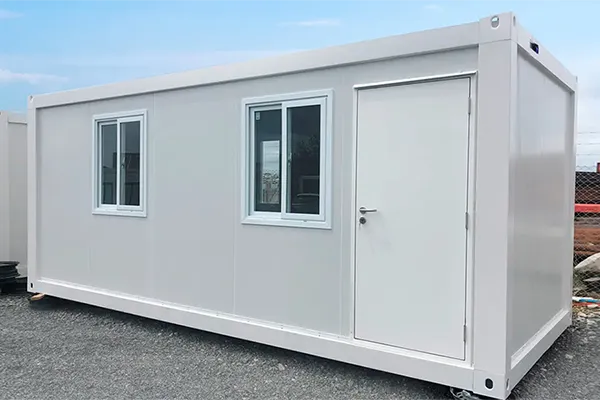
KUBO provides dormitory-oriented modular building families for worker, staff and management accommodation; modular sanitary/ablution arrangements; modular dining and kitchen buildings; site-office families; and project support modules. The table below keeps those verified building roles separate from customer-specific quantities.
| Building family | Why the roster changes it | Core or conditional | Verified KUBO reference | Quantity input |
|---|---|---|---|---|
| Worker dormitory group | Long rotations create a resident bed bank, while day/night shifts may justify zoning the same resident population into quieter sleep groups. | Core when workers sleep on site. | Modular dormitory buildings and worker dormitory unit | Maximum concurrent workers, room standard, room mix and selected KUBO configuration. |
| Staff/supervisor dormitory group | Supervisors or staff may require a different room mix or location from the main worker block. | Core only when the approved accommodation schedule separates these groups. | Dormitory building families and detachable dormitory block unit | Concurrent staff/supervisor residents and the agreed room standard for each group. |
| Conditional changeover dormitory group | Crew-change timing matters only when an incoming crew and an outgoing crew both need beds on the same night. | Conditional. | KUBO dormitory families, including folding worker dormitory options where the selected project strategy supports them. | Maximum overnight overlap, room standard and whether the overlap needs a dedicated or pooled bed bank. |
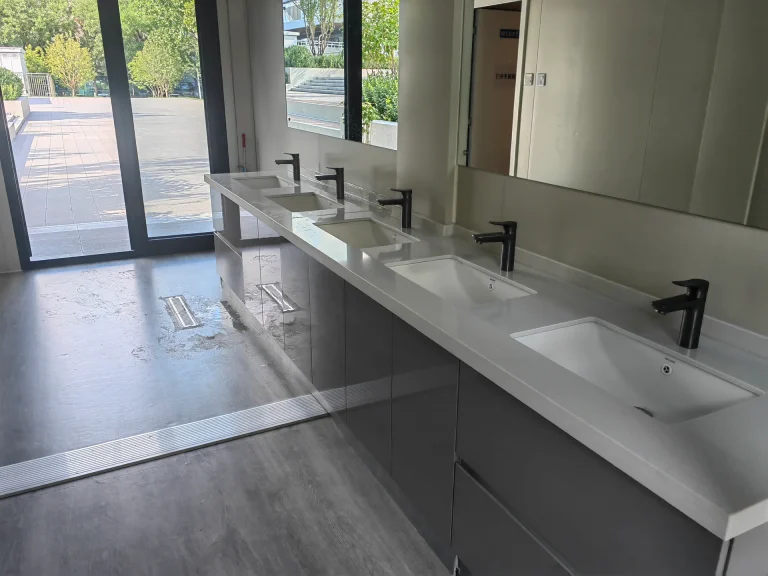
| Sanitary/ablution group | Day and night shifts can move shower and washroom peaks away from a single daily peak. | Core where shared or standalone sanitary facilities are part of the camp brief; configuration may also be integrated where supported. | Modular sanitary and ablution units | Resident groups, shift-release pattern, selected sanitary arrangement and project-defined fixture/utility requirements. |
| Dining/kitchen group | Meal waves may follow shift start, shift end and changeover timing rather than total resident count alone. | Core when dining/kitchen scope is included. | Modular dining and kitchen buildings | Meal waves, dining arrangement, kitchen brief and buyer/operator requirements. |
| Laundry/workwear support | Long rotations create recurring personal-laundry and workwear handling needs, but their peak pattern can differ from showers and meals. | Conditional to the project brief. | Camp components and support functions | User groups, laundry/workwear process, equipment responsibility and whether specialist contaminated-workwear handling is separately required. |
| Crew-change reception and project office | Arrival/departure windows can create short administrative peaks even when bed demand does not increase. | Core when roster control, reception or project administration is included. | Modular site office families, including flat pack site office units | Reception workflow, roster-control stations, meeting/administration rooms and any separately specified luggage or waiting space. |
| First-aid/security/storage modules | These functions support the camp but are driven by project scope, not by a 14/14 label. | Conditional. | KUBO camp components, equipment storage and clinic/guard-room configurations | Required support functions, room/equipment brief and agreed factory-versus-site scope. |
Choose the dormitory strategy before converting bedspaces into modules
The largest procurement error at this stage is to jump directly from resident count to “number of containers.” KUBO dormitory products are available across multiple modular building families, and selection depends on room mix, duration, transport, installation and reuse objectives. There is no universal occupants-per-module number that can be applied to every oilfield project.
The buyer should first decide how the bed bank will be organized. Three strategies are useful for pre-RFQ discussion: one pooled bed bank, separated day-sleep and night-sleep zones, and a conditional changeover block. None is automatically correct for every project, and none requires hot-bunking as a default assumption.
| Dormitory strategy | When it can fit | Procurement effect | Condition to resolve before module schedule |
|---|---|---|---|
| One pooled bed bank | Resident groups can use the same room standard and the site can protect sleeping areas from disruptive circulation without creating separate building groups. | Simplifies the room schedule because the required bedspaces are allocated from one accommodation pool. | Confirm whether day-sleep residents can still receive the required low-disruption zoning and whether worker/staff room standards remain compatible. |
| Separated day-sleep and night-sleep zones | Night-shift residents need stronger separation from daytime arrivals, office movement, service activity or other routine traffic. | The same total resident count may be divided into distinct dormitory groups, which affects block arrangement, circulation and phased module allocation. | Confirm shift populations, room standards and whether separation means different buildings, wings or another approved layout arrangement. |
| Conditional changeover block | Incoming and outgoing crews both require beds during a defined overlap window, or the buyer wants a separate temporary bed bank for roster transitions. | Adds bedspaces only for the confirmed overnight overlap rather than multiplying the whole camp by a generic changeover percentage. | Confirm the maximum number sleeping during overlap, how often it occurs, and whether those rooms can be used for another approved purpose outside changeover periods. |
A pooled bed bank can be efficient when room standards and zoning are compatible, but it should not be treated as permission to assign the same physical bed to different people without a customer-defined policy. Separated sleep zones can reduce cross-traffic around day sleepers, yet they may split what would otherwise be one accommodation block. A changeover block gives procurement a visible place to hold genuine overnight overlap, but it becomes unnecessary if both crews never need beds on the same night.
This decision should be recorded before RFQ because it changes how KUBO maps the room schedule to modular building families. It also makes later quantity changes easier to control: a revised night-shift headcount changes the day-sleep group; a revised overlap policy changes the changeover group; neither should force the buyer to rebuild the entire facility list from scratch.
Use zoning to protect sleep and keep crew-change traffic out of the dormitory core
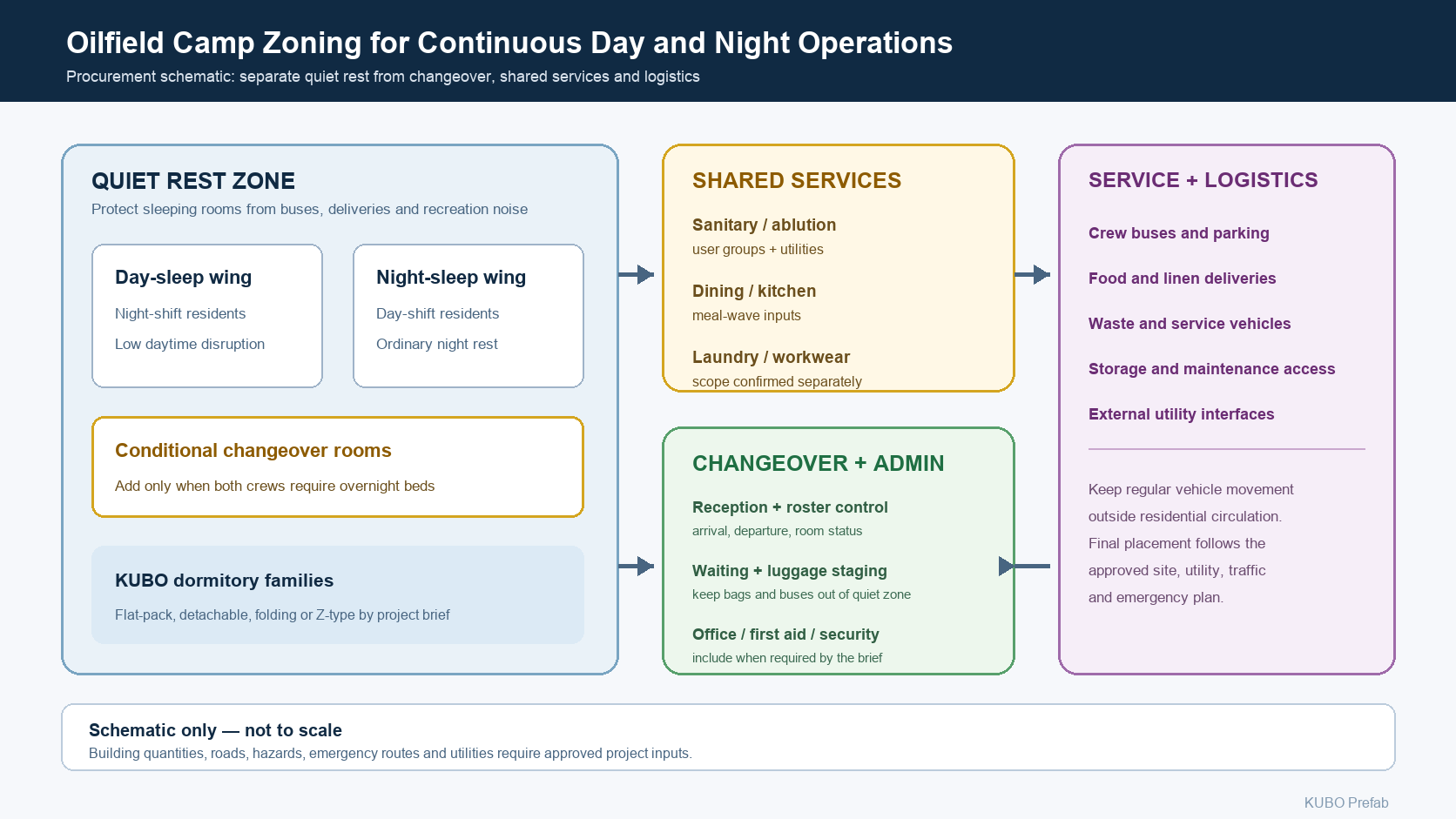
At building-list stage, zoning is not detailed site engineering. It is a relationship diagram showing which building groups should be close, which activities should be kept apart, and where shift movement is expected. That level of definition is enough to improve an RFQ because it tells bidders whether they are pricing a single undifferentiated camp or a coordinated set of accommodation and support groups.
For long day/night shifts, the first zoning move is to keep dormitory circulation from becoming the route to reception, project offices or high-activity service areas. Incoming crews should be able to reach crew-change administration without walking through protected sleeping zones. Staff/supervisor accommodation can be grouped separately if its room standard or operating relationship differs from worker accommodation. A conditional changeover block, when required, should connect logically to arrival/departure control without turning the main dormitory group into a waiting area.
Sanitary/ablution positioning depends on whether facilities are shared, standalone or integrated in the selected configuration. Dining/kitchen buildings should relate to meal-wave movement, not simply sit beside the largest dormitory block by default. Laundry/workwear support needs an agreed workflow and equipment responsibility; it should not be assumed to include specialist industrial cleaning for contaminated workwear. First-aid, security and storage remain project-specific support functions rather than automatic consequences of a roster.
The zoning sketch also helps procurement identify what does not need to be frozen yet. Exact module placement, external utility routing and detailed interfaces can follow later. At this stage, the buyer needs a clear adjacency logic: sleep zone, shared-facility zone, administration/crew-change zone and support zone. The schematic remains subordinate to the project-approved site and utility plan rather than becoming an engineering site plan.
Select KUBO product families by function, transport and reuse objective
After the building list and zoning logic are stable, product-family selection becomes more disciplined. The question is not “Which KUBO module is best for a 14/14 camp?” It is “Which KUBO building family fits each approved function, room mix, project duration, transport strategy, installation method and reuse objective?” That distinction prevents the roster from being used as a substitute for an actual building brief.
Dormitory families for worker, staff and management accommodation
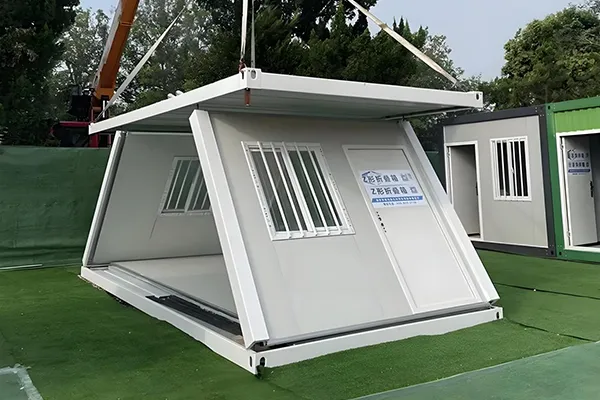
KUBO’s modular dormitory range covers dormitory-oriented building families for worker, staff and management accommodation. Project options include worker dormitory units, detachable dormitory block units, folding rapid worker dormitory units and Z-type folding temporary housing units. The buyer should select among them only after defining the room mix and the transport, installation and reuse objectives. The module schedule then follows the selected configuration; it is not derived from a universal occupancy figure.
Sanitary and ablution configurations
KUBO can configure modular sanitary and ablution arrangements as standalone, shared or integrated facilities where the selected building configuration and project brief support that arrangement. For pre-RFQ planning, procurement should state which resident groups will use the facilities and how shift-release times create shower or washroom peaks. Fixture ratios, hot-water systems, wastewater treatment and external utility scope should remain project-defined rather than being assumed from a standard module name.
Dining and camp-kitchen buildings
KUBO can coordinate modular dining-hall, canteen and camp-kitchen requirements within the wider workforce-camp plan. A long roster makes these functions important, but it still does not set the number of dining seats or define the kitchen process. The useful pre-RFQ input is the expected meal-wave pattern, the intended dining arrangement and the buyer/operator brief. These allow the dining/kitchen family to be placed in the building list without inventing an operating model.
Crew-change reception and project administration
KUBO modular site-office families can be configured around reception, roster control, meetings and project administration when those functions are included in the approved room schedule. Relevant product families include flat pack site office units, detachable flat pack site office units, detachable office modules, folding site offices and Z-type folding site office units. If the crew-change process also requires luggage holding, waiting space or check-in counters, those functions need to be stated explicitly; they are not automatic inclusions in a standard office unit.
Project support modules
KUBO’s camp component range can support project-specific functions such as laundry, first-aid, security and storage when the brief requires them. Examples include detachable flat pack temporary camp units, equipment storage units, security booth/mobile clinic configurations, expandable medical isolation clinic units, folding clinic/guard-room units and Z-type relocatable storage units. The function, equipment and scope should be defined by the project; these references do not imply specialist industrial laundry, camp operation or local approvals.
For broader oil-and-gas accommodation topics beyond this pre-RFQ building-list stage, buyers can also review KUBO’s oil and gas camp housing planning guide. This article stays with the narrower task of turning rotation and shift information into a building-family schedule.
Use a buyer-replaceable bedspace formula instead of a universal crew-change percentage
The bedspace calculation should be simple enough to audit and replace as the project inputs improve. Use:
required bedspaces = maximum concurrent residents + overnight crew-change overlap + approved operating reserve
Each term needs a project value. “Maximum concurrent residents” is the highest resident population that actually needs a bed at the same time, not the total number of people employed across alternating crews. “Overnight crew-change overlap” is the additional number of incoming and outgoing personnel who both require beds on the same night. “Approved operating reserve” is whatever reserve the buyer or project team has decided to carry; this article does not assign a universal percentage.
Public 14/14 and 21/21 examples describe timing. They do not define the overlap quantity. A project could have a same-day crew change with little or no additional overnight sleeping demand, or it could deliberately keep incoming and outgoing teams on site together for a defined handover period. Those two policies can use the same roster label and require different accommodation quantities.
Once required bedspaces are established, procurement should divide them into the approved room groups: workers, staff/supervisors, protected day-sleep residents where separately zoned, and changeover beds if a dedicated block is chosen. Only then should KUBO map those room groups to specific modular building configurations. Exact module quantity follows the agreed room mix, internal arrangement and selected KUBO system.
Keep meals, showers and laundry/workwear as separate peak calculations
A bed is a simultaneous overnight requirement. Shared facilities behave differently. A dining peak can be concentrated around shift release; a shower peak can occur immediately after a crew returns; laundry or workwear handling may be scheduled in batches or by resident group. Treating all three as the same percentage of resident count hides the operating pattern that procurement actually needs to communicate.
| Shared function | Pre-RFQ peak input | What not to assume from the roster alone |
|---|---|---|
| Dining/kitchen | Number and timing of meal waves, resident groups served and intended dining arrangement. | Do not assume one seat per resident, a fixed seat ratio or a standard kitchen equipment package. |
| Sanitary/ablution | Shift-release pattern, user groups, shared versus integrated arrangement and project-defined fixture requirements. | Do not convert bed count into a universal fixture ratio or assume hot-water and wastewater scope. |
| Laundry/workwear | Personal-laundry policy, workwear handling process, user groups, equipment responsibility and service timing. | Do not assume industrial contaminated-workwear cleaning or specialist process equipment is included. |
| Crew-change reception | Largest arrival/departure wave, roster-control process, waiting/meeting need and any separately specified luggage flow. | Do not assume that a reception peak requires extra beds unless the same people also remain overnight. |
Freeze the pre-RFQ decisions that stay useful even if the final roster changes
The final headcount may still be under development when procurement needs a credible building list. That does not prevent useful progress. The buyer can freeze the structure of the brief before freezing every quantity.
At this stage, record the resident groups that need accommodation, the preferred dormitory strategy, whether night-shift day sleep requires a separately protected zone, which facility families belong in the camp, and whether crew change creates an overnight bed requirement or only a short operational peak. Add a working range for maximum concurrent residents if the exact number is not yet approved. This creates a controlled basis for comparison without pretending that a preliminary figure is final.
It is also useful to identify the first occupancy date and whether the camp will be delivered in phases. A phased schedule can separate the first required dormitory and sanitary capacity from later accommodation or support additions, but the phase quantities must still come from the project brief. Product-family selection can then consider project duration, transport, installation and reuse objectives alongside function.
The result is a pre-RFQ package that procurement can issue consistently: a building-family list, a room-group logic, a zoning concept, a bedspace formula with replaceable inputs and separate peak questions for shared facilities. Detailed drawings and final utility data can follow when the project is ready for the next stage.
Send five inputs for a project-specific KUBO module schedule
If you are preparing crew change accommodation planning or an oilfield crew rotation accommodation RFQ, you do not need the complete final design before starting a useful discussion with KUBO. Send only these initial inputs:
- project country and location;
- maximum concurrent residents, or a working range;
- typical roster and day/night shift pattern;
- room standard and required facility families; and
- first required occupancy date.
KUBO can use these inputs to compare suitable building families and prepare a project-specific module schedule for discussion. Detailed drawings and final utility data can follow later as the project information develops.
Review the KUBO Oil & Gas Workforce Accommodation solution for the commercial solution scope, or contact KUBO with the five inputs above to start the building-list review.
Practical questions before the building-list freeze
Do we need extra dormitory modules if crews change on the same day?
Not automatically. Extra bedspaces are driven by overnight overlap, not by the fact that a crew change occurs. If the outgoing crew leaves before the incoming crew needs accommodation, the changeover may increase reception, dining or transport activity without adding another full set of beds. If both crews sleep on site on the same night, include the maximum overlap in the bedspace formula and decide whether those beds sit in the pooled bank or a conditional changeover group.
Should night-shift rooms be in a separate building?
A separate building is one option, not a universal requirement. The procurement objective is protected day sleep with low routine daytime disruption. Depending on the selected layout and room schedule, that could be achieved through a separate building, a distinct wing or another controlled zone. The pre-RFQ brief should state the night-shift population and the required separation outcome so KUBO can map it to the selected building configuration.
Can one ablution block serve both day- and night-shift residents?
Potentially, if the project brief allows a shared arrangement and the timing, user groups and selected sanitary configuration support it. The decision should be based on the actual shift-release pattern and project-defined sanitary requirements rather than a generic bed-to-fixture rule. If peaks overlap or resident groups must be separated, the building list may need a different arrangement.
Which KUBO building system fits a camp that may move after drilling?
Relocation is a product-family selection input, not a conclusion that follows from the roster. KUBO offers detachable, folding and Z-type folding dormitory and support options among its modular families. Selection should consider the required room mix, transport strategy, installation method, project duration and intended reuse plan. A camp expected to move should therefore state the reuse objective in the RFQ so the building-family comparison is made against the actual deployment strategy.
Sources and References
- Corporate Hospitality Services — Navigating Oil Rig Work Schedules and Their Impact on Lodging
- U.S. Occupational Safety and Health Administration — Long Work Hours, Extended or Irregular Shifts, and Worker Fatigue: Hazards
- ATCO Frontec — Shell Blue Sky Lodge
- KUBO — Modular Dormitory Buildings
- KUBO — Modular Sanitary / Ablution Units
- KUBO — Modular Site Office
- KUBO — Modular Dining and Kitchen Buildings
- KUBO — Camp Components