


1. Executive Summary
There is no one-size-fits-all container system.

Choosing the right container or modular building system depends on project duration, site conditions, logistics constraints, regulatory requirements, and future expansion plans.
In real-world projects, container systems are not simply interchangeable building units. Each system is designed around a different balance of speed, cost, structural performance, compliance, and scalability. Selecting an unsuitable system at an early stage often leads to hidden costs, redesigns, delayed approvals, or limited long-term usability.
Key Takeaways:
- Container system selection is a strategic project decision, not a product choice.
- The right system must align with the full project lifecycle, from deployment to relocation or long-term use.
- Logistics efficiency, site accessibility, and local regulations can outweigh material cost differences.
- Systems that appear cost-effective initially may introduce significant downstream risks if they are mismatched to the project context.
- A structured, criteria-based evaluation early in the planning phase significantly reduces procurement and execution risk.
For decision-makers, understanding how different container and modular systems perform under real project conditions is essential to achieving predictable timelines, controlled budgets, and scalable outcomes.
Planning a container or modular project often raises early questions about system suitability, compliance, and future scalability.
If you are still evaluating options, KUBO Prefab can help you review which container systems align with your project requirements before decisions are finalized.
→ Contact KUBO Prefab for an early system review
2. Why Container System Selection Matters (Beyond Price)
In many modular and container housing projects, system selection is often driven by unit price comparisons. While upfront cost is an important factor, focusing solely on price frequently leads to suboptimal decisions that affect the entire project lifecycle.
Container systems define far more than the physical structure. They directly influence:
- Transportation strategy (containerized shipping vs bulk transport)
- On-site installation complexity and time
- Compliance with local building codes and permitting processes
- Operational performance over time
- Flexibility for expansion, relocation, or repurposing
- A system that is cheaper per unit may require:
- Additional on-site labor
- Specialized lifting or assembly equipment
- Design compromises due to structural or dimensional limits
- Early replacement or reinforcement for long-term use
Conversely, a system with a higher initial cost may reduce overall project expenditure by minimizing logistics volume, shortening installation timelines, or avoiding regulatory rework.
System Choice Shapes Project Risk
From a risk perspective, container system selection determines how exposed a project is to common failure points such as:
- Delayed site access or customs clearance
- Incompatibility with local climate conditions
- Non-compliance with fire, safety, or occupancy standards
- Constraints on future capacity increases
These risks rarely appear in early cost comparisons but often surface during construction or operation, when corrective actions are most expensive.
A Lifecycle-Oriented Decision
Effective container system selection evaluates the total project impact, not just procurement cost. This includes:
- Expected project duration (temporary vs long-term use)
- Likelihood of relocation or phased expansion
- Local regulatory environment
- Site logistics and infrastructure constraints
- Required performance standards for occupants
When these factors are considered systematically, system selection becomes a tool for risk control and value optimization, rather than a cost-cutting exercise.
In modular and container-based projects, choosing the right system early is one of the most decisive actions a project team can take to ensure long-term success.

3. Overview of Common Container & Modular Building System Types
Before comparing systems, it is essential to clarify a common misconception:
“Container buildings” do not represent a single construction method.
In practice, container and modular projects rely on different structural systems, each designed to optimize a specific combination of logistics efficiency, structural performance, compliance, and lifecycle expectations.
Below are the most widely used container and modular building system types in real-world projects.
ISO Shipping Container–Based Systems
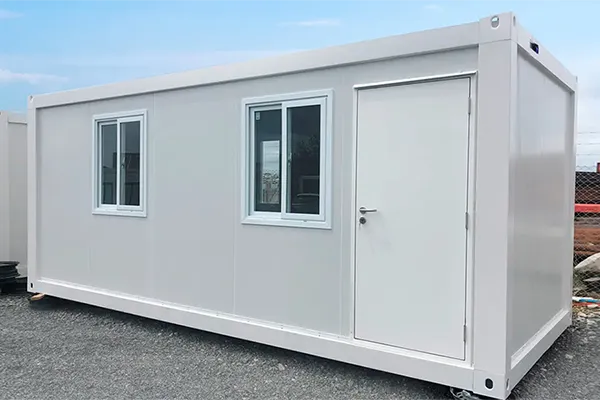
ISO container systems repurpose standard shipping containers as building modules. These units retain their original steel frame and corner castings, allowing them to be transported through global container logistics networks.
They are typically used where speed and transport compatibility are prioritized over layout flexibility.
Common characteristics:
- Fixed module dimensions
- Strong structural integrity
- Limited interior width and ceiling height
- Best suited for short-term or relocatable applications
Flat Pack Container Systems
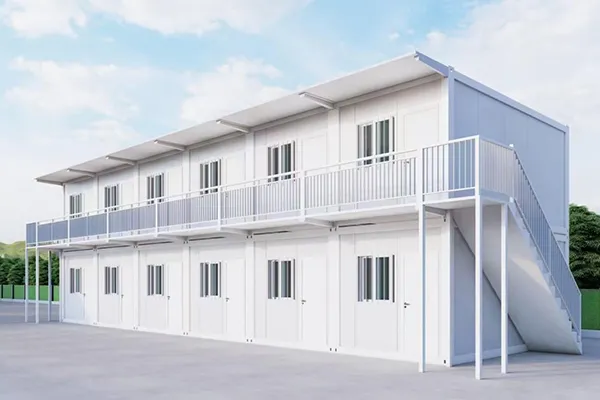
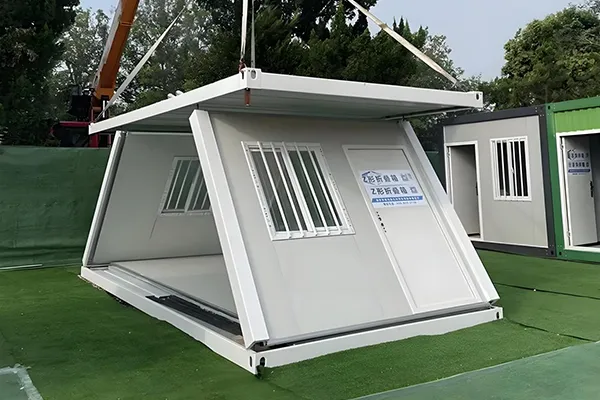
Flat pack systems are purpose-designed modular structures that are shipped in disassembled or semi-disassembled form and assembled on-site.
Instead of transporting air volume, flat pack systems maximize shipping efficiency by stacking components.
Common characteristics:
- High transport efficiency for large-scale projects
- Flexible layout and repeatable unit grids
- Requires organized on-site assembly
- Widely used in workforce camps and phased developments
Welded Modular Units (Volumetric Modular)
Welded modular systems are fully assembled volumetric units manufactured in factories and transported to site as complete modules.
They offer higher structural performance and better long-term durability but require more transport capacity.
Common characteristics:
- Factory-controlled quality
- Better insulation and finishing options
- Faster on-site installation
- Higher transport volume per unit
Panelized Modular Systems
Panelized systems deliver buildings as wall, floor, and roof panels rather than volumetric units.
This approach provides greater architectural flexibility and code compliance, especially for public and institutional projects.
Common characteristics:
- High design adaptability
- Suitable for complex layouts
- Increased planning and coordination requirements
- Strong alignment with local building codes
Hybrid Modular Systems
Hybrid systems combine elements from multiple approaches, such as flat pack structural frames with pre-finished volumetric service modules.
They are commonly applied in projects that require phased expansion, long-term durability, and logistics efficiency.
4. Container Housing System Comparison
The following table provides a side-by-side comparison of the most common container and modular building systems.
This comparison focuses on decision-critical factors, not marketing claims.
Container Housing System Comparison Table
How to Use This Comparison
This comparison should not be read as a ranking.
Instead, it serves as a filtering tool to eliminate systems that are structurally or operationally misaligned with the project’s requirements.
For example:
- A system optimized for shipping efficiency may not be suitable for long-term occupancy.
- A system designed for permanent use may introduce unnecessary cost and logistics complexity in temporary projects.
- Understanding these trade-offs is the foundation of effective container system selection.
Why System Type Alignment Matters
Selecting a container system that does not match the project’s duration, logistics environment, or regulatory pathway often results in:
- Redesign during execution
- Increased installation time
- Compromised user experience
- Limited adaptability for future needs
- A clear understanding of system types allows project teams to move from supplier-driven decisions to project-driven system selection.
5. Flat Pack vs Container Buildings: What Most Buyers Misunderstand
The comparison between flat pack systems and container-based buildings is one of the most common—and most misunderstood—topics in modular construction.
Many buyers assume this is a simple trade-off between cost and speed. In reality, flat pack and container buildings are optimized for entirely different project constraints, and choosing between them requires a clear understanding of how each system performs beyond the factory gate.
The Core Difference: Volume vs Logistics Efficiency
The fundamental distinction lies in how space is transported.
Container-based buildings move fully enclosed volumetric units. This approach prioritizes:
- Immediate structural integrity
- Minimal on-site assembly
- Faster single-unit deployment
- Flat pack systems, by contrast, transport building components in a disassembled form. This approach prioritizes:
- Maximum shipping density
- Reduced logistics cost per square meter
- Scalability across large deployments
- Neither approach is inherently better. Each solves a different problem.
When Container Buildings Make Sense
Container-based buildings are typically the better choice when:
- The project requires rapid, localized deployment
- Site access is unpredictable or limited
- Skilled assembly labor is not available on-site
- The building is intended for short-term or relocatable use
However, container buildings are constrained by fixed dimensions and interior widths. For projects that prioritize occupant comfort, layout flexibility, or long-term performance, these limitations become more pronounced over time.
When Flat Pack Systems Are the Better Option
Flat pack systems are generally more suitable when:
- The project involves large-scale accommodation or multiple buildings
- Logistics cost is a major factor
- Phased expansion is anticipated
- The project timeline allows for organized on-site assembly
Flat pack systems enable consistent unit replication across large camps, making them particularly effective for workforce housing, education facilities, and long-term modular developments.
Common Buyer Misconceptions
Misconception 1: Flat pack systems are always cheaper
While flat pack systems reduce shipping costs, total project cost depends on labor availability, site management, and assembly efficiency.
Misconception 2: Container buildings are always faster
For small deployments, this may be true. For large projects, container logistics and stacking limitations often offset the speed advantage.
Misconception 3: Both systems offer the same long-term performance
In practice, flat pack systems often provide better insulation options, interior planning flexibility, and upgrade paths for long-term use.
Flat Pack vs Container Buildings: Practical Comparison
Choosing Based on Project Reality, Not Assumptions
The decision between flat pack and container buildings should be guided by project scale, logistics conditions, and future plans, not by generic cost comparisons.
In many projects, the most costly errors arise not from the system itself, but from applying the right system to the wrong context.
Understanding these distinctions is a critical step in effective container system selection—and a necessary foundation before evaluating suppliers, pricing, or design options.
6. Decision Framework: How to Choose the Right Container System
Selecting the right container or modular system is not a matter of preference—it is a logic-driven decision based on project constraints.
Rather than comparing systems in isolation, successful projects follow a structured evaluation process that aligns system characteristics with real-world requirements.
Below is a simplified decision framework that reflects how container systems are evaluated in practice.
Step 1: Define Project Duration
If the project duration is less than 24 months:
→ Prioritize relocatable or ISO container–based systems that minimize long-term investment and allow redeployment.
If the project duration exceeds 24–36 months:
→ Consider flat pack, welded modular, or hybrid systems designed for extended use and better interior performance.
Project duration determines whether durability, insulation, and lifecycle cost should outweigh rapid deployment.
Step 2: Assess Site Access and Logistics Constraints
If site access is limited, remote, or unpredictable:
→ Favor systems with high transport efficiency and flexible delivery sequencing, such as flat pack or panelized modular systems.
If the site has reliable heavy-lift access and staging space:
→ Volumetric modular or container-based systems may be feasible without introducing logistics bottlenecks.
Logistics complexity often has a greater impact on project timelines than system fabrication.
Step 3: Evaluate Regulatory and Compliance Requirements
If local building codes, fire regulations, or occupancy permits apply:
→ Avoid systems that rely on repurposed shipping containers without full compliance pathways.
If the project operates under temporary or exempt frameworks:
→ Container-based systems may be acceptable, provided safety standards are met.
Regulatory alignment should be assessed early, as non-compliant systems often require costly redesign or retrofitting.
Step 4: Consider Future Expansion and Scalability
If phased expansion or capacity growth is anticipated:
→ Select systems with standardized structural grids and repeatable modules, such as flat pack or hybrid modular systems.
If the project scope is fixed with no expansion planned:
→ A more rigid system may be acceptable without introducing long-term limitations.
Expansion readiness is rarely addressed in initial procurement—but frequently becomes a constraint later.
Step 5: Align System Performance with Occupancy Needs
If occupant comfort, energy efficiency, or long-term usability is critical:
→ Prioritize systems that allow for enhanced insulation, HVAC integration, and interior planning flexibility.
If basic accommodation or utility use is sufficient:
→ Simpler systems may meet functional requirements without unnecessary upgrades.
Performance expectations should reflect how the building will be used, not just how quickly it can be installed.
A Practical Summary for Decision-Makers
Short-term, rapidly deployed projects benefit from speed-oriented systems.
Large-scale or long-term developments require logistics efficiency and scalability.
Compliance-driven projects demand system-level alignment with regulations.
Expansion-ready projects should avoid systems that lock in fixed layouts.
The most effective container system selection follows project logic—not supplier defaults or price comparisons.
By applying a structured decision framework early, project teams can reduce uncertainty, control risk, and avoid costly system changes later in the project lifecycle.
Selecting the wrong container system can lead to redesigns, approval delays, and unnecessary cost.
KUBO Prefab provides project-based system evaluation to help you compare feasible container and modular systems based on duration, site conditions, and regulatory context.
→ Discuss your project with KUBO Prefab
7. System Selection by Application Scenario
While container systems share common structural principles, their suitability varies significantly by application.
Project requirements change depending on how the buildings will be used, who will occupy them, and how long they are expected to remain in operation.
Below are common application scenarios and the system selection logic typically applied in each case.
7.1 Workforce Camps and Labor Accommodation
Workforce camps are among the most common use cases for container and modular systems, particularly in mining, energy, infrastructure, and industrial projects.
Key Requirements
Rapid deployment to remote or undeveloped sites
Predictable capacity planning
Repetitive layouts for efficient management
Potential for phased expansion
Recommended System Logic
Flat pack container systems are often preferred for large camps due to logistics efficiency and scalability.
Hybrid modular systems are suitable when camps are expected to evolve into semi-permanent facilities.
ISO container systems may be used for short-term or highly mobile deployments but often face limitations in comfort and layout consistency.
System selection should prioritize transport efficiency and expansion readiness, as workforce camps frequently grow beyond initial capacity estimates.
7.2 Schools and Training Facilities
Educational facilities require a different balance between speed and long-term performance. While modular solutions offer rapid delivery, they must also meet strict functional and regulatory standards.
Key Requirements
Classroom size and ceiling height
Acoustic performance
Natural lighting and ventilation
Compliance with local education and safety regulations
Recommended System Logic
Panelized modular systems or welded modular units provide better layout flexibility and compliance pathways.
Flat pack systems can be effective for standardized classroom layouts in regions with supportive regulatory frameworks.
Repurposed shipping containers are generally less suitable due to dimensional and compliance constraints.
For education projects, system selection should prioritize learning environment quality and regulatory alignment over speed alone.
7.3 Clinics and Healthcare Facilities
Healthcare facilities present some of the most demanding requirements for modular construction. System selection must account for technical infrastructure, hygiene, and long-term reliability.
Key Requirements
HVAC zoning and air quality control
Separation of clean and non-clean areas
Medical equipment integration
Consistent operational performance
Recommended System Logic
Welded modular units or panelized modular systems are typically the most appropriate.
Hybrid systems may be used when rapid deployment is required alongside long-term use.
Basic container systems are rarely suitable without significant modification.
In healthcare projects, decisions informed by modular healthcare system planning resources should keep performance stability and compliance central because operational failure carries high risk.
7.4 Public and Government-Funded Projects
Public-sector projects introduce additional layers of complexity related to procurement, transparency, and long-term accountability.
Key Requirements
Clear compliance documentation
Alignment with public procurement standards
Long service life expectations
Maintainability and audit readiness
Recommended System Logic
Panelized and welded modular systems align more naturally with public-sector approval processes.
Systems with clear lifecycle documentation and standardized components reduce procurement risk.
Temporary container systems are generally limited to emergency or interim use cases.
For public projects, system selection is as much about process compatibility as physical performance.
Application-Driven Selection, Not System Preference
Across all scenarios, the most successful projects apply the same principle:
- The application defines the system—not the other way around.
By evaluating container and modular systems through the lens of real operational needs, project teams can avoid over-specification, reduce compliance risk, and select systems that remain viable throughout the project lifecycle.
8. Common Mistakes in Container System Selection (and How to Avoid Them)
Many challenges in modular and container projects do not stem from construction quality, but from early-stage system selection errors. These mistakes are often invisible during procurement and only emerge during installation or operation—when corrective actions are costly.
Below are the most common system selection mistakes observed in real projects, along with practical guidance on how to avoid them.
Mistake 1: Choosing a System Based on Unit Price Alone
Why it happens:
Early comparisons often focus on per-unit cost without considering logistics, installation, or lifecycle implications.
Impact:
- Higher transport and handling costs
- Increased on-site labor requirements
- Unplanned retrofits or early replacement
How to avoid it:
Evaluate systems based on total project cost, including transport, installation, compliance, and long-term usability—not just manufacturing price.
Mistake 2: Applying Temporary Systems to Long-Term Projects
Why it happens:
Project timelines evolve, but the selected system does not.
Impact:
- Accelerated wear and maintenance issues
- Reduced occupant comfort
- Compliance challenges as project scope changes
- How to avoid it:
Define realistic project duration scenarios and select systems that can support extended use or upgrading if required.
Mistake 3: Ignoring Local Regulatory and Approval Pathways
Why it happens:
Assumptions are made that container systems are exempt from standard building regulations.
Impact:
- Delayed approvals
- Redesign or structural modifications
- In some cases, project suspension
- How to avoid it:
Confirm early whether the selected system aligns with local building codes, fire regulations, and occupancy requirements.
Mistake 4: Underestimating Logistics and Site Constraints
Why it happens:
System selection is made without a detailed review of site access, staging space, or lifting capabilities.
Impact:
- Delivery delays
- Increased crane and handling costs
- Installation sequence disruptions
How to avoid it:
Match system type to real site conditions, not ideal assumptions. Logistics feasibility should be validated before finalizing system selection.
Mistake 5: Failing to Plan for Expansion or Reconfiguration
Why it happens:
Initial capacity estimates are treated as fixed.
Impact:
- Inefficient add-on solutions
- Inconsistent layouts
- Higher expansion costs
- How to avoid it:
Select systems with standardized grids and repeatable modules when phased growth is possible or likely.
Mistake 6: Overlooking Occupant Experience and Operational Performance
Why it happens:
Focus remains on delivery speed rather than long-term usability.
Impact:
- Poor thermal comfort
- High energy consumption
- Reduced satisfaction and productivity
- How to avoid it:
Align system performance with how the space will be used, particularly for accommodation, education, or healthcare environments.
Avoiding These Mistakes Starts with System-Level Thinking
Most system selection errors originate from treating container buildings as products, rather than project-specific solutions.
By evaluating container systems through the lenses of lifecycle, compliance, logistics, and future flexibility, project teams can significantly reduce risk and avoid the most common pitfalls in modular construction.
9. How KUBO Prefab Supports Container System Selection
Selecting a container or modular system is not only a technical decision—it is a project-defining step that influences cost control, timelines, compliance, and long-term flexibility.
KUBO Prefab supports clients at this critical stage by acting as a system-level advisor, helping project teams move from uncertainty to structured decision-making.
Project-Based System Evaluation
KUBO Prefab begins by reviewing the core project parameters, including:
- Project duration and development phases
- Site conditions and logistics constraints
- Local regulatory and approval requirements
- Intended use, occupancy standards, and performance expectations
Based on these inputs, KUBO Prefab identifies which container or modular systems are technically suitable, operationally viable, and scalable, while filtering out options that introduce avoidable risk.
Comparative System Recommendation (Not Product Pushing)
Rather than promoting a single system by default, KUBO Prefab provides:
- Clear comparison between feasible system types
- Explanation of trade-offs between speed, cost, durability, and flexibility
- Guidance on how system choice affects future expansion or relocation
This allows decision-makers to understand why a system fits their project, not just what is available on the market.
Integration with Early Planning & Feasibility
System selection is coordinated with early planning considerations such as:
- Site layout logic and zoning
- Capacity planning assumptions
- Phased construction and expansion strategies
- By aligning system choice with planning logic, KUBO Prefab helps reduce:
- Late-stage design changes
- Procurement revisions
- Execution delays
Compliance-Oriented Guidance for Regulated Projects
For projects subject to building codes, public procurement rules, or institutional standards, KUBO Prefab places strong emphasis on:
- System compliance pathways
- Documentation readiness
- Long-term operational accountability
This approach is particularly relevant for public-sector, education, healthcare, and infrastructure-related projects, where early misalignment can jeopardize approvals.
Frequently Asked Questions (FAQ)
What is the most common mistake in container system selection?
The most common mistake is choosing a system based solely on unit price without considering logistics, compliance, and long-term usability. This often results in higher total project costs.
Are flat pack systems always better for large projects?
Flat pack systems are often more efficient for large-scale projects due to transport efficiency and scalability. However, they still require proper site organization and assembly planning to be effective.
Can shipping containers be used for long-term buildings?
Shipping containers can be used for long-term applications in some cases, but they often face limitations related to insulation, layout flexibility, and regulatory compliance. Purpose-designed modular systems are generally more suitable for permanent use.
How early should system selection be finalized?
System selection should ideally be addressed during the concept or feasibility stage, before detailed design and procurement. Late changes significantly increase cost and complexity.
Do container systems need to comply with local building codes?
Yes. In many jurisdictions, container and modular buildings are subject to the same building, fire, and occupancy regulations as conventional structures. Compliance pathways should be confirmed early.
Can modular systems support future expansion?
Many modular systems are designed with standardized grids and repeatable units that support phased expansion. However, not all systems offer this flexibility, making early selection critical.
Is there a “best” container system for all projects?
No. The best system depends on project-specific factors such as duration, location, regulatory environment, and operational needs. System selection should always be context-driven.