

Public-service continuity & humanitarian response
Emergency & Humanitarian Modular Buildings and Facilities
KUBO is a project-based emergency and humanitarian modular building supplier and manufacturer for municipalities, government agencies, humanitarian organisations, implementing partners and prime contractors. We manufacture public-service, WASH, accommodation and operational support buildings around the programme phase, affected population, local services and verified deployment conditions.
- Municipal service continuity
- Emergency response compounds
- Humanitarian support facilities
- Preparedness and redeployment programmes
Deployment time is project-specific. Approved specification, quantity, production status, freight, customs, site, utilities, local labour and authority acceptance all affect first use.

01
Function-Led Planning
Each module serves a defined public or response function.
02
Phased Deployment
Facilities open in useful operational packages.
03
Inclusive Site Inputs
Protection, privacy, access and culture shape the layout.
04
Factory-Based Supply
Controlled drawings, production, packing and export support.
Where this solution applies
One modular platform can serve different programmes—but the planning basis changes
A municipal overflow building, post-disaster response base and humanitarian settlement may use similar structures, yet their users, service standards, procurement routes and protection obligations differ.
Municipal
Public-Service Continuity
Temporary or replacement space can maintain essential services while permanent facilities are renovated, expanded or restored.
- Confirm authority and public users
- Connect with existing services
- Plan accessibility and circulation
Emergency
Disaster Response Bases
Operational compounds can support coordination, responders, logistics, first aid, sanitation and selected accommodation.
- Prioritise the first useful package
- Protect emergency access
- Connect later functions safely
Humanitarian
Community Support Facilities
Programmes may require reception, accommodation, hygiene, health, education, distribution and community spaces.
- Separate household and staff needs
- Include protection and privacy
- Coordinate service partners
Preparedness
Pre-Positioned Capacity
Authorities and relief organisations can prequalify repeatable modules, packing plans and deployment packages.
- Define inspection cycles
- Preplan climate and site scenarios
- Train deployment teams
Scope boundary: KUBO is a modular-building manufacturer and project supplier, not a humanitarian operator, settlement authority, medical provider or authority having jurisdiction.
Response and recovery phases
Deploy by operational priority, then adapt as the response stabilises
Identify the minimum first package, triggers for added facilities and the point when temporary assets should transition, relocate or leave.
01 · Before an event
Preparedness
Define scenarios, approved unit families, storage, freight routes, local partners, sites and framework procurement.
02 · First opening
Operational Base
Coordination, registration, sanitation, first aid, communications, secure storage and staff support establish a controlled response point.
03 · Growing demand
Expanded Services
Accommodation, bathing, food service, distribution, health, education and community functions expand against verified needs.
04 · Stabilised use
Transitional Facilities
Longer use may require improved privacy, thermal comfort, durability and maintenance access.
05 · Next use
Recovery & Redeployment
Modules may support reconstruction, convert to municipal use, move, enter storage or leave under an agreed exit plan.
Readiness rule: rapid building deployment cannot compensate for an unsafe site, unavailable water, missing wastewater arrangements, blocked access, absent operating staff or unresolved approval.
Deployment model
Strengthen existing services before creating a separate temporary system
Compare each model using population access, site safety, operating capacity and the burden of duplicated services.
| Deployment model | When it can work | Primary advantage | Main risks | Modular role |
|---|---|---|---|---|
| Expansion of Existing Public Services | A safe operating facility has land, access, management and spare service capacity | Uses established staff, utilities and referral pathways | Overloading the host facility or mixing incompatible flows | Additional rooms, sanitation, storage or waiting space |
| Central Response Hub | One prepared site can support coordination, logistics, services and selected accommodation | Consolidates management and utilities | Long travel, congestion and single-site disruption | A zoned multi-function compound |
| Central Hub + Distributed Points | Communities are dispersed or repeated travel is impractical | Brings selected services closer to users | Staffing, stock control, water and communications at each point | Central base plus repeatable satellites |
| Temporary Standalone Settlement | Existing and host-community options cannot safely absorb the population | Consolidates accommodation and essential services | Land, protection, segregation, utilities, impact and exit | Facilities only within a multi-sector plan |
Complete response environment
Plan public, residential and operational spaces as one service system
Accommodation alone is not a functioning response. Public services, WASH, operations, access and maintainable utility interfaces must work together.

Service network
Use zoning to protect dignity, safety and service access
Public reception, family accommodation, staff areas, health functions, deliveries, waste and utilities need clear routes and appropriate separation without unnecessary barriers.
Reception & Registration
Arrival, information, assessment, records, waiting and referral spaces for accessible public flow.
Temporary Accommodation
Household, individual or staff units planned around duration, privacy, culture and specific needs.
WASH & Hygiene
Toilets, showers, handwashing, laundry and cleaning integrated with water and wastewater plans.
Health & First Aid
Rooms configured only to the responsible health authority’s clinical brief.
Coordination Offices
Incident management, municipal services, meetings, communications and staff support.
Food & Distribution
Serving, dining, storage or distribution planned around queues, hygiene, waste and safe movement.
Learning & Community
Flexible rooms based on programme, safeguarding and cultural inputs.
Storage & Utility Interfaces
Secure stocks and defined connections for power, water, wastewater, communications and fire systems.
Site and programme design basis
A response label is not enough to configure safe public facilities
Define users, site suitability, existing services, dependable utilities and the authorities or sector leads that approve the design before module selection.
01
Population & Protection
Define households, staff, duration, privacy, accessibility, safeguarding and cultural needs.
- Separate public and staff assumptions
- Accessible routes and facilities
- Safe lighting and consultation
02
Land, Hazards & Access
Confirm land rights, survey, drainage, hazards, wind, fire access, road reliability and proximity to services.
- Multi-sector assessment
- All-weather logistics
- Expansion and safe separation
03
WASH & Utilities
State water source, treatment, storage, wastewater, drainage, power, backup, communications and operating ownership.
- Peak demand
- Maintenance access
- External network boundaries
04
Codes & Programme Standards
Identify building, fire, accessibility, public-health and occupancy requirements plus programme specifications.
- Local professionals
- Review and inspection route
- Approved function basis
KUBO can provide agreed module-side utility interfaces. A complete water, wastewater, power, communications, medical or food-service system is not automatically included.
System selection
Match deployment needs with duration, freight, local capacity and future use
Select the building system only after the function schedule, site data and responsibility split are clear.
| System | Potential role | Possible value | Resolve before selection |
|---|---|---|---|
| Folding Container House | Selected repeatable advance offices, staff support, hygiene or temporary accommodation | Fewer field erection steps after unloading | Deployment space, lifting, support, anchorage and service hookup |
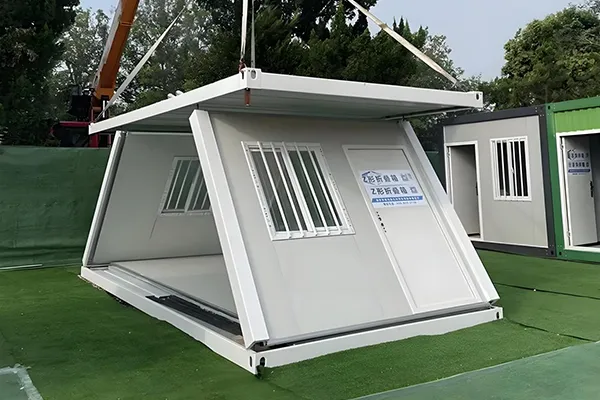
| Z-Type Folding Container House | Pre-positioned or repeatable packages where its geometry suits the function | Compact transport concept | Inspection after storage, handling and connection plan |
| Flat Pack Container House | Repeated accommodation, office, WASH, health, classroom and community blocks | Repeatable grid and bulk packing | Assembly labour, foundations and controlled installation |
| Detachable Container House | Assets expected to be repaired, reconfigured or transferred | Replaceable components and planned reuse | Labelling, records, refurbishment and competent reassembly |
Reference configurations
Build operational packages—not fixed shelter bundles
These patterns are planning references. Final facilities follow verified needs, operating partners, site services and approved programme responsibilities.
Pattern A
Municipal Continuity Hub
Temporary public-facing capacity beside an operating civic, health, education or administration site.
- Reception, consultation and offices
- Accessible WASH and waiting
- Connection to existing services
Pattern B
Disaster Response Base
An operational compound for coordination teams and responders, with selected public services.
- Command and staff welfare
- First aid, registration and sanitation
- Emergency access and resilient utilities
Pattern C
Transitional Community Compound
Longer-duration accommodation and public-service buildings within an authority-led recovery plan.
- Household accommodation and WASH
- Health, education and community rooms
- Upgrade, handover and exit conditions
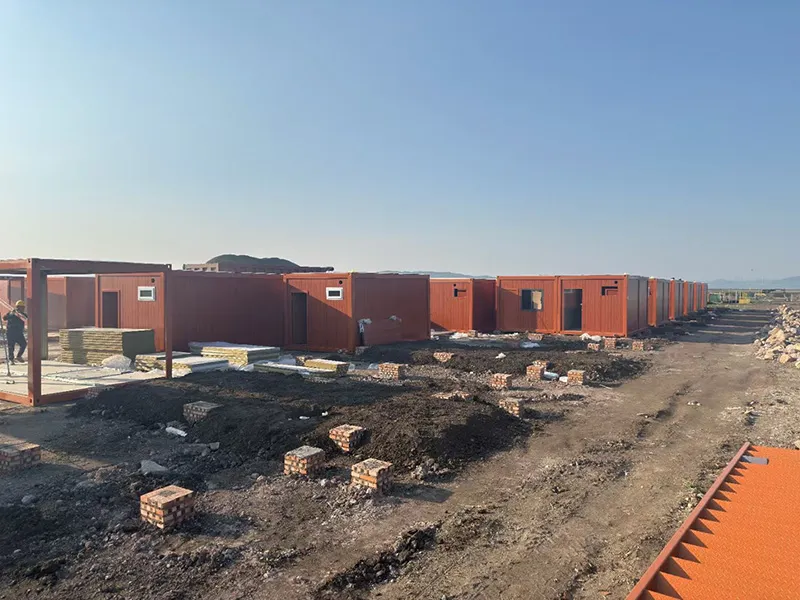
Planning scenario—not a fixed package
Flood-affected region with disrupted public facilities and dispersed communities
Start with safe extensions to operating services and a central coordination base. Add satellite registration, WASH, first aid or community points only where access and operating capacity justify them.
- Confirm population access and safe sites
- Open a minimum complete service package
- Separate public, residential and logistics flows
- Plan transition, municipal reuse or removal
Project delivery path
Coordinate factory release with site, services and operating readiness
01
Needs & Function Brief
Confirm authority, users, functions, occupancy, duration, standards and priorities.
02
Site & Scope Basis
Develop a module schedule, zoning, utilities, phases and responsibility assumptions.
03
Design Freeze
Approve module types, openings, materials, interfaces, labels and inspection requirements.
04
Factory Production
Manufacture controlled batches and maintain unit identification for site sequencing.
05
Packing & Logistics
Align packing with customs, routes, unloading, storage, priority packages and handling limits.
06
Deployment & Handover
Support agreed clarification while local teams assemble, connect, inspect and commission.
Responsibility boundary
Define every interface before comparing supplier prices
Do not describe a package as turnkey unless every building, service, operating and approval obligation is explicitly contracted with qualified parties.
KUBO Factory Supply & Support
Manufacturer-led supply within the agreed boundary.
- System and module configuration
- Project drawings and specifications
- Factory production and inspection
- Export packing and documents
- Installation manuals and agreed support
Joint Technical Coordination
Interfaces that must be documented together.
- Approved function and module schedule
- Site zoning and protection inputs
- Building-side MEP connection points
- Fire, access and sanitation information
- Release, testing and handover records
Authority, Operator & Local Team
Programme, statutory and local delivery responsibilities.
- Needs, land and community consultation
- Survey, drainage and foundations
- Codes, permits and occupancy approval
- External utilities and fire systems
- Customs, installation and operations
Factory & quality evidence
Keep every module connected to the approved project documents
For framework contracts and phased packages, consistency across release batches matters. Unit codes, functions, materials, interfaces and packing records should remain traceable through loading, storage and deployment.
- Approved-document check
- Frame and envelope inspection
- Interface verification
- Function codes and priority packing
- Handover and storage records

Procurement FAQ
Questions to resolve before ordering emergency or public-service modules
These answers establish an early procurement basis. Local codes, programme standards, quantities and responsibilities remain subject to approved documents.
Can KUBO provide immediate shelter after a disaster?
KUBO can supply modular buildings for planned emergency and recovery programmes, but timing depends on approved specifications, quantity, production or stock status, freight, customs, inland access, prepared sites, utilities and local installation.
Does KUBO design and operate humanitarian settlements?
No. KUBO configures and manufactures modular buildings within an approved brief. Authorities and appointed organisations retain needs assessment, land, protection, WASH, health, education, security, staffing, maintenance and daily operations.
How should temporary accommodation quantities be calculated?
Start with verified people and household data, privacy, specific needs, culture, duration and spare or isolation capacity. Compare host-community and existing-service options before fixing a standalone compound.
Can one module design serve housing, clinics, classrooms and offices?
A common structural platform may support several functions, but layout, occupancy, ventilation, accessibility, hygiene, fire strategy, services, finishes and specialist equipment differ. Each type must follow the responsible authority's approved brief.
Are folding units always the fastest emergency choice?
Not always. Complete opening time includes approval, production or stock release, export, customs, road delivery, unloading, support, anchorage, utilities, inspection and staffing.
Can buildings operate without permanent power, water and sewer?
Only with a separately designed off-grid service plan covering generation and backup, water source and treatment, storage, wastewater, drainage, communications, waste and responsible operators.
How should accessibility, privacy and protection be addressed?
They must shape the site and module brief before design freeze, including step-free routes, accessible WASH, household privacy, lighting, safe waiting, consultation rooms and culturally appropriate layouts.
Can emergency modules be stored and redeployed?
Yes, when the system and asset plan define storage conditions, periodic inspection, inventories, deployment exercises, handling equipment, refurbishment and responsibility for subsequent acceptance.
Who handles land, permits, utilities and onsite installation?
These are normally led by the client, competent authority, local contractor and locally authorised professionals. The contract must assign survey, approvals, civil works, external services, customs, unloading, assembly, testing and occupancy responsibility.
What should we send an emergency and humanitarian modular building supplier?
Provide the country, responsible authority, programme context, people served, functions, duration, priorities, site and hazard information, WASH and power plan, access, codes, approval route, operating partner and intended recovery or redeployment path.
Municipal and response project brief
Request a preliminary modular facility configuration
Share the non-sensitive inputs that determine function, occupancy, site feasibility, utilities and phased supply. KUBO will review them as an emergency and humanitarian modular building supplier.
- Authority and deployment country
- Programme context and people served
- Public, residential and operational functions
- Site, access and local services
- WASH, power and approval responsibility
- Target period, scope and operating partner
Output: a preliminary response facility configuration—not compliance approval, a delivery promise or an assessment of aid eligibility.
Planning resources
Build a defensible public-project brief before requesting prices
Review project evidence, procurement inputs and lifecycle decisions before supplier comparison.

Emergency Modular Camp for Refugee Housing
Review documented project context and modular delivery rather than relying on generic emergency claims.
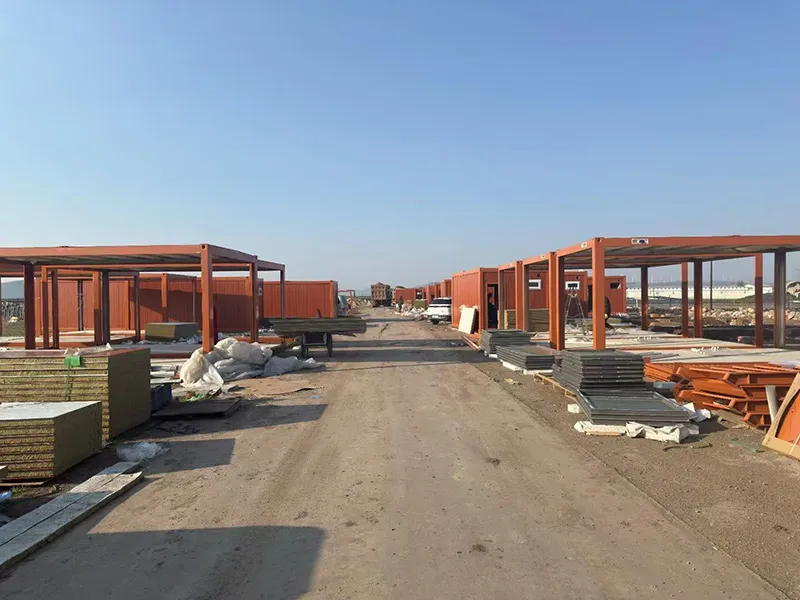
Modular Housing for Public Projects
Organise authority requirements, site data, responsibilities, approvals and comparable proposals.
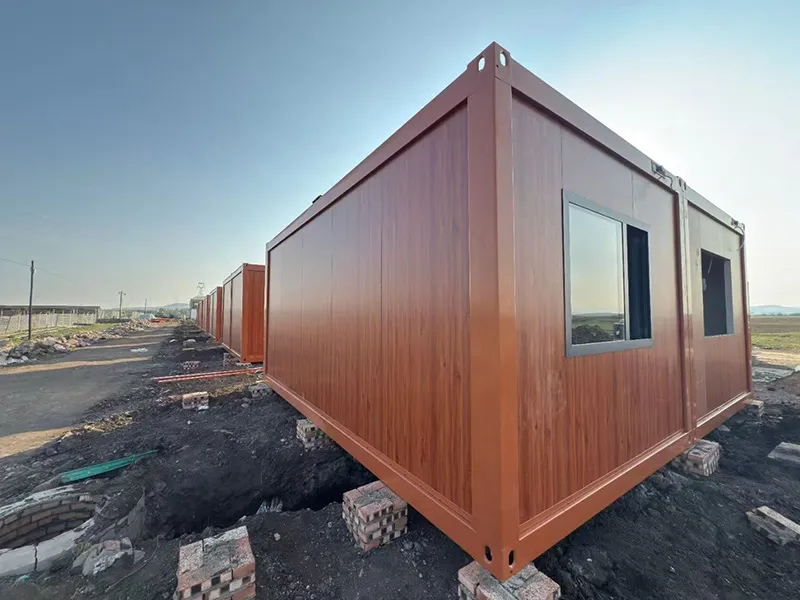
Temporary vs Long-Term Modular Buildings
Compare duration, comfort, maintenance, approvals, relocation and future use before system selection.
Related solution paths
Move to the page that matches the primary project question
Stay here for public-service continuity, emergency response and mixed humanitarian facilities. Move when clinical or formal education functions dominate.
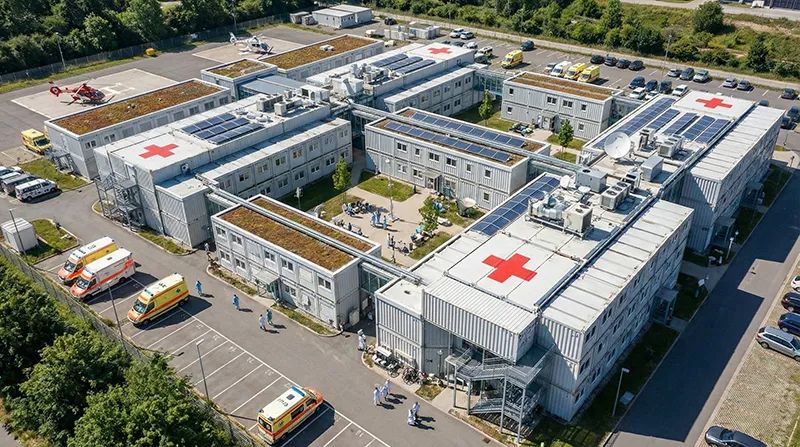
Medical & Healthcare Modular Solutions
Use the medical path when clinical rooms, patient flow and healthcare support dominate the brief.

Education & Training Facility Solutions
Use the education path when formal classrooms, training and learning functions dominate the brief.
Solutions hub
All KUBO Solution Paths
Return to the Solutions hub when the programme spans several functions or the right specialised path is not yet clear.