


Summary
A remote wind, solar, battery energy storage, substation, or transmission project does not automatically need a dedicated camp. Hotels, rental housing, and managed commuting can remain workable when suitable accommodation is genuinely available, journeys are safe and predictable, shifts allow adequate recovery, and temporary workforce demand does not place unreasonable pressure on nearby communities.
A renewable energy workforce camp becomes relevant when accommodation starts affecting project operations rather than merely worker convenience. Long or unreliable journeys, fatigue exposure, seasonal access problems, limited local rooms, fragmented crews, irregular shifts, delayed emergency support, and overlapping contractor workforces can turn accommodation into a material project-control issue.
Under those conditions, dedicated accommodation can provide a controlled interface between rest, transport, meals, hygiene, laundry, medical support, security, workforce accountability, and shift dispatch. These functions matter because a worker’s ability to arrive safely, rested, equipped, and on time is influenced by what happens between shifts as well as during working hours.
The central conclusion is conditional: use local accommodation where it remains sufficient, safe, stable, and socially manageable. Consider a dedicated workforce camp when reliance on hotels, rentals, or commuting transfers excessive risk into fatigue, transport reliability, workforce welfare, local housing availability, emergency response, or continuity of site operations.
When Does Workforce Accommodation Become a Project-Control Decision?
Renewable energy workforce accommodation planning is often treated as an administrative task during early development: identify nearby towns, obtain indicative room availability, and estimate how far workers will travel. That approach may be adequate for a small survey team or a short enabling package. It becomes less reliable when the project moves into construction and several contractor workforces must operate to different shifts, work fronts, and access requirements.
The accommodation question is therefore broader than whether beds can be booked. A project team must ask whether the proposed arrangement can support the workforce under the conditions in which the project will actually be built.
The IFC and EBRD guidance on workers’ accommodation begins with an assessment of local workforce availability, existing housing capacity, project requirements, and potential effects on surrounding communities. It distinguishes between using accommodation within existing communities and developing new facilities rather than presenting employer-provided housing as the automatic choice.
A dedicated camp becomes more credible when weaknesses in the local model repeatedly affect several areas at once:
- workers cannot travel safely within the available rest period;
- room availability changes during tourism, harvest, or other regional demand peaks;
- crews are spread across properties that cannot support coordinated transport;
- essential services are unavailable at the times required by the shifts;
- temporary demand competes with residents for already constrained housing;
- severe weather or poor roads make daily travel unpredictable;
- supervisors cannot reliably account for workers during disruptions or emergencies.
These are causal warning signs, not universal thresholds. Their significance changes with workforce size, construction duration, project location, road conditions, roster design, contractor composition, climate, and the resilience of nearby communities.
Why Can Distance from Town Become More Important Than Room Availability?
A hotel may appear close to a project on a map while still being operationally unsuitable. The actual journey may include unsealed roads, mountain routes, flood-prone crossings, construction traffic, heavy-haul movements, wildlife exposure, poor lighting, or sections that deteriorate during seasonal weather.
Travel time should consequently be examined as a variable range rather than a single average. A journey completed comfortably in daylight and dry weather may take longer at night, after rain, during snow, under dust conditions, or when road controls are introduced for equipment deliveries.
This variability matters because construction activities are interconnected. Late arrival of one crew can affect inductions, permits, pre-start meetings, lifting operations, electrical isolation, testing, inspections, and handovers between contractors. Accommodation may appear separate from the construction program, yet unreliable journeys can create daily variability at the workface.
Fatigue Changes the Accommodation Question
Long travel is not only a productivity concern. It can become a fatigue and road-safety exposure, particularly when workers travel after extended, night, or irregular shifts.
The UK Health and Safety Executive guidance on work-related journeys advises employers to assess the danger of workers driving home when excessively tired after long or irregular hours and to consider overnight stays as a possible control. WorkSafe Queensland’s fatigue guidance explains that fatigue reduces the ability to work safely and effectively and can be especially consequential when driving, performing concentration-intensive tasks, or working at night.
A camp does not eliminate fatigue. Poorly designed rosters, excessive hours, heat exposure, high workload, disturbed sleep, and inadequate recovery can remain significant risks even when workers live beside the project. Dedicated accommodation addresses only part of the problem by reducing dependence on long, uncontrolled journeys before and after shifts.
Warning Signs That Accommodation Is Affecting the Project
| Warning sign | Operational consequence | Why dedicated accommodation may become relevant |
|---|---|---|
| Long or highly variable journeys | Fatigue exposure, late starts, inconsistent arrivals, and difficult journey planning | Housing closer to the work area can reduce and standardize routine travel |
| Workers are dispersed across several towns or properties | Complicated crew assembly, transport, briefings, and accountability | A common base can simplify dispatch and welfare oversight |
| Roads are vulnerable to weather or seasonal deterioration | Delayed shifts, unsafe journeys, stranded workers, and disrupted support services | A suitably located camp may reduce repeated travel across the affected route |
| Early starts, late finishes, or rotating shifts are required | Journeys occur during fatigue-sensitive periods and recovery time is reduced | Near-site accommodation can support controlled transport and longer rest opportunities |
| Local room inventory changes unpredictably | Relocations, booking gaps, increased administration, and divided crews | Dedicated capacity can provide greater continuity through changing project phases |
| Specialist contractors arrive simultaneously | Sudden accommodation shortages and fragmented mobilization | Temporary camp capacity can absorb overlapping non-local workforces |
| Medical and emergency services are distant | Longer response pathways and greater dependence on reliable communications and transport | A managed camp can provide a defined first-response and evacuation interface |
| Meals, laundry, sanitation, and rest provision vary by property | Inconsistent welfare conditions and difficulty maintaining project-wide standards | Centralized services can make provision more consistent and auditable |
No single row proves that a camp is necessary. The case becomes stronger when several warning signs interact and cannot be reduced through reasonable transport, roster, or local-accommodation controls.
When Can Hotels, Rentals, and Commuting Remain Workable?
Local accommodation can be the more proportionate solution when the project is accessible and the surrounding market has genuine spare capacity. It may also create economic opportunities for local hotels, landlords, restaurants, transport operators, and service businesses.
The key word is genuine. A room identified during an early survey is not necessarily available throughout the project. Local inventory may already serve residents, seasonal workers, tourists, public-sector employees, maintenance contractors, or other infrastructure projects. Availability can also change once several renewable developments enter construction in the same region.
The project should therefore distinguish between visible inventory and dependable project capacity. Dependable capacity must remain suitable for the required stay length, shift pattern, vehicle parking, worker turnover, transport arrangements, and welfare expectations.
| Local accommodation and commuting remain more workable when… | Conditions increasingly support a dedicated workforce camp when… |
|---|---|
| Suitable rooms are consistently available near the principal work area | Rooms are limited, seasonal, widely dispersed, or subject to repeated booking changes |
| Journeys are safe and predictable under expected operating conditions | Travel is long, variable, weather-sensitive, or dependent on vulnerable routes |
| Shift times allow sufficient rest and controlled transport | Early, late, night, rotating, or extended shifts make commuting difficult to manage |
| Temporary demand is modest relative to local housing capacity | The workforce could absorb a material share of the available local market |
| Local services can support food, laundry, medical, and welfare needs | Essential services are limited, distant, or unavailable during required hours |
| One practical transport plan can serve the workforce | Different crews, properties, shifts, and work fronts require multiple transport systems |
| Use of local accommodation will not materially disadvantage residents | Housing pressure, displacement concerns, or community opposition is already evident |
| Emergency communication and accountability remain manageable | Fragmented lodging makes muster, welfare checks, and incident coordination difficult |
| Workforce demand is short, stable, and easy to forecast | Crew numbers rise and fall through overlapping construction packages |
This comparison is intended to expose the operating conditions behind the decision, not to replace project-specific feasibility work. A broader examination of accommodation models is available in the guide to local construction, rental housing, and prefabricated buildings for remote projects.
Why Are Renewable Energy Construction Projects Particularly Exposed?
Renewable energy projects frequently combine rural or sparsely populated locations with temporary demand for specialized labor. The accommodation pressure does not arise from renewable technology itself; it arises from how the construction workforce, work fronts, access routes, and local settlement pattern interact.
Wind and Utility-Scale Solar Projects
A wind project may cover a broad area containing access roads, foundations, crane pads, collection systems, substations, operations buildings, and turbine work fronts. The nearest town to the project boundary may still be far from the active construction area.
Utility-scale solar projects are often more geographically concentrated, but labor demand can rise quickly when piling, tracker assembly, module installation, cabling, inverter work, grid connection, testing, and quality inspections overlap. Early civil teams may fit within local lodging while later workforce peaks exceed it.
For both project types, the relevant issue is not whether local accommodation can support the first crews. It is whether the same arrangement remains stable when several packages operate concurrently.
BESS and Substation Projects
Battery energy storage and substation sites may occupy a smaller footprint, yet they can depend on non-local electrical, controls, protection, commissioning, fire-safety, and specialist installation personnel.
The accommodation case may therefore be driven by skill scarcity and work timing rather than total headcount. A relatively small group can still require dependable near-site accommodation when work involves critical testing windows, irregular hours, controlled energization activities, or limited replacement labor.
Transmission Projects
Transmission construction can create a different problem because work fronts move along a corridor. As towers, conductors, access tracks, substations, and related works progress, the practical distance between one town and the active work area changes.
A single hotel base may be workable during one phase and inefficient during another. Depending on alignment, road access, available settlements, and environmental constraints, a project may examine phased, relocated, or multiple accommodation bases. That does not mean every transmission project requires several camps; it means the accommodation geography should follow the construction geography rather than only the project’s registered address.
Why Does Workforce Ramp-Up Expose Problems That Early Surveys Miss?
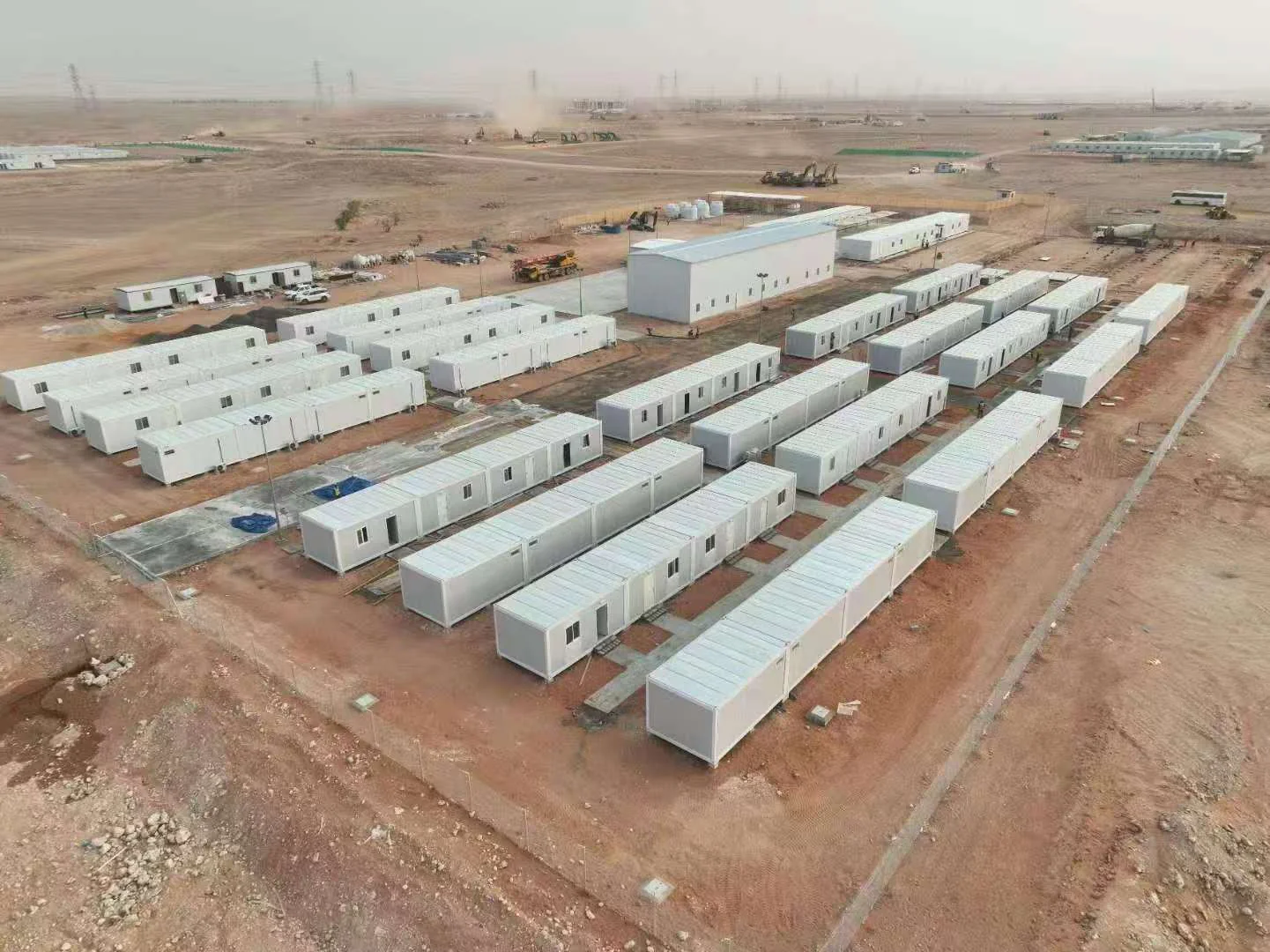
Accommodation arrangements often look workable during survey, environmental, fencing, site-establishment, or initial civil works because the early workforce is comparatively small. Those teams may occupy available rooms without noticeably affecting the local market.
The situation can change when civil, mechanical, electrical, logistics, transmission, testing, and commissioning contractors overlap. Workers may arrive under different employment arrangements, rosters, languages, supervision structures, transport requirements, and welfare expectations.
The World Bank ESS2 guidance on labor and working conditions emphasizes the need to define how different categories of project workers will be managed, clarify responsibilities among parties, and establish appropriate policies where accommodation services are provided. It also addresses coordination where workers employed by multiple parties operate in one location.
For accommodation, unclear responsibility can create practical gaps:
- one party books rooms but another controls transport;
- meal provision does not match contractor shift times;
- no single team maintains an accurate resident list;
- camp rules conflict with workforce-management procedures;
- medical escalation and after-hours transport responsibilities are unclear;
- accommodation defects are reported but not assigned to an accountable owner.
A dedicated camp can centralize these interfaces, but only when governance is defined. Concentrating workers without clarifying responsibilities simply concentrates the consequences of weak management.
Why Is Workforce Welfare Part of Operational Readiness?
Worker accommodation must support recovery from work. A bed alone does not provide adequate rest if the room is excessively hot, noisy, overcrowded, insecure, poorly maintained, or disconnected from suitable sanitation and meals.
The ILO Workers’ Housing Recommendation establishes broad principles concerning adequate and decent worker housing. The IFC and EBRD guidance expands the practical accommodation considerations to include potable water, sanitary facilities, cooking and dining, laundry, nutrition and food safety, medical facilities, recreation, communications, security, grievance procedures, and community relations.
These provisions have operational implications:
- inadequate sleep conditions can compound fatigue;
- unsuitable meal timing can interfere with shift readiness;
- weak laundry arrangements can delay clean workwear;
- poor communications can intensify isolation for workers away from home;
- unreliable sanitation or water can affect both welfare and workforce availability;
- absent grievance mechanisms can allow recurring accommodation problems to escalate;
- inconsistent standards between contractor groups can create dissatisfaction and conflict.
The required provision will vary by jurisdiction, climate, duration, workforce profile, cultural needs, and access to external services. Detailed implementation belongs within project planning rather than this early-stage problem-recognition discussion. Teams moving into that stage can consult the Renewable Energy Project Camp Planning Guide.
Why a Camp Must Be Treated as an Operating Interface
| Interface | What needs to function | Consequence when accommodation is treated only as sleeping space |
|---|---|---|
| Shift dispatch and transport | Resident lists, departure times, routes, vehicles, and delayed-return procedures | Missing workers, late starts, uncontrolled journeys, and inconsistent briefings |
| Meals and hydration | Shift-compatible service, dietary provision, field meals, and food safety | Reduced readiness, avoidable downtime, and welfare complaints |
| Laundry and hygiene | Workwear turnaround, room cleaning, sanitation, and waste management | Hygiene problems and unavailable protective workwear |
| Medical support | First aid, escalation protocols, communications, and evacuation transport | Delayed response and uncertainty over responsibility |
| Security and accountability | Access control, visitor procedures, muster records, and welfare checks | Poor emergency accountability and difficult incident management |
| Rest and recreation | Sleep conditions, thermal comfort, noise control, connectivity, and suitable recreation | Fatigue, isolation, dissatisfaction, and reduced retention |
| Utilities | Reliable water, power, wastewater, communications, and appropriate backup | A utility failure can affect a large share of the workforce simultaneously |
| Community interface | Transport behavior, local service use, conduct expectations, and complaint handling | Housing pressure, traffic impacts, conflict, and loss of community confidence |
This is why a renewable energy workforce camp can become a project-control decision. It connects several systems that otherwise remain divided among construction, logistics, human resources, HSE, security, contractors, and community-relations teams.
How Do Security and Emergency Response Affect the Need for a Camp?
Remote work can make rescue, medical attendance, supervision, and emergency assistance harder to obtain. WorkSafe Queensland’s guidance on remote and isolated work identifies separation from assistance as a defining concern and notes that workers may have difficulty obtaining rescue, medical help, emergency services, information, or supervision.
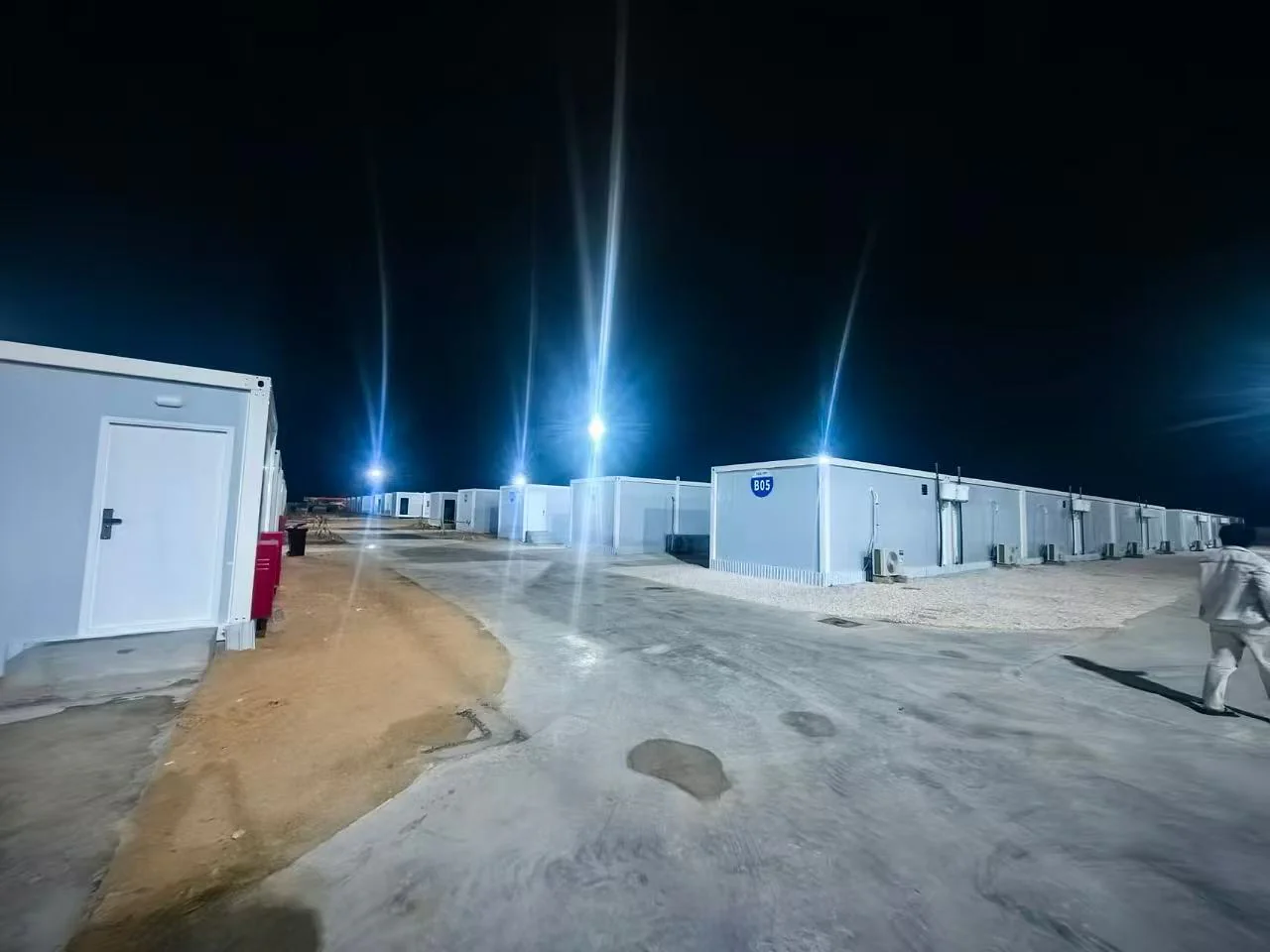
A managed camp can establish a known resident population, communications coverage, first-response capability, transport arrangements, security controls, and muster procedures. It may also reduce the number of workers driving independently after shifts.
Those benefits depend on appropriate siting. A poorly located camp can introduce its own risks, including flood exposure, wildfire access constraints, severe-weather vulnerability, nearby industrial hazards, or dependence on a single road. Security controls must also remain proportionate and respect workers’ rights, including reasonable freedom of movement.
The question is therefore not whether a camp is inherently safer than a hotel. It is whether the complete accommodation arrangement provides a more dependable emergency and accountability system under the project’s actual conditions.
What Do EnergyConnect and EnergyCo Show About the Decision?
Official Australian transmission-project examples illustrate how dedicated accommodation can respond to specific operating conditions without establishing a universal rule.
Transgrid reported that the New South Wales section of EnergyConnect used six self-contained accommodation facilities along a long transmission alignment. Its official EnergyConnect camp update connected the camp approach with keeping workers closer to construction areas, reducing travel time, supporting worker health and wellbeing, and avoiding unnecessary demand for housing needed by local families.
The planning implication is not that another transmission project should copy the number or form of those camps. The relevant lesson is that accommodation locations can be aligned with moving work fronts and regional housing constraints.
EnergyCo’s Central-West Orana REZ workforce accommodation fact sheet describes temporary facilities for the transmission workforce, shuttle transport where practical, and limited short-term use of hotels, motels, and rentals while the facilities are established. EnergyCo explains that dedicated temporary accommodation can reduce demand on existing housing where surrounding communities are already experiencing pressure.
This demonstrates a phased and hybrid principle: local accommodation can support a limited early workforce while dedicated capacity serves later construction demand. Whether that principle applies elsewhere depends on local inventory, workforce timing, community conditions, transport risk, and project geography.
What Can a Dedicated Camp Not Solve?
A camp cannot correct unsafe rosters, excessive work hours, poor journey management, unrealistic productivity assumptions, weak contractor coordination, or inadequate emergency planning. It cannot make an unsuitable site acceptable, and it does not remove the need to assess land, traffic, water, wastewater, waste, environmental, and community impacts.
Dedicated accommodation also does not guarantee good welfare. Poor maintenance, unreliable meals, inadequate sanitation, excessive noise, weak communications, restrictive management, or ineffective grievance handling can make a camp less suitable than local accommodation.
Nor should a camp be used to isolate the workforce unnecessarily from nearby communities. Accommodation management must balance site security and community protection with reasonable worker autonomy.
The accurate conclusion is therefore not that a camp automatically creates control. A properly located and competently managed camp can create a more controllable operating environment when local alternatives expose the project to excessive variability.
Conclusion: Recognize the Accommodation Problem Before It Becomes a Site Problem
Remote renewable energy projects require dedicated workforce accommodation only when project-specific conditions justify it. Hotels, rentals, and commuting remain credible where accommodation is stable, journeys are safe, shifts allow sufficient recovery, essential services are available, and temporary demand can be absorbed without unreasonable community effects.
A renewable energy workforce camp becomes a serious project option when distance, road conditions, workforce peaks, fragmented lodging, shift patterns, welfare needs, emergency response, or local housing pressure begin to undermine safe and dependable operations.
The early-stage objective is not to select buildings, calculate detailed capacity, or prepare an RFQ. It is to identify whether accommodation has become an operational interface requiring coordinated control.
Project owners, EPC contractors, and workforce planners investigating that possibility can explore Renewable Energy Project Camp Solutions and review how camp-style workforce housing solutions may support projects where local options are no longer sufficient.
Frequently Asked Questions
1. Does every remote renewable energy project need a workforce camp?
No. A camp may be unnecessary when sufficient local labor and suitable accommodation are available, journeys remain safe and predictable, shifts allow adequate recovery, and the workforce will not place unreasonable pressure on local housing or services. Remoteness should trigger investigation, not an automatic camp decision.
2. What is the clearest sign that a renewable energy workforce camp may be necessary?
The clearest sign is that accommodation is repeatedly affecting several operational areas at once. Examples include fatigue-sensitive travel, unreliable arrivals, room shortages, fragmented transport, inconsistent welfare services, community housing concerns, and poor emergency accountability. The combined effect matters more than any single indicator.
3. How far is too far for workers to commute to a renewable energy construction site?
There is no universal distance. A shorter journey on an unsafe or weather-sensitive road may present more risk than a longer journey on a controlled route. Shift length, road condition, traffic, vehicle type, night driving, weather, rest opportunity, and travel-time variability should all be considered.
4. Can hotels be used while a dedicated camp is being established?
Yes. Hotels, motels, and rentals can support early or limited crews while dedicated accommodation is prepared, provided availability, transport, welfare, and community impacts remain manageable. Successful accommodation of a small enabling team should not be treated as proof that the same model can support peak construction.
5. Can one project use commuting, hotels, and a camp at the same time?
Yes. Local employees may commute from home, selected specialists may use hotels, and larger non-local contractor crews may stay in dedicated accommodation. A hybrid approach still requires consistent welfare expectations, coordinated transport, emergency procedures, and clearly assigned management responsibilities.
6. Why can fragmented hotel accommodation become difficult to manage?
Dispersed properties complicate shift dispatch, vehicle routing, resident accountability, emergency communication, welfare checks, and consistent accommodation standards. These issues may remain manageable for a small team but become increasingly difficult as workforce numbers, shifts, contractors, and work fronts expand.
7. Do compact BESS and substation projects ever need dedicated workforce accommodation?
They can. Physical site area does not determine the answer. A compact project may still be remote, dependent on scarce specialists, or subject to irregular testing and commissioning windows. Accommodation needs are influenced by workforce skills, access, shift requirements, local room capacity, and emergency support.
8. How can a dedicated camp reduce pressure on nearby communities?
Dedicated temporary capacity can reduce project demand for hotels and rentals needed by residents, tourists, essential workers, and local businesses. It does not remove every community impact, because the camp still creates traffic, utility, waste, land-use, and service requirements that must be assessed and managed.
9. Does locating workers near the site remove fatigue risk?
No. It may reduce commuting time and post-shift driving, but fatigue can still result from roster design, excessive hours, night work, heat, workload, disturbed sleep, or inadequate recovery. Near-site accommodation should complement, not replace, broader fatigue and journey-management controls.
10. What welfare services affect whether a camp can support the project?
Relevant services include suitable sleeping conditions, potable water, sanitation, meals, laundry, thermal comfort, communications, recreation, first aid, medical escalation, transport, security, and grievance arrangements. The required provision depends on project duration, climate, jurisdiction, workforce composition, cultural needs, and access to external services.
11. What should a project team do when accommodation warning signs appear?
The team should validate local housing availability, map realistic journeys under expected conditions, review workforce ramp-up and shift patterns, identify community and welfare constraints, and assign responsibility for the complete accommodation interface. This establishes whether local controls remain credible or dedicated accommodation requires further feasibility assessment.
Sources and References
- IFC and EBRD Guidance on Workers’ Accommodation: Processes and Standards
- World Bank ESS2 Guidance Note on Labor and Working Conditions
- International Labour Organization Workers’ Housing Recommendation, 1961
- UK Health and Safety Executive Guidance on Planning and Managing Work Journeys
- WorkSafe Queensland Guidance on Fatigue
- WorkSafe Queensland Guidance on Remote and Isolated Work
- EnergyCo Central-West Orana REZ Workforce Accommodation Fact Sheet
- Transgrid EnergyConnect Workforce Accommodation Update