


Summary
When a mining project, infrastructure contract, oil and gas development, renewable-energy site or other remote construction project begins mobilizing workers, accommodation can quickly become a schedule-critical issue.
Project teams usually face three broad choices:
- rent existing houses, apartments, hotels or lodges near the project;
- construct accommodation locally using conventional on-site building methods;
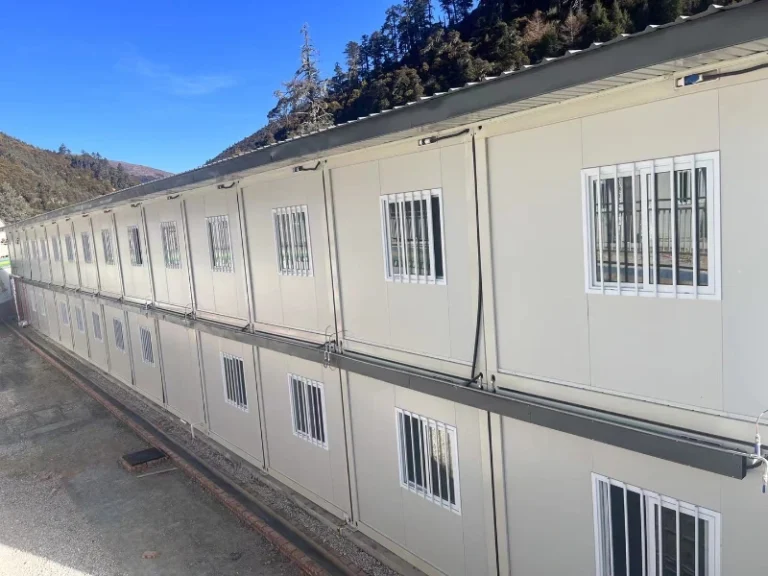
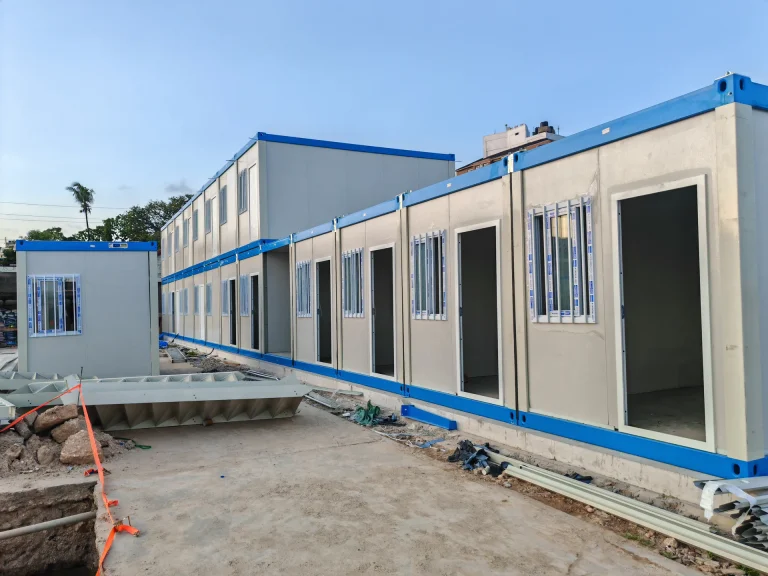
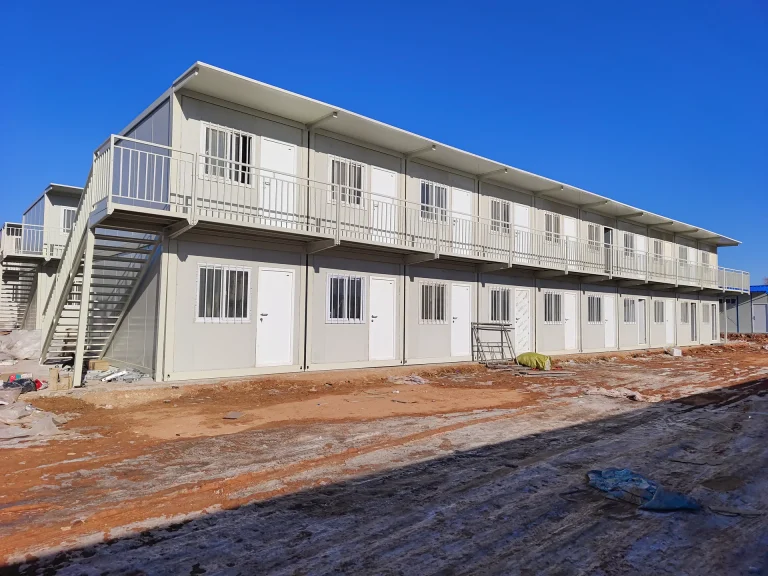
- procure prefabricated or modular buildings and assemble them at or near the project site.
The fastest option is not always the one with the shortest construction period.
Rental housing may allow the first workers to move in almost immediately, but it can become difficult to scale when hundreds of beds are required. Local construction may provide a durable long-term asset, yet the project can become dependent on local contractors, material availability, weather, utilities and sequential site work. Prefabricated buildings can compress the construction schedule by moving much of the building process into a factory while site preparation happens in parallel, but logistics, approvals, foundations and late design changes still matter.
For remote projects, the more useful question is therefore not:
“Which building method is fastest?”
It is:
“Which accommodation strategy can make the required workforce operational, at the required scale, with the lowest schedule risk?”
That distinction changes the entire comparison.
Why Workforce Accommodation Becomes a Project Schedule Problem
A remote project does not need accommodation in the abstract. It needs a specific number of people to be able to arrive, sleep, eat, shower, work, recover and return to the job safely.

That means the real project milestone is rarely “building completion.”
The operational milestone is closer to:
The date on which the required workforce can actually mobilize and remain on site without accommodation becoming a constraint on construction activity.
Consider a project that needs 300 workers.
A local rental strategy may secure 40 rooms in two weeks. Technically, it has delivered accommodation faster than a prefabricated camp that takes several months to design, manufacture, ship and install.
But if the project needs 300 beds before the main construction package can begin, those 40 rooms do not solve the schedule problem.
The relevant comparison is therefore not the time required to obtain the first bed. It is the time required to achieve the required accommodation capacity.
This is why accommodation planning for remote mining projects, construction camps and infrastructure projects must be connected to the workforce mobilization curve.
A project may require:
- 20 surveyors and supervisors during early works;
- 80 civil workers during site preparation;
- 250 workers during structural construction;
- 600 workers during peak installation;
- 100 permanent personnel during operations.
The fastest accommodation strategy for the first 20 people may be completely unsuitable for the following 600.
In practice, many successful remote-project accommodation strategies are therefore phased or hybrid rather than based on a single solution.
The Three Main Options
At a high level, most remote-project accommodation decisions fall into three categories.
| Accommodation Strategy | Potential Speed Advantage | Main Schedule Risk | Best Suited To |
|---|---|---|---|
| Rental housing | Existing accommodation can be occupied immediately | Insufficient capacity, fragmented locations, lease availability | Small teams or projects near established towns |
| Local construction | Uses local contractors and can create a permanent asset | Sequential construction, labor, materials, weather and utilities | Long-term projects with strong local construction capacity |
| Prefabricated buildings | Factory production and site preparation can occur simultaneously | Design decisions, manufacturing, transport and site readiness | Medium to large remote projects requiring scalable accommodation |
This table is useful as a starting point, but it hides an important reality.
“Rental,” “local construction” and “prefabricated buildings” are not three standardized products.
A project renting 15 apartments in a regional city is very different from a project attempting to rent 500 beds across multiple towns.
A locally constructed 20-room lodge is different from building a complete 1,000-person workforce village with kitchens, laundries, offices and utilities.
A prefabricated project may use:
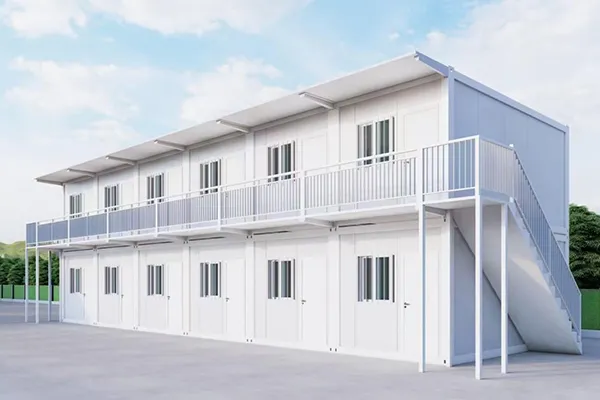
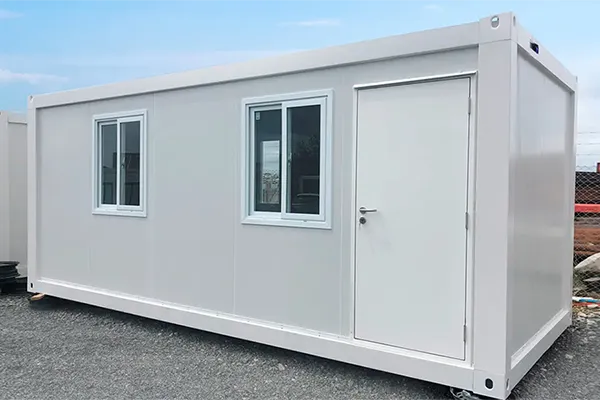
- flat-pack container buildings;
- detachable modular units;
- panelized buildings;
- volumetric modules;
- hybrid systems combining prefabricated structures with locally completed civil works.
The speed advantage therefore depends heavily on project scale and delivery conditions.
Option 1: Rental Housing — Usually the Fastest Way to Start, but Not Always the Fastest Way to Scale
Existing rental housing has an obvious advantage: the buildings already exist.
There is no factory production period, no structural installation and usually no need to construct bedrooms from the ground up.
For an early project team, this may be the fastest possible solution.
A project manager can potentially lease:
- houses;
- apartments;
- serviced apartments;
- hotels;
- motels;
- lodges;
- existing workforce accommodation.
The first employees can sometimes be accommodated within days or weeks.
For a 10-person exploration team or a 30-person engineering team working near an established city, building a dedicated camp may make little economic or operational sense.
The problem appears when workforce demand begins to exceed the capacity of the local housing market.
Rental Speed Is Controlled by Available Inventory
Suppose a project requires 200 beds.
A nearby town technically has more than 200 rental rooms, but those rooms are:
- owned by different landlords;
- available at different dates;
- distributed across a large geographic area;
- built to different standards;
- subject to different lease conditions.
The project does not have one 200-bed accommodation facility.
It has a portfolio-management problem.
The project team may need to manage:
- dozens of rental contracts;
- security deposits;
- furniture;
- utility accounts;
- cleaning arrangements;
- maintenance responsibility;
- worker transportation;
- check-in and check-out schedules;
- complaints from landlords or neighboring residents.
As the workforce grows, rental housing can become operationally complex even before it becomes physically unavailable.
The Real Constraint May Be the Town, Not the Project
Remote resource and construction projects can create sudden demand in relatively small housing markets.
Australian Bureau of Statistics reporting on regional and remote mining towns has historically documented how demand for workers and accommodation during mining expansion contributed to higher property values and rents in some communities. not only a cost issue.
A project attempting to absorb a large share of available local housing may compete with:
- local residents;
- teachers;
- healthcare workers;
- public-service employees;
- other contractors;
- tourism demand.
Housing therefore becomes part of the project’s community-impact and stakeholder-management problem.
IFC and EBRD guidance on workers’ accommodation treats accommodation as a broader issue involving planning, construction and management rather than simply the provision of beds. rge project, the question should therefore be:
How much local accommodation can the project use without becoming dependent on a housing market it does not control?
Commuting Can Remove Part of the Speed Advantage
A rental property may be ready immediately but located 45, 60 or 90 minutes from the project site.
That introduces another system:
- buses;
- drivers;
- fuel;
- shift schedules;
- road conditions;
- fatigue management;
- emergency transport.
Imagine 300 workers traveling 60 minutes to site and 60 minutes back every day.
The project has not eliminated accommodation infrastructure. It has transferred part of the problem into transport operations.
For some projects, that is acceptable.
For others—particularly construction sites operating long shifts or locations with poor roads—it may reduce productivity and increase operational risk.
When Rental Housing Is Probably the Fastest Option
Rental accommodation is particularly attractive when:
- the project workforce is relatively small;
- the nearby town has genuine surplus accommodation capacity;
- the accommodation period is short;
- workers do not need to live directly beside the project;
- workforce numbers remain relatively stable;
- suitable rooms can be secured under coordinated lease arrangements.
It can also be extremely useful during the first phase of a larger project.
A project may rent 20–50 rooms for:
- survey teams;
- project management;
- engineers;
- early civil contractors;
while a larger dedicated workforce accommodation solution is being prepared.
In this situation, rental housing acts as a mobilization bridge rather than the final accommodation strategy.
Option 2: Local Construction — Potentially Durable, but Highly Dependent on Local Capacity
Traditional local construction appears straightforward.
The project:
- acquires or prepares the land;
- completes design and approvals;
- purchases materials;
- mobilizes contractors;
- constructs the buildings on site;
- installs utilities and finishes;
- commissions the accommodation.
For a permanent mining operation, industrial site or long-duration infrastructure project, this can create a valuable long-term asset.
Local construction may also support:
- local employment;
- local contractors;
- regional supply chains;
- permanent community development.
However, when speed is the primary objective, conventional construction has one structural limitation:
many activities occur sequentially.
Foundations may need to be completed before walls.
Walls may need to be completed before roofing.
The building must usually be weather-tight before large parts of the interior work can proceed efficiently.
Mechanical and electrical works follow the physical progress of the structure.
Finishing follows earlier trades.
Inspections occur at different stages.
Every dependency adds another opportunity for delay.
Remote Construction Often Has a Capacity Problem Before It Has a Building Problem
A project may have land and approved drawings but still struggle to build quickly because the location lacks:
- enough skilled construction workers;
- concrete capacity;
- reliable material suppliers;
- specialist subcontractors;
- cranes or lifting equipment;
- accommodation for the construction workers themselves.
This last point is particularly important.
A project may decide to construct accommodation locally because it wants to avoid importing buildings.
But who houses the workers who are constructing the accommodation?
For truly remote greenfield projects, local construction can create a circular problem:
The project needs workers to build the accommodation, but it needs accommodation before it can mobilize enough workers to build.
This is one reason early camps and temporary workforce facilities often become important even when the final project intends to develop permanent buildings.
Materials May Be “Local” Only in the Final Few Kilometers
The term local construction can also be misleading.
A project may use a contractor from the region, while the contractor still needs to transport:
- structural steel;
- cement;
- insulation;
- roofing;
- doors;
- windows;
- plumbing materials;
- electrical equipment;
- bathroom fixtures;
from another city, port or country.
If the site is remote, the project may still have a long supply chain.
The difference is that instead of shipping a coordinated building system, the project is shipping hundreds or thousands of separate construction inputs.
That can work well when a mature local construction ecosystem already exists.
It becomes more difficult when procurement is fragmented.
Weather Affects a Larger Share of the Construction Process
Conventional construction exposes a significant proportion of work to site conditions.
Depending on the location, delays may come from:
- heavy rain;
- extreme heat;
- snow;
- high winds;
- flooding;
- cyclone seasons;
- inaccessible roads.
This does not mean prefabricated projects are immune to weather. Foundations, unloading and installation still occur on site.
The difference is that a larger proportion of the building can be produced away from the final location.
Utilities Can Become the Hidden Critical Path
One of the most common mistakes in accommodation planning is to focus on bedrooms while underestimating infrastructure.
A finished building is not an operational camp without:
- electricity;
- potable water;
- sewage treatment or sewer connections;
- drainage;
- roads;
- communications;
- fire protection.
Governments themselves recognize enabling infrastructure as a constraint on housing delivery. Australia’s Housing Support Program, for example, explicitly includes funding intended to remove housing-development barriers through enabling infrastructure and community amenities. principle is even more important on remote project sites.
A contractor may be capable of building 100 rooms quickly, but if the sewage treatment system is six months behind schedule, those rooms still cannot be occupied.
Therefore, any serious comparison between local construction and prefabricated buildings must separate:
building delivery time
from
site operational-readiness time.
When Local Construction Can Be the Fastest Option
Traditional site construction can still be extremely competitive when:
- the project is close to an established construction market;
- qualified contractors are immediately available;
- materials are locally stocked;
- the project requires relatively few buildings;
- the design is highly customized;
- transportation of large modules is difficult;
- the facilities will remain permanently after the project;
- local authorities strongly favor conventional construction.
A 20-room building constructed beside a developed town may be faster locally than designing an international modular procurement package.
The answer changes when the requirement becomes a 500-person camp in a location with limited labor and materials.
Option 3: Prefabricated Buildings — Faster When the Project Can Parallelize Work
The strongest schedule advantage of prefabricated construction comes from one idea:
parallel work.
While the site team completes:
- earthworks;
- roads;
- drainage;
- foundations;
- utility infrastructure;
the building manufacturer can simultaneously produce:
- structural frames;
- wall systems;
- roofs;
- doors;
- windows;
- bathrooms;
- electrical components;
- internal finishes.
With conventional construction, much of this work would happen after the site and foundation stages.
This overlap can compress the overall project schedule.
McKinsey has reported that modular construction can reduce project schedules by approximately 20% to 50% under suitable conditions. The same analysis also warns that the benefits are not automatic: design, manufacturing, logistics and assembly all have to be managed correctly. lar Building Institute similarly describes typical schedule reductions of around 30% to 50%, largely because factory construction can proceed simultaneously with site and foundation work. It also notes that a large proportion of modular building construction can take place in a controlled factory environment. te workforce accommodation, this changes the project sequence substantially.
Conventional Sequence
Design
↓
Site preparation
↓
Foundations
↓
Structural construction
↓
Envelope
↓
MEP installation
↓
Interior finishing
↓
Commissioning
Prefabricated Sequence
Factory:
Design → Manufacturing → QA/QC → Packing → Transport
At the same time on site:
Site preparation → Foundations → Utilities
↓
Installation → Connections → Commissioning
The calendar advantage comes from overlapping the two streams.
But Prefabricated Does Not Mean Instant
One of the most damaging assumptions in remote-project planning is:
“Because the buildings are prefabricated, we can order them late.”
That is not how serious modular projects work.
The building still needs:
- confirmed capacity;
- room configuration;
- structural design;
- climatic criteria;
- electrical requirements;
- plumbing strategy;
- fire requirements;
- foundation information;
- transportation planning.
A late decision can simply move the delay from the construction site to the design and procurement stage.
Remote Logistics Can Still Control the Schedule
The 2025 completion of new modular accommodation at Byron Heights in the Falkland Islands provides a useful real-world reminder.
The UK’s Defence Infrastructure Organisation described the location as one of the most remote sites on its estate. The overall improvement programme involved accommodation at several remote locations and had to manage extreme weather and a logistics chain of almost 8,000 miles. on is not that modular construction is slow.
The lesson is that:
prefabrication reduces one category of uncertainty—on-site building activity—but it does not remove geography.
A remote project may still need to manage:
- international shipping;
- port handling;
- customs clearance;
- inland transport;
- road restrictions;
- bridge limits;
- crane availability;
- unloading;
- temporary storage;
- weather windows.
A factory may complete a building package on time while the project site remains inaccessible.
The fastest remote-project accommodation system is therefore not simply the fastest system to manufacture.
It is the one whose:
design + production + transport + installation + commissioning
can be controlled as a complete delivery chain.
Not All Prefabricated Buildings Have the Same Logistics Profile
The phrase prefabricated building covers multiple systems.
This matters because transportation can determine the viability of a remote project.
Volumetric Modules
Three-dimensional modules may arrive substantially completed.
Advantages include:
- less finishing work on site;
- rapid final installation;
- high factory completion.
The disadvantage is transport efficiency.
A completed volumetric room contains a large amount of enclosed air during shipping.
For projects with difficult or expensive logistics, this can become significant.
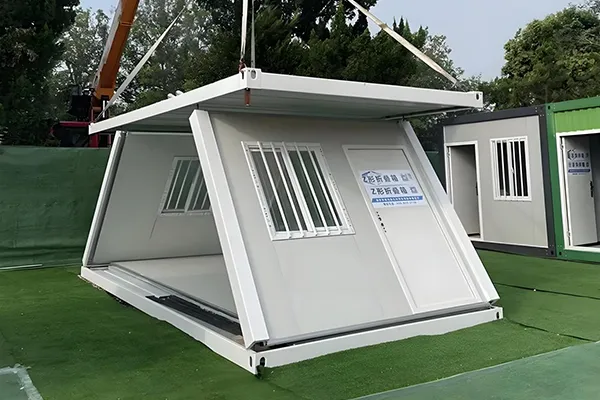
Flat-Pack and Detachable Modular Buildings
Flat-pack or detachable systems transport structural components in a compact form and assemble the building at the destination.
The trade-off is different:
- greater transport density;
- less shipping volume per building;
- more assembly activity on site.
For remote mining camps and large workforce accommodation projects, this trade-off can be attractive when shipping efficiency is important.
Panelized Buildings
Panels and structural components are manufactured off site and assembled locally.
This can provide:
- high transport efficiency;
- architectural flexibility;
but requires more construction labor at the destination.
There is therefore no universal answer to the question:
“Which prefabricated building is fastest?”
The correct system depends on where the project bottleneck exists.
If site labor is extremely scarce, a highly completed module may be attractive.
If international transportation is the dominant constraint, a more compact flat-pack system may be preferable.
The Most Important Comparison: Time to One Room vs. Time to Full Capacity
Consider a simplified 400-person remote project.
Rental Strategy
Week 2:
- 50 rooms secured.
Week 6:
- 120 rooms secured.
Week 12:
- 180 rooms secured.
The project technically obtained accommodation quickly.
It still cannot house the 400-person peak workforce.
Local Construction Strategy
Month 1:
- site mobilization and procurement.
Month 2–4:
- foundations and structural work.
Month 5–8:
- building completion and fit-out.
The full facility becomes available relatively late, although it may create a permanent asset.
Prefabricated Strategy
Month 1:
- design confirmation and site preparation.
Month 2–4:
- factory production occurs while foundations and utilities are constructed.
Month 4–5:
- shipping and delivery.
Month 5–6:
- installation and commissioning.
The exact schedule will vary enormously by country, building system and project scope.
The strategic point is different:
remote accommodation should be evaluated against the workforce ramp-up date, not against the date when the first room becomes available.
Which Option Is Faster at Different Project Scales?

| Project Scenario | Likely Fastest Initial Solution | Likely Best Scalable Solution |
|---|---|---|
| 10–30-person survey or exploration team | Rental housing | Rental housing |
| 50–100-person short construction project near a town | Rental or existing lodge | Rental or small modular facility |
| 200–500-person remote mining construction project | Rental for early team | Prefabricated workforce camp |
| 500–1,500-person remote EPC project | Temporary early accommodation | Phased prefabricated camp |
| Long-term operation near an established regional centre | Rental during mobilization | Permanent local or modular construction |
| Project with highly unstable workforce numbers | Rental plus temporary modular | Expandable phased modular system |
This is why arguing that one method is always faster is usually not useful.
Project conditions change the answer.
Eight Questions That Determine Which Option Will Actually Be Faster
1. How Many Beds Are Required?
A local market that can easily absorb 30 workers may be unable to absorb 300.
The larger the workforce, the more important capacity certainty becomes.
Ask:
- How many people arrive in Month 1?
- What is the peak workforce?
- How long will the peak last?
- How quickly does the workforce decline?
The peak number alone is not enough.
A 600-person project that reaches peak workforce in Month 24 is a different accommodation problem from a project that needs 600 beds in six months.
2. How Remote Is the Site?
“Remote” should not be treated as a binary category.
A project may be:
- 20 minutes from a town;
- three hours from a regional city;
- accessible only through an unsealed road;
- accessible through a port;
- accessible seasonally;
- located on an island;
- located in desert, alpine or tropical conditions.
Distance changes the relative importance of:
- transport;
- local labor;
- construction materials;
- worker commuting.
The more remote the project, the less useful it becomes to compare accommodation methods using urban construction assumptions.
3. Is Suitable Rental Housing Actually Available?
Do not ask only:
“Are there houses in the area?”
Ask:
- How many suitable units are available now?
- How many can realistically be leased at the same time?
- How far are they from the site?
- Can leases be secured for the full project period?
- What happens when another project enters the market?
Available housing today is not necessarily guaranteed housing during peak construction.
4. Does the Region Have Real Construction Capacity?
A local contractor may exist without having the capacity to deliver a large remote camp.
Review:
- workforce availability;
- current project backlog;
- material lead times;
- subcontractor capacity;
- equipment availability;
- quality-control systems.
The critical question is not whether local construction is possible.
Most things are technically possible.
The question is whether it can be executed within the project schedule with an acceptable degree of certainty.
5. Can Building Production and Site Preparation Run in Parallel?
This is where prefabricated systems can create their greatest advantage.
However, parallelization only works if the project makes decisions early enough.
Late changes to:
- room layout;
- bathroom locations;
- electrical systems;
- window positions;
- HVAC;
- fire strategy;
can disrupt manufacturing.
A prefabricated project therefore often requires earlier design discipline than conventional construction.
The project exchanges some late-stage flexibility for greater schedule control.
6. What Is the Logistics Constraint?
Before selecting a building system, investigate:
- shipping routes;
- container availability;
- road dimensions;
- bridge limitations;
- crane access;
- unloading space;
- seasonal weather;
- customs procedures.
A building system optimized for factory efficiency may not be optimized for the project’s actual transport route.
For remote international projects, transport density can become part of building design.
7. How Long Will the Project Need the Accommodation?
A two-year construction camp and a 30-year mining operation have different asset strategies.
For temporary projects, the value of a building may include:
- dismantling;
- relocation;
- reuse;
- resale.
For permanent operations, lifecycle considerations may favor a more permanent configuration.
Modular Building Institute guidance distinguishes between permanent modular construction and relocatable buildings, with relocatable systems specifically designed for reuse or repurposing. materially change the economic comparison.
8. What Other Facilities Are Required?
A project rarely needs only bedrooms.
A functioning remote workforce camp may also require:
- dining facilities;
- kitchens;
- laundries;
- offices;
- meeting rooms;
- recreation facilities;
- clinics;
- security buildings;
- storage;
- maintenance facilities.
The schedule should therefore evaluate the complete operational camp, not only accommodation blocks.
A project with 500 finished bedrooms and no operational kitchen does not have a 500-person camp.
The Fastest Solution Is Often a Hybrid Strategy
For many remote projects, the most effective answer is not to choose one method exclusively.
A phased strategy might look like this:
Phase 1: Early Mobilization
Use:
- hotels;
- rental houses;
- existing local accommodation.
Purpose:
- accommodate management;
- survey teams;
- engineers;
- early contractors.
Phase 2: Main Construction Workforce
Deploy:
- prefabricated accommodation;
- dining;
- laundry;
- offices;
- supporting camp facilities.
Purpose:
- create predictable capacity before peak workforce mobilization.
Phase 3: Permanent Operations
Retain, relocate or replace facilities depending on the project’s long-term needs.
The project may:
- retain part of the modular camp;
- relocate temporary buildings;
- construct permanent housing;
- integrate selected buildings into the operational site.
This approach aligns accommodation investment with the project lifecycle.
It also avoids two common mistakes:
Mistake 1: building a complete permanent village before knowing the final operating workforce.
Mistake 2: assuming short-term rentals can support unlimited workforce growth.
A Better Way to Compare Speed: The Accommodation Critical Path
A useful accommodation schedule should include at least six stages.
1. Decision Time
How long does the project take to define:
- workforce capacity;
- accommodation standards;
- site;
- budget;
- procurement strategy?
Many accommodation delays occur before any supplier begins work.
2. Design and Approval Time
This includes:
- architectural layout;
- structural engineering;
- authority approvals;
- client review;
- technical coordination.
3. Procurement or Production Time
For rental housing:
- locating and contracting available units.
For local construction:
- contractors, labor and materials.
For prefabricated construction:
- factory capacity and manufacturing.
4. Site Infrastructure Time
Including:
- earthworks;
- foundations;
- roads;
- water;
- power;
- sewage.
5. Delivery and Installation Time
Including:
- transport;
- unloading;
- assembly;
- building connections.
6. Commissioning Time
Including:
- inspections;
- testing;
- furnishing;
- operational handover.
The fastest accommodation method is the strategy with the shortest and most reliable end-to-end critical path.
That is a very different calculation from comparing building erection times.
Why Schedule Certainty May Matter More Than Theoretical Maximum Speed
Imagine two options.
Option A
Expected completion:
6 months.
Possible range:
5–12 months.
Option B
Expected completion:
7 months.
Possible range:
6–8 months.
Which is faster?
On paper, Option A.
For a project with a fixed workforce mobilization deadline, Option B may be more valuable.
Large projects frequently pay a high price for uncertainty.
If workers arrive before accommodation is ready, the project may face:
- emergency hotel costs;
- delayed mobilization;
- transport problems;
- reduced productivity;
- rescheduling of subcontractors.
Therefore, project teams should evaluate:
- average schedule;
- worst-case schedule;
- dependencies;
- ability to recover from delay.
Prefabricated construction is often attractive not simply because factories can manufacture quickly, but because a larger proportion of building activity can be controlled in a repeatable production environment.
That advantage is strongest when the project itself is also well managed.
McKinsey’s analysis is useful here: modular construction has demonstrated meaningful schedule compression, but capturing those benefits requires coordinated design, manufacturing, logistics and assembly. words:
prefabrication cannot compensate for poor project planning.
So, Which Is Actually Faster?
The practical answer is:
Rental housing is usually fastest for immediate, small-scale mobilization.
Use it when:
- the workforce is small;
- suitable inventory exists;
- the project is close to established communities;
- the requirement is temporary.
Its speed advantage declines as workforce scale increases.
Local construction can be fastest when strong local construction capacity already exists.
Use it when:
- contractors and materials are readily available;
- the project is not severely remote;
- the facilities are long-term;
- local construction fits the project schedule.
Its greatest risks are sequential construction, site conditions and dependence on local resources.
Prefabricated buildings are often the fastest scalable option for medium and large remote projects.
They become especially attractive when:
- hundreds of beds are required;
- the project site has limited local construction labor;
- workforce mobilization has a fixed deadline;
- factory production can overlap with site preparation;
- the buildings may need to be expanded, relocated or reused.
But the project must plan:
- design;
- manufacturing;
- transport;
- foundations;
- utilities;
- installation;
as one integrated delivery system.
Final Comparison
| Question | Rental Housing | Local Construction | Prefabricated Buildings |
|---|---|---|---|
| Fastest for first 20 workers? | Often yes | Usually no | Usually no |
| Easy to scale to hundreds of workers? | Often difficult | Possible but potentially slow | Usually well suited |
| Dependent on local housing supply? | High | Low | Low |
| Dependent on local construction labor? | Low | High | Lower, but installation labor still required |
| Factory/site work can occur simultaneously? | Not applicable | Limited | Yes |
| Weather exposure during building production | None | High | Lower |
| Transport requirement | Worker transport may be significant | Materials transport | Building/module transport |
| Suitable for relocation or reuse | No | Usually limited | Depending on system, yes |
| Best for highly remote projects | Sometimes for early teams | Depends on local capacity | Often strong candidate |
| Main schedule risk | Availability | Site construction | Design, manufacturing and logistics coordination |
The Real Decision Is Not “Prefab or Traditional”
For remote projects, accommodation strategy should begin with a workforce and logistics question, not a construction-method preference.
A project should know:
- how many workers are coming;
- when they are coming;
- how long they will remain;
- where they will work;
- what local housing actually exists;
- what construction resources are available;
- how materials or buildings can reach the site;
- what infrastructure must be completed before occupation.
Only after those questions are answered does it make sense to compare rental housing, conventional local construction and prefabricated buildings.
The fastest solution for a 25-person early works team may be a hotel.
The fastest solution for a 300-person mine construction workforce may be a purpose-built prefabricated camp.
The most appropriate solution for a 20-year operating workforce may eventually be permanent housing.
A well-planned project may use all three.
The objective is not to choose the building method that sounds fastest.
It is to ensure that accommodation never becomes the reason the workforce cannot mobilize.
Planning Accommodation for a Remote Project?
KUBO works with contractors, developers and project teams planning modular and prefabricated facilities for remote construction, mining, infrastructure and workforce accommodation projects.
Early-stage planning can include:
- workforce accommodation capacity;
- phased camp expansion;
- accommodation block configuration;
- offices and supporting facilities;
- prefabricated building system selection;
- shipping and transport considerations;
- site installation planning.
For projects where the required workforce, location and schedule are already known, the most useful starting point is usually not a generic unit price. It is a review of how many buildings are required, when they must become operational and how they can realistically reach the project site.
Website: www.kuboprefab.com
Email: [email protected]
WhatsApp: +86 13823499770
Frequently Asked Questions
Is prefabricated construction always faster than local construction?
No.
Prefabricated construction can significantly compress schedules because factory production can occur while site preparation and foundation work are underway. However, poorly defined designs, manufacturing delays, transport constraints or an unprepared site can remove part of this advantage.
A small building near an established city may sometimes be completed faster by a capable local contractor.
The larger and more remote the project becomes, the more important parallel production and reduced dependence on local labor may become.
Is renting local housing cheaper and faster than building a workforce camp?
For a small workforce, often yes.
For a large workforce, the answer depends on:
- available housing inventory;
- rental prices;
- project duration;
- commuting distance;
- transportation cost;
- workforce turnover.
Rental housing can become difficult to coordinate when workers are distributed across many properties. Large projects can also place significant pressure on small local housing markets.
How many workers justify building a dedicated remote workforce camp?
There is no universal threshold.
A 50-person project in a location with no housing may need a dedicated camp.
A 200-person project beside a city with surplus accommodation may not.
The decision should consider:
- workforce size;
- duration;
- remoteness;
- available housing;
- commuting time;
- project schedule.
How much faster are modular buildings than conventional construction?
Industry analyses commonly report significant schedule compression under appropriate conditions.
McKinsey has cited approximately 20% to 50% schedule acceleration for modular construction, while the Modular Building Institute describes potential completion approximately 30% to 50% sooner because factory work can overlap with site preparation. gures should not be treated as a guaranteed project schedule.
Actual results depend on design, factory capacity, logistics, approvals, foundations and site infrastructure.
What usually delays a prefabricated workforce camp?
Common causes include:
- late confirmation of workforce capacity;
- repeated layout changes;
- incomplete structural or climatic requirements;
- delayed foundations;
- utility infrastructure not being ready;
- shipping disruption;
- customs clearance;
- difficult inland transportation;
- insufficient crane or installation planning.
A modular building can arrive on time and still remain unusable if the site is not ready.
Should remote projects use flat-pack or fully assembled modular buildings?
It depends on the logistics strategy.
Fully assembled volumetric modules can reduce work at the destination but occupy more transport volume.
Flat-pack and detachable systems can improve shipping density but require more assembly at the project site.
Projects should compare:
- shipping distance;
- container and freight costs;
- road access;
- local assembly labor;
- installation schedule.
The fastest factory system is not necessarily the fastest total project system.
Can a project combine rental housing and prefabricated accommodation?
Yes, and this is often one of the most practical strategies.
Rental housing can support:
- project management;
- engineers;
- survey teams;
- early civil works.
A prefabricated camp can then be delivered before the main construction workforce arrives.
This allows early mobilization without assuming the local rental market can support the entire project.
What should be planned before requesting a quotation for a remote workforce camp?
At minimum, define:
- project location;
- required workforce capacity;
- peak workforce date;
- expected project duration;
- room occupancy standard;
- required supporting facilities;
- climate conditions;
- available site utilities;
- transport access.
Without this information, comparing prices from different suppliers can be misleading because suppliers may be pricing completely different scopes.
Sources and References
- McKinsey & Company — “Modular Construction: From Projects to Products.” The analysis discusses modular schedule compression of approximately 20%–50% and the importance of integrating design, manufacturing, logistics and assembly. ular Building Institute — “What Is Modular Construction?”** Provides industry guidance on parallel factory and site construction, potential schedule reduction and the distinction between permanent and relocatable modular buildings. Defence Infrastructure Organisation — “DIO Completes Major Improvement Project in the Falkland Islands.”** A real remote-infrastructure case involving modular accommodation, extreme weather and an almost 8,000-mile logistics chain. ernational Finance Corporation and European Bank for Reconstruction and Development — “Workers’ Accommodation: Processes and Standards.”** Guidance addressing the planning, construction and management of employer-provided workforce accommodation. tralian Bureau of Statistics — Australian Social Trends reporting on regional and remote mining towns.** Historical reporting discusses how workforce and accommodation demand associated with mining activity affected property values and rents in some regional communities. tralian Government Department of Infrastructure — Housing Support Program.** The program recognizes enabling infrastructure as an important constraint affecting housing delivery.