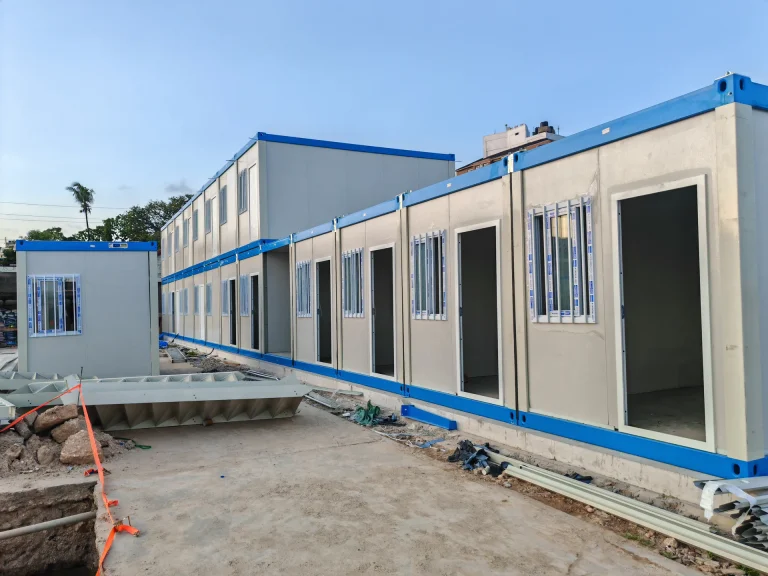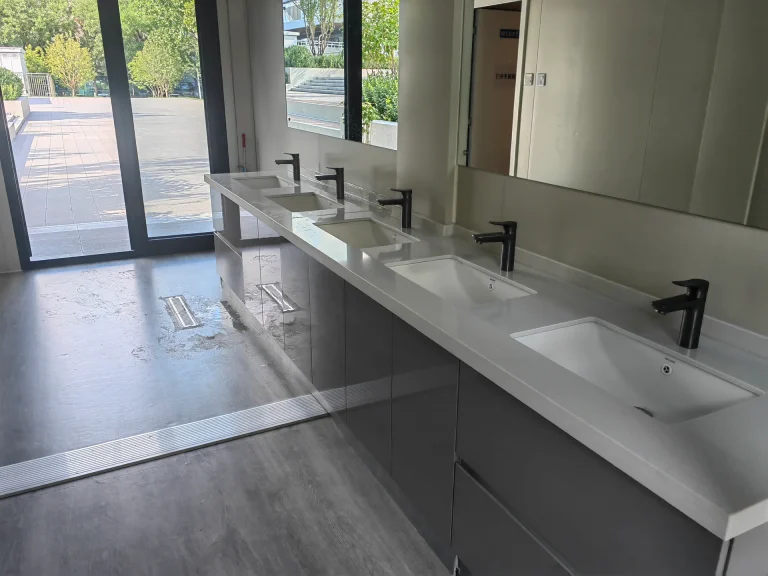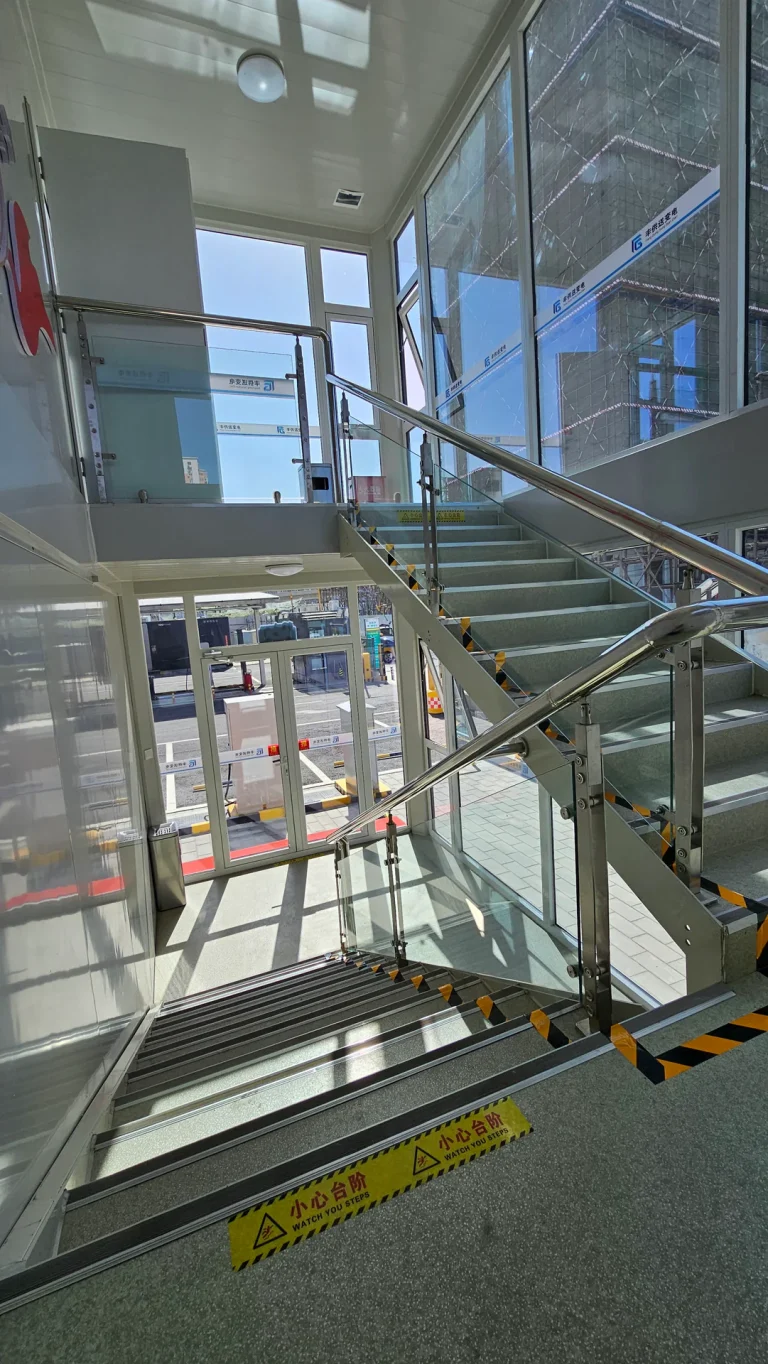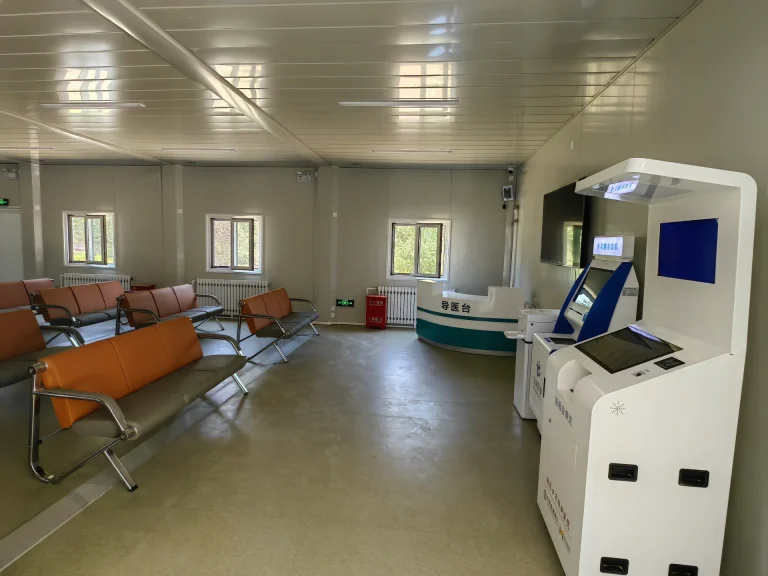



Summary
A relocatable renewable energy camp should not reach the end of construction with its next use still undefined. As a solar, wind, BESS, transmission, substation or other renewable-energy project moves from peak construction into commissioning and steady operations, the workforce profile changes sharply. Accommodation blocks, offices, dining facilities, sanitation buildings and other temporary facilities that were justified during construction can become oversized for the operational phase.
The best response is rarely “remove everything” or “keep everything.” A stronger lifecycle strategy separates the camp into assets that should remain for operations and maintenance, assets that can move directly to another project, assets worth storing for later deployment, components requiring repair or replacement, and buildings that should be retired.
This approach is consistent with the underlying concept of relocatable modular construction. The Modular Building Institute describes relocatable buildings as modular buildings designed to be reused and transported to different sites, and it also notes that modular buildings can be disassembled, relocated or refurbished for a new use. That supports reuse as a legitimate project strategy, but it does not imply unlimited relocation cycles or automatic suitability for every future site.
A practical post-construction reuse plan therefore needs to answer seven questions:
- What facilities are genuinely required for long-term O&M?
- Which modules have a confirmed future use?
- What is the verified condition of each reusable asset?
- How will dismantling preserve structural and component value?
- How will components be identified, packed, transported or stored?
- What needs to be repaired or replaced before another deployment?
- Does the next site accept the recovered buildings from structural, climatic, utility, safety and regulatory perspectives?
The main conclusion is straightforward: camp relocation should be managed as an asset-transition project, not as a demolition exercise. For owners and EPC contractors with multiple renewable-energy projects, the value of modular construction is not simply that a building can theoretically move. The value comes from knowing which assets remain serviceable, where they are, what condition they are in, what their next deployment requires, and whether reuse actually reduces overall project risk.
Why Post-Construction Camp Planning Needs a Lifecycle Decision
During peak renewable-energy construction, temporary facilities are sized around construction activities rather than long-term operations.
A project can require civil crews, electrical contractors, installation teams, commissioning personnel, supervisors, quality personnel, HSE teams, logistics staff, vendor representatives and project-management personnel. Support facilities can include accommodation, project offices, meeting rooms, dining, kitchens, laundries, sanitation buildings, storage, workshops and welfare spaces.
After construction, many of those functions reduce or disappear.
The resulting operational facility requirement depends on the project rather than on a standard percentage of the original camp. A remote project with difficult access can justify retaining selected accommodation, offices, welfare rooms, storage or contractor facilities. A site close to established population centers can require much less resident accommodation. Some projects can support routine operational personnel from outside the site while keeping only security, office, storage and welfare functions inside the project boundary.
That distinction matters because simply retaining a smaller number of accommodation modules does not necessarily create a rational O&M base.
Water supply, wastewater arrangements, electrical distribution, kitchens, laundry facilities, communications and access infrastructure were potentially configured for a construction population much larger than the steady-state workforce. If the building count is reduced without reviewing those systems, the owner can inherit an unnecessarily complicated facility.
The renewable energy project camp lifecycle framework should therefore be used as a transition question: which temporary construction facilities should disappear, which functions still support operations, and which physical assets have value elsewhere?
Five Possible Destinations for Every Camp Asset
Before dismantling begins, each major modular asset should have an intended disposition.
That disposition can change after inspection, but the project should avoid entering demobilization with hundreds of modules categorized only as “to be removed.”
A useful five-way classification is:
Retain.
The asset remains on the renewable-energy site as part of the O&M or long-term support base.
Relocate directly.
The asset has a confirmed next project and moves from the completed project toward that deployment without prolonged storage.
Store for future deployment.
The module remains potentially useful, but the next project or installation date is not yet sufficiently defined.
Repair or reconfigure.
The underlying asset remains worth recovering, but condition or layout prevents immediate redeployment.
Retire or recover selected components.
Further relocation is no longer justified, although individual components can still have legitimate reuse or recycling value where appropriate.
Post-Construction Strategy Decision Table
| Decision factor | Retain for O&M | Relocate directly | Store for later reuse | Repair/reconfigure | Retire |
| Primary objective | Support long-term site operations | Transfer usable capacity into another project | Preserve future optionality | Restore or adapt asset value | End service life responsibly |
| Schedule certainty | Usually strongest once O&M scope is confirmed | Depends on both sites being synchronized | Lower because future deployment remains uncertain | Depends on repair scope and parts | Usually easier to define |
| Scalability | Retained footprint can be deliberately reduced | Can support phased mobilization at next project | Inventory can be released later in batches | Can restore only selected modules | Does not provide future capacity |
| Local-labor dependency | Limited after transition | Dismantling and reinstallation require local execution capability | Labor required at both storage and later redeployment stages | Can require workshop and site labor | Depends on disposal/recovery route |
| Logistics exposure | Low after final positioning | Highest during immediate transfer | Multiple handling stages can increase exposure | Additional moves can be required | Limited to removal/recovery logistics |
| Site-readiness dependency | Existing location already known | High: receiving site must be ready | Deferred until next deployment | Depends on repair location | Low |
| Utility interface | Existing systems need rationalization | Entire utility interface must be established again | Disconnected during storage | Can be updated during repair | Permanently disconnected |
| Approval interface | Existing use changes still need project review | Destination requirements need fresh review | Future jurisdiction may be unknown | Configuration changes can affect review | Closeout obligations remain |
| Maintenance need | Continued operational maintenance | Inspection before and after transfer | Preservation and periodic condition checks | Repair plus recommissioning | No future building maintenance |
| Relocation complexity | Low | High | High over the full lifecycle | Medium to high | None after retirement |
| Main interface risk | Keeping unnecessary facilities | Sending assets to an unready site | Deterioration and lost traceability | Repair scope grows after dismantling | Discarding recoverable value |
| Total project risk | Low when correctly right-sized | Manageable with coordinated engineering and logistics | Can become high if storage is uncontrolled | Depends on condition certainty | Low future operational risk |
The critical lesson is that reuse is not automatically the lowest-risk choice.
A structurally sound building with complete records, a known destination and an installation team expecting it is a useful project asset. The same building, dismantled into unidentified parts and left exposed in storage for an uncertain period, can become a source of schedule and quality risk.
Start by Defining the O&M Core

Before deciding how many modules remain, define what the operational organization actually needs.
Separate Routine Demand From Peak Maintenance Demand
Routine O&M demand and occasional contractor demand should not be treated as identical.
The permanent operational team can require only limited offices, sanitation, storage, changing facilities and meeting space. Periodic maintenance, major repair campaigns, inspections or specialist interventions can create temporary peaks.
If the retained O&M base is designed only around the largest conceivable maintenance event, the owner can carry unnecessary buildings for most of the year. If it is designed only around the smallest routine crew, future contractor campaigns can require new temporary facilities.
A more useful planning model separates:
- daily resident or site-based staff;
- regular visiting contractors;
- occasional specialist teams;
- maintenance shutdown or campaign peaks;
- security personnel;
- emergency occupancy assumptions.
The facility plan can then determine what should remain permanently and what can be remobilized when needed.
Review Functions, Not Just Bed Numbers
Post-construction planning often starts with accommodation quantity, but the operational base is broader than sleeping capacity.
Questions should include:
- Is a permanent project office required?
- Is there secure spare-parts storage?
- Are changing and shower facilities needed?
- Will visiting contractors require induction or meeting space?
- Does the project need an on-site workshop or maintenance room?
- Will any accommodation remain because of remoteness or access limitations?
- Which sanitation facilities must stay?
- Are kitchen and dining facilities still justified?
- What emergency-support functions are required by the project plan?
This can produce a retained O&M configuration very different from the construction camp.
Rationalize Utilities at the Same Time
Removing accommodation while leaving the construction utility layout substantially unchanged can create its own inefficiencies.
The transition review should consider:
- electrical distribution;
- standby power where applicable;
- potable and service water;
- wastewater;
- drainage;
- hot-water systems;
- communications;
- fire-related infrastructure;
- external lighting;
- access and security.
The purpose is not necessarily to replace every oversized system. It is to determine whether the retained layout remains technically and operationally sensible after the construction population has disappeared.
Build the Asset Register Before Dismantling
A relocatable camp becomes difficult to manage when the physical assets and their records separate.
Asset management provides a useful conceptual framework here. ISO 55000:2024 describes asset management as a systematic approach through which organizations manage assets across their life cycles and seek to realize value while aligning asset-management objectives with organizational objectives. Its overview also links asset management with effective asset use, risk management and lifecycle thinking.
For a camp owner, that does not mean ISO 55000 prescribes a specific container-camp register. It does mean that treating reusable modular buildings as managed lifecycle assets is more rigorous than treating them simply as leftover construction materials.
What the Register Should Capture
A useful project-level register can include:
- unique asset ID;
- modular system type;
- dimensions;
- room or facility function;
- original project;
- installation date;
- available manufacturing or batch identification;
- approved drawings;
- modification history;
- significant repair history;
- current location;
- condition classification;
- latest inspection date;
- photographs;
- known missing components;
- repair requirements;
- replacement-component requirements;
- packing unit or transport reference;
- planned disposition;
- future project destination where known.
The precise database format can differ among owners.
The important point is that logistics, procurement, engineering and project teams should all be able to answer the same basic questions:
What do we own? Where is it? What condition is it in? What is it configured to do? What must happen before it can be used again?
Physical Identification Must Match the Digital Record
A database does not create traceability if modules and dismantled components cannot be matched back to it.
Asset identification should therefore survive:
- dismantling;
- lifting;
- cleaning;
- transport;
- storage;
- refurbishment;
- reinstallation.
For componentized systems, identification can extend below module level.
A building set can distinguish structural frames, roof elements, floor components, wall panels, doors, windows, service components, fastener kits, stairs and external accessories.
The numbering system does not need to be elaborate. It needs to remain consistent.
Inspect Before Dismantling Hides the Evidence
Condition inspection should take place while each building is still assembled.
Once wall connections have been separated, utilities disconnected and components stacked, it becomes harder to reconstruct how a defect presented itself during operation.
A leak, for example, is more informative when the inspection team can see its location relative to the roof, wall, window and internal finish than when the affected panel has already been removed.
Structural Frame and Connections
The inspection scope should reflect the specific modular system and manufacturer documentation.
Areas requiring attention can include:
- corner posts;
- primary beams;
- floor framing;
- roof framing;
- bolted connections;
- welded areas where applicable;
- lifting interfaces;
- connection plates;
- anchorage interfaces;
- areas affected by impact or previous repair;
- field-added penetrations or modifications.
Look for evidence such as deformation, corrosion, damaged connection holes, missing hardware or repairs that change the original configuration.
Where structural condition is uncertain, the unit should move into an engineering-review category instead of being assumed suitable for another relocation.
Roof and Building Envelope
Envelope deterioration can substantially change refurbishment scope even when the primary frame remains usable.
Inspect:
- roof panels and joints;
- flashings;
- wall panels;
- external finishes;
- sealants;
- windows;
- doors;
- glazing;
- weather stripping;
- insulation condition where observable;
- service penetrations;
- signs of water ingress;
- internal staining or condensation-related deterioration.
This inspection is especially important when the first site had aggressive dust, coastal exposure, high rainfall, strong solar exposure or large temperature swings.
Those environmental factors do not automatically make reuse unsuitable; they affect what should be checked.
Wet Areas
Ablution buildings, laundries and kitchens typically contain more service interfaces than dry accommodation modules.
Inspection should review relevant:
- sanitary fixtures;
- drainage;
- floor condition;
- wall finishes;
- plumbing connections;
- water-heating equipment;
- signs of leakage;
- moisture damage;
- service penetrations.
A reusable structural module can require extensive interior refurbishment if wet-area deterioration has been ignored.
Mechanical and Electrical Components
The building and its installed equipment should not be treated as one indivisible reuse decision.
Lighting, sockets, distribution equipment, water heaters, air-conditioning equipment, ventilation equipment, sanitary fixtures and other services can have different remaining service lives from the structural shell.
Destination conditions matter as well.
Electrical supply characteristics, climate, equipment efficiency expectations, fire strategy and local requirements can differ from the first project. A structurally reusable module can therefore be redeployed with selected equipment replaced.
Use a Condition Classification That Drives Action
An inspection report that simply lists defects is less useful than a classification connected to the next decision.
A practical project-specific system could use categories such as:
Condition A — Ready for Planned Redeployment
No material defect prevents the proposed next use, subject to routine servicing, destination review and normal reinstallation checks.
Condition B — Repair Before Redeployment
The unit remains suitable for recovery, but defined repairs or component replacements are required.
Condition C — Engineering Review Required
Structural concerns, significant modifications, uncertain condition or configuration changes prevent automatic release.
Condition D — Retire or Recover Components
The module should not proceed as a complete reusable building under the current project assessment.
These are planning categories rather than universal industry grades. The owner can adapt them to its quality and asset-management system.
What matters is the decision logic.
Selective Dismantling Preserves Reuse Value
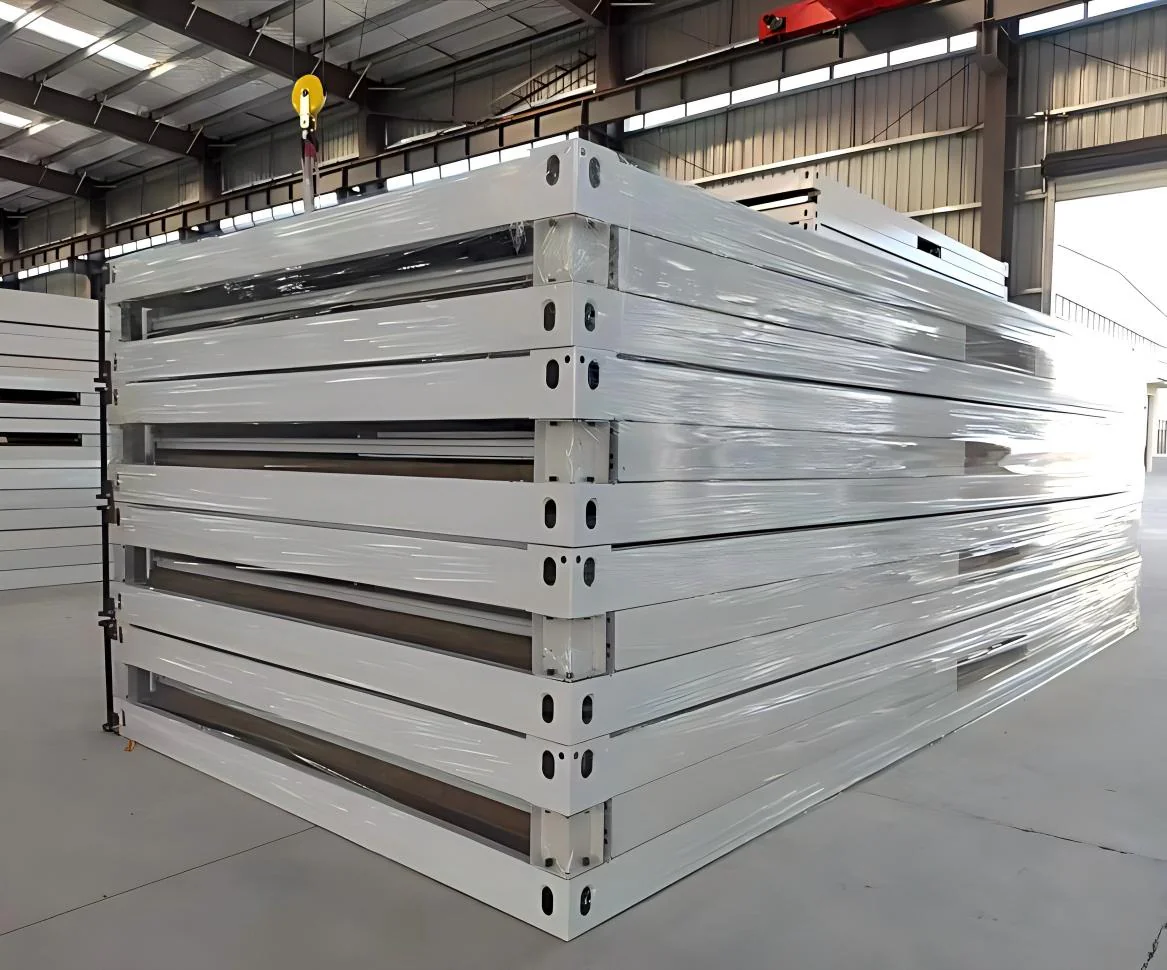
Demolition prioritizes removal.
Reuse-oriented dismantling prioritizes recovery.
That difference should appear in the method statement, labor planning, labeling system, lifting sequence and packing plan.
Isolate and Record Services
Before structural separation, relevant electrical, water, drainage, communications and other service interfaces need controlled isolation under the project’s applicable procedures.
At this stage, the team should record what was disconnected and whether reusable service components remain with the module or are removed into separate kits.
Remove Loose and Vulnerable Contents
Furniture, equipment and loose components should be removed or secured according to the intended transport configuration.
Leaving uncontrolled items inside a module can damage:
- interior panels;
- windows;
- doors;
- fixtures;
- equipment;
- finishes.
Separate External Interfaces
Typical external interfaces can include:
- canopies;
- stairs;
- ramps;
- corridors;
- decks;
- skirting;
- external piping;
- cable routes;
- weather seals;
- connection trims.
If those parts are reusable, they should receive the same identification discipline as the main structure.
Reverse the Assembly Logic
For detachable systems, dismantling should generally follow the approved system procedure rather than improvised cutting or forced separation.
The goal is to preserve:
- connection geometry;
- panel edges;
- fastener locations;
- lifting features;
- protective finishes;
- component compatibility.
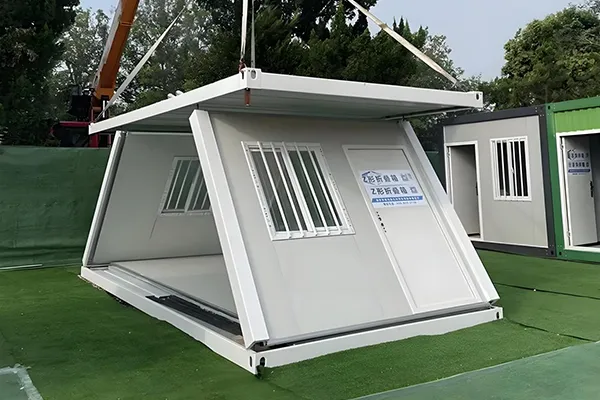
A detachable container house can be particularly relevant where later separation, component access and relocation are important parts of the procurement strategy. The exact suitability still depends on the project requirement, system configuration and anticipated handling cycle.
Do Not Treat Relocation as a Routine Lift
Modular buildings are transported and installed through controlled handling methods, but a building that has been occupied and modified is not necessarily in the same condition as it was when it left the factory.
Before lifting or moving an assembled unit, the project team should confirm the applicable handling configuration for that building system and its current condition.
Relevant planning variables can include:
- permitted lifting points;
- module weight;
- internal equipment;
- center of gravity;
- temporary bracing where specified;
- crane or lifting-equipment selection;
- rigging arrangement;
- ground conditions;
- lifting area;
- nearby obstructions;
- wind and weather conditions;
- transport configuration.
The Modular Building Institute notes that relocatable buildings are intended for transportation between sites and are installed in accordance with manufacturer guidance and applicable local requirements. That supports planned relocation, but it does not remove the need to verify the condition and lifting arrangement for an actual module before another move.
Repacking Is Part of the Relocation Strategy
A reusable camp can lose value between dismantling and reinstallation if its packing is treated as an afterthought.
This is particularly important for componentized systems.
A transport package needs to achieve two different objectives:
physical protection and recoverability at the destination.
Packing solely for maximum density can fail the second objective.
Keep Building Sets Traceable
Where possible, related components should be packed using a logic that allows the receiving team to understand what belongs together.
That can include:
- structural components;
- wall-panel groups;
- roof components;
- doors and windows;
- service components;
- stairs;
- fastener kits;
- sealing materials;
- replacement parts.
A packing list should connect those packages with the asset register.
Plan Loading and Securing for the Actual Transport Chain
For cargo moving in containers or other cargo transport units, the IMO/ILO/UNECE CTU Code is directly relevant to the transport interface. The International Maritime Organization explains that the Code covers loading and securing of cargo in containers and other intermodal transport, taking account of both sea and land transport modes, and that it applies across the intermodal transport chain from packing through receipt and unpacking.
The CTU Code does not provide a project-specific packing design for a particular modular camp. That still has to be developed for the actual component weights, packaging, transport mode and equipment.
Its relevance is that relocation planning should not stop once parts have been dismantled. Loading, securing, transport and unpacking are part of the same logistics chain.
Storage Is an Active Asset-Management Stage
When the next project is not yet ready, storage can be necessary.
It should not be treated as a condition in which nothing happens.
A module can leave the first site in acceptable condition and become unsuitable for immediate deployment after an extended period of poor storage.
Review the Storage Environment
The storage plan should consider project-specific risks such as:
- standing water;
- drainage;
- direct ground contact;
- humidity;
- salt or industrial exposure;
- dust;
- ultraviolet exposure of vulnerable components;
- theft;
- pest entry;
- ventilation;
- stacking;
- access for inspection;
- fire and emergency arrangements for the storage facility.
Different components can require different preservation approaches.
Electrical equipment, seals, panels, structural components and interior finishes should not automatically be stored in the same way.
Create Inspection Points During Storage
A useful preservation plan includes periodic review rather than assuming condition remains unchanged.
The review can check:
- visible corrosion;
- moisture;
- packaging deterioration;
- damaged coverings;
- movement or settlement of stacks;
- missing labels;
- pest activity;
- access restrictions;
- changed future-project requirements.
The owner should also periodically challenge the business case.
If no realistic future deployment exists, indefinite storage can turn an intended reusable asset into inventory with accumulating handling and preservation cost.
Distinguish Strategic Storage From Abandonment
Strategic storage has:
- identified assets;
- known location;
- responsible owner;
- preservation requirements;
- inspection status;
- retrieval logic.
Abandonment has none of those things.
That distinction often determines whether the next project receives a usable asset or a refurbishment problem.
Direct Relocation Can Reduce Interface Loss—If the Next Site Is Ready
When the next project is confirmed, moving modules directly from one project to another can reduce storage and preserve continuity.
Condition reports, packing information, drawings and known modifications can move with the assets.
The trade-off is that the receiving project becomes part of the outgoing project’s schedule.
Before dispatch, the next site should have adequate clarity on:
- camp layout;
- required module mix;
- site access;
- unloading arrangements;
- lifting area;
- foundations or supports;
- drainage;
- electrical connection;
- water supply;
- wastewater;
- communications;
- fire and emergency strategy;
- target occupancy date.
If the site is not ready, immediate transport can create:
- temporary offloading;
- double handling;
- unplanned storage;
- congestion;
- additional damage exposure;
- delayed installation.
Direct relocation works best when asset readiness and site readiness converge at approximately the same time.
Reinstallation Must Be Treated as a New Site Project
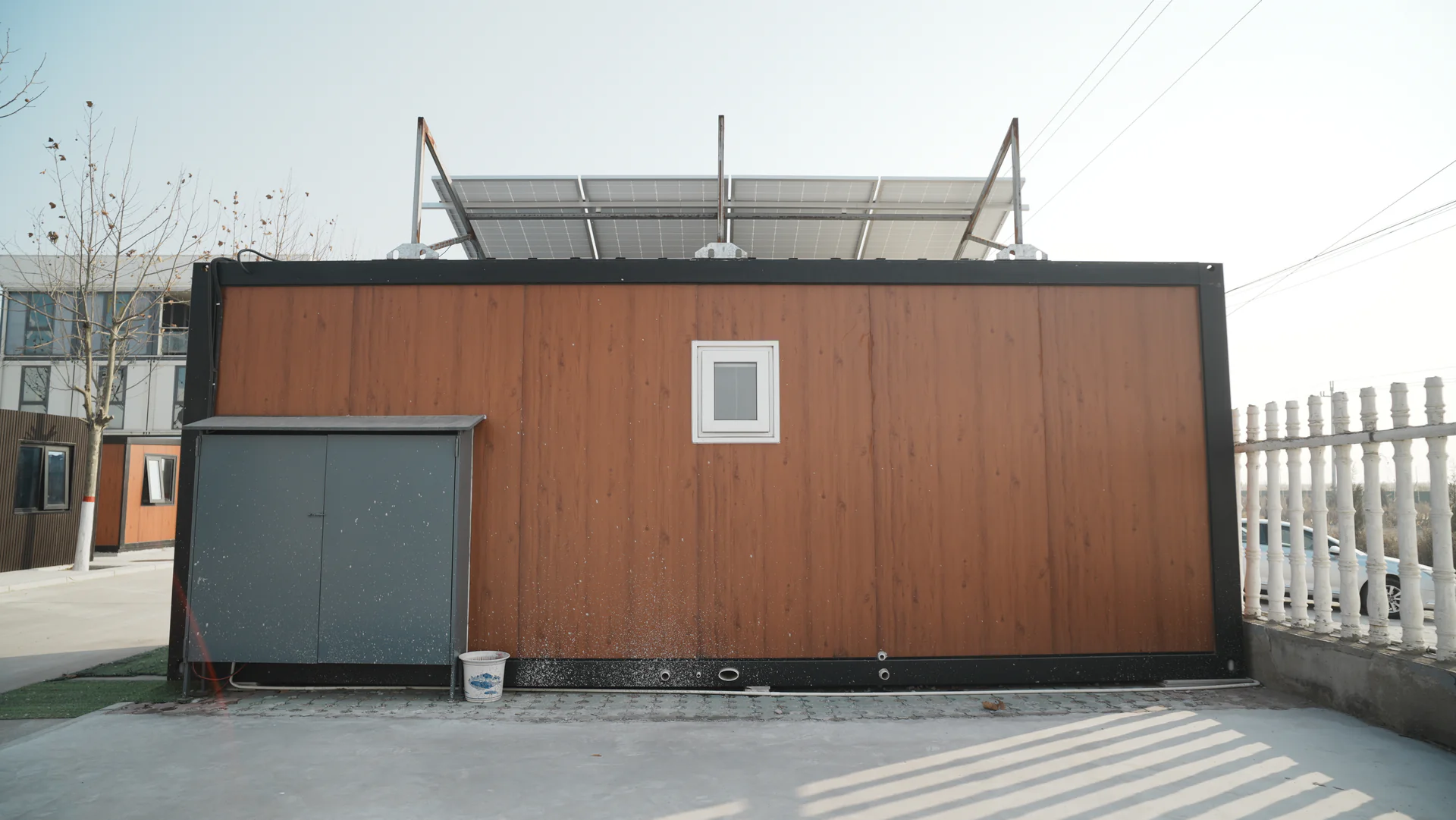
One of the most important boundaries in modular camp reuse is that physical reusability does not equal destination suitability.
A module can be in excellent condition and still require adaptation for its next location.
Recheck Environmental Design Inputs
The next site can differ in:
- wind;
- snow;
- seismic conditions;
- temperature;
- humidity;
- rainfall;
- corrosion exposure;
- altitude;
- soil and foundation conditions.
The appropriate structural and building-envelope requirements should therefore be reviewed for the destination.
Recheck Occupancy and Function
A dormitory reused as a dormitory presents a different change scenario from a former accommodation unit converted into an office, clinic, meeting space or other function.
Occupancy assumptions can affect:
- layouts;
- exits;
- fire strategy;
- ventilation;
- electrical loads;
- sanitation;
- accessibility;
- internal finishes.
The extent of required review depends on the jurisdiction and project.
Recheck Utilities
The next project can have a different:
- voltage or frequency;
- water source;
- wastewater solution;
- hot-water strategy;
- communications network;
- air-conditioning requirement;
- standby-power strategy.
The owner should therefore avoid treating an old utility package as automatically compatible simply because the building shell is reusable.
Recheck Local Requirements
The Modular Building Institute describes relocatable buildings as compliant with applicable codes or regulations and states that installation follows manufacturer guidance and local code requirements. The practical implication is that relocation does not create a universal approval that travels unchanged with the building.
Project teams should identify the requirements applicable to the new destination before committing the reuse strategy.
Component Replacement Is a Normal Part of Modular Reuse
A useful lifecycle model distinguishes between reusing the asset and reusing every individual component.
These are not the same thing.
A structural frame can remain suitable while lower-value or wear-sensitive parts require renewal.
Depending on inspection findings, candidates for replacement can include:
- weather seals;
- selected connection hardware;
- damaged panels;
- door hardware;
- flooring;
- sanitary fixtures;
- lighting equipment;
- electrical accessories;
- HVAC units;
- plumbing components;
- damaged windows;
- localized insulation;
- interior finishes.
This creates a more realistic definition of reuse.
The objective is not to maximize the percentage of original components retained. It is to produce a safe, serviceable building for the next project while preserving economically sensible asset value.
Do Not Promise Unlimited Reuse Cycles
The Modular Building Institute states that relocatable buildings are designed to be reused multiple times and transported to different sites.
That statement should not be converted into a guaranteed number of relocations for a particular camp.
Practical reuse depends on variables such as:
- structural system;
- connection design;
- manufacturing condition;
- original installation;
- maintenance quality;
- environmental exposure;
- occupancy;
- modifications;
- dismantling method;
- lifting;
- inland transport;
- marine transport where applicable;
- storage;
- repair quality;
- component replacement;
- destination requirements.
The correct lifecycle question is therefore not:
“How many times can this building move?”
It is:
“What is the verified condition of this asset now, and what must be done before the proposed next deployment?”
This condition-based approach prevents a marketing concept—relocatability—from replacing engineering judgment.
Compare Recovered Capacity With the Next Project’s Actual Need
Another common error is to design the next camp around the number of modules technically owned.
Suppose an owner has 120 modules remaining from a previous project.
That number alone does not establish 120 usable modules for the next camp.
After assessment, the inventory could consist of:
- modules immediately suitable for the proposed reuse;
- modules requiring minor repairs;
- modules needing significant refurbishment;
- modules configured for the wrong function;
- modules awaiting engineering review;
- modules that should be retired.
The next project’s design should therefore use verified serviceable capacity, not nominal inventory.
Configuration matters as much as quantity.
A portfolio containing 80 sleeping modules does not solve a requirement for offices, dining, sanitary space and specialist facilities. Likewise, an inventory containing many office modules does not automatically satisfy a large workforce-accommodation requirement.
A useful planning model is:
available inventory × verified condition × functional compatibility × destination suitability = recoverable project capacity
Any shortfall becomes a new procurement, conversion or rental requirement.
Evaluate Lifecycle Cost, Not Sunk Purchase Cost
Already owning a modular building does not make its next deployment free.
The original purchase cost is historical. The next project still faces recovery costs.
A lifecycle comparison can include:
- inspection;
- engineering;
- service isolation;
- dismantling;
- lifting;
- local handling;
- packing;
- inland transport;
- international transport where applicable;
- temporary storage;
- long-term storage;
- preservation;
- refurbishment;
- replacement components;
- new foundations;
- local installation;
- utility reconnection;
- testing;
- commissioning;
- project approval processes.
The commercial comparison should therefore be:
recover and redeploy existing asset
versus
procure the required capacity for the new project
rather than:
already owned
versus
new purchase price.
When Reuse Becomes More Attractive
Reuse is generally easier to justify when:
- condition is good;
- documentation is complete;
- module configuration matches the next project;
- the next project is confirmed;
- distance is manageable;
- storage is limited;
- local installation capability is available;
- replacement scope is predictable.
When New Supply Can Become More Rational
New modules can deserve stronger consideration when:
- the old inventory is geographically distant;
- condition is uncertain;
- storage history is poor;
- repair scope is substantial;
- destination requirements differ materially;
- configuration does not match the new workforce plan;
- reuse would put the mobilization schedule at risk.
A hybrid strategy is often practical.
Recovered modules can provide part of the project capacity while new units close the quantity, function or specification gap.
Include Camp Demobilization in Project Closeout
Removal of a construction camp takes place inside a wider decommissioning and closeout context.
The World Bank Group Environmental, Health and Safety Guidelines are technical reference documents for Good International Industry Practice. IFC states that their applicability should be tailored to project-specific hazards and risks, taking account of factors such as host-country context and other site-specific conditions. The General EHS Guidelines also contain a dedicated construction and decommissioning section covering environmental, occupational-health-and-safety, and community-health-and-safety topics.
That does not create a universal decommissioning prescription for renewable-energy camps.
It does support an important project-management boundary: camp removal should be included in the project’s EHS and closeout planning rather than treated only as a logistics activity.
Depending on the site, the closeout scope can need to address:
- redundant building materials;
- residual utility infrastructure;
- wastewater or drainage interfaces;
- maintenance materials;
- waste segregation;
- temporary foundations;
- access routes;
- disturbed areas;
- local removal obligations;
- landowner or lease requirements.
Which elements remain or are removed depends on the project, approvals, land agreement and local requirements.
Modular reuse does not eliminate those obligations.
Practical Relocatable Renewable Energy Camp Transition Sequence
A structured transition helps prevent the camp from becoming a late-stage construction problem.
| Work package | Core question | Main output | What can fail if delayed |
| 1. Workforce transition | When does construction occupancy reduce? | Demobilization curve | Facilities close too early or remain unnecessarily |
| 2. O&M definition | What functions remain after handover? | O&M facility brief | Retained base is oversized or incomplete |
| 3. Asset disposition | What remains, moves, stores or retires? | Asset disposition register | Removal starts without a destination |
| 4. Condition assessment | Which assets are actually reusable? | Inspection and condition status | Next project assumes unavailable capacity |
| 5. Utility transition | What remains connected? | Isolation and revised utility plan | Retained facilities inherit unsuitable services |
| 6. Dismantling planning | How will reusable assets be recovered? | Method statement and sequence | Connections and finishes are damaged |
| 7. Packing planning | How are sets identified and protected? | Packing and loading records | Components arrive mixed or incomplete |
| 8. Logistics | Where does each asset go? | Transport or storage plan | Double handling and congestion increase |
| 9. Destination engineering | Is the recovered asset suitable there? | Site-specific technical review | Reuse assumptions fail after shipment |
| 10. Repair/replacement | What needs renewal? | Refurbishment scope | Installation schedule absorbs hidden repairs |
| 11. Reinstallation | Is the facility ready for use? | Completion and commissioning records | Occupancy is delayed |
| 12. Asset update | What is the new lifecycle status? | Updated register | The same information problem repeats next time |
This sequence is intentionally front-loaded.
The earlier the owner understands the next use, the easier it is to preserve asset value during demobilization.
Common Failure Modes in Renewable Energy Camp Relocation
Dismantling Before Asset Disposition Is Approved
Modules are removed quickly, but project teams have not determined which buildings are going to another project.
The result can be mixed packing, unnecessary handling and poor traceability.
Keeping the Construction Camp Almost Intact for O&M
This avoids a transition decision but transfers unnecessary building and utility maintenance into operations.
The better question is what O&M functions are actually required.
Removing Too Much
An aggressive demobilization can leave the site without appropriate facilities for visiting technicians, contractor campaigns or other planned operational activity.
Routine and peak O&M requirements should be considered separately.
Assuming Every Modular System Has the Same Relocation Profile
“Modular” describes a broad construction approach.
Different systems have different connection methods, packing characteristics, assembly requirements and relocation implications.
A flat-pack container house can be highly effective for large, repeatable project accommodation, while a detachable system can offer different advantages where future component separation and reconfiguration receive more weight. Selection should follow lifecycle requirements rather than a generic assumption that one format is best for every phase.
Shipping Before the Receiving Project Is Ready
The modules reach the destination, but foundations, unloading space or utility interfaces are incomplete.
The supposedly direct relocation becomes temporary storage plus another handling operation.
Reusing Without a Fresh Site Review
A module performed well at the first project, so the team assumes it can be installed identically at the second.
Different structural, climatic, utility and local requirements can invalidate that assumption.
Losing Small Components
Large structural frames are easily tracked.
Fasteners, seals, brackets, trims, stair components, electrical accessories and other small items are easier to lose—and their absence can still stop installation.
Treating Stored Assets as Frozen in Time
An asset was classified as reusable before storage, so the next project assumes the same classification remains valid years later.
Condition should be reassessed after meaningful storage or transport exposure.
Using Book Inventory Instead of Serviceable Inventory
The register says 100 modules exist.
The project discovers during mobilization that only part of that inventory is immediately usable.
Condition status needs to be part of capacity planning.
Preserving Assets With No Credible Reuse Case
Storage can feel more conservative than retirement.
Yet indefinite preservation without a likely project, defined owner or review point can consume resources without delivering lifecycle value.
Plan for the Second Deployment During the First Procurement
The strongest relocation strategy begins before the first camp is built.
If an owner has a multi-project renewable-energy pipeline, the original procurement can include lifecycle questions alongside initial capital cost and delivery schedule.
Useful questions include:
- Is future relocation genuinely expected?
- Which buildings are likely to remain for O&M?
- Which functions are project-specific?
- Which room types can be standardized?
- How will modules be identified?
- What drawings and records need to be retained?
- Which components are intended to be replaceable?
- How will future packing sets be organized?
- What spare-parts strategy makes sense?
- Where could units be stored between projects?
- How different are likely future climates?
- How much site assembly capability will future projects have?
This does not require predicting every future deployment.
It means avoiding choices that unnecessarily restrict later options.
Standardize Where It Creates Real Value
Portfolio owners can benefit from controlled standardization where project requirements allow it.
Examples include common:
- room grids;
- panel dimensions;
- door hardware;
- sanitary components;
- electrical components;
- air-conditioning specifications;
- labeling systems;
- connection components.
Standardization can reduce the number of unique spare parts and make condition records easier to interpret.
It should not override site-specific engineering or regulatory requirements.
The aim is controlled repeatability, not forced uniformity.
A Better Lifecycle Decision Framework
For an EPC contractor or project owner, the post-construction decision can be reduced to four filters.
Filter 1: Operational Need
Does the current renewable-energy asset still need this facility?
If yes, retain it or reconfigure it for O&M.
Filter 2: Physical Condition
Is the module technically suitable for further service?
If uncertain, inspect and route it to repair or engineering review.
Filter 3: Future Project Fit
Does a known project need this configuration?
If yes, compare direct relocation with storage and new procurement.
Filter 4: Lifecycle Economics and Risk
After inspection, dismantling, transport, repair and reinstallation are included, does recovery still make sense?
If yes, redeploy.
If not, replacement, retirement or selective component recovery can be more rational.
This framework prevents the procurement team from overvaluing one factor—such as the fact that a module is already owned—while ignoring condition, destination compatibility or schedule risk.
Plan Your Camp Reuse Strategy
A relocatable renewable energy camp creates its greatest lifecycle value when the post-construction pathway is defined before dismantling begins.
The objective is not to relocate the maximum possible number of modules. It is to retain the right O&M facilities, recover assets that remain technically and commercially useful, protect those assets through dismantling and logistics, and prevent the next renewable-energy project from inheriting unknown condition or configuration risk.
KUBO’s renewable energy project camp lifecycle guidance can be used to frame that transition from construction through O&M retention and later redeployment.
For a project-specific reuse review, prepare:
- project type and location;
- current camp layout;
- modular system type;
- building and room quantities;
- construction demobilization schedule;
- expected O&M staffing pattern;
- facilities proposed for retention;
- current drawings;
- modification and repair history;
- latest condition information;
- proposed next project, if known;
- transport assumptions;
- storage assumptions;
- future site climate and location;
- required date for the next deployment.
Those inputs allow the decision to move beyond “Can the camp be reused?”
The more useful questions are:
Which assets should remain? Which should move? Which require repair? What capacity is genuinely serviceable? What must change for the next site? And does relocation still improve the total project outcome after logistics, refurbishment and interface risk are included?
When those project inputs are available, plan your camp reuse strategy with KUBO.
Frequently Asked Questions
1. What is a relocatable renewable energy camp?
A relocatable renewable energy camp is a modular workforce-accommodation or project-facility system for which later relocation, reconfiguration or reuse forms part of the lifecycle strategy. It can support project types such as solar farms, wind farms, BESS installations, substations, transmission projects and related infrastructure.
The Modular Building Institute describes relocatable buildings more broadly as modular buildings designed for reuse and transportation between different sites. For a renewable-energy project, however, relocatability should still be evaluated against actual condition, handling method, maintenance, transport exposure and destination requirements. The term should not be interpreted as a guarantee of unlimited reuse cycles.
2. Should a renewable-energy construction camp remain on site for O&M?
Only the facilities justified by the project’s actual operating model should remain.
A remote site can benefit from retaining selected accommodation, office, welfare, sanitation, storage or contractor-support space. Another site can operate effectively with a much smaller non-residential facility.
Instead of applying a fixed percentage of construction capacity, define routine O&M staffing, visiting-contractor demand and credible peak-maintenance requirements. Review utilities at the same time. A small retained building footprint connected to unnecessarily large construction-stage water, wastewater or electrical systems can still create an inefficient long-term facility.
3. When should camp downsizing planning begin?
It should begin while construction demobilization is still predictable enough to influence decisions.
The project team needs time to define the O&M base, inspect assets, choose disposition routes, isolate utilities, plan lifting, prepare packing and coordinate the next site or storage facility.
If these decisions begin only after most construction personnel have left, logistics can drive the process instead of engineering and asset strategy.
Early planning is particularly valuable when another project is expected to receive the buildings because the receiving site needs enough design and infrastructure readiness to avoid unnecessary interim storage.
4. Can flat-pack container buildings be relocated after construction?
They can be candidates for reuse when their design, condition and dismantling method support the proposed relocation.
The broader modular-construction principle supports disassembly, relocation and refurbishment, but individual system suitability still depends on its configuration and condition.
A flat-pack container house can be well suited to large repeatable camp blocks where shipping and construction-phase deployment are important priorities. Where repeated dismantling, component access or future reconfiguration carries greater weight, a different system can deserve consideration. The choice should be made from project lifecycle requirements rather than from a generic assumption that every modular format relocates identically.
5. What should be inspected before a modular camp is dismantled?
Inspection should cover the areas relevant to the specific building system, including the structural frame, connections, lifting interfaces, roof, walls, doors, windows, seals, internal finishes, wet areas, electrical equipment, mechanical equipment and known modifications.
The pre-dismantling stage is particularly useful because defects are still visible in their assembled context. Water ingress, door misalignment, damaged connections or equipment faults can be harder to diagnose after components have been separated.
The inspection should lead to an actionable status such as ready for planned redeployment, repair required, engineering review required or retirement.
6. Is direct relocation better than storing modular camp buildings?
Direct relocation can reduce storage and help preserve continuity when the next project is confirmed and ready to receive the assets.
It is not automatically better.
If the new site lacks foundations, unloading access, lifting space, utilities or an approved camp layout, immediate shipment can create temporary storage and double handling.
Storage can be the better bridge when project schedules do not align, provided the storage plan controls drainage, environmental exposure, security, identification and condition inspection.
The decision should therefore compare two real execution paths rather than assuming that either immediate transport or storage is inherently preferable.
7. Does the original building approval automatically remain valid after relocation?
That should not be assumed.
Relocatable buildings are intended for movement between sites, but the Modular Building Institute also notes that they are installed according to manufacturer guidance and applicable local requirements.
A new destination can have different wind, snow, seismic, climate, utility, fire, occupancy or other regulatory conditions. The building can also have been modified during its first project.
Existing drawings and records remain valuable inputs, but the new installation should be reviewed against the requirements applicable to the destination and proposed use.
8. Which components can need replacement before a second deployment?
The answer depends on actual condition rather than a universal replacement schedule.
Components receiving particular attention can include weather seals, damaged panels, connection hardware, doors, floor finishes, sanitary equipment, electrical accessories, HVAC equipment, plumbing components, windows and localized insulation.
Replacing such items does not mean modular reuse has failed.
A lifecycle strategy can preserve the higher-value structural asset while renewing components whose condition or destination compatibility no longer meets the next project’s requirement. The replacement scope should be established through inspection rather than assumed before dismantling.
9. Why is an asset register important for a reusable modular camp?
Because ownership quantity and usable project capacity are not the same thing.
A company can own many modules while lacking reliable information about their configuration, condition, repair requirements, location or completeness.
ISO 55000 provides broader asset-management principles centered on systematic lifecycle management, organizational objectives, value realization and risk. A camp-specific asset register is a practical project application of that lifecycle mindset.
When physical labels, inspection records, drawings, photographs and packing references stay connected, future project teams can determine what capacity is genuinely available instead of relying on an uncertain historical inventory figure.
10. How many times can a relocatable renewable energy camp be reused?
There is no responsible universal number.
Relocatable modular buildings are designed for multiple uses and transportation between sites, according to the Modular Building Institute, but actual serviceability remains asset-specific.
The practical reuse history depends on structural design, connection condition, environmental exposure, maintenance, modifications, dismantling quality, lifting, transport, storage and component replacement.
A relocatable renewable energy camp should therefore use condition-based release decisions before each deployment. The relevant question is not only how many times a unit has moved, but whether its verified present condition and destination requirements support another use.
Sources and References
- Modular Building Institute — What Is Modular Construction? — Provides the modular-construction and relocatable-building context used in this article, including the ability to disassemble, relocate or refurbish modular buildings and the definition of relocatable buildings as structures designed for reuse and transport between sites.
- ISO — ISO 55000:2024 Asset Management: Vocabulary, Overview and Principles — Provides the lifecycle-oriented asset-management principles used to frame modular camp assets as managed physical assets whose value, use and risk should be considered systematically across their life cycles.
- International Maritime Organization — IMO/ILO/UNECE Code of Practice for Packing of Cargo Transport Units — Provides authoritative guidance on loading and securing cargo in containers and other intermodal transport units across sea and land transport chains, including the responsibilities associated with packing, receiving and unpacking cargo transport units.
- International Finance Corporation — World Bank Group Environmental, Health and Safety Guidelines — Provides the GIIP framework used to place camp removal within wider project EHS and decommissioning planning, while emphasizing that applicability should be tailored to project-specific hazards, risks and site conditions.