


Summary
Workforce camp laundry planning should start with the operating model, not with a room size or washer count. Self-service laundry puts resident access, distributed equipment and peak-use behaviour inside the building brief. A central laundry concentrates washing, drying, sorting and distribution into a staffed back-of-house process. Outsourcing can remove most on-site washing demand, but it creates collection, storage, dispatch, clean-return and service-contingency requirements. Hybrid arrangements divide these streams. Before an EPC or camp operator freezes the laundry building, it should separate personal clothing, linen and towels, and controlled workwear; calculate weekly loads and cycles; check drying as well as washing; and replace planning assumptions with the selected equipment schedule. KUBO can use these inputs to configure an agreed modular laundry or support-room scope and identify building-side utility interfaces.
Choose the Laundry Operating Model Before Freezing the Building
For a remote camp, the practical question is not simply, “How many washing machines do we need?” The more useful question is, “Who handles each laundry stream, where does that work happen, and what must the building and camp utilities support?” That decision belongs in concept development and RFQ preparation, before room arrangements, equipment schedules and connection points become expensive to change.
Three laundry streams should be separated from the beginning:
- Personal clothing, which may be washed by residents in a self-service room or handled centrally.
- Bed linen and towels, which may create a larger scheduled back-of-house flow involving collection, sorting, washing, drying, folding, storage and redistribution.
- Controlled or potentially contaminated workwear, where the project may require segregation and a different handling procedure from ordinary personal clothing.
The IFC and EBRD guidance on workers’ accommodation recognizes both individual washing arrangements and employer-provided laundry services, and it also identifies the need for special laundry arrangements where work clothing has contacted dangerous substances. That supports a key planning principle: the operating model and the clothing stream matter before machine quantities are discussed. It does not establish a universal machine ratio or utility allowance for every camp.
KUBO’s camp components planning approach similarly treats laundry as a project-defined support function. The buyer should establish who operates it, how frequently laundry is processed, what equipment is intended and what utilities are available. For complete camp procurement, this keeps the laundry building connected to the wider accommodation and support-facility plan rather than treating it as an isolated appliance room.
Self-Service, Central, Outsourced or Hybrid: What Changes?
| Decision area | Self-service laundry | Operator-managed central laundry | Outsourced laundry | Hybrid model |
|---|---|---|---|---|
| Process owner | Residents operate machines within camp rules and access hours. | Camp laundry staff control receiving, processing and return. | External service processes nominated streams off site. | Responsibility is divided by stream, such as resident clothing on site and linen off site. |
| Typical stream logic | Often suited to personal clothing; linen may be handled separately. | Can combine personal clothing, linen and towels if the operating process is designed for them. | Can remove selected high-volume streams from on-site processing. | Allows different routes for personal clothing, linen and controlled workwear. |
| Building access | Resident-facing access, circulation and machine availability matter. | Back-of-house receiving, staff circulation and process separation dominate. | Collection, storage, dispatch and return access replace most washing-room activity. | Requires both resident-facing and service-facing zones where applicable. |
| Internal flow | Simple wash/dry flow, but peak resident demand can be uneven. | Dirty receiving, sorting, washing, drying, folding, clean storage and distribution should follow a controlled sequence. | Dirty collection and outbound dispatch must remain distinct from clean-return storage and distribution. | Each stream needs an explicit route so outsourced and on-site flows do not conflict. |
| Utilities | Water, drainage, electrical supply, ventilation and dryer requirements depend on the selected equipment and simultaneous use. | Potentially concentrated water, hot-water, drainage, power or fuel, ventilation and lint-management demand. | On-site process water can be much lower for outsourced streams, but logistics and storage remain. | Utility demand depends on which streams remain on site. |
| Resilience | Consider access peaks, failed units and resident demand during downtime. | Consider equipment redundancy and whether downstream drying or folding becomes the bottleneck. | Consider transport delay, contractor interruption, missed collection and temporary clean-stock requirements. | Can retain limited on-site capacity as a contingency where the project chooses to do so. |
| Expansion | Additional resident capacity can require more machine positions and utility connections. | Expansion affects the complete process chain, not only washer count. | Expansion may be absorbed operationally if the external service has suitable capacity, but collection and storage still need checking. | Can allow the camp to change the allocation of streams over time if space and interfaces have been planned. |
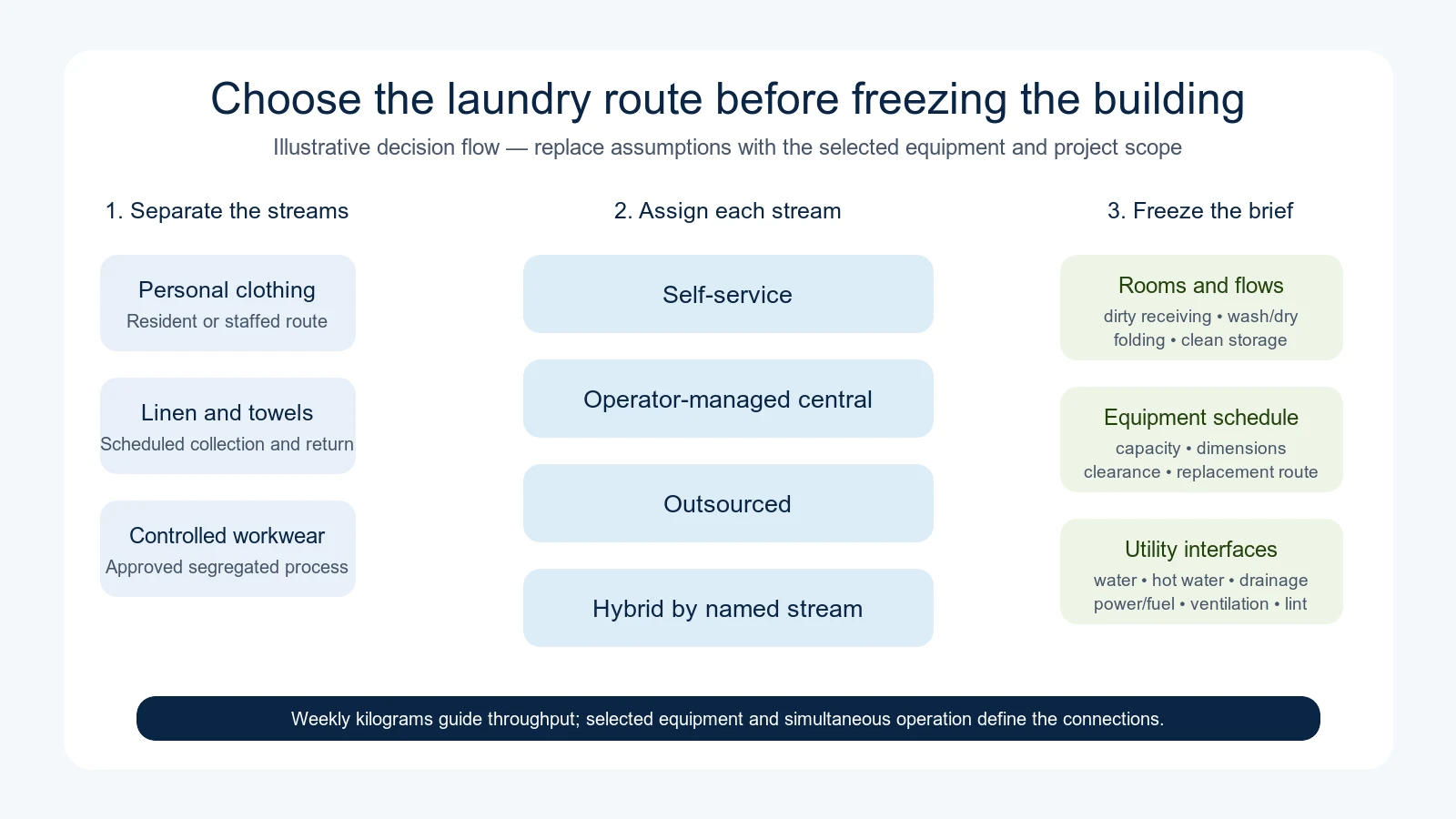
No column is automatically the “best” choice. A construction camp with frequent workforce rotation, a long-life mining camp, a project with limited water, and a camp near a reliable commercial laundry may reach different conclusions even at the same resident count. Shift patterns, workwear controls, operating labour, utility capacity, weather, transport reliability and planned camp duration can all change the preferred model.
A 300-Resident Workforce Camp Laundry Planning Example
The following calculation is a hypothetical planning example. It is not KUBO project data, a quotation, a compliance ratio, a market average or an equipment recommendation. Its purpose is to show how a buyer can convert resident and operating assumptions into weekly laundry streams, washer cycles and preliminary utility questions before the equipment schedule is finalized.
Hypothetical planning assumptions
- 300 residents.
- Hypothetical personal-clothing load: 4.0 kg per resident per week.
- Hypothetical linen-and-towel load: 2.5 kg per resident per week.
- Hypothetical operating schedule: six laundry operating days per week.
- Hypothetical practical washer fill assumption: 80% of rated dry-load capacity.
- Self-service equipment reference: one Speed Queen commercial front-load washer with a rated dry-load capacity of 9.5 kg and published water use of 51.8 L per cycle.
- Hypothetical self-service scheduling input: six cycles per machine per operating day.
- Managed-central equipment reference: one 35 lb / 15.9 kg Alliance washer-extractor. The cited equipment table lists 178 L hot water plus 79 L cold water per cycle, or 257 L total, and average drive electricity of 0.4 kWh per cycle.
- Hypothetical managed-central scheduling input: eight cycles per machine per operating day.
- A buyer may add one reserve unit in either scenario as a hypothetical resilience allowance. This is not a washer-manufacturer rule.
The two machine references are intentionally different because they illustrate different operating concepts. Their water figures therefore must not be used to claim that one operating model inherently consumes more or less water than another. The final project calculation must replace these references with the selected equipment, selected cycles and actual simultaneous-operation assumptions.
Step 1: Calculate the hypothetical weekly laundry stream
Personal clothing is:
300 residents × 4.0 kg/resident/week = 1,200 kg/week.
Linen and towels are:
300 residents × 2.5 kg/resident/week = 750 kg/week.
The hypothetical combined stream is therefore:
1,200 + 750 = 1,950 kg/week.
This first separation already affects the building decision. A camp could allow residents to wash the 1,200 kg personal-clothing stream themselves while sending the 750 kg linen stream elsewhere. Another camp could bring both streams into one staffed central laundry. The same 300 residents can therefore produce different room, flow, staffing and utility requirements.
Option A: Self-service personal clothing with linen handled separately
Using the cited 9.5 kg self-service washer only as an illustrative reference and the hypothetical 80% practical fill assumption:
Effective load per cycle = 9.5 kg × 0.80 = 7.6 kg.
The 1,200 kg weekly personal-clothing stream would require:
Ceiling of 1,200 ÷ 7.6 = 158 cycles/week.
Using the hypothetical schedule of six cycles per machine per day over six operating days:
158 ÷ (6 cycles/day × 6 days) = 4.39, rounded up to 5 active washers.
If the buyer chooses the hypothetical planning allowance of one additional reserve unit, the layout would make provision for six washers. That reserve is an operating decision, not a standard requirement.
Using the cited 51.8 L/cycle reference:
158 cycles × 51.8 L = 8,184.4 L/week, or approximately 8.18 m³/week of washer process water.
In this option, the 750 kg/week hypothetical linen-and-towel stream is not processed by those self-service machines. It still requires a defined route, such as a separate central process or outsourced linen service.
Option B: Operator-managed central laundry for personal clothing plus linen
Using the cited 15.9 kg Alliance washer-extractor only as an illustrative central-laundry reference and retaining the hypothetical 80% practical fill assumption:
Effective load per cycle = 15.9 kg × 0.80 = 12.72 kg.
For the hypothetical combined 1,950 kg weekly stream:
Ceiling of 1,950 ÷ 12.72 = 154 cycles/week.
Using the hypothetical operating schedule of eight cycles per machine per day for six days:
154 ÷ (8 cycles/day × 6 days) = 3.21, rounded up to 4 active washer-extractors.
If the project elects to add the same hypothetical one-unit reserve allowance, the planning layout would make provision for five washer-extractors.
The referenced Alliance table lists 178 L hot plus 79 L cold water per cycle. For this illustrative calculation:
154 cycles × 257 L = 39,578 L/week, or approximately 39.58 m³/week.
The cited average drive-electricity figure gives:
154 cycles × 0.4 kWh = 61.6 kWh/week of illustrative washer drive electricity.
That number is not the electrical demand of the laundry building. It excludes water heating, hot-water generation, dryers, ventilation, lighting, pumps, auxiliaries and any other equipment. Those loads must come from the final equipment schedule.
Option C: Fully outsourced processing of the two hypothetical streams
If both personal clothing and linen/towels are processed off site, the hypothetical outsourced mass is:
1,950 kg/week.
For those outsourced streams, on-site washer process water is zero in this simplified example. That does not mean the laundry function disappears from the camp.
If the project hypothetically schedules two dispatches each week:
1,950 kg ÷ 2 = approximately 975 kg per dispatch.
The logistics plan therefore needs to handle roughly 975 kg of dirty outbound material and the corresponding clean return at each dispatch, before allowing for carts, bags or containers, packaging, temporary holding, quarantine requirements, delayed collections or contingency stock.
An outsourced model still requires decisions about where dirty material is collected, how it is separated, where clean linen is received and stored, how vehicles reach the service zone and what happens if the external service is interrupted. A project may also choose to retain an emergency washer, but that would be an additional planning input rather than an automatic requirement.
Do Not Compare the Three Options by Weekly Water Alone
The worked example demonstrates a calculation method, not a performance ranking. The self-service and central examples use different machine references, different load sizes and different processing boundaries. The self-service example handles personal clothing only, while the central example processes personal clothing plus linen. Their weekly water totals therefore are not an apples-to-apples efficiency comparison.
More importantly, weekly totals cannot establish the building’s actual connection requirements. A camp may process the same weekly mass through many different operating patterns. Three washers filling simultaneously can create a different short-duration water demand from three washers filling sequentially. Several machines discharging together can produce a drainage condition that is invisible in a weekly cubic-metre total.
Before design freeze, the project team should replace the illustrative references with the actual equipment schedule and answer questions such as:
- How many washers can fill simultaneously?
- How much hot and cold water does the selected cycle require?
- What is the manufacturer’s required inlet condition?
- Can several machines discharge at the same time, and what is the resulting peak drain flow?
- How is hot water generated, and what recovery rate is required during the operating window?
- What are the dryer electrical or fuel loads?
- What ventilation and make-up-air requirements apply to the selected drying equipment?
- How is lint collected and maintained?
- What equipment loads and vibration inputs must the floor or supporting structure accommodate?
- What service clearances and replacement route must remain accessible after fit-out?
This is also why washing and drying must be evaluated separately. A washer calculation may show that the week’s dirty load can be processed, but it does not prove that dryers, drying rooms, folding stations, clean storage or distribution can keep pace. In some projects, the drying stage rather than the washing stage can become the practical throughput constraint.
Translate the Operating Model into a Laundry Building Brief
Once the operating route is chosen, workforce camp laundry requirements become much more specific. The project team can stop asking for a generic “laundry room” and start defining the spaces, flows and interfaces the building actually needs.
| Planning element | Self-service | Central managed | Outsourced | Hybrid |
|---|---|---|---|---|
| Resident access | Required where residents use the room directly. | Usually separated from the main processing area. | Generally unnecessary for the off-site process itself. | Required only for streams retained as self-service. |
| Dirty receiving | Usually decentralized through resident use. | Dedicated receiving and sorting can be important. | Collection and temporary dirty storage are core functions. | Required for centrally handled or outsourced streams. |
| Quarantine or controlled hold | Project-specific and generally separate from ordinary resident laundry. | May be required where the operating procedure identifies controlled streams. | May be required before dispatch. | Defined by the stream that requires segregation. |
| Washing zone | Resident-facing machine positions. | Back-of-house washer positions with service access. | Not required for fully outsourced streams unless contingency capacity is retained. | Scaled only for on-site streams. |
| Drying | Machine or other drying capacity must match actual resident use. | Must be sized as part of the process chain. | Mostly transferred off site for outsourced streams. | Depends on which streams remain on site. |
| Folding and clean storage | May be limited or resident-managed. | Important downstream functions before distribution. | Clean-return receiving and storage remain necessary. | May exist for selected central or outsourced streams. |
| Distribution | Residents normally retrieve their own loads. | Requires an organized clean-return process. | Requires receipt and redistribution from the external service. | Different distribution routes may coexist. |
| Equipment replacement route | Doorways, circulation and service access should accommodate selected machines. | Particularly important for larger washer-extractors and dryers. | Only relevant to retained on-site equipment. | Defined by the retained equipment schedule. |
Self-service laundry changes resident-facing design
A self-service camp laundry behaves partly like an amenity used directly by residents. The project should consider opening hours, queue behaviour, circulation, machine access, rules for leaving or collecting loads, housekeeping and how wet traffic interacts with adjacent accommodation or common areas.
Distributed self-service rooms can reduce the walking distance from sleeping blocks, but each additional laundry location can create another set of water, drainage, power and ventilation interfaces. A single larger resident laundry concentrates those interfaces but may create stronger peak-use periods around shift changes or rest days. The correct balance depends on the camp layout and actual shift pattern rather than a universal machine-per-person ratio.
Central laundry changes the building into a process space
An operator-managed central laundry is more than a room containing larger machines. It has an inbound dirty stream and an outbound clean stream. Depending on the operating plan, its sequence may include receiving, sorting, controlled holding, washing, drying, folding, clean storage and distribution.
This makes clean and dirty flow a building-layout issue. Service access, cart movement, staff circulation and the relationship between the laundry and accommodation blocks can affect daily operation. The buyer should also decide how linen is counted or recorded, how loads are staged and what buffer is required between processing steps.
The cited Alliance 35 lb machine illustrates why equipment selection has physical consequences. Its published reference dimensions include approximately 889 mm width, 992 mm depth and 1,407 mm height, with a net weight of 550 kg. The same equipment reference also identifies service clearances. These values should not be applied automatically to another washer, but they show why the equipment schedule must be coordinated with doors, circulation, service zones and supporting construction before the building is released.
Outsourcing replaces process space with logistics space
An outsourced laundry can reduce the on-site washing and drying process, yet the camp still handles physical laundry flows. Dirty collection needs a defined location and frequency. Outbound loads need access to the dispatch route. Clean returns need protected receiving and storage before redistribution.
The project should also decide what happens during service disruption. A remote site may face weather, road or contractor interruptions that are irrelevant to an urban hotel using a nearby commercial laundry. The answer does not have to be a duplicate full laundry plant; it might instead involve clean-stock buffer, altered collection frequency, limited emergency equipment or another project-specific contingency. What matters is that the contingency is decided before space is removed from the building program.
Hybrid laundry should be defined by stream, not by a vague percentage
A hybrid model is often easiest to communicate when each stream has a named route. For example, personal clothing may remain self-service, bed linen and towels may be processed centrally or outsourced, and controlled workwear may follow a separately approved process. That is more useful for building design than saying that “half the laundry is outsourced,” because different streams need different access, handling and segregation.
Remote Camp Laundry Utilities: Design for Connections and Peaks
Weekly laundry load is useful for estimating throughput. It is not enough for designing camp utilities. Water supply, hot-water generation, drainage, power, fuel and ventilation should be checked against the selected machines and the way they will operate together.
The equipment data in the worked example show the scale of the issue. The Speed Queen reference lists 51.8 L of water per cycle for the cited commercial front-load washer. The Alliance reference lists separate hot- and cold-water quantities for the cited washer-extractor. Those values belong to those references and their documented conditions; they are not KUBO standard allowances and should not be carried into a project after the actual equipment has changed.
Drainage deserves the same treatment. A weekly discharge total does not tell the site engineer the peak flow into a branch line or collection system. Simultaneous discharge assumptions, local drainage design, floor drainage, any required pretreatment and the final discharge destination are project-specific inputs.
As one jurisdiction-specific example, the United States OSHA temporary-labor-camp regulation addresses water supply, laundry fixtures, hot and cold water, floor drainage, drying facilities and related sanitary conditions. It should be applied only where its jurisdiction and project conditions make it relevant; it is not a global KUBO design rule. Other countries and projects can impose different requirements.
The practical RFQ lesson is simpler: identify the project country and applicable local requirements, select or define the intended equipment, and coordinate the building-side interfaces with the responsible engineers before production release.
A KUBO Modular Laundry or Camp Support-Room Path
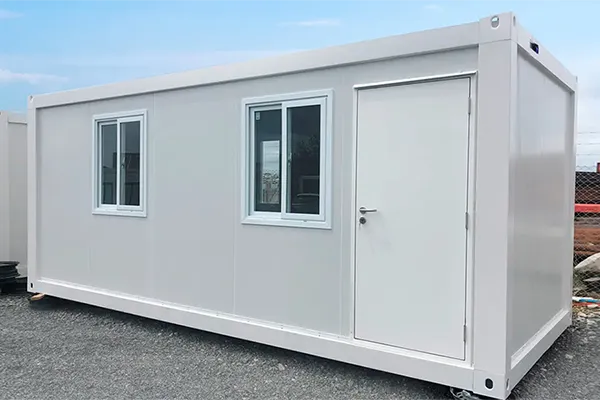
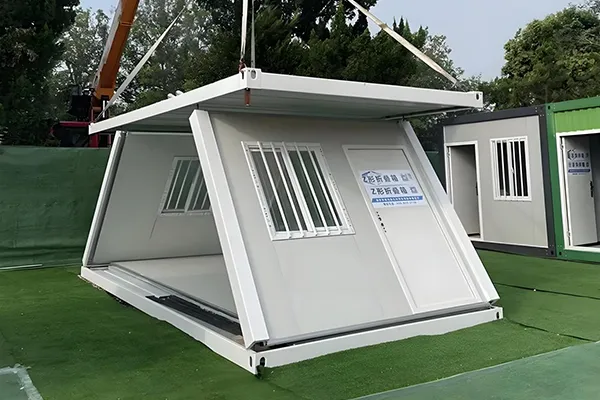
Where the project requires an on-site laundry building or support space, KUBO can incorporate the agreed function within the wider modular-camp package. The KUBO Detachable Flat Pack Camp Support Module can be configured as a laundry or dry-support room with project-specific partitions and electrical or plumbing provisions where these items are included in the quotation.
This allows the laundry function to be coordinated with the broader camp-style workforce housing solution rather than treated as a late standalone room. Depending on the agreed scope, KUBO can configure and manufacture the modular accommodation and support-building package, coordinate building-side interfaces, produce against approved requirements, prepare the modules for export and provide agreed installation guidance.
The laundry equipment schedule still matters because the support building must be coordinated around the equipment actually selected. Specialist laundry equipment, external site water and power, external drainage networks, process engineering, local approvals, installation labour, commissioning, camp operation and maintenance are project-specific scopes unless they are expressly included in the relevant contract.
For EPC procurement, the important point is not to assign every interface to one supplier at concept stage. It is to make each interface visible early enough that the building supplier, equipment supplier, site contractor and local engineer are working from the same requirements before drawings are frozen. KUBO’s modular camp supply-scope guidance can be used to define which camp-building items sit inside the quoted package and which interfaces remain part of site delivery.
Use Three Release Gates Instead of Calling the Laundry “Finished”
A laundry can look complete architecturally while still being unable to accept its machines or operate correctly. Separating building readiness, equipment readiness and operating readiness gives the project team clearer release criteria.
| Release gate | What should be complete | Typical unresolved risk if released too early |
|---|---|---|
| 1. Building ready | Shell, agreed wet-area finishes, floor and drainage provisions, equipment access, ventilation provisions and agreed utility connection points are complete within the defined building scope. | Machines arrive but clearances, doors, drain locations, service routes or connection points do not match the equipment schedule. |
| 2. Equipment ready | Selected machines are installed, connected, protected, accessible for service and replacement, and tested by the responsible parties. | The building is usable as space but the laundry process cannot run reliably or cannot be maintained. |
| 3. Operating ready | Resident or staff procedures, chemical handling, clean/dirty flow, controlled-workwear rules, collection and return, maintenance and contingency arrangements are approved. | Equipment functions technically but daily operations produce queues, cross-flow, missing linen, inappropriate segregation or weak disruption response. |
This distinction is particularly useful when a camp opens in phases. The building can be manufactured for an agreed first-stage equipment schedule while the project also identifies where future machine positions, connection capacity or adjacent support space may be required. Expansion provisions should still be explicit project requirements; unused space or spare connections should not be assumed automatically.
What to Put in the Laundry RFQ Before Design Freeze
A useful workforce camp laundry planning brief does not need to begin as a complete engineered specification. It does, however, need enough operating information to avoid designing the wrong room.
For an initial KUBO discussion, prepare:
- Resident count at the first opening phase and any planned later phase.
- Shift pattern, especially crew-change times that could create self-service peaks.
- Operating model: self-service, central managed, outsourced or hybrid.
- Laundry streams: personal clothing, linen and towels, and any controlled workwear.
- Operating days per week and any required processing window.
- Available site utilities: water, hot-water strategy, power or fuel, drainage and any known limitations.
- Equipment schedule if machines are already selected, including manufacturer data and service clearances.
- Opening sequence if the camp will be commissioned in phases.
Where the final machines are not yet selected, the project can still send planned throughput and provisional equipment assumptions, clearly marked as such. KUBO can use the available information to compare a modular support-room or laundry-building arrangement and identify which equipment and site-interface decisions remain open before the building configuration is frozen.
For teams preparing the whole accommodation package rather than only the laundry room, the workforce camp proposal requirements guide covers the broader inputs needed for a camp proposal. The remote camp facilities checklist can also help place laundry alongside the other shared facilities that must support the camp’s actual workforce and operating pattern.
Procurement FAQs
Should a 300-person camp use self-service or a central laundry?
Resident count alone is not enough to decide. The hypothetical 300-resident example produces different building requirements depending on whether personal clothing, linen and workwear follow the same route. Self-service gives residents direct access but can create usage peaks and multiple resident-facing interfaces. A central laundry concentrates equipment and utilities but adds receiving, sorting, drying, folding, storage and distribution functions. Compare the actual laundry streams, shift pattern, staffing model, utilities and service reliability before selecting the operating route.
Can we size the laundry building from kilograms per week?
Weekly kilograms are a useful throughput input, but they do not establish the room area or utility connections. The building also depends on machine dimensions, service clearances, replacement routes, dirty and clean staging, dryers, folding and storage, staff or resident circulation and maintenance access. Weekly load should therefore be converted into cycles and process flows, then coordinated with the selected equipment schedule.
If laundry is outsourced, can we remove the laundry building entirely?
Possibly, but not without checking the remaining camp process. A fully outsourced stream still needs dirty collection, separation where required, temporary storage, vehicle access, dispatch, clean receiving, clean storage and redistribution. The project also needs a response to external-service disruption. Depending on the operating plan, these functions may require a smaller support or logistics room rather than a washing facility.
How should controlled workwear be handled in the same camp as personal laundry?
Do not assume that controlled or potentially contaminated workwear can share the ordinary resident-laundry route. The IFC/EBRD guidance recognizes special laundry facilities where work clothing has contacted dangerous substances. The project’s applicable occupational-health rules and operating procedures should determine whether this stream requires segregation, dedicated handling or an external specialist process. That decision should reach the building team before room flows and service access are finalized.
When should washer and dryer models be frozen?
The final equipment schedule should be available before the building and utility interfaces are released for production wherever machine dimensions, weights, connection points, service clearances, drainage, ventilation or electrical requirements affect the design. Early planning can use clearly labelled reference equipment, as in the hypothetical calculation above, but those values should be replaced with the selected manufacturer data before design freeze. Dryers deserve the same attention as washers because washing capacity alone does not prove complete laundry throughput.
Plan the Laundry Building Around the Way the Camp Will Actually Operate
Workforce camp laundry planning becomes much more reliable once the project stops treating laundry as one generic room. Decide which streams residents handle, which streams staff handle and which leave the camp. Translate the resulting weekly load into cycles, but also test drying, storage, clean and dirty flow, equipment access and peak utility conditions. Only then should the laundry building and its connection points be frozen.
If you are preparing a camp concept or RFQ, send KUBO the resident count, shift pattern, personal-clothing/linen/workwear model, operating days, available water/power/drainage information and target opening phase. Through the KUBO project enquiry, we can discuss an appropriate modular laundry or support-room arrangement within the wider camp package and identify the equipment and site-interface decisions that still need to be closed before production requirements are finalized.
Related Planning Guides
Sources and References
- IFC and EBRD — Workers’ Accommodation: Processes and Standards. Used for the distinction between individual washing, employer-provided laundry service, adequate washing and drying facilities, and special handling of work clothing exposed to dangerous substances.
- US OSHA — 29 CFR 1910.142 Temporary Labor Camps. Used only as a United States jurisdiction example for laundry-related water, sanitary, floor-drainage and drying provisions.
- Speed Queen Commercial — Front-Load Washer Specifications. Used only for the cited illustrative 9.5 kg capacity, 51.8 L/cycle water use and reference machine dimensions/electrical information.
- Alliance Laundry Systems — Installation/Operation Supplement. Used only for the cited 35 lb washer-extractor dimensions, weight, water, drive-electricity, sound and clearance reference data.