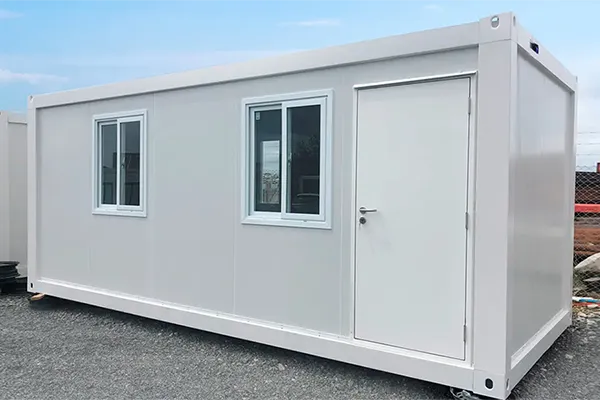


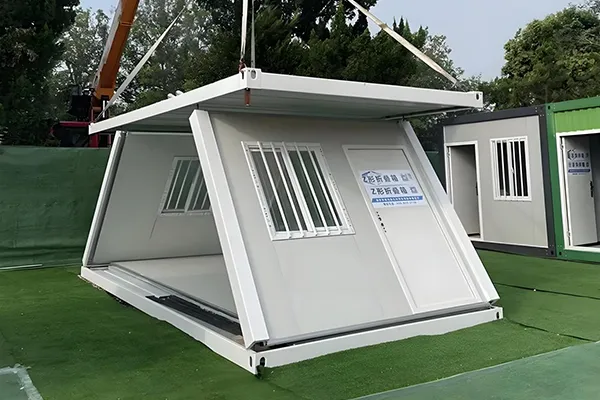

Summary
Mining camp cost depends on the workforce the camp must accommodate, the services that support that workforce, and the work required to make the facilities usable at the actual mine site. A factory module quotation covers only its stated supply boundary.
A defensible budget separates capital expenditure, operating expenditure and lifecycle cost. It also distinguishes cost per design bed from cost per peak resident and cost per occupied worker-night. Before comparing suppliers, freeze a common capacity basis, facility schedule, technical requirements and handover boundary. Keep unresolved scope and pricing uncertainty visible.
Define the Capacity Denominator Before Comparing Cost
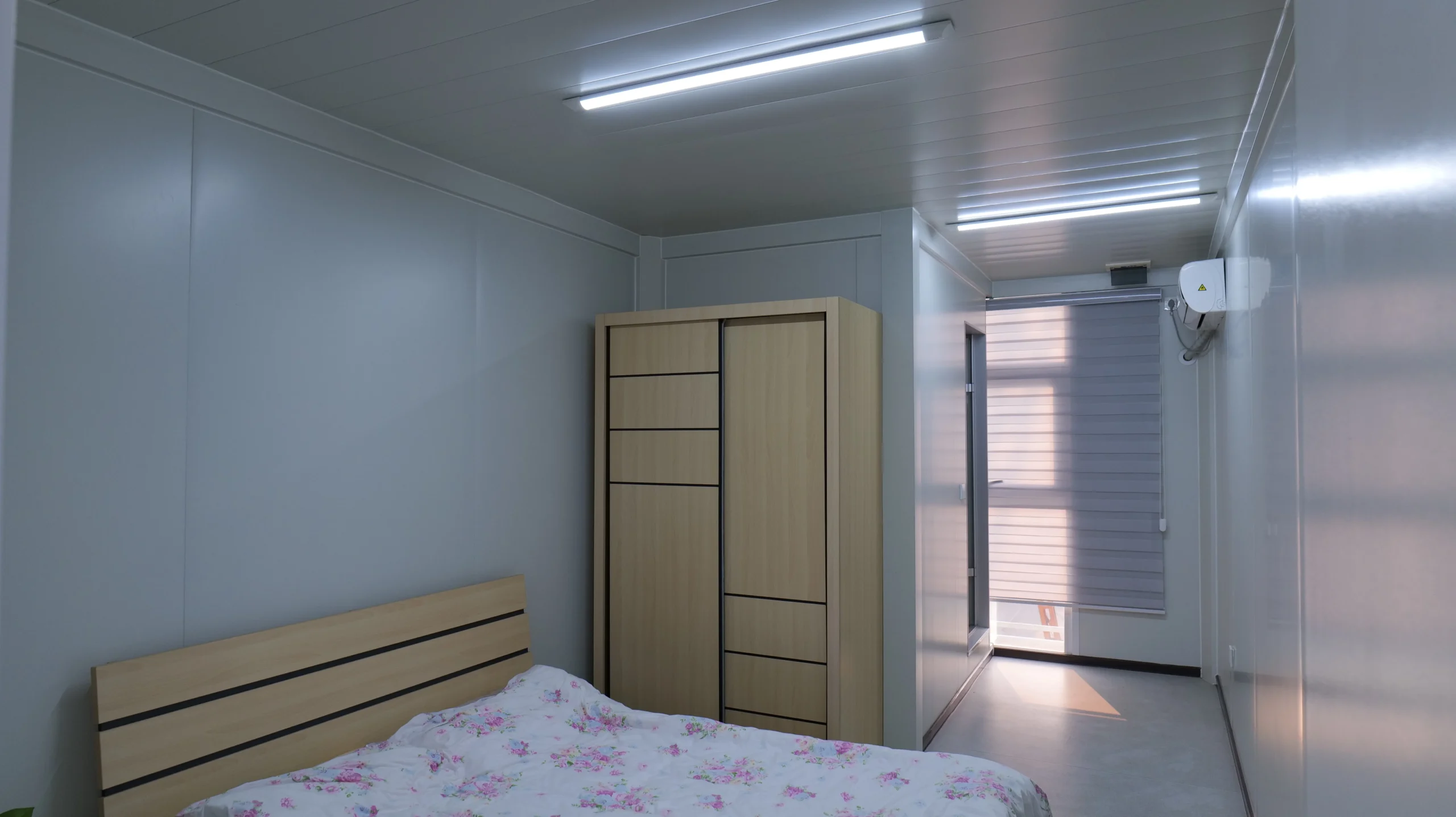
“Cost per worker” can describe different decisions. A procurement team evaluating construction expenditure needs a different measure from a camp operator assessing accommodation costs over successive workforce rotations.
Use the following distinctions throughout the estimate.
| Metric | Calculation | Decision it supports | Limitation |
|---|---|---|---|
| Capital cost per design bed | Defined camp capital budget ÷ installed design beds in the same scope | Comparing capital provision for equivalent accommodation capacity | Does not measure actual utilization |
| Capital cost per peak resident | Defined camp capital budget ÷ planned peak concurrent residents | Relating investment to the workforce mobilization plan | Depends on roster overlap, resident categories and reserves |
| Operating cost per occupied worker-night | Defined operating expenditure for a period ÷ occupied worker-nights in that period | Assessing the cost of running the camp | Excludes capital unless explicitly incorporated through a separate method |
| Lifecycle cost per occupied worker-night | Defined lifecycle cost ÷ cumulative occupied worker-nights over the analysis period | Comparing accommodation strategies across their intended use | Requires consistent timing, scope and occupancy assumptions |
| Lifecycle cost per occupied worker-year | Defined lifecycle cost ÷ cumulative occupied worker-years under a stated conversion convention | Longer-term accommodation planning | Must not be confused with total employees or calendar years of camp ownership |
The numerator and denominator must cover the same phase and boundary. If an initial-stage budget includes infrastructure for expansion, disclose that investment beside the initial-stage cost per bed. Do not divide by future beds that have not been supplied and installed.
Translate the mine roster into concurrent demand
Total mine employment does not establish camp capacity. Local commuters, personnel on leave and staff based elsewhere may never occupy a room. Conversely, camp operators, visiting specialists and construction subcontractors may need accommodation without appearing in the owner’s direct employee count.
Prepare an occupancy profile that identifies arrival and departure overlaps, contractor mobilization, shutdown activity, visitors and rooms temporarily unavailable for maintenance. Record reserve rooms separately from rooms expected to be occupied.
Night-shift personnel also need sleeping accommodation while day-shift personnel work. A shift timetable should not be interpreted as permission to assign the same bed to different workers without an explicitly reviewed accommodation policy.
Room allocation can create constraints even when the total bed count appears sufficient. Accessible rooms, privacy arrangements, visitor accommodation and maintenance reserves may limit which beds can serve a particular workforce group.
Keep room count, bed count and usable capacity separate
A room schedule should identify room types, occupancy, bathroom arrangements and allocation rules. Converting selected rooms to higher occupancy changes more than the denominator: it can change furniture, storage, circulation and service demand.
Report design beds alongside the capacity the camp can actually support at the relevant stage. Bedrooms may be installed while water, sanitation or common facilities still constrain occupancy. That gap belongs in the mobilization plan and budget assumptions.
Build a Mining Camp Budget-Basis Matrix
A budget basis records what the estimate assumes and who supplied the information. It should let another estimator understand why a cost exists, what evidence supports it and what would trigger a revision.
The information owner is the party responsible for obtaining or confirming an input. That party may differ from the designer, supplier or payer.
| Budget input | Responsible information owner | Estimate treatment | Risk if undefined |
|---|---|---|---|
| Mine phase, intended use and accommodation duration | Owner’s project and operations teams | Separate initial deployment, subsequent phases and end-of-use scenarios | Temporary requirements become embedded in permanent investment |
| Workforce roster and concurrent residents | Owner’s workforce planner, with contractor and camp-operator input | Develop occupancy profiles and reserve-room assumptions | Bed demand is understated or capacity is purchased unnecessarily |
| Room mix and accommodation policy | Owner and camp operator | Price the agreed room schedule; identify alternatives separately | Bidders achieve different prices by changing occupancy or amenities |
| Support-facility demand | Camp operator and relevant service planners | Use function-specific demand assumptions | Dining, laundry or welfare provision cannot support the residents |
| Site layout and land constraints | Buyer/EPC and survey team | Develop quantities from an identified layout revision | Building positions, routes and service lengths change after pricing |
| Ground conditions and foundation basis | Geotechnical specialist and local structural engineer | Use available investigation results; identify unresolved foundation scope | Ground treatment or foundation changes remain outside the budget |
| Climate, exposure and design criteria | Appointed local engineers | Price against documented parameters and applicable requirements | Generic building specifications require later adaptation |
| Utility availability and service quality | Owner’s utilities team, supported by service providers | Distinguish verified existing capacity from new infrastructure | An assumed connection cannot meet camp demand |
| Transport route and unloading constraints | Buyer/EPC logistics lead, with manufacturer packing data | Establish a route-specific logistics basis | Packages cannot reach or be handled at the installation area |
| Installation resources and site conditions | Site contractor, coordinated by buyer/EPC | Build the estimate around an identified execution method | Labor, lifting or temporary facilities are missing |
| Approval and inspection pathway | Local engineer coordinating with relevant authorities | Identify submissions, professional services and required evidence | Manufacturing proceeds on an unacceptable documentation basis |
| Occupancy milestones and phased handover | Buyer/EPC scheduler and owner | Link expenditure to usable facility packages and dependencies | Buildings arrive before the site can receive or operate them |
| Currency, cost date and commercial assumptions | Procurement and project controls | State a common comparison basis and retain original quotation values | Price differences reflect inconsistent assumptions |
| Maintenance, relocation and closure strategy | Owner’s asset and operations teams | Assess separately in the lifecycle model | Reuse credits or removal obligations distort the investment decision |
Give each input a revision and status: confirmed, assumed or awaiting verification. An assumption is usable for early budgeting when its consequences are understood. It becomes dangerous when copied into later procurement documents as if it were verified.
For example, an assumed connection to mine power should identify the information still needed: available capacity, connection location, service characteristics and responsibility for any upgrade. “Power available” is insufficient to establish the camp’s electrical scope.
Separate the Complete Capital Budget Into Cost Packages
The camp capital budget should follow a defined endpoint, such as facilities ready for the agreed occupancy stage with the required connections, testing and handover evidence.
This endpoint is a scope definition, not a claim that every commissioning activity or startup expense receives the same accounting treatment. The owner’s accounting policy determines capitalization; the project estimate must capture the expenditure wherever it is classified.
Use the following breakdown as a coverage check. Individual items may sit inside different contracts, but each should appear only once in the consolidated budget.
| Cost package | Scope to identify | Evidence supporting the estimate | Boundary or duplication check |
|---|---|---|---|
| Factory accommodation package | Structures, enclosure, room fit-out, bathrooms, internal services, furniture and specified equipment | Room schedule, drawings, specifications and itemized scope | Establish what is factory-installed, supplied loose or omitted |
| Factory support-building package | Defined kitchen, dining, administration, laundry, medical, welfare and storage buildings | Facility schedule and fit-out requirements | Separate building shells from operational equipment and contents |
| Freight and logistics | Packing, transport, cargo cover, handling, clearance services, inland movement, storage and final unloading | Packing assumptions and route-specific quotations | Check the delivery endpoint and charges already included in supplier totals |
| Site preparation and civil works | Surveys, clearing, earthworks, foundations, drainage, access, walkways and external works | Site information, engineering quantities and local pricing | Identify camp works shared with mine infrastructure |
| Utilities and external networks | Power supply, water systems, wastewater, communications, fire-service infrastructure and distribution | Demand schedules, connection information and utility concept | Separate building services from generation, treatment and external connections |
| Installation and temporary works | Mobilization, labor, supervision, lifting, access equipment, tools, temporary services and protection | Installation method, contractor scope and resource assumptions | Check who accommodates and supports the installation workforce |
| Testing, commissioning and handover | Component checks, integrated system testing, training, documentation and agreed startup activities | Commissioning plan and acceptance requirements | Avoid counting the same tests in manufacturer, installer and specialist packages |
| Professional and approval work | Local design, engineering review, surveys, submissions, inspections and applicable approval fees | Professional proposals and project approval register | Distinguish supplier design from local professional responsibility |
| Owner and EPC costs | Project management, procurement, site coordination, assurance, security, startup preparation and relevant insurance | Owner estimate and project execution plan | Include costs retained outside supplier and construction contracts |
| Commercial and fiscal provisions | Applicable duties, nonrecoverable taxes, escalation and currency provisions | Confirmed commercial treatment and estimate assumptions | Do not add charges already embedded in quoted totals |
| Risk allowance | Residual exposure associated with identified uncertainties | Risk register and documented assessment | Exclude known omitted scope and risks already covered elsewhere |
Factory pricing can help develop the building packages. It cannot establish the other rows without project information and appropriate local input.
The broader mechanisms behind manufactured-building prices are covered in KUBO’s modular building cost factors guide. For a mining camp, the important extension is how accommodation demand interacts with remote infrastructure, mine operations and staged occupancy.
Separate project cost from cash requirements
A payment schedule and a cost estimate answer different questions. Deposits, recoverable taxes, retention and advance purchases can affect funding before they affect the final project cost.
Maintain a cash-flow view alongside the estimate when these differences matter. Apply tax and recovery treatment only after project-specific review; neither a supplier’s headline price nor a generic delivery description establishes the buyer’s tax position.
Separate Support Facilities From Accommodation Buildings
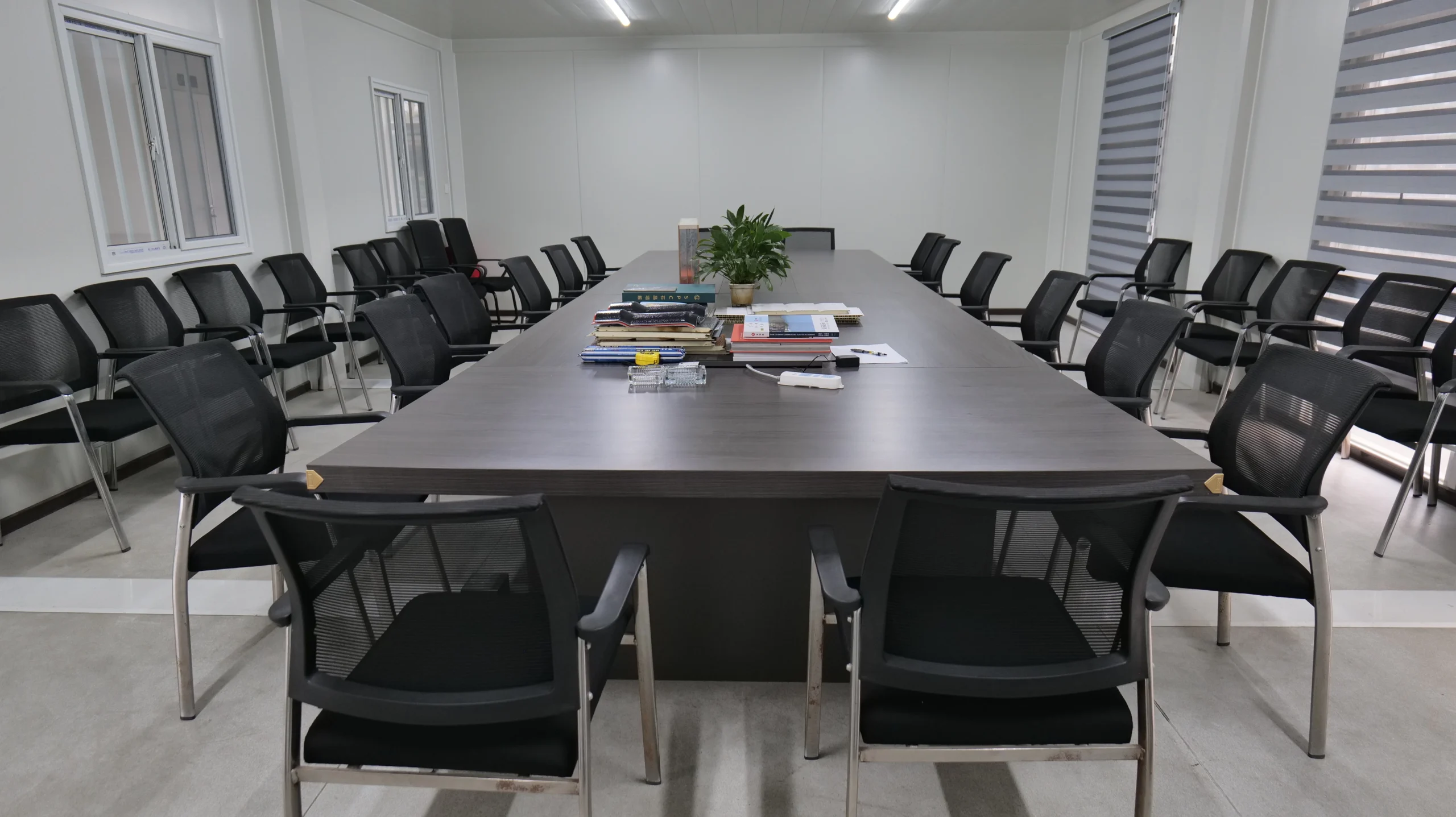
Bedrooms should be priced from the room schedule. Shared facilities need their own demand model.
The IFC and EBRD guidance on workers’ accommodation addresses the planning, construction and management of employer-provided housing. It provides accommodation guidance rather than a mining camp price benchmark or a substitute for local requirements.
For estimating purposes, translate the operating plan into a facility schedule:
- Dining and kitchens: resident and nonresident users, meal periods, production arrangements, storage strategy and deliveries.
- Laundry and housekeeping: personal laundry, linen, workwear handling, cleaning arrangements and storage.
- Administration and welfare: staffing, meetings, recreation and facilities used by personnel who do not sleep in camp.
- Medical and emergency support: the owner’s assessed needs, staffing and relationship with external services.
- Maintenance and stores: repair activities, spare parts, consumables and access for service personnel.
A kitchen building, its equipment and the catering operation are distinct procurement scopes. Similarly, a medical room does not by itself provide staffing, equipment or an emergency-response service.
Support costs do not necessarily move in proportion to bed count. Removing rooms may leave the same essential service functions in place. Adding rooms may require a discrete change to plant, equipment or building layout.
Identify shared users and shared assets
Mining projects may use the same dining, administration or medical facilities for camp residents and commuting personnel. Those additional users belong in the sizing basis even though they are excluded from the residential denominator.
Where mine infrastructure serves the camp, show the allocation method. A shared power upgrade could be charged entirely to the mine infrastructure budget, allocated partly to the camp, or reported as a separate shared investment. Any approach must remain explicit when comparing project options.
KUBO’s mining accommodation and workforce facilities scope covers accommodation, offices, dining, welfare and support buildings across mine stages. It provides manufacturer-side planning context; project quotations still need to identify the selected buildings, equipment and local interfaces.
Translate Remote-Site Conditions Into Priced Requirements
Country names and descriptions such as “desert camp” or “tropical specification” are too broad for final pricing. The estimate needs project-specific design inputs and a clear statement of which information has been verified.
Climate and the workforce’s rest environment
The local design team should establish relevant structural actions, exposure conditions and environmental criteria. These can affect framing, anchorage, envelope design, cooling or heating, ventilation, drainage and material protection.
For mining accommodation, the relationship with the roster matters. A daytime sleeping area beside service traffic presents a different planning problem from an administration block used during normal working hours.
Safe Work Australia’s fatigue-risk guidance recommends that provided accommodation allow restful sleep and recovery. This is Australian guidance, not a universal acoustic or room specification. The project application is to establish the required rest conditions before pricing layout and building options.
Do not attach an unsupported productivity return to an accommodation upgrade. Price the agreed requirement and assess any operating benefit only with suitable project evidence.
Ground conditions and local works
Foundation quantities depend on both site conditions and building information. Ground investigation alone does not establish the foundation design; module reactions, support positions and anchorage requirements must also be coordinated.
Record the drawing revision used for foundations and external services. A change to room blocks, finished levels or utility entries can affect work already priced by the site contractor.
Access roads and drainage also have construction and operating roles. Identify temporary measures separately from permanent works so they are neither omitted nor counted twice.
Utility source, distribution and operating responsibility
A building’s electrical inlet or plumbing outlet is only one end of a service interface. The estimate must establish what connects to it and whether the upstream or downstream infrastructure is adequate.
For each utility, record:
- Required demand and the assumptions behind it.
- Available source capacity and service characteristics.
- Connection location and external distribution scope.
- Storage, treatment or backup arrangements.
- Testing responsibility and the operating party after handover.
Where utility availability remains uncertain, compare explicit alternatives. A verified connection and a standalone supply system should not be blended into one unexplained allowance.
The utility selection also changes operating costs. Keep fuel, purchased water, consumables, service labor and recurring maintenance in the operating model, while identifying the equipment and construction expenditure separately.
Connect Factory Scope to Site Installation Risk

The extent of factory completion determines which activities remain at the mine site. A price comparison should therefore connect each offered building package to its destination execution method.
A more complete transported module may require particular route and lifting arrangements. A package requiring more assembly may need additional staging space, supervision, weather protection and trade work. Neither approach has a universal cost advantage.
Request enough packing information to assess the route: transport form, package dimensions, weights and proposed shipment grouping. Where these are preliminary, freight and lifting estimates should carry the same qualification.
The remote-site review should also consider seasonal access, receiving capacity and delivery sequence. A shipment sequence that works for manufacturing may not match the order in which foundations, utilities and operational facilities become available.
Price the remaining work, including construction support
An installation quotation should identify the work it completes and the resources assumed. “Supervision included” does not establish who provides crews, tools, cranes, consumables or temporary power.
For a mining project, also ask where installers will stay and how they will receive meals, transport and site access before the permanent camp opens. These enabling arrangements can sit outside both the factory contract and the finished-camp operating budget unless deliberately assigned.
Tie inspection and testing to physical interfaces. For a module connection, define who installs it, who checks it, what evidence is retained and who resolves a failed test. The same approach applies to seals, service connections and connections to foundations.
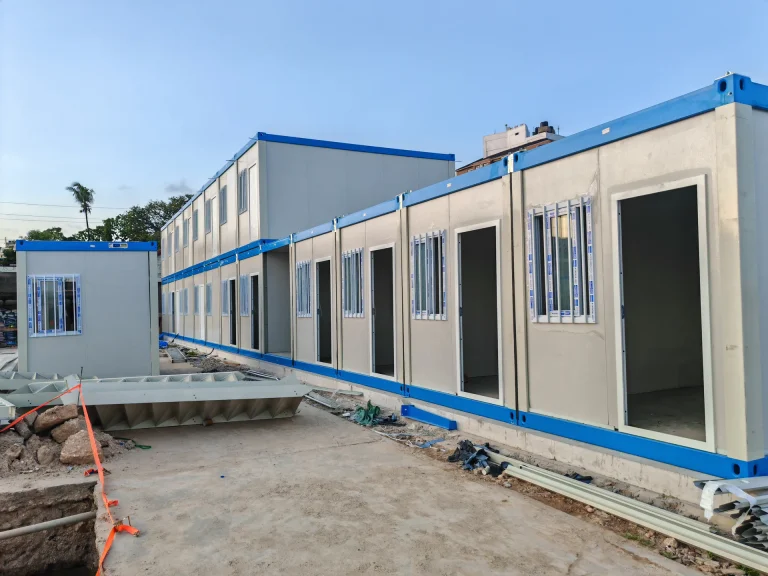
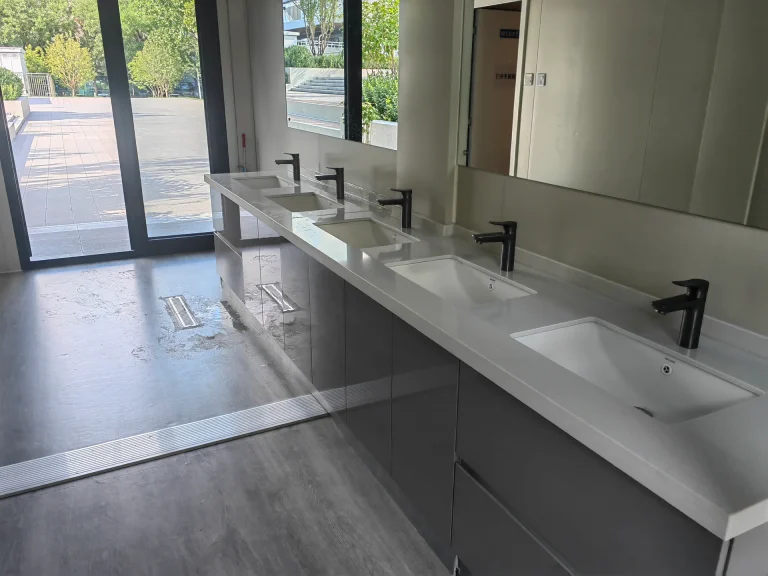
The KUBO installation, bedroom, meeting-room and steel-frame welding photographs used with this article are reference images of physical arrangements and activities. They do not establish project prices, quantities, dates, customer identities, technical performance, inspection acceptance or delivery outcomes. Use them to frame questions about scope; rely on project documents for commitments.
Assign Responsibilities Before Pricing Interfaces
Commercial responsibility, design responsibility and statutory authority are different. The following matrix is a procurement starting point; the actual allocation must follow the contracts, professional appointments and local requirements.
| Party | Principal responsibility to define | Information or deliverables needed | Boundary to make explicit |
|---|---|---|---|
| Manufacturer | Agreed factory design, supply, fabrication and related documentation | Package drawings, specifications, interface data, packing information and contracted records | Local works, site installation and approval services require express inclusion |
| Buyer/EPC | Overall scope integration, procurement coordination and consolidated budget | Approved budget basis, package boundaries, schedule and decision register | Owner-retained work remains part of the project even when excluded from bids |
| Site contractor | Contracted local works, assembly, connections and construction controls | Execution method, resource plan, site records and testing results | Supplier supervision does not automatically include contractor labor or equipment |
| Local engineer | Appointed jurisdiction-specific design, coordination and professional review | Applicable design basis, calculations, local submissions and review records | Review of factory information does not transfer every design obligation |
| Relevant authority | Regulatory review, permits or acceptance within its remit | Required applications and supporting evidence | An authority is not the project designer or guarantor of the commercial scope |
For shared interfaces, name a lead responsible for closure and identify the contributing parties. An electrical connection may require data from the manufacturer, design by a local engineer and installation by a site contractor. The buyer/EPC needs a clear route for resolving mismatches between them.
Establish the jurisdiction-specific approval pathway
Western Australia’s employer-provided accommodation guidance discusses accommodation safety and facilities such as drinking water, sanitation and protected sleeping areas. Its stated application conditions concern Western Australia. It should not be presented as the law governing camps elsewhere.
The International Code Council’s off-site and modular construction page describes standards work addressing the off-site construction process. Citing an ICC standard does not establish its adoption or acceptance for a particular mine.
The local engineers and relevant authorities must establish the actual approval route under local law. The buyer should also identify contractual or financing requirements that supplement that route. Budget the resulting professional services, submissions and inspections, and establish which evidence must be produced during manufacture.
Normalize Bids Without Hiding Uncertainty
Bid normalization brings offers to a common technical and commercial basis. It cannot make an unacceptable design acceptable merely by adding money to a comparison sheet.
The World Bank’s June 2025 guidance on writing technical specifications describes specifications as defining what the purchaser intends to procure and the basis for assessing supplier performance. It is general procurement guidance, not a mining accommodation standard.
For the mining camp RFQ, use a controlled set of capacity, facility and technical documents. The modular building tender specification checklist provides a broader specification structure; the camp schedules establish the mining application.
Separate coverage status from pricing status
An item can be included in a quotation and still be provisional. An owner-supplied item can have a firm price. These are different dimensions.
Use included, excluded or owner-supplied to describe scope coverage. Use firm, provisional, allowance or unpriced to describe the pricing basis, with definitions agreed for the comparison.
In this register, “provisional” means subject to an identified adjustment mechanism. An “allowance” is a budgeting provision whose basis and uncertainty must be recorded. Contract definitions may differ and should prevail in the contract itself.
| Register item | Scope coverage | Pricing status | Normalization treatment | Evidence or closure action |
|---|---|---|---|---|
| Specified bedroom fit-out confirmed in the bid | Included | Firm within stated terms | Retain within quoted total | Link to room schedule and quotation revision |
| Destination unloading omitted from delivery scope | Excluded | Unpriced | Obtain local pricing or record a reasoned allowance | Confirm package weights, unloading method and contractor |
| Foundations priced against assumed ground conditions | Included or separately contracted | Provisional | Retain the existing provision; show the adjustment exposure separately | Close investigation and engineering inputs |
| Wastewater system pending selection | Excluded from factory supply | Buyer allowance | Carry a defined utility allowance in the project total | Establish design demand, solution and local requirements |
| Owner-provided lifting equipment | Owner-supplied | Firm internal allocation or allowance | Include relevant mobilization and operating costs once | Confirm availability, suitability and charging basis |
| Freight subject to booking conditions | Included to stated endpoint | Provisional | Identify embedded freight and permitted adjustment terms | Confirm validity and booking basis |
| Required room standard replaced by an alternative | Included as an alternative | Priced, technically unresolved | Keep outside compliant ranking until disposition | Obtain technical decision and, where needed, revised price |
| Bundled supply and installation with unclear boundaries | Claimed included | Unseparated | Retain the total; flag unresolved coverage | Request written scope clarification or a revised offer |
Every register entry should also carry an accountable owner, source document, affected cost package and closure milestone.
Start with the actual quoted total
For each bidder:
Normalized comparison amount = quoted total + documented additions for missing common scope + documented replacement adjustments − justified, separable out-of-boundary deductions.
Apply this carefully:
- Add only work needed to reach the agreed comparison boundary.
- If replacing an embedded provisional amount, adjust by the difference rather than adding the replacement in full.
- Retain an allowance already included in the quotation and identify it visibly.
- Deduct unwanted scope only when its value is separable and the comparison remains technically equivalent.
- Leave inseparable bundles intact until clarified.
For detailed reconciliation of transport and commercial endpoints, use the modular building landed cost guide. The mining camp comparison must extend beyond delivery to the required site and operating interfaces.
Do not use zero to represent an unknown cost. If credible pricing is unavailable, show the unresolved item and explain whether it could change the ranking. A subtotal with identified gaps is more useful than an apparently complete total built on unsupported amounts.
Keep known scope separate from residual risk
Known work belongs in a cost package, even if its price is an allowance. A risk allowance addresses uncertainty around that work or other identified exposure.
For example, the expected foundation solution belongs in the foundation estimate. The possibility that further investigation requires a different solution belongs in the uncertainty register.
Assess related risks together. A late site release may cause storage, repeated handling and contractor remobilization. Treating each effect as unrelated can overstate exposure, while hiding all of them in an unexplained percentage prevents meaningful review.
Report the quoted amount, normalized additions, embedded provisional provisions, owner costs and residual risk separately. Only combine them into a project budget when their boundaries have been checked for overlap.
Match Estimate Maturity to the Procurement Decision
A detailed spreadsheet does not make an estimate mature. Maturity depends on how much of the scope, design, execution method and pricing basis has been established.
The following gates are practical project controls, not formal estimate classifications or accuracy guarantees.
| Stage | What can reasonably be budgeted | Evidence before moving forward | Decision and remaining limits |
|---|---|---|---|
| Concept | Alternative workforce scenarios, broad facility configurations and preliminary package allowances | Mine-stage brief, preliminary occupancy profile, site options and initial infrastructure assumptions | Select a planning direction; retain scenario differences and material unknowns |
| Pre-RFQ | A common base scope with defined alternatives and identified local packages | Room and facility schedules, preliminary layout, design-input register, utility concept and responsibility matrix | Issue a comparable request; label unverified inputs and required bidder responses |
| Bid evaluation | Quoted packages plus supported scope adjustments and owner-retained work | Bid compliance review, clarification records, local quotations, logistics basis and uncertainty register | Compare technically acceptable offers; show gaps capable of changing the result |
| Pre-award | Proposed contract sum and consolidated project budget around an agreed award baseline | Accepted scope revisions, priced deviations, interface allocation, adjustment mechanisms, inspection requirements and release conditions | Authorize commitment within the agreed boundary; retain explicit conditions for later design or work releases |
Freeze a comparable baseline without pretending all design is complete
Before final comparison, align the bed and resident basis, room mix, support facilities, technical criteria, delivery endpoint and installation responsibilities. Each bidder should reference the same baseline or identify its deviations.
Some detailed design may continue after award. Where it does, define the remaining deliverable, its owner, the release condition and the commercial treatment of change.
Do not release irreversible work against an unresolved input that can alter it. Foundation construction, concealed factory work and long-lead purchases may require different release gates. Record those dependencies in the procurement schedule.
The pre-award question is whether the remaining uncertainty is bounded and allocated well enough to support the commitment.
Compare Operating and Lifecycle Costs on a Separate Basis
A capital budget shows the expenditure required to establish the defined camp. An operating budget models the recurring resources needed to run it. A lifecycle model brings those streams together over an explicit period.
For operating comparisons, define whether costs include catering, cleaning, laundry, utilities, staffing, maintenance, waste services and administration. State the service level beside the figure. Accommodation-only and fully serviced worker-night rates are different products.
In the lifecycle model, include relevant replacements, refurbishment, relocation and end-of-use work. Count initial capital once. Do not add depreciation to a cash-based lifecycle model that already includes the asset purchase.
If future costs are discounted, state the valuation date and use consistent inflation and discount assumptions. Label any unit-cost result to distinguish a present-value comparison from a current operating rate.
Occupancy deserves its own sensitivity analysis. Lower utilization spreads fixed costs across fewer occupied nights, while variable costs may change with use. This is why a capital cost per bed cannot predict an operating cost per resident.
Treat residual value cautiously. A relocatable building may require disassembly, repair, transport and adaptation before further use. Show those costs and any supported recovery value separately, with a scenario excluding uncertain resale proceeds.
Related Mining Camp Budget Guides
- Modular Building Cost Factors: What Determines the Cost of a Project?
- Factory Price vs Modular Building Landed Cost: How to Reconcile International Quotations
- Modular Building Tender Specification Checklist: What to Define Before Issuing the RFQ
Frequently Asked Questions
Can an existing mine camp provide a benchmark for an expansion?
Yes, if its records can be reconciled to the new scope. Separate original construction costs from subsequent upgrades and identify shared infrastructure already available.
An expansion may benefit from existing kitchens or utility systems, but it may also trigger capacity upgrades. Compare the incremental expansion budget separately from the combined camp investment. Otherwise, a favorable expansion cost per bed can be mistaken for the cost of developing a new camp.
How should shutdown accommodation be budgeted when the resident peak is brief?
Model the timing and duration of the peak separately from normal operations. Compare permanent additional rooms, temporary facilities and external accommodation against the same service requirement and availability assumptions.
Include mobilization, connection, operation and removal where relevant. A short occupancy period does not eliminate enabling works. Keep the temporary solution’s worker-nights separate so its cost is not diluted across years of unrelated permanent-camp use.
What if a supplier proposes fewer beds but better room conditions?
Treat it as a capacity and technical alternative. Check whether it still accommodates the required resident profile and whether any displaced demand needs another solution.
If the owner accepts a different accommodation policy, issue that revised basis consistently for comparison. A higher room standard may be desirable, but it should not obscure a shortfall against the workforce plan.
How should leased camps and purchased camps be compared?
Use a common occupancy period and service boundary. Review mobilization, enabling works, recurring charges, maintenance obligations, minimum commitments, damage provisions and return conditions alongside the purchase alternative.
A lease payment and a capital quotation are not directly comparable totals. Develop separate cash flows, include owner-retained costs in both, and apply a consistent treatment of residual value and end-of-use obligations.
Should equipment already owned by the mine be treated as free?
Show it as owner-supplied and distinguish cash expenditure from internal resource use. Existing equipment may still require mobilization, operation, inspection, fuel or maintenance.
Availability also matters. A crane committed to process-plant construction may not be available when accommodation arrives. If the camp plan depends on that resource, record the dependency and any fallback arrangement instead of assuming unrestricted access.
Can procurement proceed while geotechnical investigation is incomplete?
Some activities may proceed against controlled assumptions, but the release boundary matters. Establish which building decisions depend on foundation support, levels or anchorage before authorizing manufacture.
Where uncertainty remains, define the investigation responsibility and adjustment mechanism. The buyer should understand the exposure attached to each released package; a general statement that foundations are excluded does not resolve a building-to-foundation interface.
How should an optional expansion be presented in the base budget?
Separate the installed base scope, enabling investment for expansion and future optional purchases. Identify which current infrastructure is being enlarged or prepared for later phases.
Do not count optional future beds in current installed capacity. If an option carries a quoted price, record its validity, conditions and interfaces. A future option is not a committed project cost until exercised, although enabling works may already require expenditure.
What happens if the preferred quotation expires before award?
Seek written confirmation or an updated offer. Check whether only price has changed or whether freight, payment terms, material assumptions or delivery conditions have also moved.
Update the comparison consistently. Keeping one expired quotation beside another current offer can distort the ranking. Retain the earlier version for traceability, but identify the commercial basis that supports the actual award decision.
How should temporary accommodation for the installation crew be allocated?
Assign it to the construction or owner package that provides it, with an explicit service period and scope. Include meals, transport or other support only where they form part of that arrangement.
Check for overlap with contractor rates and camp-operator startup costs. Once parts of the permanent camp become usable, a planned transfer may be possible, but the estimate should not assume occupancy before the relevant facilities are ready.
Can a lower bid be selected when some uncertainty remains?
Yes, if the offer is technically acceptable and the remaining exposure is understood. Record unresolved items, the party carrying each risk and the evidence supporting the recommendation.
If a missing item could materially change the ranking, seek clarification or compare supported scenarios before selecting. Uncertainty alone does not disqualify a bid; concealing uncertainty prevents a defensible decision.
Request a Project-Specific Mining Camp Budget Scope
Prepare a brief covering the mine location and phase, resident profile, room schedule, support-facility requirements and intended accommodation duration. Add available layout, ground, climate, utility and access information, together with occupancy milestones and the proposed division of factory and local work.
Identify missing information openly. A preliminary scope can distinguish confirmed requirements, priced alternatives and assumptions awaiting local verification. That gives procurement a practical basis for coordinating manufacturer proposals with engineering and site-contractor budgets.
Use the verified contact form to request a project-specific mining camp budget scope, with the capacity basis, included facilities and responsibility boundaries stated together.
Sources and References
- IFC and EBRD — Workers’ Accommodation: Processes and Standards. Guidance on employer-provided accommodation planning, construction and management.
- World Bank — How to Write Technical Specifications for Goods, Works, or Nonconsulting Services, June 2025. General procurement guidance on specifying requirements.
- WorkSafe Western Australia — Employer Provided Accommodation and Duty of Care. Jurisdiction-specific accommodation guidance with stated application conditions.
- Safe Work Australia — Fatigue: Managing Risks. Australian guidance addressing fatigue controls, including accommodation supporting rest and recovery.
- International Code Council — Off-Site and Modular Construction. Information on off-site construction standards development; project applicability requires jurisdiction-specific confirmation.