


Summary
A modular building tender specification should do more than describe the buildings a project wants to buy. It must establish a controlled procurement baseline that tells bidders what is required, which requirements are mandatory, what may be proposed as an alternative, where factory scope ends, where site scope begins, what evidence must be returned, and how the successful offer will become a contractually traceable technical baseline.
That distinction matters particularly for modular construction. A building may pass through design, factory fabrication, packing, international transport, unloading, site assembly, MEP connection, inspection and local approval before it becomes operational. A tender that defines the room layout but leaves these interfaces ambiguous can produce bids that appear comparable while allocating fundamentally different work, risk and cost to the buyer.
The practical answer is to build the modular building tender specification as a hierarchy: project criteria → building schedule → modular-system requirements → discipline specifications → interface matrices → document requirements → bidder-return schedules → price and program schedules. Each significant requirement should have an identifier that survives clarification and, where applicable, reaches the final contract documents.
This article addresses that pre-issue specification and bidder-return workflow. Once bids have been received, individual departures should move into a controlled technical evaluation process; KUBO’s separate guide explains how to compare modular building technical deviations rather than leaving them buried in quotation notes.
The World Bank’s June 2025 procurement guidance provides a useful general principle: the technical specification is the purchaser’s definition of what is being procured and later becomes a yardstick against which contractual performance is measured. It therefore needs to be clear, accurate and complete enough for bidders to prepare responsive offers.
Why a Modular Building Tender Specification Is Different From a Product Specification
A product datasheet normally describes an existing product.
A tender specification defines a procurement obligation.
Those are not the same document.
For a remote workforce camp, temporary project accommodation, modular office complex or prefabricated support building, the tender may need to control much more than module dimensions and wall-panel materials. It can affect:
- building functions and occupancy assumptions;
- room and equipment schedules;
- structural design criteria;
- thermal and envelope requirements;
- electrical, plumbing, drainage and HVAC interfaces;
- fire and life-safety requirements defined by the applicable project basis;
- factory completion level;
- module connections and field joints;
- packing and transport configuration;
- lifting, unloading and staging;
- foundations and anchorage interfaces;
- assembly responsibility;
- testing and inspection;
- project documentation;
- authority and professional-review requirements;
- commissioning and handover;
- relocation or future reuse.
This is why modular procurement is vulnerable to scope ambiguity. The word “building” may represent very different delivered states.
One bidder may price a largely factory-integrated unit with internal electrical and sanitary systems. Another may price a knock-down structural and enclosure package requiring substantially more destination-side assembly. A third may include supervision but exclude installation labor. All three might reasonably describe their offer as a “modular building.”
The International Code Council’s off-site construction work illustrates the breadth of the interface. Its off-site standards framework covers planning, design, fabrication, transportation, assembly, inspection, approval, regulatory compliance, in-plant and site inspection, AHJ roles and MEP integration. These ICC standards should not be treated as universally mandatory; their relevance depends on the applicable jurisdiction and project requirements. Their value here is demonstrating how many stages can sit between factory manufacturing and final building acceptance.
A strong tender therefore specifies not merely what the finished building is, but also enough of how responsibilities, evidence and interfaces will be controlled to make competing bids commercially and technically comparable.
Build the Tender as a Controlled Specification Hierarchy
Large modular tenders become difficult to administer when requirements are scattered between architectural drawings, spreadsheets, email notes, equipment schedules, civil criteria and commercial instructions.
The better approach is a deliberate hierarchy.
Tender Specification Hierarchy
| Level | Document or control | What it should establish | Typical failure if omitted |
|---|---|---|---|
| 1 | Project brief and governing criteria | Project purpose, destination, design basis, intended life/use, applicable project criteria and approval assumptions | Bidders design against different underlying conditions |
| 2 | Building and accommodation schedule | Building types, quantities, rooms, occupancy, fixtures, equipment and functional relationships | Quotations contain different room or equipment scope |
| 3 | Modular-system basis | Required system, permitted system families, or rules for alternatives | Bids use structurally and logistically different solutions without a comparison basis |
| 4 | Architectural and discipline specifications | Structure, envelope, finishes, MEP and other project requirements | Technical compliance becomes subjective |
| 5 | Interface and responsibility matrices | Who designs, supplies, installs, connects, tests and approves each interface | Buyer inherits unpriced scope gaps |
| 6 | Document and evidence requirements | Drawings, calculations, schedules, certificates, reports and inspection records required at each stage | Evidence is requested only after award, when leverage is lower |
| 7 | Bidder-return schedules | Compliance, deviations, inclusions, exclusions, assumptions, technical data and deliverables | Important qualifications remain hidden in free-form proposals |
| 8 | Price schedule | Required commercial breakdown and options | Bid totals represent different scopes |
| 9 | Program schedule | Required milestones and assumptions | Lead-time statements cannot be meaningfully compared |
| 10 | Contract-document index | Where each accepted tender requirement will reside after award | Clarifications disappear between bid and execution |
The hierarchy should also establish document precedence. If a drawing says one thing and a schedule says another, bidders should not be forced to decide which requirement governs.
This principle is consistent with the World Bank’s view that technical specifications should give bidders sufficient information to determine how to prepare a substantially responsive bid and calculate the cost and quality necessary to meet the purchaser’s requirement.
Start With the Project Basis, Not the Module
A common procurement error is beginning the specification with a preferred module size or supplier system before defining the project conditions that determine whether that configuration is appropriate.
For modular projects, tender inputs should normally start with questions such as:
Where is the project?
The destination affects governing requirements, climate assumptions, logistics, transport interfaces, professional responsibilities and the approval pathway.
What buildings are required?
A 500-person camp cannot be defined only by a headcount. The tender may require accommodation, offices, dining, sanitary buildings, laundry, storage, recreation, medical or other support functions according to the project brief.
What are the operating assumptions?
Permanent occupancy, shift patterns, wet-area intensity, equipment loads, maintenance expectations and future reuse can change configuration requirements.
What information is already established?
Separate fixed project criteria from assumptions that bidders are expected to develop.
What information is deliberately left for bidder design?
If bidders may propose engineering solutions, the tender should identify the required outputs and the evidence used to evaluate them.
What remains the buyer’s responsibility?
Site surveys, geotechnical data, external utility infrastructure, foundations, permits and destination installation cannot silently become manufacturer obligations simply because they interact with the building.
KUBO’s own system-selection guidance similarly begins with project location, building function, approximate quantity, room schedule, site access, relocation requirements, installation resources, utilities, schedule, structural criteria and local approvals rather than selecting a product name in isolation.
Project teams preparing an enquiry can review the KUBO modular building systems overview to understand why the structural and delivery system should be treated as a procurement variable rather than simply another line in a material schedule.
Decide Whether Each Requirement Is Prescriptive or Performance-Based
Not every tender requirement should be written in the same way.
The World Bank distinguishes between conformance specifications, which prescribe technical characteristics, materials, dimensions, drawings or standards, and performance specifications, which define required outputs while allowing the bidder to propose how those outputs are achieved.
That distinction is particularly useful in modular procurement.
Use a Prescriptive Requirement When the Input Itself Matters
Examples may include:
- a fixed interface elevation;
- mandatory room clear dimensions;
- connection points that must align with existing infrastructure;
- client-selected equipment;
- specified finish systems where compatibility is required;
- a defined electrical supply interface;
- drawing conventions required by the EPC document system.
In those cases, equivalence of final performance may not resolve an interface problem. The physical requirement itself matters.
Use a Performance Requirement When the Result Matters More Than the Manufacturer’s Method
Depending on the project, this approach could apply to requirements such as:
- required structural design performance;
- required thermal or acoustic outcome;
- specified environmental resistance;
- functional room performance;
- equipment duty;
- maintainability requirements.
The applicable project criteria must define what constitutes acceptable performance and what evidence demonstrates it.
Avoid Accidental Single-Supplier Specifications
Over-prescription can unintentionally describe one proprietary system rather than the project’s actual need.
The World Bank’s guidance recommends neutral specifications and, where appropriate, performance characteristics rather than unnecessarily restrictive brand or finite product descriptions. Its rules apply specifically to World Bank-financed procurement, but the specification-writing principle is useful more broadly: define constraints because the project requires them, not merely because an existing catalog happens to contain them.
For modular tenders, that means asking whether a dimension is a genuine site or functional constraint or simply inherited from a reference product.
Define the Modular-System Boundary Before Bidders Price
Different modular systems can shift work between the factory, transport phase and site.
KUBO’s current systems overview distinguishes six system approaches by factors including transport form, assembly profile, factory integration, relocation characteristics and deployed-space implications. For example, flat-pack systems can support repeatable connected layouts but require organized site assembly, while knock-down formats place greater emphasis on transport efficiency and field assembly. Expandable and folding formats shift the balance again.
The tender therefore needs one of three positions:
| Tender position | Best suited to | Procurement effect | Main risk |
|---|---|---|---|
| Fixed system | Project has already completed system engineering and must retain specific interfaces | High configuration consistency | May unnecessarily restrict competition if the restriction is not technically justified |
| Performance-based alternatives | Buyer wants suppliers to optimize the modular concept | Greater solution flexibility | Bids can become difficult to compare if alternative-evaluation rules are weak |
| Defined baseline plus controlled alternatives | Buyer has a preferred basis but wants credible alternatives | Preserves a comparable base offer while allowing value engineering | Requires a disciplined alternative-offer schedule |
For many EPC tenders, the third approach is operationally useful: require every bidder to price the defined baseline, then allow separately identified alternatives.
The alternative should state what changes, why it is proposed, which specification clauses are affected, required evidence, price effect, schedule effect and affected interfaces.
That prevents an “alternative” from becoming an untraceable set of hidden quotation assumptions.
What Changes When the Modular System Changes?
The selected system can influence:
| Procurement factor | Why the tender must address it |
|---|---|
| Lifecycle | Relocation, disassembly, maintenance and replacement strategies may differ |
| Scalability | Repeated blocks and connected buildings may require different connection and service strategies |
| Schedule certainty | Factory completion and site assembly profiles change where schedule risk sits |
| Local-labor dependency | Some systems transfer more assembly and finishing to the destination |
| Logistics | Packing form, handling, route constraints and staging differ |
| Site readiness | Assembly methods may require different laydown, lifting or working areas |
| Utilities | Internal pre-integration and field connections can move across scope boundaries |
| Approval | The actual proposed configuration must still meet the applicable approval pathway |
| Maintenance | Access to components and service connections should match the operating strategy |
| Relocation | Demounting and reassembly may be fundamental for some projects and irrelevant for others |
| Interface risk | More field joints, trade handoffs or temporary assumptions can create additional coordination points |
| Total project risk | Factory price alone does not reveal where engineering, logistics and site obligations ultimately reside |
The tender should not attempt to declare one system universally superior. It should make the bidder demonstrate how its proposed system satisfies the project’s actual constraints.
Modular Building Tender Specification Checklist
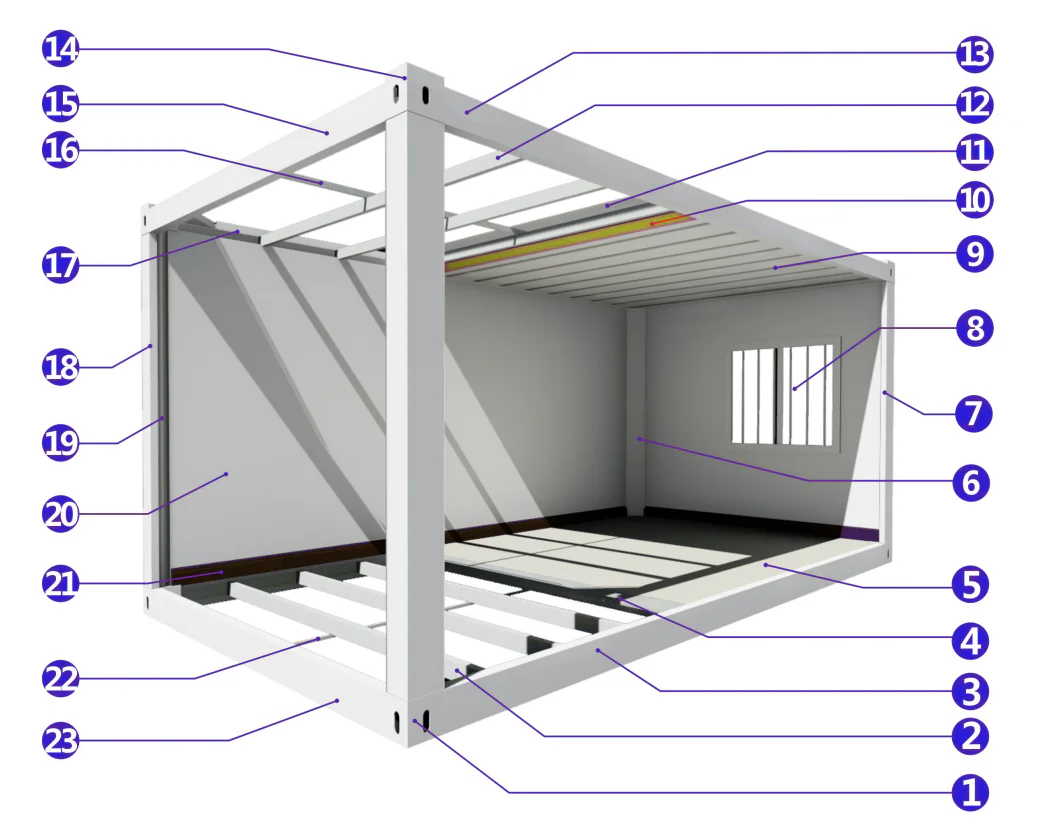
The following matrix is intended as a pre-issue control tool. Not every item belongs in every project, and the applicable engineering criteria must come from the project team and relevant jurisdiction.
| Tender section | Define before issue | Require from bidder |
|---|---|---|
| Configuration | Building types, quantities, layouts, room schedules, occupancy assumptions, connected/standalone arrangement, accessibility requirements where applicable | Proposed arrangement, dimensional data, configuration drawings and identified departures |
| Modular system | Required system or alternative rules; factory/site completion boundary; relocation intent | System description, transport state, assembly concept and alternative statement if applicable |
| Structure | Governing project criteria, loading basis, structural interfaces, foundation/anchorage responsibility | Proposed structural basis, requested engineering data and required evidence according to tender stage |
| Envelope | Roof, wall, floor and opening performance; finishes; environmental criteria; interface details | Proposed constructions, technical data and deviations |
| Internal finishes | Room-specific floor, wall, ceiling, door, hardware and wet-area requirements | Finish schedule and included/excluded accessories |
| Electrical | Incoming supply basis, internal distribution boundary, fixtures, outlets, earthing interface, external connection point | Load data, single-line or schematic information where required, included equipment and connection boundary |
| Plumbing/drainage | Fixtures, internal pipework, water/heating scope, drainage termination and venting interfaces | Fixture schedule, connection points, service requirements and exclusions |
| HVAC/ventilation | Indoor-condition basis where specified, ventilation requirements, equipment scope and control philosophy | Equipment proposal, loads/data required by tender and external service assumptions |
| Fire/life safety | Project-specific requirements and responsibility split | Proposed compliant scope and evidence required by the procurement documents |
| Factory completion | Items required complete before shipment and items intentionally deferred to site | Factory completion statement by discipline |
| Transport/packing | Destination, transport assumptions, handling constraints, protection requirements and shipment documentation | Packing concept, transport configuration, handling assumptions and excluded logistics |
| Unloading/staging | Available access, cranes or lifting assumptions, laydown area and site restrictions | Required lifting/handling resources and sequence assumptions |
| Foundations/site works | Foundation responsibility, design-input boundary, site preparation, roads, external services | Required interface loads/data and manufacturer-supplied connection details |
| Installation | Supplier supervision, labor, plant, consumables, temporary works, testing and commissioning boundaries | Installation methodology, resource assumptions and exclusions |
| Inspection/QC | Required factory and site inspections, hold/witness points, evidence and third-party requirements | Proposed inspection plan and records to be submitted |
| Documentation | Drawing register, calculation requirements, schedules, manuals, reports, submission stages and formats | Document-deliverables schedule |
| Handover | As-built requirements, manuals, test records, punch-list closeout and training if applicable | Handover-document list and completion responsibilities |
| Lifecycle | Maintenance expectations, access, relocation/reuse intent and spare-item requirements where relevant | Maintenance information and project-specific recommendations |
| Commercial return | Required pricing structure, optional items, allowances, taxes/freight basis where applicable and exclusions | Completed price schedule without substitution by a lump-sum quotation |
| Program return | Required milestone definitions | Engineering, approvals, manufacture, inspection, packing, shipping-readiness and site assumptions as relevant |
The value of the matrix is not its length. Its value is that each item forces a question: is this requirement defined, intentionally left open, or assigned to someone else?
Treat Factory Completion as a Measurable Scope Boundary

“Factory finished” is too vague for a serious tender.
A modular building can contain multiple completion states simultaneously. Structural framing may be complete, internal finishes nearly complete, MEP partly installed and external building-to-building services entirely excluded.
A more useful bidder-return schedule asks for completion by work package:
| Work package | Factory | Site | By others | Bidder clarification required |
|---|---|---|---|---|
| Structural frame | ||||
| External wall system | ||||
| Roof system | ||||
| Internal partitions | ||||
| Floor finish | ||||
| Doors/windows | ||||
| Internal electrical | ||||
| Module-to-module electrical connection | ||||
| Internal plumbing | ||||
| Connection to site water network | ||||
| Connection to site drainage | ||||
| HVAC equipment | ||||
| External stairs/platforms | ||||
| Furniture/equipment | ||||
| Testing |
A supplier should not be forced into a scope it cannot perform merely to make the table look complete. “By others” is acceptable when that is the intended contracting strategy. The problem is an undefined blank.
Define the Responsibility Matrix Before Price Comparison Begins
Modular projects usually involve several organizations whose responsibilities overlap at physical interfaces.
The manufacturer cannot establish unknown site conditions. The EPC cannot manufacture project-specific units without approved design information. A local engineer’s statutory role depends on the jurisdiction. An authority having jurisdiction cannot be replaced by supplier approval. A third-party inspector can inspect against defined criteria but does not automatically assume the designer’s responsibility.
A useful tender therefore assigns responsibility by action.
Modular Project Responsibility Matrix
| Activity | Manufacturer | Buyer / EPC | Site contractor | Local engineer / AHJ | Third-party inspector |
|---|---|---|---|---|---|
| Establish employer/project requirements | Provides technical input | Lead | Input as needed | Advises on local requirements | Normally no |
| Confirm destination and site information | Uses supplied information | Lead / coordinates | Provides site data | Reviews where required | No |
| Develop manufacturer design within agreed scope | Lead | Reviews/coordinates | Interface input | Local review where required | Verification only if contracted |
| Define foundation/site interface | Supplies module loads/interface data as agreed | Coordinates design basis | Executes assigned works | Design/review where applicable | Inspect if contracted |
| Manufacture modules/components | Lead | Surveillance if required | No | Normally no | Inspection if required |
| Factory QC | Lead | Defines contractual requirements | No | As required by project | Witness/verify if contracted |
| Packing | Lead if included | Defines destination constraints | Handling input | No | Inspect if specified |
| Freight/import | According to contract | According to contract | Local coordination as assigned | No | No |
| Unloading/staging | Technical instructions if included | Coordinates responsibility | Often executes | No | Observe if required |
| Site assembly | Supply/supervision/installation according to contract | Coordinates | Often executes | Review where required | Inspect if required |
| External utility infrastructure | Interface data | Coordinates | Usually executes | Designs/reviews where applicable | Inspect if specified |
| Final utility connection | Defined supply boundary | Coordinates | Usually executes | Reviews/approves as applicable | Inspect/test if required |
| Local approval | Supplies agreed technical documents | Coordinates applicant responsibilities | Supports site evidence | Professional/statutory role where applicable | Does not replace AHJ |
| Commissioning/handover | Within contracted scope | Accepts/co-ordinates | Site support | Where applicable | Witness if contracted |
This matrix should be adapted to the actual project and jurisdiction rather than copied unchanged into every RFQ.
A local distributor, agent or procurement intermediary can also hold legitimate responsibilities—for example local logistics coordination, installation support, import administration or after-sales service. The tender should make those responsibilities contractually visible. The issue is not whether an intermediary exists; the issue is whether the buyer can see what that organization is responsible for and what value is included in its price.
Make MEP Interfaces Explicit
MEP language creates some of the most persistent tender ambiguities.
Consider the statement:
Electrical system included.
It does not establish a useful procurement boundary.
A tender should instead determine which of the following belong to the supply:
- internal wiring;
- distribution boards;
- luminaires;
- switches and sockets;
- equipment isolators;
- earthing within the building;
- module-to-module connections;
- external feeders;
- site transformer or distribution system;
- external trenching/cabling;
- testing;
- local modification;
- final energization.
Plumbing needs the same treatment:
- fixtures;
- internal water distribution;
- internal drainage;
- water heaters;
- venting;
- module-to-module connections;
- termination beneath or outside the module;
- external water network;
- external sewer or treatment system;
- final hookup and testing.
The tender does not necessarily need to include all of these in the manufacturer scope. It needs to say where the boundary is.
KUBO’s public procurement resources make the same distinction between factory supply, project coordination, site/utility interfaces and local execution.
Control Evidence Before the Tender Is Released
A specification should not merely say “submit certificates.”
It should define what evidence answers what question.
Different documents establish different things.
A material datasheet may identify composition or manufacturer-stated properties. A calculation may address a project-specific engineering question. A test report may address a defined tested configuration. An inspection record can establish that an inspection occurred against identified criteria. A quality-management certificate concerns the stated management-system scope; it is not automatically product certification.
KUBO’s modular building planning resources and document guidance explicitly makes these distinctions. Its public company catalog is a general system reference rather than a project technical specification, while layouts, editable drawings, installation references, packing references, calculations, tests and reports can depend on system, configuration, destination, site conditions, project stage and agreed scope.
That evidence discipline should be reflected in the tender.
Evidence Schedule Example
| Requirement | Tender requirement | Evidence requested with bid | Evidence after design | Evidence before shipment |
|---|---|---|---|---|
| System configuration | Conform to defined layout/function | Proposed arrangement | Approved drawings | As-built/final record if required |
| Structural basis | Meet stated project criteria | Design approach and declared basis | Project-required calculations/review | Release evidence required by contract |
| Envelope | Meet specified construction/performance | Technical data | Approved details | Inspection/test documentation where specified |
| MEP scope | Meet defined service requirements | Schedules and interface statement | Coordinated drawings | Test records where applicable |
| Packing | Meet defined handling/protection basis | Packing concept | Final packing plan if required | Packing/inspection record |
| Documentation | Submit specified deliverables | Bid deliverables register | Controlled design submissions | Final dossier |
The exact evidence depends on the project. Asking every bidder for every document at tender stage can be wasteful. Asking for too little can make technical evaluation speculative.
The solution is to establish evidence by stage.
Do Not Use Factory Images as Technical Proof
Manufacturing photographs have a legitimate procurement role, but a limited one.
Factory photographs can help a buyer understand manufacturing context, processes being shown and the physical environment in which equipment or fabrication activities are visible.
They do not prove:
- production throughput;
- dimensional tolerance;
- structural performance;
- certification;
- project compliance;
- testing scope;
- production capacity;
- a particular project’s workmanship.
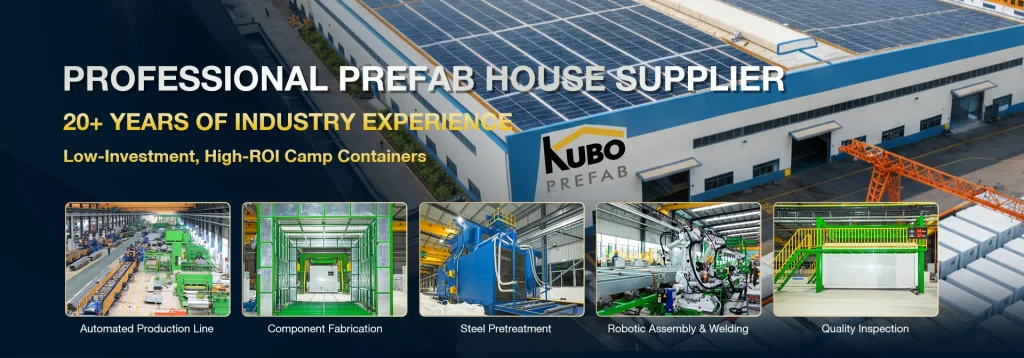
KUBO factory images show manufacturing context including robotic frame welding and steel-processing equipment. They should be treated as visual manufacturing references, not substitutes for controlled project evidence.
The same rule applies to product illustrations. An illustration showing frame, floor, roof, wall, window and drainage component groups can help explain system architecture. It should not be converted into an assumed project bill of materials.
This distinction matters at BOFU stage because attractive evidence can easily be asked to answer a question it was never designed to answer.
Build the Bidder-Return Package Before You Issue the Tender
A specification controls what the buyer asks for. A bidder-return package controls how the bidder must answer.
Without structured return schedules, bidders often respond using their normal proposal formats. Procurement then receives five different documents organized around five different suppliers’ internal systems.
That makes omissions difficult to detect.
A modular tender return package should normally consider the following.
1. Compliance Schedule
Require a response against identified requirements.
Useful response categories may include:
- Comply;
- Comply subject to clarification;
- Deviation;
- Not applicable.
Do not permit “Comply” to override a contradictory technical attachment. The tender should state that qualifications and deviations must be declared.
2. Deviation Schedule
Every known departure should reference:
- requirement ID;
- document and revision;
- requirement;
- offered alternative;
- reason;
- supporting evidence;
- affected drawing or discipline;
- price effect where requested;
- schedule effect where requested.
Detailed technical adjudication comes after tender receipt; the pre-issue job is to ensure bidders have a controlled place to declare the deviation.
3. Inclusion and Exclusion Schedule
Do not rely only on a list entitled “Exclusions.”
Require both.
An inclusion schedule confirms what the bidder believes it has priced. An exclusion schedule identifies what remains outside that scope.
This is particularly valuable for:
- furniture;
- appliances;
- external stairs;
- canopies;
- foundations;
- lifting;
- assembly;
- supervision;
- external utilities;
- commissioning;
- third-party inspection;
- professional review;
- permitting support.
4. Technical Data Schedule
Do not ask the evaluator to search dozens of datasheets for core bid parameters.
Create a project-specific return sheet containing the data the evaluation team will actually compare.
5. Drawing and Document Schedule
Require bidders to identify:
- documents submitted with the tender;
- documents proposed after award;
- documents requiring buyer input;
- documents requiring approval before manufacturing;
- documents required before shipment.
6. Price Schedule
The price schedule should map to the technical scope rather than exist as a disconnected commercial spreadsheet.
Tender preparation should determine which packages require distinct pricing so that omitted or optional scope can be recognized later. Detailed landed-cost reconciliation belongs to a separate commercial exercise; the specification’s upstream job is simply to make the offer boundary intelligible.
7. Program Schedule
“Delivery in X weeks” is rarely sufficient for a modular project.
Ask bidders to identify the basis of the program, such as:
- commencement trigger;
- required buyer inputs;
- design/document submissions;
- approval dependencies;
- procurement or manufacturing milestones where relevant;
- inspection/release assumptions;
- packing readiness;
- shipment-readiness milestone;
- destination/site activities where included.
The tender should not force bidders to promise milestones that depend on information the buyer has not yet committed to provide.
Create a Requirement-to-Bid-to-Award Traceability Loop
The most important control in a technical tender is not a beautifully formatted specification. It is the ability to answer:
Where did this requirement go?
A requirement should remain traceable from issue through bid response, clarification and final contract incorporation.
Traceability Register
| Field | Purpose |
|---|---|
| Requirement ID | Permanent reference for the technical obligation |
| Source document | Identifies where the requirement originated |
| Revision | Prevents evaluation against superseded text |
| Requirement text/summary | Defines the controlled requirement |
| Requirement type | Mandatory, rated, information, interface or other project category |
| Bidder response | Records the bidder’s declared position |
| Evidence reference | Identifies supporting document |
| Deviation status | Indicates whether a departure exists |
| Clarification reference | Connects tender questions and answers |
| Technical disposition | Records the evaluation outcome |
| Commercial treatment | Identifies price/scope consequence where applicable |
| Final agreed requirement | Records the award basis |
| Contract-document location | Shows where the requirement was incorporated |
A simple example illustrates why this matters.
Suppose ENV-014 specifies a particular envelope requirement.
The bidder responds that its standard wall construction differs and provides technical evidence.
Clarification modifies one aspect of the bidder’s proposal.
The tender team accepts the alternative.
If that accepted position exists only in clarification correspondence, the project now has two baselines: the tender specification and the supplier’s interpretation.
The final step in the loop therefore matters as much as the technical review: the accepted position must be incorporated into the controlled award documents.
The Loop
Requirement → Bidder response → Evidence → Deviation status → Clarification → Technical disposition → Commercial treatment → Final contract location
That sequence should be designed before tender issue even though several fields will remain blank until evaluation.
Separate Mandatory Requirements From Rated Criteria
Not every desirable feature should become a mandatory pass/fail condition.
Some requirements establish the minimum acceptable project solution. Others differentiate the quality of technically acceptable proposals.
Confusing the two makes evaluation harder.
The World Bank’s Rated Criteria guidance, within the World Bank procurement framework, recommends defining the evidence bidders must provide, the evaluation methodology, criteria and associated weightings. It also warns against vague criteria and duplication between rated criteria and mandatory requirements.
A modular tender might therefore distinguish:
Mandatory compliance examples
- required building functions;
- defined interface compatibility;
- mandatory project criteria;
- minimum documentation obligations;
- compulsory scope boundaries.
Potential differentiating criteria, where the procurement method permits them
- project-specific methodology;
- risk-management approach;
- installation planning;
- technical solution quality;
- relevant evidence demonstrating the proposed approach.
Do not invent scoring after tenders arrive.
If an attribute will influence award, the tender should say how.
Match the Procurement Document Family to the Contracting Strategy
A modular project can be procured under different contractual structures.
Some contracts resemble supply of goods. Others include substantial engineering, installation or works. Larger packages may resemble plant design-and-build or design/supply/installation models.
There is no universally correct document family.
ADB’s current bidding-document index illustrates the point within the ADB framework: it provides separate families for works, Plant & Design Build, Plant–Design, Supply and Installation, and goods, with one-envelope, two-envelope and merit-point variants. That structure should not be exported as a universal rule, but it shows why the procurement document should match the actual delivery model instead of forcing every modular project into a generic equipment RFQ.
A package containing design, fabrication, transport, site erection and commissioning needs different risk controls from a factory-supply-only order.
The specification must follow the contract model.
Define Site Inputs Before Making the Manufacturer Responsible for the Site
A tender may require the manufacturer to design interfaces, but the manufacturer still needs reliable inputs.
Depending on the project, relevant tender information can include:
- site location;
- site plan;
- topographic information;
- geotechnical information where relevant;
- foundation strategy;
- available access and route restrictions;
- crane or lifting limitations;
- laydown area;
- utility characteristics;
- connection locations;
- environmental design criteria;
- drainage strategy;
- construction sequencing;
- adjacent structures;
- local approval assumptions.
Where information is not available, say so.
A declared assumption can be priced and managed.
An undisclosed unknown becomes a future dispute.
Create a Tender-Release Gate
Before issue, the project team should perform a structured release review.
Tender-Release Gate
| Gate question | Release condition |
|---|---|
| Is the project brief frozen to the intended tender stage? | Current revision approved |
| Are building types and quantities controlled? | Building schedule issued |
| Are room/equipment requirements coordinated? | Conflicts resolved or explicitly identified |
| Is the modular-system basis defined? | Fixed system or alternative rules stated |
| Are governing project criteria identified? | Applicable criteria listed by responsible discipline |
| Are manufacturer/site interfaces assigned? | Responsibility matrix issued |
| Are MEP termination points defined? | Interface schedules completed |
| Are factory and site completion boundaries defined? | Completion matrix included |
| Are transport and handling assumptions stated? | Tender logistics basis issued |
| Are bidder evidence requirements proportional and clear? | Evidence schedule included |
| Are mandatory and rated criteria separated? | Evaluation basis approved |
| Is there a controlled deviation-return form? | Bidder form included |
| Are inclusions/exclusions explicitly returned? | Return schedules included |
| Does the price schedule follow the technical scope? | Commercial/technical mapping checked |
| Does the program schedule define milestone meanings? | Program return format included |
| Is document precedence defined? | Tender instructions completed |
| Can important requirements be uniquely referenced? | Requirement IDs assigned |
| Are the final award-document destinations anticipated? | Contract-document index framework created |
A tender should not pass the gate merely because a deadline has arrived.
An unresolved interface does not disappear when the RFQ is issued. It simply moves from engineering into bidder assumptions.
Apply a Formal Responsibility Check Before Tender Release
The release meeting should include the people who understand the consequences of the requirements being issued.
The World Bank’s technical-specification guidance emphasizes early involvement or consultation with relevant stakeholders because a procurement can be procedurally successful while still failing to meet operational needs.
For a modular camp or project-building tender, the review group may therefore require representation from:
- project management;
- procurement;
- architecture/building planning;
- structural engineering;
- civil/site engineering;
- electrical engineering;
- mechanical/plumbing engineering;
- logistics;
- construction;
- operations or end users;
- local compliance professionals where required.
That does not mean every person writes the specification.
It means requirements that affect them should not be frozen without their input.
The UK Government Commercial Function’s MMC guidance makes a related point in the UK public-procurement context: modern methods of construction require MMC-specific contracting considerations and project-specific legal and commercial advice.
Common Tender Specification Failures and Their Project Consequences
“All buildings complete”
Problem: Complete at what point—factory release, unloading, assembly or utility connection?
Consequence: Site labor and installation costs become difficult to compare.
“Electrical included”
Problem: The termination boundary is missing.
Consequence: External distribution, module connections or final hookup may emerge as unpriced scope.
“Supplier to meet local standards”
Problem: The applicable standards, approval route and responsible professional are undefined.
Consequence: Bidders make different regulatory assumptions.
“Equivalent alternatives accepted”
Problem: No equivalency criteria or return schedule is defined.
Consequence: Procurement cannot distinguish a genuine equivalent from a commercial substitution.
“Provide all certificates”
Problem: The required evidence is undefined.
Consequence: Large document packages are received without answering the actual technical question.
“Installation by supplier”
Problem: Labor, lifting plant, temporary works, accommodation, tools, consumables and commissioning boundaries are missing.
Consequence: Site-scope assumptions become commercially material after award.
“Delivery required by project date”
Problem: Buyer approvals and site-readiness dependencies are not defined.
Consequence: The contractual schedule can assign risk to a party that does not control the prerequisite.
“As per supplier standard”
Problem: The bidder’s standard is not attached or identified.
Consequence: The contract incorporates an undefined technical baseline.
These problems rarely remain “just documentation issues.” They propagate into engineering changes, commercial qualifications, procurement delay, site disruption, rework, temporary works and disputes over responsibility.
What the Bidder Should Receive on Day One
A disciplined modular RFQ package should give a bidder enough information to understand both the building and the procurement process.
A practical release package may include:
- instructions to bidders;
- project brief;
- building schedule;
- room/equipment schedule;
- drawings;
- technical specifications;
- modular-system basis;
- interface matrix;
- factory/site completion matrix;
- responsibility matrix;
- document/evidence schedule;
- compliance schedule;
- deviation schedule;
- inclusions/exclusions schedule;
- technical-data returns;
- price schedule;
- program schedule;
- alternative-offer form;
- document register and revision status.
Not every project requires a large tender volume. A small temporary site-office package can use a proportionately simpler structure.
The control principles should remain the same.
What KUBO Needs to Prepare a Tender-Stage Proposal
A useful manufacturer response depends heavily on the quality of the enquiry.
For early system screening and proposal development, useful project information can include:
- project country and destination;
- intended building functions;
- approximate quantity;
- accommodation or room schedule;
- preferred layouts or connected-building requirements;
- site access and handling constraints;
- expected project duration;
- relocation or reuse intentions;
- utility requirements;
- installation responsibility;
- schedule requirements;
- structural or environmental criteria already established;
- approval requirements already identified;
- tender specifications and drawings;
- required bidder-return formats;
- mandatory evidence or documentation requirements.
KUBO’s public resources distinguish general product information from configuration-specific project documentation. That matters during tender preparation: a catalog can help shortlist a system, but it should not silently become the final technical specification for a project.
If you are preparing an RFQ, EPC tender or project-building package, you can request a project and tender document review. Provide the current specification, building schedule, drawings, project destination, required quantities, utility basis, installation boundary and bidder-return requirements where available. KUBO can then review the enquiry against the selected modular system and agreed supply scope rather than responding only from a general catalog configuration.
Related Procurement Guides
- How to Compare Technical Deviations in Modular Building Quotations
- Modular Building Cost Factors: What Determines the Cost of a Project?
- Modular Building Factory Audit Checklist for Overseas Buyers
Frequently Asked Questions
What should a modular building tender specification include?
At minimum, it should establish the project basis, building functions and quantities, modular-system boundary, technical requirements, discipline interfaces, factory/site responsibility split, document requirements, bidder-return schedules, commercial scope format and program assumptions.
For larger EPC or camp packages, a responsibility matrix and requirement-traceability register are particularly useful because they keep engineering and commercial interfaces visible throughout procurement.
Should a modular building tender specify the exact modular system?
Only when the system itself is a justified project requirement.
If the project has already engineered interfaces around a particular structural or deployment system, prescribing that basis may be appropriate. Where several systems could satisfy the project, the tender can instead define required outcomes and state how alternatives will be evaluated.
A strong compromise is a mandatory baseline offer plus separately identified alternatives.
What is the difference between a modular building tender specification and an RFQ?
The RFQ is the wider procurement request. The technical specification is one controlled part of that request.
The RFQ can also contain instructions, contractual terms, evaluation rules, price schedules, program schedules and bidder-return forms.
The specification defines what the project requires technically; the RFQ tells the bidder how to submit an offer against that requirement.
How detailed should the tender be before contacting a modular building manufacturer?
It should be detailed enough to prevent bidders from pricing materially different assumptions, but it does not need to contain the final construction design unless the procurement strategy requires that.
If configuration development remains part of the supplier’s scope, define the performance requirements, fixed interfaces, project criteria, required outputs and evaluation method rather than inventing unresolved design details simply to make the tender look complete.
Should the tender request a compliance statement?
Yes, but a generic one-page declaration is rarely enough for a complex modular project.
A clause-by-clause or requirement-by-requirement compliance schedule is more useful. It gives the evaluation team a common structure for identifying compliance, qualifications, deviations and supporting evidence.
The tender should also require deviations to be declared separately.
Should bidders be allowed to offer deviations?
That depends on the procurement rules and the requirement.
Where alternatives are permitted, forcing bidders to conceal technically reasonable differences can reduce transparency. A controlled deviation or alternative schedule is usually more useful than encouraging bidders to describe every proposal as fully compliant.
The tender should establish which requirements are non-negotiable and how permitted alternatives will be assessed.
Who is responsible for local approval of an imported modular building?
There is no globally universal allocation.
The buyer/EPC, manufacturer, local engineer, permitting applicant, contractor and authority having jurisdiction can have different roles depending on the country, contract and project type.
The tender should therefore state the intended responsibility structure rather than assuming the overseas manufacturer can guarantee approval in a jurisdiction where other professionals or authorities hold statutory responsibilities.
What site information should be included in a modular tender?
Include the site information that materially affects design, logistics, installation or interfaces and is available at tender stage.
This may include location, environmental criteria, access, layout, site levels, geotechnical information where relevant, utility conditions, foundations, unloading constraints, staging space and construction sequencing.
Where information remains unavailable, identify the missing item and define the tender assumption or later verification process.
Should packing and transport requirements be part of the technical specification?
They should be addressed somewhere in the controlled tender package when they affect the proposed modular system or condition at delivery.
Packing format can influence handling, field assembly and shipment planning. The tender should distinguish product design requirements from shipping assumptions while making the interface between them visible.
KUBO notes that packing and loading references are configuration-dependent and can change with the selected system, confirmed quantity and shipping plan.
How should the buyer compare a supplier’s standard specification with the project specification?
Treat the project specification as the procurement baseline unless the tender explicitly states otherwise.
Require the bidder to map its proposed configuration against that baseline. Differences should be identified in the deviation schedule rather than forcing evaluators to compare two complete specification documents manually.
After tenders are received, technical deviations should be evaluated against the original requirement, supporting evidence, interface consequences and final commercial treatment rather than accepted through general supplier-standard wording.
When should the modular building specification be frozen?
Freeze the tender issue baseline when the information required for fair bidding has been sufficiently coordinated and formally approved for that procurement stage.
Do not confuse tender freeze with final design freeze. Supplier design development may continue after award where the contract provides for it.
The crucial control is revision management: bidders must know which revision they priced, and post-tender changes must be traceable.
Sources and References
- World Bank Procurement Guidance: How to Write Technical Specifications for Goods, Works, or Nonconsulting Services, June 2025 — guidance on purchaser requirements, specification completeness, stakeholder involvement, neutral specifications, and conformance versus performance specifications.
- World Bank Rated Criteria guidance — guidance on evidence, evaluation methodology, criteria, weightings and separation from mandatory requirements within the World Bank procurement framework.
- Asian Development Bank standard bidding document index — current ADB examples of different bidding-document families and evaluation structures for works, plant/design-build, plant design/supply/installation and goods.
- International Code Council Off-Site and Modular Standard Consensus Committee — scope of off-site construction considerations including design, fabrication, transport, assembly, inspection, regulatory roles and MEP integration.
- UK Government Commercial Function guidance on modern methods of construction — UK-context guidance emphasizing MMC-specific contracting considerations and project-specific legal and commercial advice.