

Summary
Brazil renewable energy camp procurement should compare complete delivery routes, not a factory building price against a locally installed camp price. An imported KUBO package can combine accommodation, offices, sanitary, dining, storage and other support buildings with controlled drawings, factory inspection, export packing and installation information. The buyer’s Brazilian delivery plan must add the named port or delivery point, customs process, inland route, unloading, foundations, utilities, installation, technical responsibility and acceptance. Imported buildings tend to fit longer projects, larger coordinated packages, customization or planned reuse; local rental or locally sourced modules may fit short deployment and rapid local service. Issue one Portuguese scope brief and one route basis before comparing offers.
What Brazil renewable energy camp procurement must decide before bid alignment
A developer, EPC/EPCM procurement team or prime contractor planning a solar construction camp in Brazil is rarely choosing only a room module. The commercial decision is how to assemble a functioning temporary facility from two connected scopes: a repeatable building package produced under controlled factory documents, and a Brazil-based delivery and installation package adapted to the project municipality, route, site and local technical requirements.
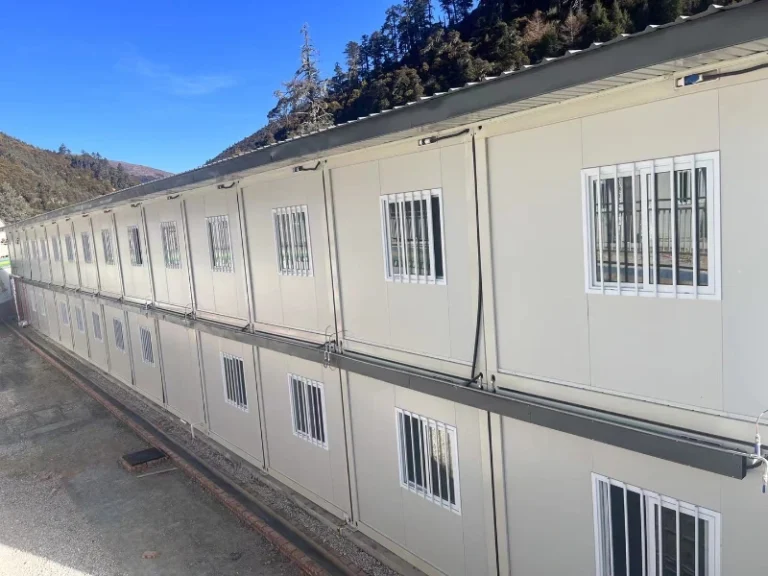
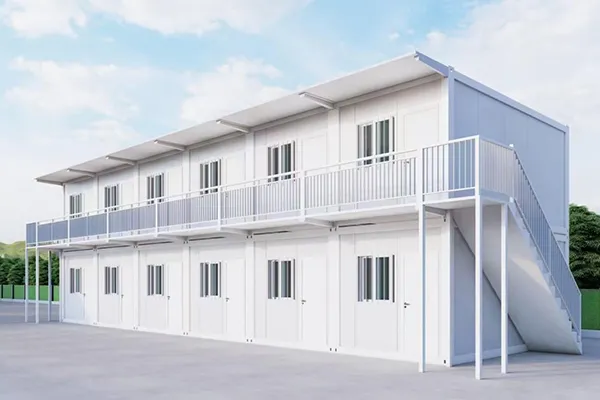
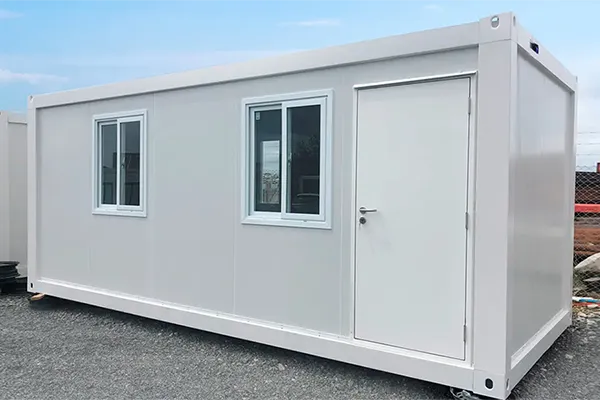
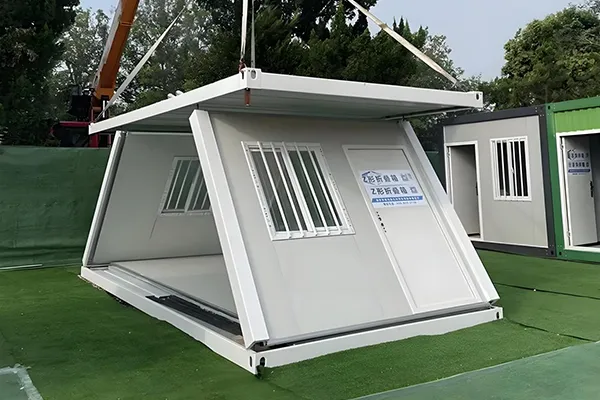
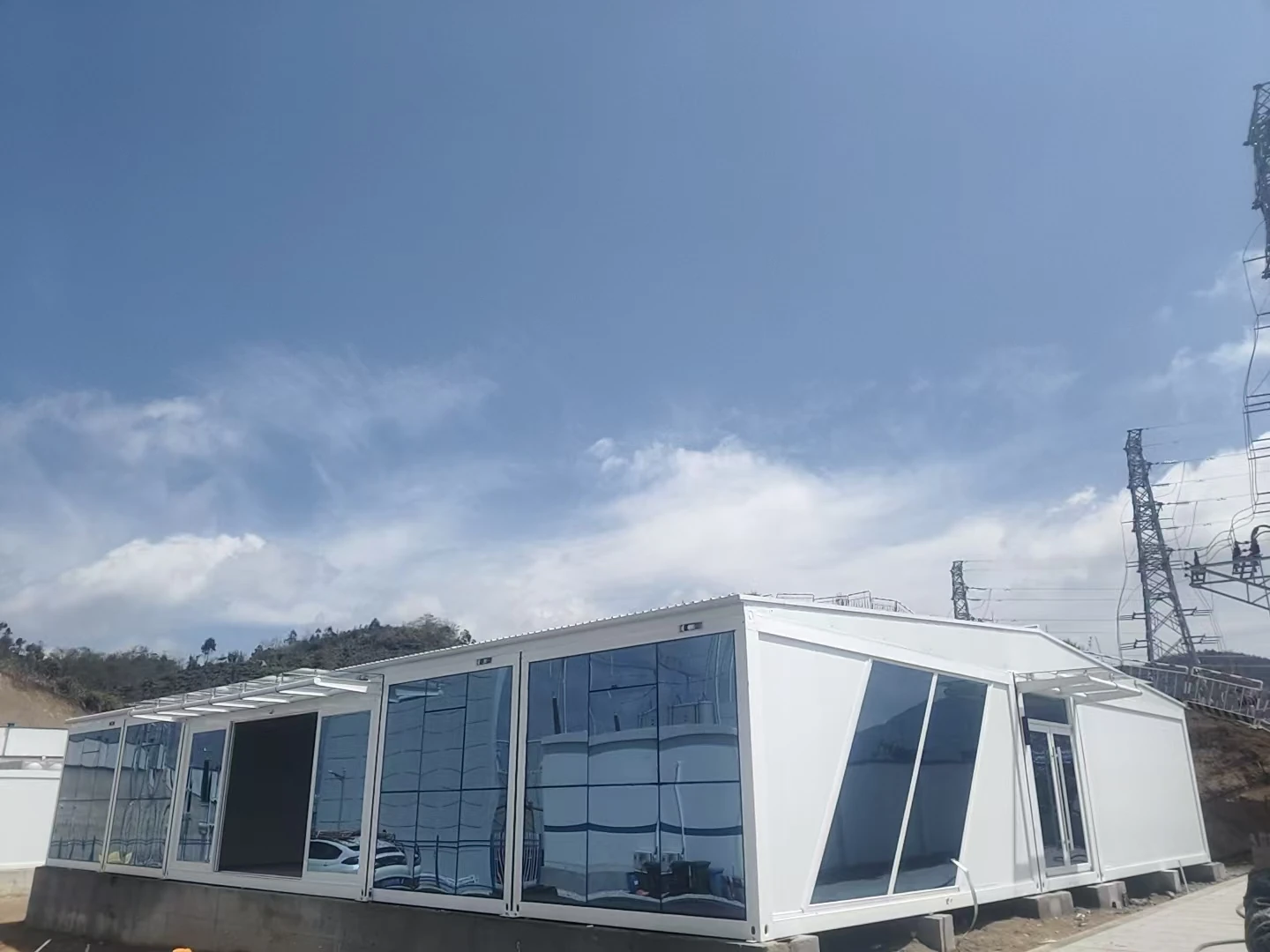
KUBO can configure a coordinated building schedule around accommodation, project-control rooms, offices, welfare spaces, sanitary facilities, dining functions, storage and related support uses. Depending on the brief, flat-pack or detachable-flat-pack systems can be considered after the functions, transport route, site conditions and assembly resources are understood. The agreed factory scope can then cover controlled project drawings and specifications, production and inspection, export packing and documents, installation manuals, and technical clarification within the contracted package. Buyers evaluating that route can review KUBO’s renewable energy project camp solutions before developing the project-specific schedule.
The Brazil-based side closes the interfaces that cannot be priced reliably from a country name alone: importer arrangements, classification and licensing review, the selected port or destination point, inland transport, road and bridge checks where required, receiving conditions, cranes and unloading, laydown, foundations, utility connections, installation labor, local engineering responsibility, inspections and approvals. When these items are absent, two apparently similar quotations can represent materially different deliverables.
This makes the article a procurement and scheme-alignment guide rather than a directory of suppliers. The useful output is one comparable brief that lets an imported factory package, an imported-plus-local-integration proposal and a local rental or purchase proposal be assessed against the same first-use requirement.
Choose the delivery model before comparing headline prices
There are three practical paths for a Brazil modular workforce camp. None is automatically correct. The choice changes with project duration, required quantity, room mix, customization, reuse strategy, import readiness, local labor and engineering resources, site utilities, route constraints and the date the first buildings must be usable.
| Decision factor | KUBO factory building package | Imported package with buyer-appointed Brazilian integrator | Local rental or locally sourced modules |
|---|---|---|---|
| Best-fit procurement situation | A coordinated set of project buildings is required and the buyer can manage the destination interfaces separately. | The buyer wants an imported, project-specific building package but also wants one defined Brazilian party to manage site delivery and installation interfaces. | Short use, urgent local mobilization, small quantities or a strong need for local replacement and service may outweigh import and ownership benefits. |
| Customization and scalability | Function schedules and building configurations can be developed as one package before factory release. | Factory configuration remains coordinated while the local integrator translates the released package into foundations, utilities and site execution. | Usually depends on the local fleet or supplier’s available formats; fast availability can be more valuable than extensive customization. |
| Schedule certainty | Requires early freeze of functions, drawings, packing basis and export documents, plus a credible destination plan. | Can improve interface visibility if the local contractor is appointed early and reviews the factory package before production release. | Can reduce international logistics exposure, although local stock, installation capacity and fit for purpose still need confirmation. |
| Local-labor dependency | The buyer defines who receives, assembles, connects, tests and maintains the buildings in Brazil. | The appointed integrator’s labor plan, supervision, tools, lifting resources and technical responsibility become priced deliverables. | Local labor and service are commonly embedded, but the exact installation and maintenance inclusions must remain visible. |
| Logistics and site readiness | Export packing can be aligned with the agreed building schedule, but port, inland route, unloading, laydown and site access must share one release basis. | The factory packing sequence can be coordinated with the integrator’s receiving, storage and erection sequence. | International shipping is removed, while local transport access, unloading and prepared foundations still affect mobilization. |
| Utilities and approvals | Connection points and design inputs are defined in the factory documents; project-specific local review and connection remain part of the Brazil plan. | The local party can be assigned the design adaptation, utility tie-ins, technical registrations and inspection coordination stated in the contract. | Local familiarity may simplify coordination, but compliance, capacity and acceptance should still be checked for the named site and use. |
| Maintenance, relocation and lifecycle | Ownership can support reuse where dismantling, storage, replacement parts and the next deployment are planned. | The buyer can combine ownership with locally contracted maintenance and future relocation support. | Rental can transfer some maintenance and demobilization obligations, subject to the actual rental terms and damage rules. |
| Main interface risk | A gap between factory supply and destination execution if the local scope is not released at the same time. | Unclear division between factory documentation and the integrator’s local engineering or installation obligations. | A readily available module may not match the required room mix, operating period, utility demand or future reuse plan. |
| Total project-risk test | Add destination costs, activities and risk allowances before comparing the result with local alternatives. | Check that the combined contracts leave no unowned interface between port receipt and accepted camp operation. | Compare rental term, mobilization, adaptations, operation, damage exposure and demobilization with the project’s full duration. |
The comparison should end with an evaluated cost and responsibility position, not a debate over whether imported or local is cheaper in general. A factory quotation may be commercially attractive yet incomplete for the first-use milestone. A local installed quotation may carry more scope, local labor and risk. Normalize both to the same delivery point, acceptance state, operating period and room schedule.
Build the KUBO package around functions, not a premature module count
The most reliable starting point for imported modular camp buildings in Brazil is a building-and-function schedule. State what each space must do, who uses it, the anticipated occupancy range, operational hours, privacy or access needs, and which utilities serve it. Only after these inputs are reviewed should the team translate spaces into building arrangements and module quantities.
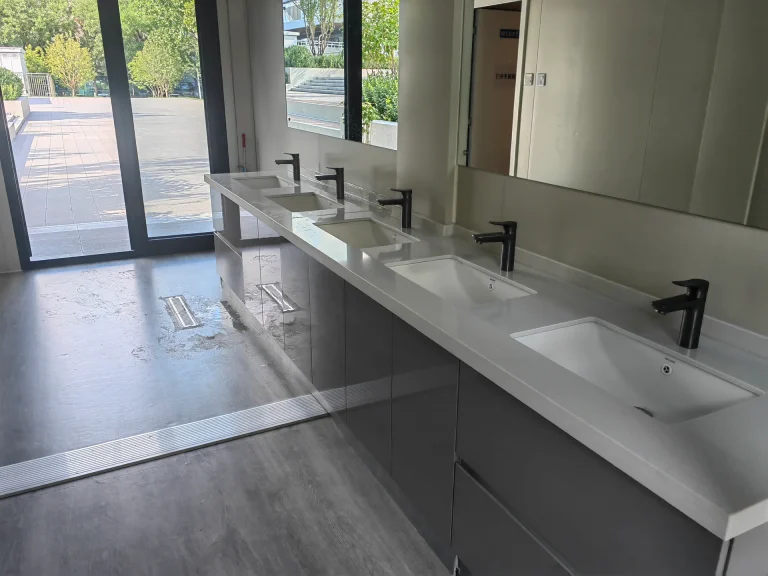
For a renewable project, the schedule may include resident accommodation, day-use welfare, sanitary and changing functions, dining or meal areas, project controls, meeting rooms, site offices, storage and other support buildings. The relative size of these functions changes through civil works, mechanical and electrical installation, commissioning and demobilization. If the workforce curve is still moving, identify an initial package, planned additions and the conditions for relocation or removal. KUBO’s detailed guidance on utility-scale solar workforce accommodation and wind-farm construction camps can support those technology-specific planning discussions without replacing the Brazil delivery brief.
Flat-pack and detachable-flat-pack solutions become meaningful choices only when the team knows the route, handling method, assembly capability and intended reuse. Packing density alone does not determine project suitability. The design must still coordinate room function, circulation, sanitation, dining, storage, utilities, foundations and site interfaces. Likewise, an attractive module count is not a complete capacity calculation: a camp can have enough beds but insufficient day-use welfare, or enough sanitary fixtures on paper but poor distribution between the camp and active work fronts.
Before a purchase order or production release, the buyer should approve a controlled room/building schedule, layout basis, openings and finishes schedule where applicable, utility interface list, drawing register, packing identification method, inspection and release points, and destination responsibility matrix. This reduces late reinterpretation between the English-language factory package and the Portuguese-language site team.
Use one route basis for every Brazil quotation
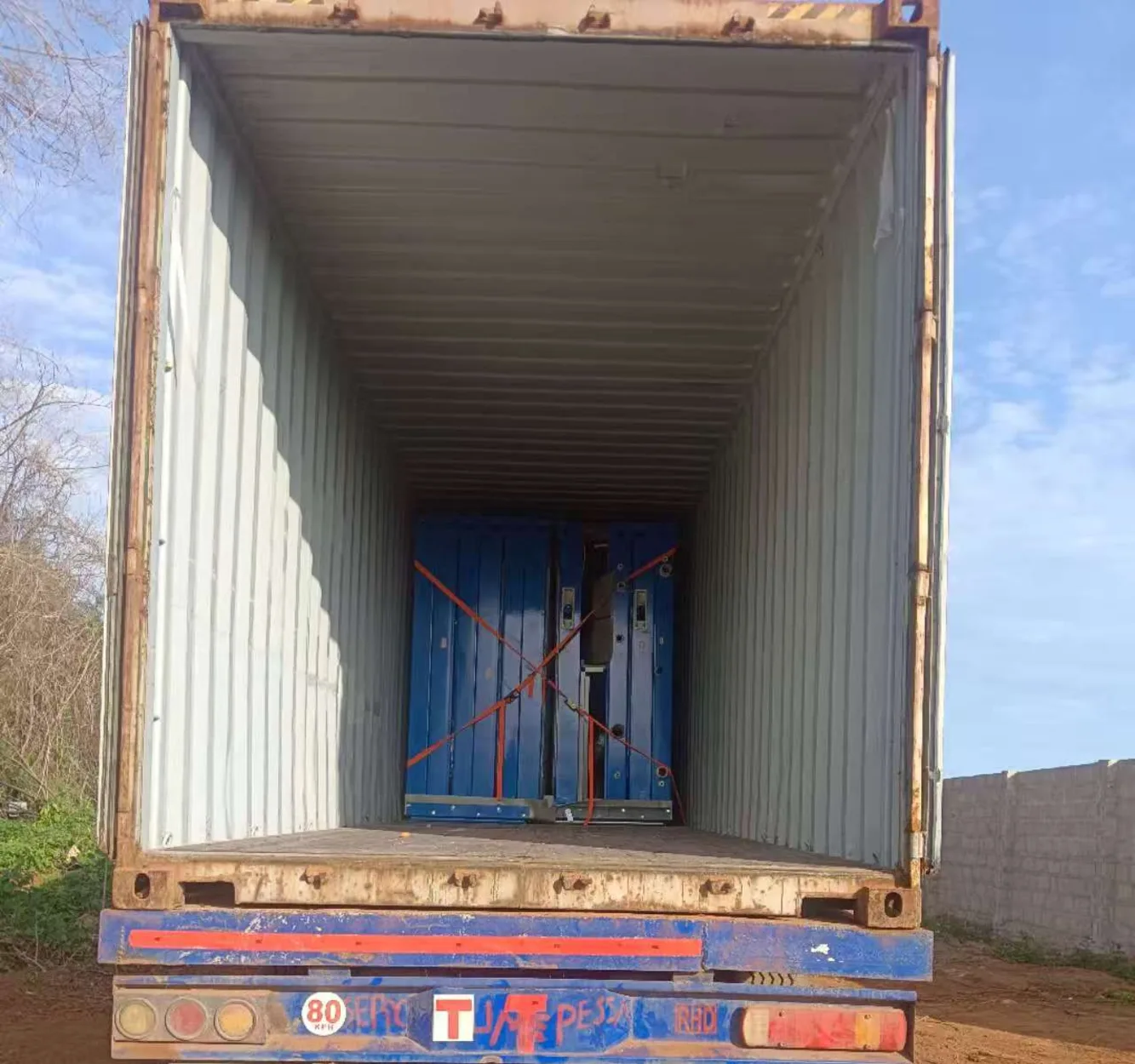
A named country is not a logistics basis. Brazil renewable energy sites can be far from candidate ports, and the inland leg may control equipment choice, packing, delivery sequence, temporary storage and lifting arrangements. Each bidder should therefore price against the same candidate port or agreed delivery point and the same final road-access assumption.
A documented planning example for a solar project near Monte Alegre do Piauí identifies access via BR-135 and PI-254 and considers Pecém, Sergipe and Salvador as port candidates at approximate study distances. That example does not select a port and is not a KUBO shipment record. Its procurement value is the method: preserve the project location and road basis, compare candidate gateways using current logistics checks, and release a route only after the responsible Brazilian parties validate it.
Route-release matrix for a comparable quotation
| Route item | Common quotation basis | Named owner before release | Evidence or decision required |
|---|---|---|---|
| Port or destination point | Use the same candidate—such as Pecém, Sergipe or Salvador in the planning example—or the same inland delivery point in every offer. | Buyer/EPC with customs and logistics advisers | Current service, cargo-handling, customs and onward-route review; no port is assumed selected merely because it appears in a study. |
| Import process | State who is importer, who prepares product data and who confirms the applicable declaration and licensing path. | Brazilian importer/customs professional, supported by supplier documents | Reviewed classification, product attributes and current Siscomex workflow before shipping documents are finalized. |
| Inland road basis | Name the municipality, site coordinates or controlled destination and the assumed road sequence; for the example, BR-135/PI-254 is a study basis. | Brazilian carrier or route-survey party | Vehicle envelope, weight, bridge or access restrictions, turning areas, seasonal conditions and final-site approach checked for the planned loads. |
| Permits and movement controls | Separate ordinary containerized movements from any load that requires special review. | Carrier and appropriate local specialists | Permit responsibility, application inputs and validity aligned with the transport plan. |
| Receiving window | Define delivery hours, call-off process, gate controls and the permitted number of arriving loads. | Site logistics manager | Delivery sequence matched to site access, laydown and installation priorities. |
| Unloading and crane | State whether the freight price includes unloading and who supplies lifting equipment, rigging and supervision. | Buyer/EPC or Brazilian installation contractor | Lift plan inputs, equipment availability, ground bearing conditions and safe working area confirmed. |
| Laydown and protection | Define the storage surface, drainage, security, weather protection and maximum dwell period before assembly. | Site contractor | Allocated area and preservation method compatible with the packing and erection sequence. |
| Shortage or damage reconciliation | Use package IDs, packing lists, receiving inspection records and a time-bound notification path. | Supplier and receiving team under the agreed contract procedure | Joint record distinguishing shipping shortage, transit damage, storage damage and installation consumption. |
This matrix changes the quality of the offer. Freight is no longer an undefined allowance to “Brazil”; it becomes a priced and reviewable movement from an agreed release point to an agreed receipt state. It also connects packing to site execution. If the installation team needs buildings in a particular sequence, package identification and container loading should follow that sequence where practical. The buyer can use KUBO’s guide to modular-building shipping documents when defining the commercial and receiving-document set.
Issue a Portuguese scope brief that preserves contractual meaning
Portuguese procurement language should do more than translate room names. It must show whether a line item is supply only, supply with installation, or an interface provided by another appointed party. Brazilian public procurement for Sistemas Modulares Habitáveis uses clear supply and installation terminology, demonstrating why fornecimento and instalação should remain visible commercial distinctions. A renewable-energy camp is a different project, but the discipline is useful.
The following field set can be used as a bilingual coordination aid. It is not a legal form or a certified translation. The buyer’s Brazilian legal, engineering, customs and procurement teams should review the final Portuguese issue for the actual contract.
| Portuguese field label | What the buyer should state | Why it changes the quotation |
|---|---|---|
| objeto e uso | Define each building’s purpose, user group, occupancy range, operating pattern and intended project duration. | Separates sleeping accommodation from day-use offices, welfare, dining, sanitary and storage functions. |
| local de entrega | Name the municipality/state, controlled site reference, candidate port or contractual delivery point and required receipt condition. | Establishes the distance, handling and risk boundary to be priced. |
| escopo de fornecimento | List buildings, components, drawings, manuals, export documents, spares or tools if agreed, and explicit exclusions. | Prevents a shell package, complete room package and installed facility from being compared as equivalents. |
| transporte e desembaraço | Assign international freight, insurance if applicable, importer role, customs data, clearance, duties/taxes treatment and inland carriage. | Determines both cost ownership and the documents required before dispatch. |
| descarga e armazenamento | Assign unloading, cranes or forklifts, rigging, receiving inspection, laydown, preservation and security. | Connects the delivery quotation to equipment availability and site readiness. |
| fundações e interfaces | Define who designs and constructs foundations and who closes structural, architectural, electrical, water, drainage, sewage and data interfaces. | These items control when a delivered package can become an operable building. |
| montagem e instalação | State labor, supervision, tools, temporary works, lifting, sequencing, weather protection, connections and completion records. | Turns the phrase “including installation” into measurable resources and outputs. |
| responsável técnico e ART/RRT | Identify the Brazilian professional or organization responsible for each local design, engineering and execution activity, with the applicable registration route confirmed locally. | Makes technical responsibility visible before mobilization rather than treating it as a late document. |
| inspeção, testes e aceite | Define factory checks, receiving inspection, installation completion checks, utility tests, document turnover, punch-list closure and acceptance authority. | Aligns payment and handover with an agreed condition instead of an undefined statement that modules have arrived. |
The brief should carry a revision number, issue date and approval status. When a Portuguese revision changes a room count, connection point or installation inclusion, the controlled factory schedule and the local contractor’s scope should change together. Otherwise, the project may manufacture against one interpretation while the receiving team prepares the site for another.
Use NR-18 as an early screen, not a final module schedule
Brazil’s current NR-18 section 18.5 provides a useful early check for construction-site living areas. It identifies sanitary facilities, changing rooms, meal areas and accommodation where workers are housed. It also sets screening ratios of one sanitary set per group of 20 workers or fraction, one shower per group of 10 or fraction, and one drinking-water device per group of 25 or fraction. Where accommodation is required, the lodging-related provision includes a kitchen when meals are prepared, a meal area, sanitary facilities, laundry and a recreation area.
Consider a hypothetical renewable project with 180 peak site workers but only 60 residents. Applying the stated ratios to the 180-worker screening population gives:
- 9 sanitary sets: ceiling of 180 divided by 20.
- 18 showers: ceiling of 180 divided by 10.
- 8 drinking-water devices: ceiling of 180 divided by 25.
The 60 residents are a different planning population. They influence beds, resident sanitation, laundry, recreation and meal arrangements, while the 180-worker peak informs broader site welfare screening. Treating resident count and peak site headcount as interchangeable can understate day-use facilities or overstate accommodation.
These results are not module quantities. A sanitary set may be distributed across more than one building or work area; showers need a practical layout, water supply, hot-water strategy where required, drainage, privacy and maintenance access; drinking-water devices must be positioned in relation to actual work locations. Shift patterns and meal waves also affect how the camp operates even where a simple regulatory ratio does not state the final room size. A Brazilian qualified professional should confirm applicability, layout, other relevant rules and the project’s final design.
For procurement, the useful step is to place the screening population and calculated minimums beside the proposed building schedule. If a bidder’s schedule differs, ask whether the difference comes from population assumptions, distribution between work fronts and camp, operating shifts, local design input or a missing function. The discussion becomes traceable before modules are frozen.
Allocate technical responsibility before the factory release
Brazilian Law No. 6,496 establishes ART for engineering, architecture and agronomy services and states that ART defines the legally responsible technical professionals for the relevant undertaking. Architecture and urbanism may involve the corresponding RRT framework. For a cross-border modular package, the practical procurement point is straightforward: technical responsibility should be attached to named activities after Brazilian professional review, not assigned by a broad sentence saying that “the supplier complies with Brazil.”
The factory package and local project package can work as one system when their interfaces are explicit:
- KUBO factory scope: agreed building configuration, controlled factory drawings and specifications, production and inspection, export packing and documents, installation manuals, and technical clarification within the contracted scope.
- Buyer/EPC scope: project criteria, site information, approved function schedule, contracting strategy, appointed local parties, overall document control and acceptance authority.
- Brazilian engineer or architect: the project-specific local design review and the technical responsibilities and registrations applicable to the services they undertake.
- Brazilian logistics and installation parties: customs and inland execution within their appointments, receiving, lifting, storage, foundations and utility interfaces where contracted, assembly, tests and completion records.
- Relevant authorities and utility entities: the reviews, permissions or connections applicable to the actual location and use.
This allocation is not a separation of teams; it is the mechanism for coordinated delivery. A foundation designer needs the released loads and connection geometry. The factory team needs the approved site and interface inputs. The installer needs current assembly documents and identified packages. The acceptance team needs inspection and test records tied to the same revision. A responsibility matrix is valuable only when it drives those exchanges and appears in the contract documents.
Keep import data current before shipping-document release
Brazil’s import process is moving through the DUIMP/LPCO/DI transition in the Portal Único Siscomex. The official schedule is operation-specific and has been updated over time. That makes early coordination with the appointed Brazilian importer and customs professional essential. The supplier should provide accurate product descriptions, quantities, values, weights, packing information and available technical documents; the Brazilian import team should confirm the applicable NCM classification, product attributes, licensing treatment and declaration route for the actual shipment.
Do not copy a classification or licensing conclusion from an unrelated modular project. Changes in materials, included equipment, electrical items, sanitary components or shipment composition can alter the data the importer needs. Before commercial documents are finalized, hold a document-release review covering the approved item descriptions, consignee/importer details, package count, weights, country-of-origin documentation where applicable, and any product information needed for the confirmed customs workflow.
The same principle applies to schedule. “Ready at factory” is not the same as “cleared, delivered and installed.” The project programme should show separate gates for design freeze, production release, factory inspection, document approval, dispatch, port processing, inland delivery, receiving, installation, utility connection, inspection and acceptance. Dates can then be managed against owned activities rather than compressed into one unsupported delivery promise.
How to normalize supplier quotations
When proposals arrive, convert them into a common commercial comparison. Start with the approved building-and-function schedule, not each supplier’s preferred module naming. Check the usable spaces and functions included, the delivery point, packing and freight boundary, installation content, foundations and utilities, local technical responsibility, inspections, handover documents, maintenance assumptions and demobilization or reuse plan.
A useful normalization sequence is:
- Confirm the same demand. Use one peak workforce range, resident range, operating period, first-use window and staged deployment plan.
- Reconcile the building schedule. Map every offered room or building to accommodation, office, welfare, sanitary, dining, storage and support requirements. Record omissions and substitutions.
- Align the logistics basis. Compare offers at the same port, destination or site receipt point and record customs, inland transport, unloading and laydown separately where they are not included.
- Align the completion state. Distinguish packed components, assembled shells, connected buildings and tested facilities ready for the stated use.
- Price the interfaces. Add foundations, cranes, installation labor, temporary works, utility distribution, local engineering, registrations, testing, preservation and site management where required.
- Test the programme. Review design inputs, approval cycles, production, transport, customs, site readiness and installation resources against the first-use milestone.
- Evaluate lifecycle value. Include the intended project duration, maintenance model, residual ownership, relocation, storage and next-use conditions rather than treating purchase and rental prices as directly equivalent.
KUBO’s workforce camp buying checklist can help procurement teams structure the broader due-diligence review. For this Brazil decision, however, the decisive additions are the Portuguese scope issue, named route basis, current import review and local technical-responsibility boundary.
Procurement FAQs
Can we request one price for delivery and installation anywhere in Brazil?
A reliable installed price needs a named municipality/state and delivery basis, plus access, unloading, foundations, utilities, installation resources and local technical scope. If the port is not yet selected, ask bidders to use the same candidate port and clearly marked inland assumption. This keeps early proposals comparable while the Brazilian logistics team completes route validation.
Should the camp be sized from peak site workers or resident workers?
Use both populations for different decisions. Peak site headcount informs construction-site welfare screening, while resident headcount drives sleeping accommodation and resident services. In the hypothetical 180-worker/60-resident case, applying one number to every function would distort the building schedule. State both ranges, shift patterns and meal arrangements, then have the local project team confirm the applicable design basis.
When should the Brazilian installation contractor join an imported camp procurement?
Before factory design freeze is preferable. The contractor can review receiving constraints, lifting and laydown, foundations, utility interfaces, local labor and tools, assembly sequencing, tests and completion records while changes remain controllable. If appointment is later, the buyer should still nominate an interim interface owner to close those inputs before production release.
What must Brazil renewable energy camp procurement fix before comparing KUBO with local rental?
Fix the functions, occupancy ranges, project duration, first-use window, delivery and completion state, maintenance expectation, and demobilization or reuse plan. Compare KUBO’s configured factory package plus all Brazil-side interfaces with the local rental’s mobilization, adaptation, service, damage and return obligations. The resulting decision reflects total project risk and operating need rather than unlike headline prices.
Discuss Your Brazil Energy Camp
To begin a focused Brazil renewable energy camp procurement discussion, send the project municipality and state, required camp functions, peak site workers and expected residents as ranges, target first-use window, preferred port or delivery point if known, and whether Brazilian customs/logistics and installation teams are already appointed. KUBO can use those inputs to discuss a preliminary building-and-function schedule, define a factory-supply boundary, and identify the questions the local delivery team should close. Discuss your Brazil energy camp with KUBO.
Sources and References
- Brazil Ministry of Labour and Employment — current NR-18 text
- Brazilian Federal Law No. 6,496 on ART and technical responsibility
- Ministry of Management and Innovation — procurement of Sistemas Modulares Habitáveis including installation
- Portal Único Siscomex — official DI transition schedule and DUIMP/LPCO guidance
- Paineira project environmental study — Monte Alegre do Piauí access and candidate-port planning reference