


Summary
Chile has approved a new edition of NCh352/1, Aislación acústica – Parte 1: Construcciones de uso habitacional – Requisitos mínimos, ensayos y consideraciones de diseño y ejecución. In its list of standards approved in October 2026, the Instituto Nacional de Normalización (INN) states that the new document is available through its catalogue and makes NCh352/1:2000 technically no longer current. The INN approval notice was published on 3 November 2026.
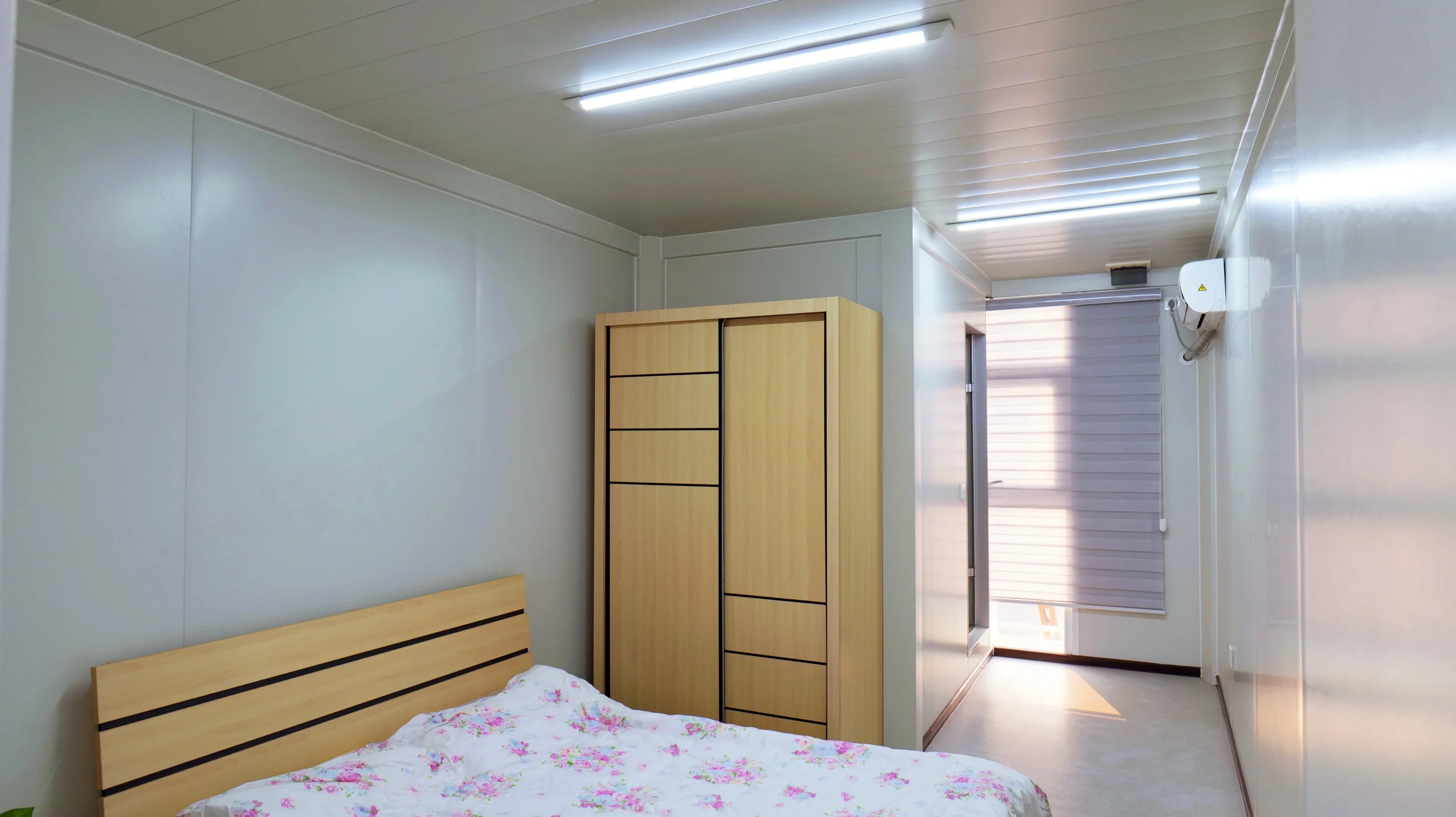
The INN notice confirms the document name, approval status and replacement of the 2000 edition. For procurement teams, the immediate action is a controlled specification review: confirm the edition adopted by the project, define the required acoustic outcome and trace responsibility from design through testing and handover. A clause-level comparison can then be completed against the licensed text and the project’s applicable regulatory or contractual basis.
A related workforce camp room standards review can help connect acoustic criteria with room allocation, shift patterns and operating needs.
Start by updating the document basis
A procurement specification often contains several acoustic references: an owner requirement, a building regulation, a national standard, a test method and a project-specific room criterion. When one referenced standard changes, the first task is document control.
The review should identify:
- the exact NCh352/1 edition required by the applicable regulation, permit, owner specification or contract;
- whether the requirement concerns a completed room, a building element, a laboratory specimen or an on-site measurement;
- the acoustic quantity, rating method, frequency range and acceptance value used in the specification;
- which drawings, wall and floor schedules, door and window schedules, MEP details and test plans depend on that reference; and
- how a change of edition will be evaluated for designs, quotations or manufacturing already in progress.

This prevents a common ambiguity: a supplier may state that a wall panel has an acoustic value while the project requires performance between completed rooms. The two statements describe different evidence.
Separate measurement from rating
Acoustic requirements become easier to manage when the project distinguishes the measurement procedure from the quantity used to report the result. The official abstract for ISO 16283-1:2014 says that the standard provides procedures for determining airborne sound insulation between two rooms using sound-pressure measurements. ISO lists that edition as published and confirmed in 2025. The official abstract also notes that the measured, frequency-dependent result can be converted into a single-number quantity using ISO 717-1.
The official abstract for ISO 717-1:2020 states that it defines single-number quantities for airborne sound insulation of buildings and elements such as walls, floors, doors and windows, and provides rules for determining those quantities from frequency-band measurements. Together, these ISO references illustrate the distinction procurement teams need to preserve between the measurement procedure and the rating reported in the specification:
- Is the specified value a field result, laboratory result or calculated design target?
- Does it apply to a partition alone or to the complete path between rooms?
- Which rating quantity and spectrum adjustment terms are required?
- What test condition, room condition and tolerance apply?
- Who appoints the tester, selects sample rooms and accepts the report?
Clear definitions allow bidders to price the same acoustic outcome and submit evidence that can be compared on one basis.
Completed-room performance depends on interfaces
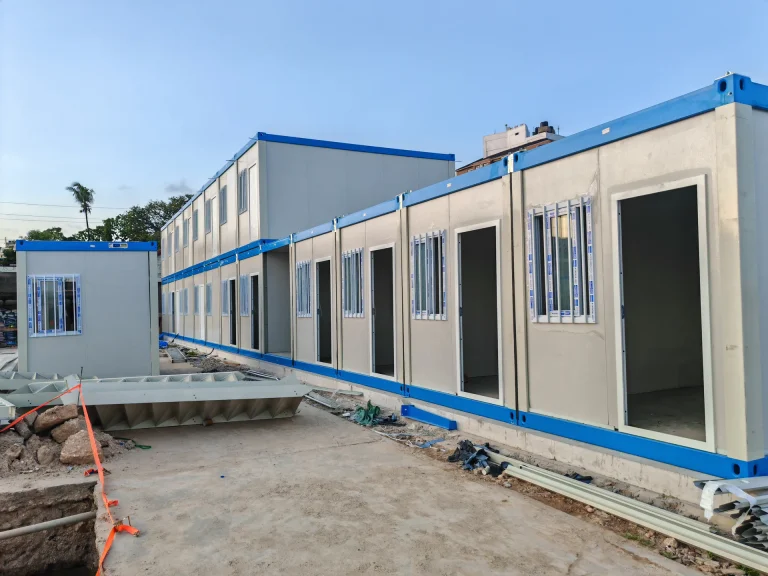
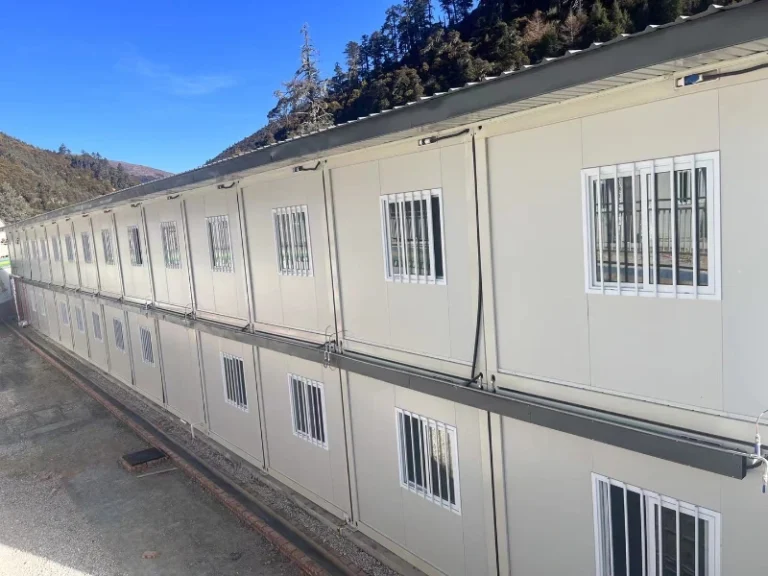
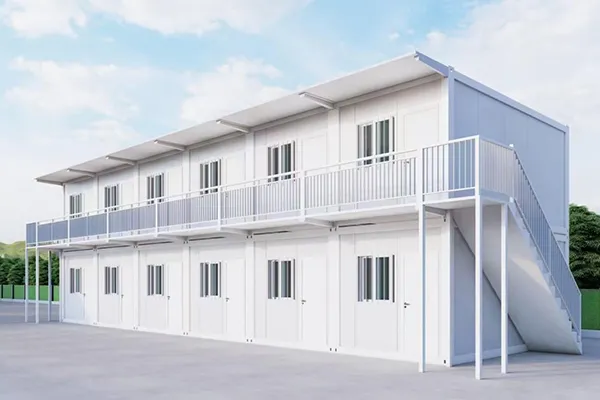
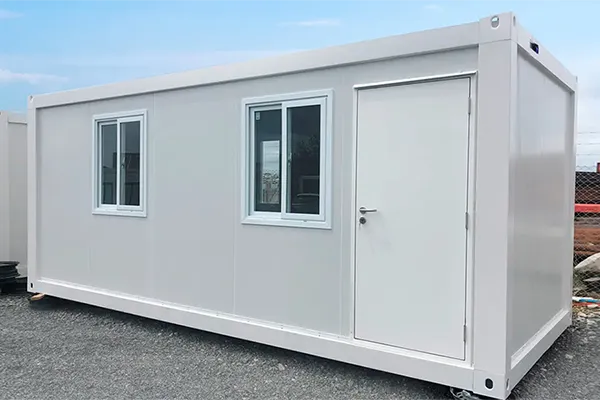
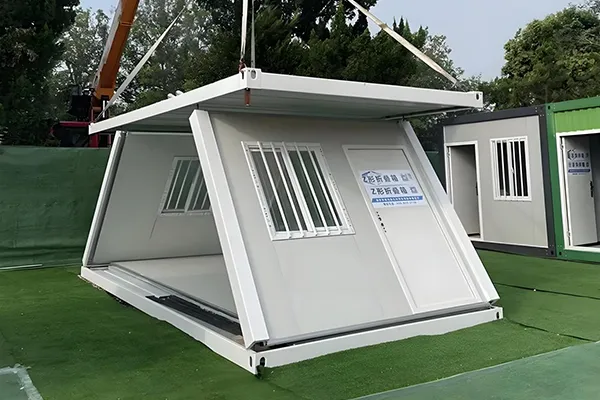
Workforce accommodation is assembled from repeated modules, room partitions and service systems. Acoustic performance therefore depends on more than the nominal insulation of one panel. The project review should cover direct transmission through the separating construction and indirect or flanking paths around it.
Important interfaces include:
- Module-to-module junctions: alignment, compression, seal continuity and treatment of gaps at floors, roofs and external walls;
- Doors and windows: leaf construction, frames, seals, thresholds, installation tolerances and any transfer grilles;
- MEP penetrations: electrical boxes, conduits, pipes, ducts, sleeves and openings that interrupt the separating assembly;
- Ceiling and floor voids: continuous cavities that may bypass a partition if closure details are incomplete;
- Ventilation: the need to maintain airflow without creating an uncontrolled sound path between rooms or from external plant; and
- Site completion: sealants, trims, service connections and repairs performed after factory production.
A procurement document should identify which party designs each detail, which work is completed in the factory, which work is completed after module installation, and what evidence closes the interface. Where completed-building performance is required, the evidence chain should connect product data, installation records and any specified field test.
Use an evidence chain from design to handover
The strongest acoustic submittal is a chain of compatible evidence rather than one headline rating. A practical sequence is:
- Design basis: approved room uses, noise sources, required quantities, criteria and test method.
- Assembly definition: drawings and schedules identify layers, framing, insulation, junctions, openings and service penetrations.
- Product evidence: reports are traceable to the tested specimen and show whether it matches the proposed assembly.
- Factory control: repeatable construction details and inspection points protect seals, insulation continuity and openings.
- Site installation: connection and closure records confirm that field work follows the approved detail.
- Acceptance: the responsible party checks documents and carries out any required field measurement under the specified conditions.
This sequence also helps with changes. If a door, wall build-up or duct route changes after approval, the project can identify which evidence must be reviewed instead of treating the change as an isolated material substitution.
Why the sleeping environment deserves a specific review
The World Health Organization’s environmental-noise guidance identifies sleep disturbance among the health effects associated with excessive noise and lists building sites, road traffic, railways and aircraft among important environmental sources. This health context complements the building-acoustic review: a remote camp should consider both sound insulation between rooms and the location of accommodation relative to roads, workshops, generators and active construction areas.
That leads to two coordinated controls. Site planning manages external sources through distance, orientation, barriers, operating rules and equipment location. Building-acoustic design manages transmission through façades, roofs, floors, partitions, doors, windows and penetrations. The project design basis should address both controls explicitly.
Procurement actions after the NCh352/1 approval
For a Chilean workforce-accommodation project, the immediate action is a focused specification review:
- Confirm the document edition and the legal or contractual route by which it applies to the project.
- Obtain and review the full new NCh352/1 before claiming specific changed requirements.
- Map each acoustic criterion to the room type, assembly, test method and acceptance evidence.
- Review doors, windows, MEP penetrations and module junctions as part of the rated construction.
- Assign factory, site and testing responsibilities in the scope and submittal register.
- Define how changes and nonconforming test results will be assessed before handover.
The approval of a new standard is therefore more than a catalogue update. It is a prompt to check whether the project is purchasing a clearly defined completed-building outcome or collecting unrelated component claims. The official approval information supports an immediate specification review, followed by a clause-level procurement checklist once the licensed text and the project adoption basis have been reviewed.
Sources and References
- Instituto Nacional de Normalización, Normas Aprobadas Octubre 2026, published 3 November 2026.
- International Organization for Standardization, ISO 16283-1:2014 – Acoustics: Field Measurement of Sound Insulation in Buildings and of Building Elements – Part 1, confirmed 2025.
- International Organization for Standardization, ISO 717-1:2020 – Acoustics: Rating of Sound Insulation in Buildings and of Building Elements – Part 1, confirmed 2026.
- World Health Organization, Guidance on Environmental Noise, accessed 2026.