


Summary
Early construction changes a remote project long before full production facilities are ready. On 16 October 2026, Vicuña reported that its first Komatsu HD1500 mining trucks had started travelling to the project camp for hoisting, assembly and mechanical testing. The company said the wider fleet would contain 36 major pieces of equipment, with phased deliveries continuing through April 2027. Upcoming work includes large-scale material movement, initial overburden removal, work-area preparation, and construction and maintenance of roads and platforms. These are the project facts disclosed in the Vicuña project update.
For camp and temporary-facilities planning teams, this stage signals a practical shift: site services, workforce support and incoming deliveries now need to advance on the same construction sequence. Heavy equipment, contractors and temporary buildings all depend on the same access network, working areas, utilities and control points. Coordinating those interfaces early allows the site to become ready as activity increases.

Mobilization creates several readiness clocks
A project programme normally contains more than one mobilization curve. Mining equipment may arrive in batches. Earthworks teams may increase as roads and platforms open. Mechanical, electrical and civil crews can peak at different times. Camp occupancy, dining demand and water use therefore do not necessarily rise in the same pattern as equipment deliveries.
The practical response is to connect, but not collapse, four schedules:
- the construction workforce plan, including contractors, shift patterns and planned overlap between trades;
- the camp activation plan for sleeping rooms, dining, sanitation, laundry, recreation and medical support;
- the site-services plan for power, potable water, wastewater, solid waste, communications and fire response; and
- the logistics plan for international freight, inland transport, unloading, laydown, assembly and installation.
The ILO Code of Practice on Safety and Health in Construction links welfare provision to the number of workers and duration of the work. It identifies drinking water, sanitary and washing facilities, clothing storage and drying, meal and weather shelters, waste disposal and, where relevant, living accommodation for workers away from home. This supports a phased approach: facilities should be ready for the workforce that will actually use them at each stage, while allowing for later peaks.
Camp capacity is only one part of service capacity
Camp readiness depends on service capacity as well as room availability. A project may have enough nominal sleeping places while its dining schedule, hot-water production, wastewater treatment, laundry throughput or medical response arrangement is still sized for an earlier phase. A staged service plan can add complete operating capacity as the workforce grows without bringing every final-phase facility online on day one.
The IFC/EBRD Workers’ Accommodation guidance note treats accommodation as a system that includes location and construction, transport, rooms and dormitories, water, sanitation, canteens, food safety, laundry, medical facilities, leisure facilities and management. It also recommends written management arrangements covering health and safety, security, living conditions, workers’ rights and community relationships. For an early-construction programme, operational readiness requires the sleeping block and its supporting services to be handed over as one working system.
A phased camp plan should therefore define an activation unit. That unit might be one accommodation block plus the corresponding share of dining, sanitation, laundry, water, wastewater and emergency capacity. The project can then add complete service increments instead of opening rooms first and attempting to catch up with support functions later.
Incoming modules need a controlled receiving system
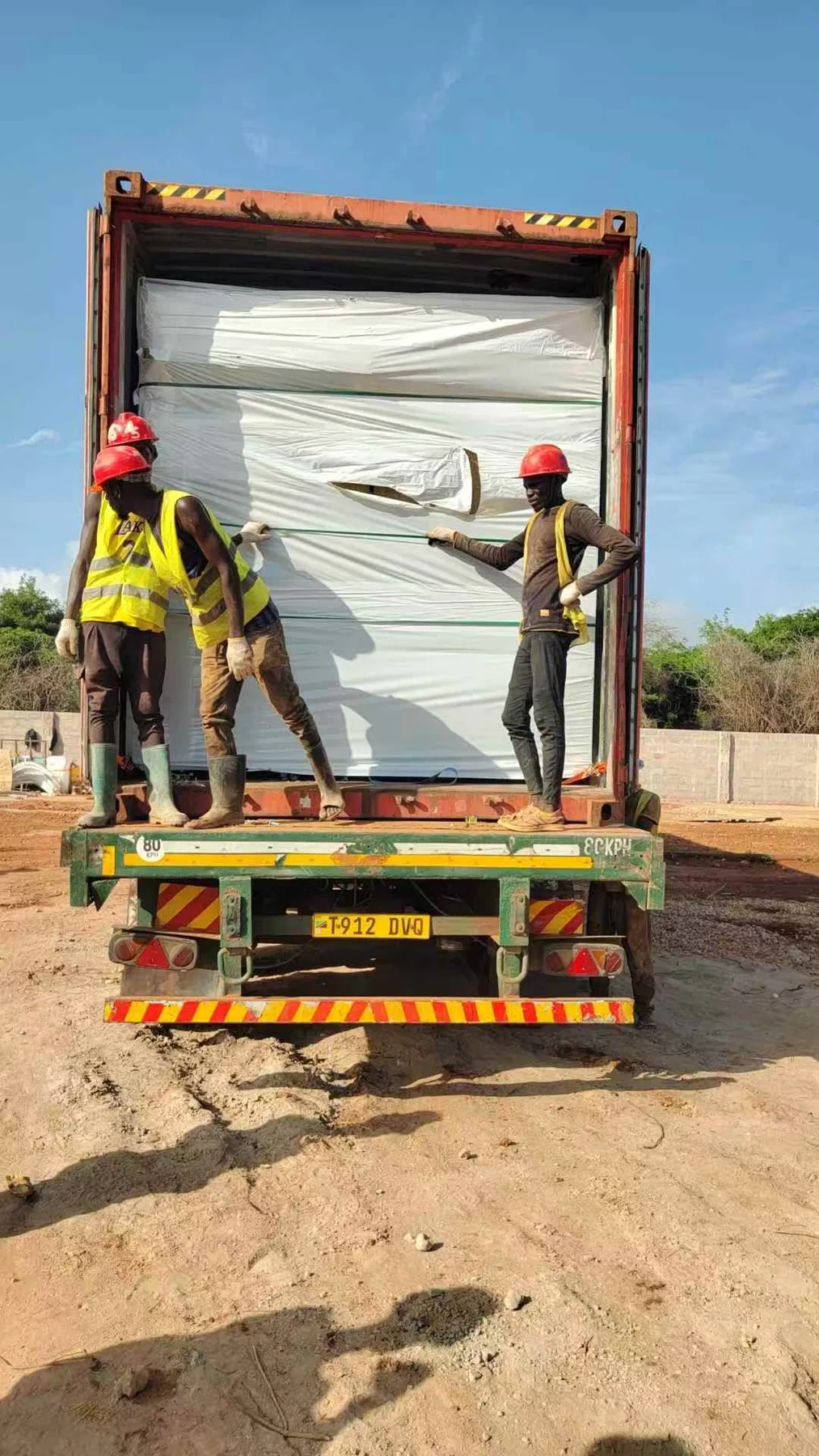
Roads and platforms built for early works may also become the route and receiving area for modular camp buildings. This creates a direct interface between civil readiness and supplier dispatch. A port-to-site logistics review should confirm the travelling dimensions and mass, route constraints, site entrance, internal road condition, turning space, unloading area, crane or forklift position, ground bearing assumptions, laydown space and installation sequence before a shipment is released.
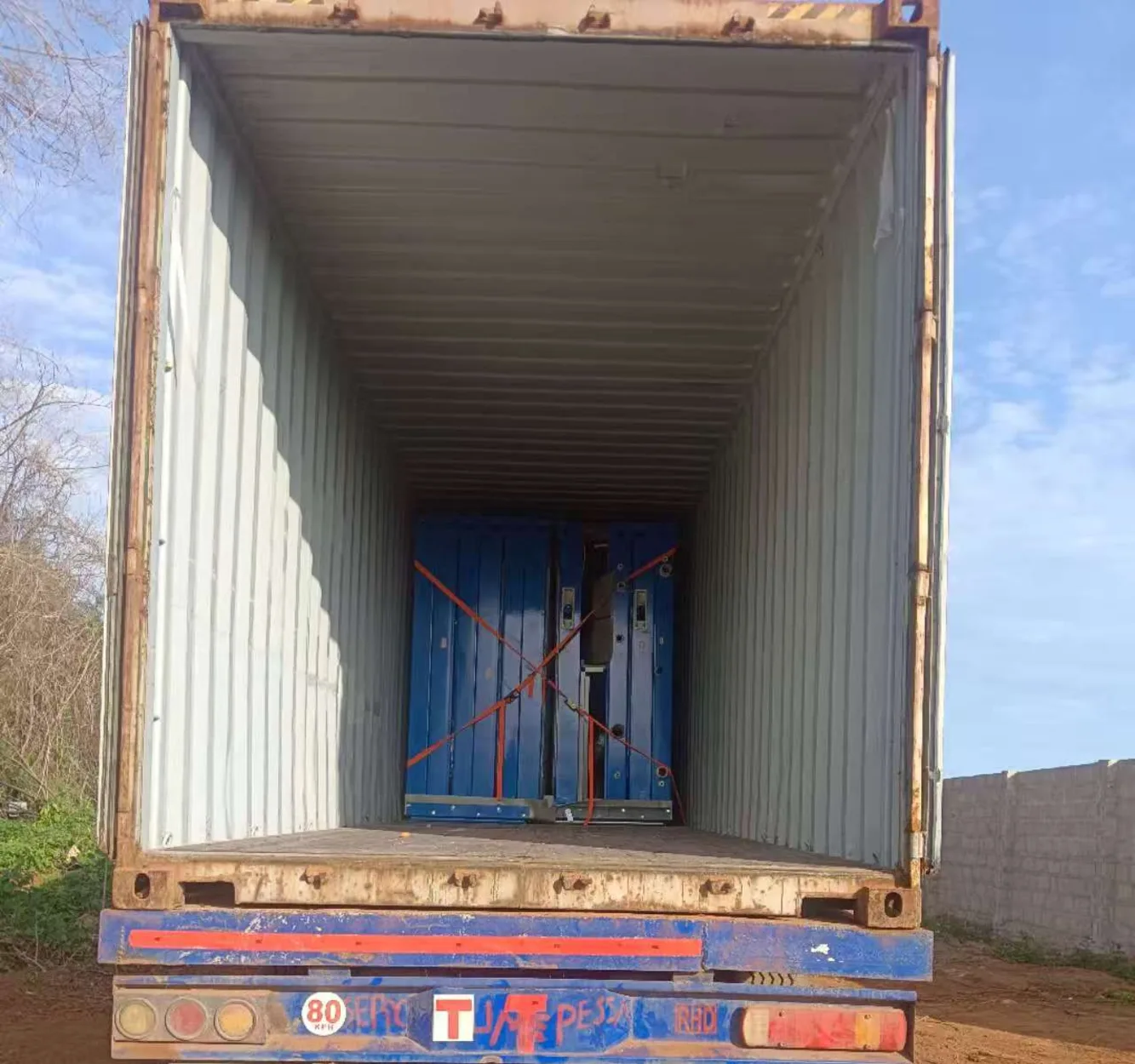
The UK’s Health and Safety Executive loading and unloading guidance calls for loading areas to be clear of unrelated traffic and pedestrians, clear of overhead electrical hazards, and located on firm, level ground. It also states that companies involved in loading and unloading should agree the method in advance, exchange load information, and check whether cargo has shifted before restraints are removed. Although the legal framework is UK-specific, these interface questions are useful for any project developing its own receiving procedure.
| Interface | Confirm before dispatch | Typical responsible parties |
|---|---|---|
| Route and site access | Vehicle and load geometry, restrictions, permits, seasonal condition, gate and internal route | EPC logistics team, haulier, local authority or road owner |
| Receiving area | Traffic separation, level surface, bearing condition, overhead hazards and safe waiting area | Site contractor, HSE team, lifting contractor |
| Unloading and laydown | Package identity, lifting points, equipment, restraints, inspection and storage sequence | Manufacturer, haulier, lifting contractor, receiving team |
| Installation release | Foundations, anchors, utility points, approved drawings, access and weather hold points | Civil contractor, modular supplier, MEP contractor, EPC engineering |
| Occupancy release | Testing, fire and emergency arrangements, water and sanitation operation, cleaning and management handover | EPC, camp operator, client and relevant local parties |
Use phase gates instead of one general readiness date
A single label such as “site ready” is too broad for a remote modular delivery. A stronger programme uses separate release gates:
- Design-basis release: the intended population, room and facility schedule, environmental criteria, utility concept and responsibility matrix are sufficiently defined for coordinated design.
- Manufacturing release: approved module types, quantities, materials, service penetrations, interfaces and document revisions are identified.
- Dispatch release: the route, receiving area, unloading resources, laydown plan and installation sequence are confirmed for that shipment batch.
- Installation release: foundations, access, lifting positions, utility connection points and current drawings are available at the correct location.
- Occupancy release: the completed facilities, services, operating procedures and emergency arrangements are ready for residents.
These gates allow equipment, civil works and camp packages to progress at different speeds without hiding dependencies. They also create a practical record of who accepted each interface and what remained outstanding at the time.
The planning lesson from early fleet arrival
Vicuña’s fleet announcement is a useful marker of construction intensity: large equipment is moving to the camp, preparation and testing will occur on site, and road and platform work is part of the next phase. For other remote mining projects, that is the point to review whether camp operations and modular delivery are tied to the same construction sequence.
The immediate next step is a joint readiness review involving construction planning, camp operations, civil works, utilities, logistics and the modular supplier. The review should use the actual workforce programme and shipment batches, identify each interface owner, and set release evidence for dispatch, installation and occupancy. That is more useful than treating the camp as a separate building package with one completion date.
Sources and References
- Vicuña Corp, New Mining Fleet Arrives in Vicuña, 2026.
- International Labour Organization, Safety and Health in Construction: ILO Code of Practice, revised edition, 2022.
- International Finance Corporation and European Bank for Reconstruction and Development, Workers’ Accommodation: Processes and Standards, 2009.
- UK Health and Safety Executive, Loading and Unloading Guidance, accessed 2026.