


Summary
For LNG construction camp planning, size accommodation from the number of non-local people who need a bed at the same time, not from total project employment or the separate peak of every contractor. Build the procurement basis around an independently operable core camp, then add complete expansion building groups as civil, mechanical/piping and E&I crews overlap. Do not remove capacity simply because one trade demobilizes: pre-commissioning, vendor and commissioning personnel can replace that headcount, leaving the bed requirement close to the construction peak. KUBO can use a buyer-supplied resident curve to compare the core, named expansion groups and the commissioning/start-up capacity that should remain live, together with the office, sanitary, dining/kitchen and agreed support functions needed in each phase.
Size the camp from overlapping resident curves, not contractor peak totals
The practical question for an LNG or gas-processing owner/EPC team is not “How many people will work on the project?” It is “How many non-local people need accommodation on the same nights, and which complete building groups must be operating when those people are on site?” That distinction changes both the initial camp size and the release sequence.
An LNG construction schedule normally moves through changing work fronts rather than one workforce block. Early site and civil activity rises before major equipment and piping installation. Mechanical and piping teams can overlap with electrical and instrumentation work. Pre-commissioning can begin by portion or system while construction continues elsewhere. Vendor specialists and commissioning teams can then remain active after large construction trades start to fall. The U.S. Department of Energy’s Understanding Natural Gas and LNG Options handbook illustrates this broad progression from site preparation and foundations through equipment and piping installation to commissioning. Its sequence is useful context, but its example dates and headcounts are not a sizing standard for another project.
That is why the accommodation basis should be a time-phased resident schedule. For each planning period, the EPC or owner combines the people from all active work packages who actually need a bed, adds camp and project-support residents who also stay in the camp, then applies the project-approved reserve. The working expression is:
Required beds in period t = non-local overnight residents from all active work packages in period t + camp/project-support residents + approved reserve.
This avoids two common distortions. Using total project jobs can overstate camp demand because local, commuting or off-site personnel may not need a bed. Adding every contractor’s separate lifetime peak can also overstate demand because those peaks may occur in different months or different construction areas. The opposite error is just as serious: reducing beds as soon as a civil or mechanical contractor reports demobilization can understate demand if E&I, vendors, pre-commissioning and commissioning teams are entering at the same time.
For a broader treatment of oil-and-gas camp facilities, site inputs and room mix, use KUBO’s Oil and Gas Workforce Accommodation solution. Buyers who are still resolving broader camp-planning questions can also review oil and gas camp housing planning. The narrower decision here is the phasing logic that converts an LNG resident curve into core, expansion and retained commissioning capacity.
Why the commissioning tail must be planned before the construction peak
Commissioning is not simply a smaller workforce that appears after construction is finished. On LNG projects, completion and testing can progress by area, portion and system. The Ksi Lisims LNG Project Overview describes pre-commissioning beginning after mechanical completion of each portion of the onshore facility, with mechanical, electrical and instrument checks preceding system commissioning. It then describes system commissioning as the point at which equipment in discrete systems works together. That project-specific sequence, documented in the Ksi Lisims LNG Project Overview, is a useful reason to tie camp release decisions to system and area handover evidence rather than a single project-calendar date.
The CP2 LNG Final Environmental Impact Statement provides another bounded example. Its construction description includes changing workforce levels across overlapping phases and identifies commissioning/start-up as continuous, 24-hour activity. The point for accommodation planning is not to copy CP2’s workforce figures. It is that a commissioning population can be smaller than the absolute construction peak while still requiring continuous support across day and night shifts. The underlying project document is available through the CP2 LNG Final Environmental Impact Statement.
This creates a procurement trap. A project may look as though it is “coming off peak” because civil and mechanical headcount is falling. Yet the replacement population may include E&I technicians, controls specialists, vendor representatives, commissioning engineers, permit and coordination staff, operations-readiness personnel and project support. If the accommodation team closes an expansion block based only on the departing trade, the bed curve can stay nearly flat while usable capacity falls sharply.
The release logic therefore needs two datasets that are usually managed by different teams: the resident forecast from project controls/camp operations, and the system or area handover forecast from construction and commissioning. A reliable LNG construction camp procurement plan brings those datasets together before each major capacity change.
A buyer-replaceable LNG camp phasing model
The table below is a hypothetical planning model. It is not a KUBO project record and it is not a recommended workforce ratio. Its purpose is to show how a project can move from early works to construction peak and into commissioning without a proportional drop in beds. Replace every value with the project’s controlled resident forecast.
| Resident input after local/commute/roster adjustments | Early works | Civil/structural ramp | Mechanical/piping + E&I peak | Pre-commissioning/commissioning | Start-up/turnover |
|---|---|---|---|---|---|
| Civil/structural | 120 | 180 | 90 | 30 | 10 |
| Mechanical/piping | 20 | 140 | 260 | 130 | 40 |
| Electrical/instrumentation | 10 | 45 | 150 | 210 | 100 |
| Pre-commissioning/commissioning/vendor representatives | 0 | 10 | 50 | 170 | 130 |
| Project controls/HSE/QA/logistics/camp operators | 35 | 45 | 55 | 60 | 50 |
| Required residents before approved reserve | 185 | 420 | 605 | 600 | 330 |
| Illustrative approved reserve | 15 | 30 | 45 | 40 | 20 |
| Illustrative bed basis | 200 | 450 | 650 | 640 | 350 |
The key signal is the transition from 650 beds at the mechanical/piping and E&I peak to 640 beds during pre-commissioning and commissioning. The headline project workforce may be changing materially by trade, yet the overnight resident requirement has dropped by only ten beds. In that situation, closing a 100-bed or 200-bed dormitory group merely because a large construction contractor has demobilized would create an artificial shortage unless another equivalent accommodation source is already confirmed.
The same arithmetic also prevents unnecessary overbuild. Suppose several contractors each report their own maximum headcount. Adding those separate maxima assumes they all occur simultaneously. The project-controls schedule should instead place each contractor population against time, identify overlap by period, remove local or commuting personnel who do not require a bed, add resident support staff, and apply the reserve approved for that project. The result is a curve that procurement can actually use.
This method is related to KUBO’s broader oilfield phase-to-bedspace planning approach, but an LNG plan needs an additional commissioning lens: capacity release should follow the system/area turnover sequence as well as trade demobilization.
Convert the resident curve into complete building groups
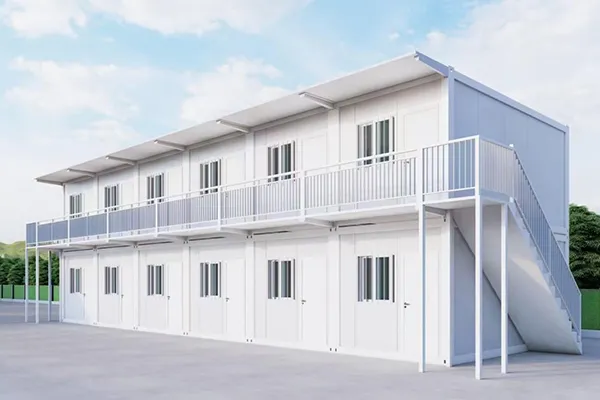
A bed curve becomes commercially useful only when it is translated into building groups that can be procured, brought into service and later taken out of service without breaking essential camp functions. KUBO’s supported configuration for this discussion is an independently operable core group plus named expansion building groups.
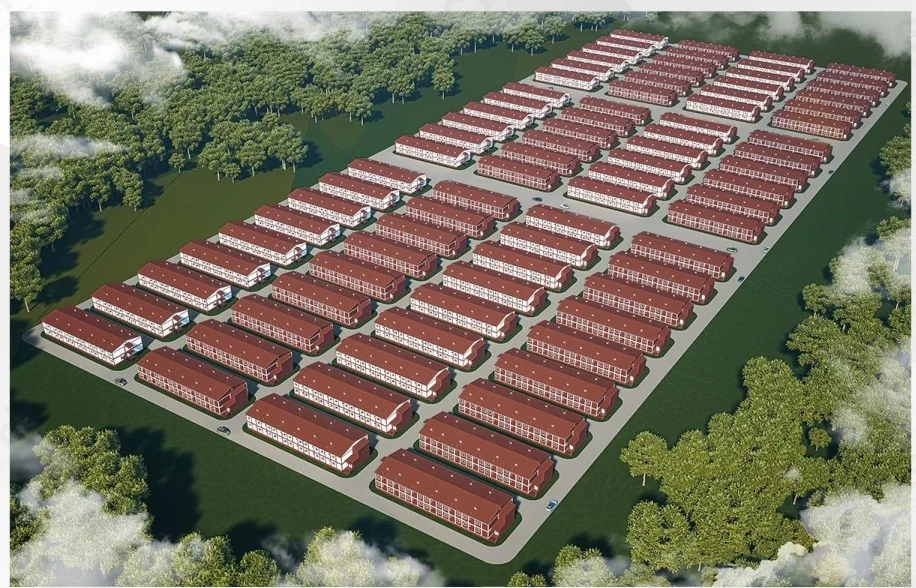
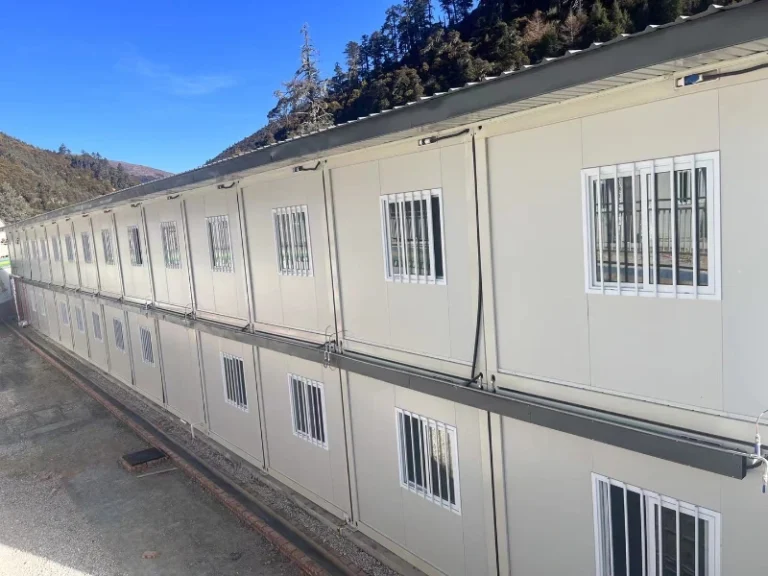
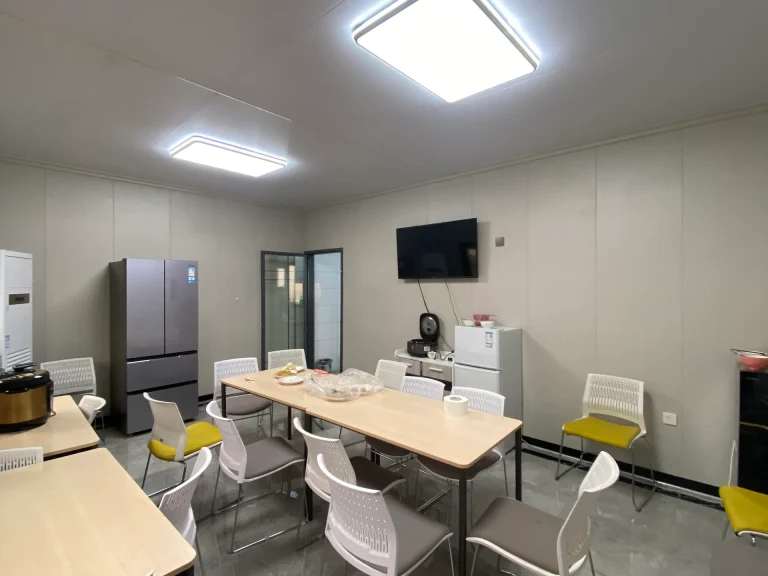
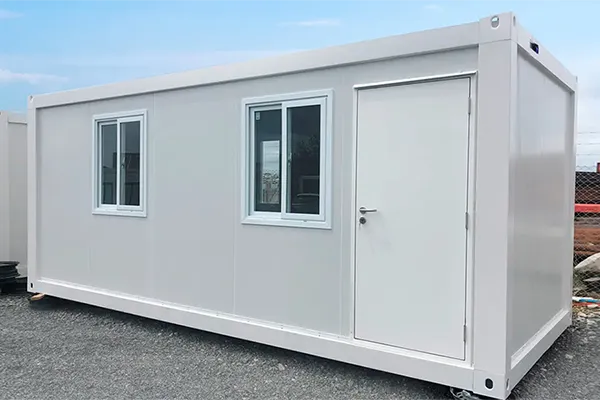
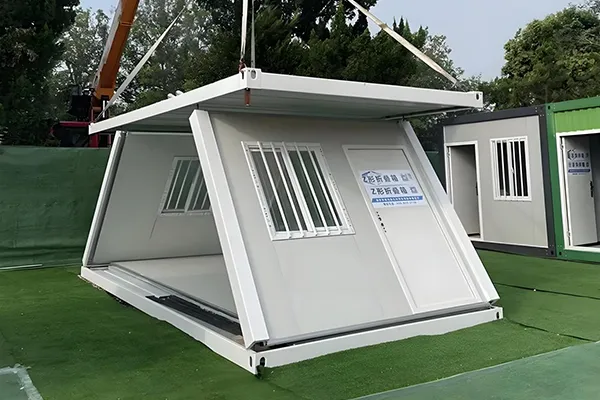
The core is not simply the first dormitory block. It is the minimum package that can support the intended resident population as an operating camp under the buyer’s service model. Depending on agreed scope, that can combine factory-built accommodation modules with project offices, sanitary facilities, dining/kitchen buildings and other verified support functions. Later expansion groups should also be defined as complete functional additions rather than beds alone. If the extra residents create additional sanitary, dining, office or other agreed support demand, those functions need to be considered in the release package.
This approach gives project controls and procurement a common language. Instead of an instruction such as “add 250 beds in Phase 2,” the release can identify “Civil/Structural Expansion Group,” show the resident band it serves, list the building functions included, state the utility and site interfaces required, and define what evidence is needed before that group can later be deactivated. A second release can be named for the mechanical/piping/E&I overlap. A retained group can be defined specifically for commissioning and start-up.
An expandable accommodation strategy is not unique to one supplier. LNG Canada’s 2019 Community Level Infrastructure and Services Management Plan described an early open-lodge arrangement before its workforce accommodation centre was complete, followed by an appropriately sized centre that could be expanded as necessary for non-local construction workers. That is a project-specific example, documented in the LNG Canada Community Level Infrastructure and Services Management Plan, not a universal template. It does, however, reinforce the planning principle that accommodation capacity can be staged rather than treated as one immutable opening-day number.
Use a release matrix that links procurement to resident and system evidence
The matrix below turns the phasing concept into a decision tool. “Release” has two meanings: release a building group for supply/mobilization when demand is approaching, and later release it from service only when the resident forecast and handover evidence both support the reduction. The exact milestones should come from the project schedule; calendar dates alone are not enough.
| Building group | Workforce served | Complete functions to check | Trigger to release for use | Evidence before taking capacity out of service | Services that must remain live |
|---|---|---|---|---|---|
| Independently operable core | Early works, project support and the minimum continuing resident population | Accommodation plus the agreed office, sanitary, dining/kitchen and support functions needed for independent operation | Confirmed first-occupancy requirement and approved resident forecast | Normally retained while the project still needs on-site/non-local accommodation | All functions required by the remaining resident and shift model |
| Civil/structural expansion group | Additional civil and structural residents during ramp-up, plus associated support demand | Dormitory capacity and any incremental sanitary, dining, office or agreed support functions created by the added population | Forward forecast shows core capacity will be exceeded during civil/structural ramp | Controlled resident forecast confirms those beds are no longer required, and downstream work packages will not immediately refill them | Capacity required for the next construction overlap remains available |
| Mechanical/piping/E&I peak group | Overlapping mechanical, piping, electrical and instrumentation populations | Peak accommodation plus the service functions required by the buyer’s shift and operating policy | Integrated contractor schedule shows the next overlap exceeds installed capacity | Resident forecast plus area/system handover evidence confirms the replacement E&I, vendor and commissioning population can be housed elsewhere in the retained groups | Commissioning-related beds, sanitary, dining, transport interface and project-office functions required by the remaining shifts |
| Commissioning/start-up retained group | E&I, vendor, pre-commissioning, commissioning, start-up and continuing project-support residents | Accommodation with the agreed support functions needed for continuing day/night operations | Defined before peak construction so it is not accidentally removed during demobilization | Start-up/turnover resident forecast and project handover status show a further reduction is supportable | Functions required by the remaining commissioning/start-up population until the project-approved transition |
This matrix prevents a common sequencing error: treating a contractor’s last major shift as the date on which a whole accommodation group can close. A trade milestone is only one input. Before reducing capacity, project controls should confirm the next-period resident curve; construction/commissioning should confirm the relevant area or system handover status; the camp operator should confirm which buildings and services must remain operating; and procurement/site teams should confirm that the proposed grouping can actually be isolated without disabling functions still needed by retained residents.
For buyers already using a general mobilization-curve method on other project types, KUBO’s workforce mobilization scheduling article explains the broader scheduling logic. The LNG difference is the need to preserve accommodation against system-based commissioning progression, not to borrow wind, solar or battery work-package assumptions.
Do not treat bed demand and service demand as the same curve
Beds are primarily driven by overnight residents. Dining, sanitation, transport interfaces and project-office demand are influenced by the same population but also by shift timing and operating policy. A camp can therefore have fewer residents after construction peak while still needing meaningful service coverage across a longer operating day.
CP2 LNG is a useful bounded example because its environmental review describes continuous 24-hour commissioning/start-up activity. A project with that operating pattern may need meals available for night-shift personnel, sanitation that remains accessible across shift changes, transport coordination at non-daytime hours, project-office or permit coordination during commissioning windows, and maintenance response for the accommodation functions that remain active. None of this produces a universal seat count, shower ratio, laundry capacity or staffing formula. Those values belong to the buyer’s service model.
For LNG workforce accommodation planning, ask the camp operator and project team to provide at least the expected shift pattern, meal-service policy, resident turnover pattern, transport interface and office/coordination requirement for each major phase. Those inputs should be reviewed alongside bed count before an expansion group is opened or closed.
This matters most during the 650-to-640 transition in the hypothetical model. If the commissioning population operates on different shifts from the construction population it replaces, the bed requirement is almost unchanged while the timing of service demand may change materially. A dormitory-only release decision would miss that operational transition.
What KUBO can configure around the phasing plan
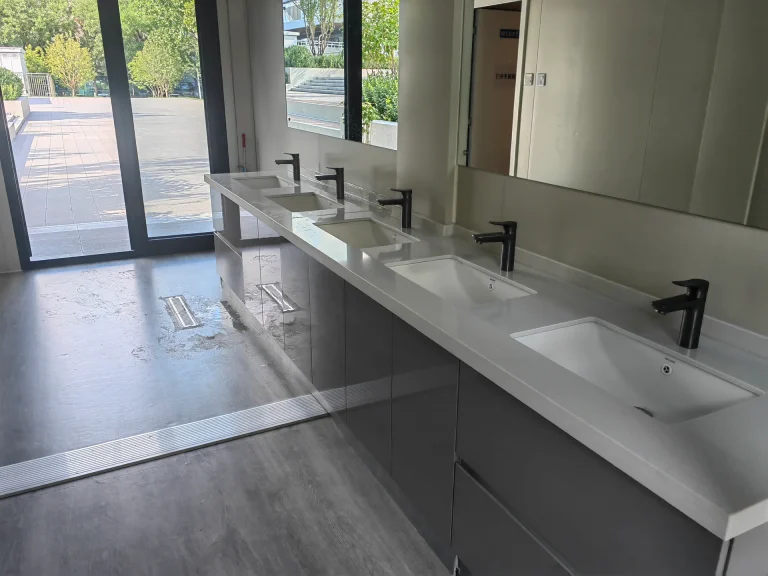
KUBO can discuss factory-built dormitory/accommodation modules, project offices, sanitary facilities, dining/kitchen facilities where included, and other verified support functions where agreed. For a phased LNG or gas-processing project, we can compare phase quantities, later building-group positioning, shared-facility assumptions, utility interfaces and delivery sequencing against the resident schedule supplied by the buyer.
The practical configuration is not “one permanent camp size” versus “one temporary camp size.” It is a set of named, traceable groups: the independently operable core, one or more expansion groups aligned with construction overlap, and a commissioning/start-up retained group. This gives the buyer a clearer basis for LNG construction camp procurement because each release can be tied to a known resident requirement and a defined bundle of building functions.
KUBO’s controllable scope can include project configuration, module/building production, quality control, export packing and delivery coordination, together with agreed installation guidance. Civil works, foundations, permits and approvals, customs and inland logistics, unloading and cranes, local installation labor, external utilities, testing, commissioning and camp operations are project interfaces to be allocated in the contract according to the selected delivery route. Defining those interfaces early allows the phasing table to show not only which building group is needed, but what site readiness must exist before that group can operate.
Once the phasing basis is stable enough for quotation, the project can move into KUBO’s broader modular project workflow. The important point at this stage is to avoid freezing building quantities before the resident overlap and commissioning tail are visible.
Prepare a compact phasing brief before requesting quantities
A useful first discussion does not require a fully engineered camp package. It requires a resident schedule that is specific enough to test whether the proposed core and expansion groups make sense. Prepare the following inputs:
- Project country and location: enough context to identify the project environment and local interfaces that will later need coordination.
- Project context: LNG terminal, gas-processing facility or related gas project.
- Resident counts and time windows: civil/structural, mechanical/piping, E&I, vendor/commissioning and project-support groups, showing who needs a bed rather than total employment.
- First occupancy: when the independently operable core must be usable.
- Commissioning/start-up window: including the expected handover sequence where available, so retained capacity is not removed too early.
- Intended supply and installation boundary: which building supply, delivery, site and installation interfaces the buyer expects to allocate to each party.
If contractor numbers are still uncertain, provide controlled low/base/high or current/forecast scenarios instead of adding all possible peaks together. The objective is not false precision. It is to expose which capacity decisions are stable now and which expansion releases should remain conditional on later workforce updates.
Discuss Your LNG Camp Phasing Plan
If you are preparing an accommodation basis before the main workforce ramp, send KUBO the project country/location, LNG or gas-processing context, resident counts and time windows by major work package, first-occupancy requirement, commissioning/start-up window, and intended supply/installation boundary. From those inputs, KUBO can compare an independently operable core with named expansion building groups, identify the commissioning/start-up capacity that should remain in the plan, and clarify which additional inputs are still needed before quotation.
Discuss your LNG camp phasing plan with KUBO.
Procurement FAQ
Can the core camp be sized to the average construction workforce and expansions cover everything above it?
It can only be sized that way if the “average” also represents a workable minimum operating configuration for the periods when the expansion groups are not active. A core that contains enough beds but depends on sanitary, dining, office or other agreed support functions located in a future expansion group is not independently operable. Define the core from the resident population that must be supported continuously and the service model that applies to that population. Expansion groups can then add complete functional capacity as the resident curve rises.
When is it safe to take a civil or structural expansion group out of service?
Not automatically when civil headcount falls. The decision should use the controlled forward resident forecast and the handover status of the areas or systems that are feeding the next work phase. If mechanical/piping, E&I, vendors or commissioning personnel are replacing the departing civil workforce, the same beds may still be required. Confirm that the remaining active groups have enough accommodation and required support functions before closing the group.
How should LNG construction camp planning handle uncertain contractor peak dates?
Keep time and headcount uncertainty visible instead of collapsing it into one oversized number. Project controls can maintain low/base/high or current/forecast resident scenarios and identify the periods where different contractor curves may overlap. Procurement can then commit the independently operable core and define named expansion groups with release triggers. As schedule confidence improves, the next group is released against the updated forecast rather than against an old total-employment assumption.
Does mechanical completion mean peak accommodation can be removed?
No single mechanical-completion milestone should be treated as an automatic camp-release date. LNG pre-commissioning and commissioning can progress by portion, area or system, and E&I, vendor and commissioning personnel can remain or increase as major construction trades leave. The camp plan should connect resident forecasts to the actual handover sequence, keeping the commissioning/start-up retained group live until the remaining population can be supported by the reduced configuration.
What should be updated before each major accommodation release?
Refresh the overnight resident count by work package, the project/camp-support population, the approved reserve, the shift/service model and the relevant area/system handover status. Also verify that the building group proposed for opening or closing can be isolated without removing sanitary, dining, office or other agreed support functions still required by the retained population. This keeps the accommodation decision aligned with both workforce and commissioning reality.
Related LNG and Oil & Gas Camp Planning Guides
- Oil and gas camp housing planning for the broader site, facility, utility and scope decisions.
- Oilfield phase-to-bedspace planning for a parallel worked method using drilling, development and operations stages.
- KUBO’s RFQ-to-delivery workflow for the next steps after the camp phasing basis is ready.
Sources and References
- U.S. Department of Energy — Understanding Natural Gas and LNG Options Handbook (2017). Used for the general construction-to-commissioning sequence; project examples are not universal sizing standards.
- U.S. Department of Energy — CP2 LNG Final Environmental Impact Statement (2023). Used for the project-specific example of phased workforce change and continuous commissioning/start-up activity.
- Ksi Lisims LNG — Project Overview. Used for the project-specific sequence from portion-level mechanical completion through mechanical, electrical and instrument pre-commissioning to system commissioning.
- LNG Canada — Community Level Infrastructure and Services Management Plan (2019). Used for the project-specific example of interim accommodation followed by an appropriately sized, expandable workforce accommodation centre.