


Summary
Philippines emergency camp procurement should begin with the required operating date, receiving island and resources already available in the country. Immediate post-disaster operations normally depend on inspected local premises, government or humanitarian assets, transport, communications, WASH and other deployable resources already within reach. Imported modular buildings become relevant when they are planned before the event, pre-positioned, or scheduled for stabilisation and extended operations. For an island response base, the buyer must close six connected gates: building specification, consignee and customs route, mainland staging, inter-island transport, island unloading and site acceptance. The correct sourcing split may combine Philippine services and infrastructure with durable modules manufactured in China; it should not assume that either local procurement or wholesale import is automatically faster, cheaper or operationally complete.
The Real Procurement Decision Is a Sourcing Split, Not a Supplier List
A government agency, humanitarian organisation, prime contractor or response operator planning an island response camp is rarely choosing between two simple alternatives called “local” and “imported.” The actual decision involves multiple functions, each with a different readiness window, logistics dependency and local interface.
Communications, initial medical support, potable water, local transport, emergency sanitation and temporary covered space may need to operate before an overseas commercial order could be manufactured, exported, cleared and transferred to an island. Durable staff accommodation, coordination rooms, secure stores, sanitary modules and first-aid support buildings may justify pre-import when the deployment is planned early enough and the destination can receive them.
This timing distinction is especially important in an archipelagic country. A module arriving at a Philippine mainland port has not yet become an operating facility on Siargao, Dinagat or another receiving island. Customs release, staging, authorized sea transport, weather, unloading equipment, last-mile access, foundations, utilities, assembly and local acceptance remain part of the deployment path.
Official reporting after Typhoon Odette described a response system using air, land and sea logistics, regional emergency operations centres and a logistics hub in Surigao City, with assistance moving onward to Siargao and Dinagat. That history demonstrates the importance of local response capacity and mainland-to-island handoffs. It does not establish a current shipping schedule, a mandatory port or a route suitable for every future project. Buyers should use it as a planning example and verify the actual destination, receiving point and transport arrangement for their own deployment.
KUBO is a modular-building manufacturer and project supplier in Foshan, China, with the capability to configure and manufacture an agreed building package for planned deployment in the Philippines. The project’s contractual scope should also identify the Philippine consignee, logistics parties, site team, local professionals and authorities responsible for destination-specific logistics, installation, compliance and acceptance.
Choose the Supply Route from the Required Operating Date
The required operating date is the first procurement gate because it immediately removes unrealistic options. An overseas order placed after a disaster should not be treated as a day-one response asset. Even if a modular design is repeatable, the complete chain still includes technical confirmation, commercial release, production, export, customs, inter-island movement, site preparation and acceptance. No universal duration can represent that chain across different islands and emergencies.
The decision table below links the operating window to the functions being procured. It also shows what changes when a buyer chooses local sourcing, pre-positioned stock or a planned imported package.
| Operating requirement | Likely starting resources | When imported modules may fit | Decision that changes | Main failure to avoid |
|---|---|---|---|---|
| Immediate post-event operation | Inspected existing premises, government and humanitarian resources, local tents, communications, WASH, transport, first aid and other assets already available or mobilised in-country | Only previously imported and deployment-ready assets should be considered for the immediate window; a new overseas order is not a day-one solution | Confirm inventory, condition, location, transport access and deployment ownership before allocating funds to new buildings | Planning around modules that have not been ordered, cleared, delivered or accepted |
| Preparedness and pre-positioning | Existing warehouses, response hubs, trained crews, framework logistics arrangements and identified sites | Repeatable modules can be evaluated before an event when storage, inspections, handling equipment, deployment procedures and local acceptance are planned | The procurement becomes an asset-readiness programme rather than a one-time building purchase | Buying modules without a storage, inspection, maintenance or deployment system |
| Stabilisation and extended response operations | Temporary local facilities plus services already established at or near the response area | Offices, secure storage, staff rest or accommodation, sanitary units and first-aid support rooms may be imported when site, route, utilities, crew and approvals are confirmed | The buyer can compare durable buildings by function and interface instead of asking one temporary shelter type to serve every user | Delivering buildings that cannot be unloaded, connected, occupied or maintained at the named site |
| Transitional or recovery use | Repaired premises, locally rented buildings, local construction and facilities retained from the response phase | Imported modular buildings may be considered when the future municipal or operational use is defined | Compare relocation, reuse, maintenance, service life, local construction and rental options over the intended operating period | Assuming a modular option is automatically the fastest or lowest-cost choice without a project comparison |
This matrix helps project teams distinguish between resources best organised close to the emergency and durable buildings that may be prepared as a manufactured package. For the wider relationship between immediate temporary facilities, stabilisation and recovery, buyers can also review KUBO’s guide to temporary emergency facilities in disaster response. The key sourcing decision is which parts of the responder camp should be organised in the Philippines and which durable buildings should be manufactured for the required operating window.
A Response Base Is Not the Same Procurement as a Household Shelter
The user group changes the facility brief. A household evacuation shelter primarily supports displaced residents and family occupancy. A responder base supports personnel who must coordinate field activity, communicate, rest between shifts, receive supplies, protect equipment and continue working from a temporary operational location.
A 2023 Cebu City procurement document provides a useful boundary example: it sought 200 family modular evacuation shelters with pads, delivery to Cebu City and a stated tender delivery term. That official procurement shows that a Philippine public buyer has purchased compact evacuation shelters. It does not demonstrate current availability, suitability for an island responder base, or the operational completeness of a command, clinic, sanitary, dining, storage and staff-accommodation package.
A response camp therefore begins with functions rather than a count of identical shelters. Depending on the operator’s brief and local services, the package may include:
- coordination, administration or communications rooms;
- secure storage for controlled equipment and response supplies;
- first-aid and support space appropriate to the operator’s defined use;
- staff welfare, rest and selected accommodation;
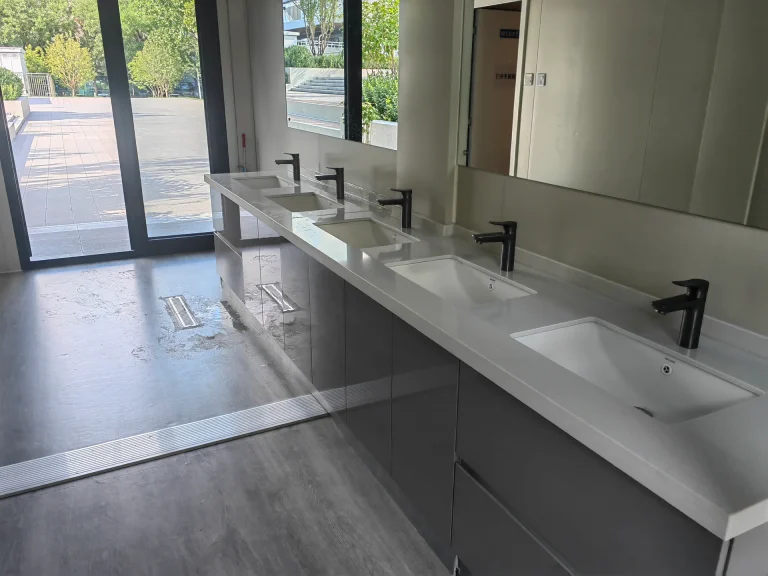
- sanitary facilities connected to a confirmed water and wastewater arrangement;
- food-service or dining support organised by the operator or local service providers; and
- covered circulation, external services and site works designed for the actual location.
KUBO can configure the building mix around the number and type of users, shift pattern, operational duration, privacy requirements, available local buildings, service capacity and the agreed scope of other contractors.
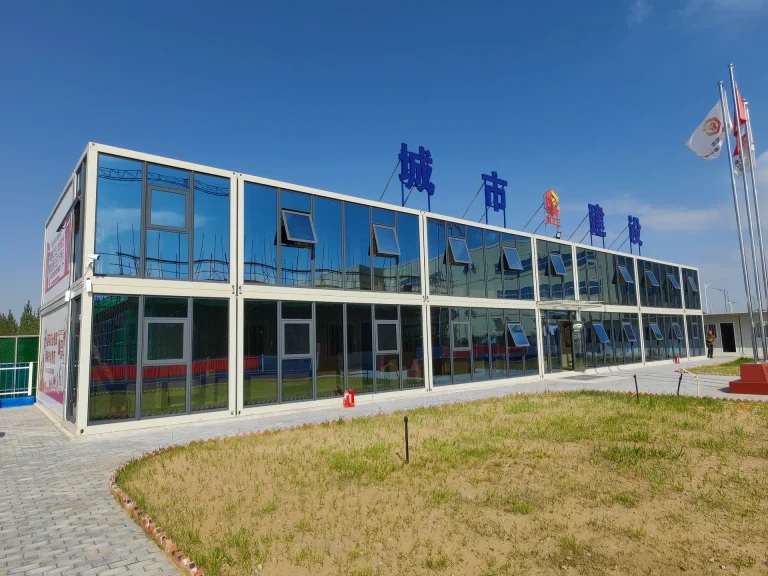
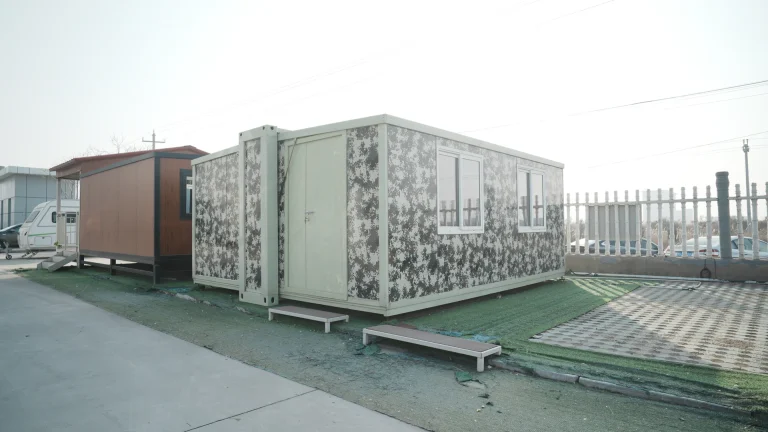
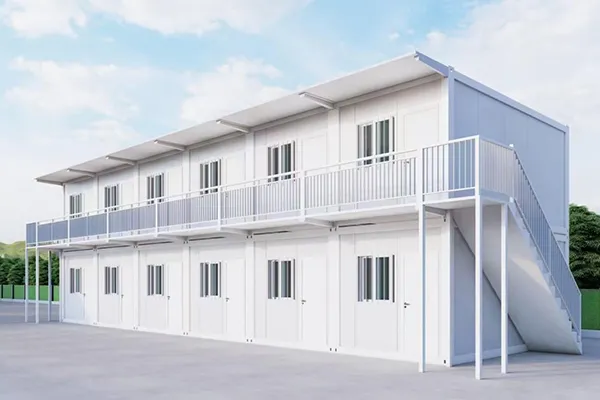
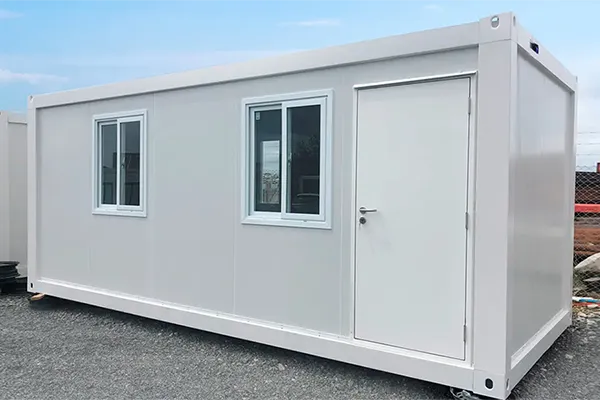
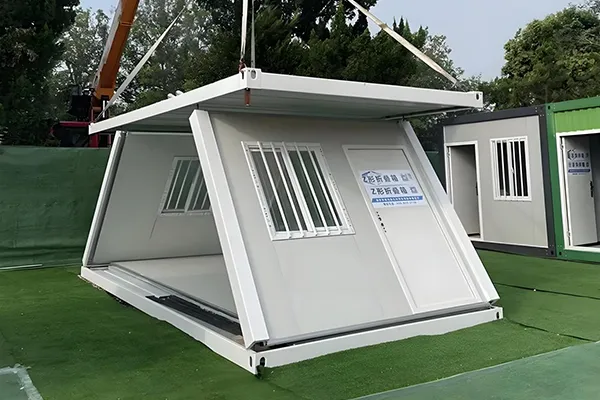
KUBO’s emergency and humanitarian modular-building solution covers planned response environments that can combine coordination, responder support, secure storage, first aid, sanitation and selected accommodation. Product references include a folding emergency shelter unit, a folding first-aid or guard support room and a detachable sanitary or storage utility module. These pages present configurable building types. Philippine availability, regulatory acceptance and site-specific structural suitability should be confirmed for the individual project.

Map Local and Imported Scope by Function
A useful sourcing discussion separates four questions that are often compressed into one request for a “complete camp”:
- Which operating functions must already exist before imported buildings could arrive?
- Which durable buildings benefit from controlled factory configuration?
- Which works can only be completed by the destination team?
- Which party will provide evidence that each interface is ready?
The following table is an initial allocation tool, not a substitute for a project responsibility schedule.
| Camp element | Potential Philippine or local scope | Potential pre-imported scope | Key comparison inputs |
|---|---|---|---|
| Immediate covered space | Inspected premises, locally held tents, rental facilities or other response assets that can be deployed within the required window | Previously imported and inspected modules held as pre-positioned stock | Opening date, inventory condition, storage location, deployment crew and site acceptance |
| Coordination and support rooms | Existing municipal rooms, rented offices, local fit-out, communications installation and operational equipment | Configured office or support modules prepared before shipment | Occupancy, layout, equipment loads, communications interfaces, privacy and future reuse |
| Responder rest and accommodation | Hotels, dormitories, schools or other inspected premises where available and authorized | Repeatable room modules for planned extended use | Headcount, shift waves, room allocation, privacy, climate response, services and intended duration |
| Sanitation | Local toilets, water supply, wastewater management, desludging, drainage and maintenance services | Sanitary building modules where the room configuration and connection points are agreed | Water source, wastewater route, maintenance access, consumables, discharge responsibility and approvals |
| First-aid support space | Clinical operator, medical equipment, licensed services, infection-control procedures and referral arrangements | A configured room shell or support module within the manufacturer’s agreed scope | Actual clinical use, operator requirements, fit-out boundary, utilities and local health requirements |
| Storage | Locally available warehouses, security staff, inventory control and distribution operations | Lockable modular stores configured for a defined item class | Stored materials, fire and ventilation needs, access control, handling method and replenishment route |
| Site and external works | Survey, local design review, foundations, anchorage, roads, drainage, wastewater, external utilities and reinstatement | Factory interface information and agreed connection locations | Ground conditions, hazard criteria, local approvals, contractor capacity and completion evidence |
The decision changes by island and site. A location with usable municipal buildings may require only supplementary sanitary, storage or staff-support space. A remote site with no serviceable premises may need a broader package, but that also increases dependency on water, wastewater, power, foundations, handling equipment and trained assembly labour. “Complete” should describe coordinated contractual coverage, not an assumption that every item comes from one factory.
Use a Six-Gate Chain for a Siargao or Dinagat Planning Example
Siargao and Dinagat are useful examples because historical official response reporting described assistance moving through Surigao toward these islands. Philippine Ports Authority reporting has also documented occasions when bad weather limited large ferry or RORO operations and suspended voyages from mainland Surigao toward Dinagat and the Siargao/Bucas Grande islands.
Those records support one procurement conclusion: the sea handoff must be treated as a weather- and authorization-dependent project gate. They do not confirm a current sailing, the correct port for a future shipment or the suitability of a particular vessel. A buyer should replace the example locations below with the project’s named port, island landing point and camp site.
| Deployment gate | Primary owner to nominate | Evidence required | Failure consequence | Latest closure point |
|---|---|---|---|---|
| 1. Factory and specification release in Foshan | KUBO and the buyer or EPC | Approved configuration, room schedule, interface requirements, packing basis, inspection and release records, and agreed export-document scope | The wrong module mix, interfaces or packaging can enter production and propagate through the deployment chain | Before purchase release for final manufacture |
| 2. Philippine port, consignee and customs treatment | Buyer, named consignee, customs broker and responsible importer | Confirmed port of discharge, importer and consignee details, commodity and document review, and written confirmation of the applicable customs route | Cargo can face clearance delay, additional handling, document correction or charges that were absent from the initial assumption | Before shipment; the responsible parties should be identified before purchase |
| 3. Mainland receiving and staging | Philippine logistics lead or prime contractor | Receiving address, storage and security plan, handling equipment, package inspection process and onward-dispatch authority | Released cargo may have no controlled location for inspection, temporary storage or transfer preparation | Before shipment |
| 4. Authorized inter-island transport and weather window | Licensed transport provider and Philippine logistics lead | Selected transport mode, package limits, booking or operating authority, loading method, weather decision rule and contingency arrangement | Mainland arrival does not translate into island delivery; cargo can remain staged while site and labour plans drift | Transport feasibility before purchase; operational confirmation before onward movement |
| 5. Island landing, unloading and last-mile access | Local logistics and site contractor | Named landing point, unloading method, lifting or handling equipment, route survey, package constraints, laydown area and site-access confirmation | Modules may reach the island but remain inaccessible to the site or unsafe to unload | Before shipment, with final readiness reconfirmed before island dispatch |
| 6. Foundations, services, assembly and acceptance | Local engineer, site contractor, utility contractors, buyer and relevant authority | Approved site basis, prepared foundations or supports, anchorage plan, utilities, drainage and wastewater arrangements, assembly resources, inspections and occupancy acceptance | Delivered buildings remain unconnected, unapproved or unavailable for operational use | Design basis before purchase; physical completion before occupation |
Each gate affects the preceding decisions. For example, an island vessel’s package limits may influence module format and factory packing. A restricted unloading method may change how components are grouped. The local foundation and utility strategy may require connection information before the building configuration is released. Closing these questions after the cargo reaches the Philippines transfers avoidable uncertainty into the most constrained part of the route.
A project requiring deeper route checks can use KUBO’s separate modular-building last-mile logistics guide. The purpose here is not to reproduce a general route survey. It is to make the Philippine sourcing decision conditional on a workable mainland-to-island handoff.
Build the Commercial Import Plan Around the Applicable Customs Route
The customs route depends on the legal and commercial nature of the shipment. Philippine Bureau of Customs guidance states that donated imported relief goods receive special duty and tax treatment only under specified consignee and documentation conditions. Other imports follow the normal customs rules, while private charges can remain payable.
A commercial modular-building purchase from KUBO is therefore not automatically a relief donation, duty-exempt cargo or priority shipment merely because the buildings will support disaster-response personnel. The buyer should identify the importer, consignee, broker, commodity treatment and supporting documents before shipment.
The customs discussion also affects contract structure. If a Philippine organisation intends to receive donated goods, its legal eligibility and document responsibilities must be confirmed through the applicable official process. If the project is a commercial procurement, the parties should price and schedule it on that basis unless the responsible authority confirms another treatment in writing.
Once the commercial route is confirmed, the buyer and manufacturer can align the invoice, packing information, technical descriptions and other agreed export records with the shipment plan. KUBO’s article on shipping documents for modular buildings provides a separate document-control reference without changing the need for project-specific customs advice.
Assign the Factory and Philippine Responsibilities Before Quotation
A clear responsibility split makes a supplier comparison more reliable. It allows buyers to see whether two quotations cover the same interfaces and exposes work that has been omitted rather than genuinely eliminated.
| Party | Typical controllable scope for this procurement | Evidence or decision expected |
|---|---|---|
| KUBO as manufacturer and project supplier | Develop the agreed modular-building configuration; coordinate the factory scope; provide agreed interface information, packing basis, inspection records and factory/export documentation | Approved configuration, scope schedule, exclusions, interface data, release criteria and document list |
| Buyer, agency or EPC | Define the operating brief, users, headcount, deployment window, duration, commercial route, overall responsibility matrix and acceptance strategy | Named decision owners, approved brief, consignee strategy, budget authority and integrated programme |
| Philippine consignee and logistics providers | Manage the applicable import and customs process, mainland receipt, staging, inter-island transfer, unloading and destination delivery within their contracts | Confirmed legal entities, route plan, transport limits, bookings or authorizations, handling plan and contingency ownership |
| Local engineer and site contractor | Verify site conditions; develop or complete local design; prepare foundations, anchorage, utilities, drainage and wastewater; provide assembly resources and completion records | Site information, locally accepted design basis, method statements, inspection records and service-readiness evidence |
| LGU, building official and other relevant authorities | Determine the permits, reviews, inspections and occupancy requirements applicable to the named site and use | Official requirements, submissions, decisions and acceptance records |
| Camp operator | Provide operational equipment, staffing, communications, medical or welfare procedures, maintenance, consumables and daily management | Operating plan, staffing model, shift profile, asset-control process and maintenance ownership |
The National Building Code of the Philippines applies broadly to the siting, construction, use, occupancy and moving of buildings and structures. The actual requirements for a temporary or modular response facility must be established with the relevant local government unit, building official and qualified Philippine professionals. A product page or factory drawing cannot replace that local determination.
This boundary is also why a quotation should not promise a universal wind rating, approval result, installation period or occupancy date without the site criteria and contracted design scope. The useful commercial question is not whether a manufacturer can make a generic claim. It is whether the project has assigned responsibility for converting the operator’s brief and local criteria into a coordinated, reviewable building and site package.
Build the Procurement Brief Around the Operating Base
A productive first enquiry does not require completed architectural drawings. It does require enough information to distinguish a real response-base plan from a generic request for container prices.
Prepare these six inputs:
- Country and receiving island or site: name the intended destination rather than stating only “Philippines.” If the site is not final, identify the candidate islands and mainland receiving options.
- Camp purpose and users: describe whether the base supports emergency coordination, field responders, utility repair teams, medical support, municipal operations or a combined mission.
- Responder headcount or range: include shift patterns where available because peak occupancy can differ from total personnel assigned to the operation.
- Target operational date: distinguish an immediate response requirement from preparedness stock, stabilisation support or a planned recovery facility.
- Expected duration: state whether the facility is intended for a short operation, repeated seasonal readiness, extended response or future municipal reuse.
- Local partners already identified: confirm whether the consignee, customs broker, island transport provider, assembly team, utility contractors and local design professionals are known.
KUBO can help define the buildings included in a factory-manufactured package and coordinate that scope with the destination work assigned to the buyer and Philippine project team. Once the sourcing route and operating concept are established, the discussion can progress to drawings, equipment schedules and detailed room data.
Compare Proposals by Deployment Dependency
A low building price does not necessarily produce a low-risk island deployment. Proposal comparison should reveal how much of the operating result depends on unassigned local work, unverified route capacity or assumptions about permits and utilities.
Review each proposal against the following questions:
- Does the proposed building mix follow responder functions, or does it simply multiply one shelter type?
- Is the package intended for preparedness, extended operations or post-event ordering, and is that timing explicit?
- Has the consignee and customs route been identified as commercial, donated or another officially confirmed treatment?
- Are package sizes and handling needs compatible with the intended mainland and inter-island chain?
- Who owns island unloading, temporary staging, damage inspection and last-mile transport?
- Are foundations, anchorage, external power, water, drainage and wastewater included, excluded or assigned to a named contractor?
- Who translates local requirements into the design criteria and obtains the necessary reviews?
- Which records release the buildings from the factory, permit shipment and allow occupation?
- Can the buildings serve a defined recovery or municipal function after the response period, or will reuse require substantial modification?
Intermediaries can add genuine value when they provide local import capability, engineering coordination, installation, maintenance or authority interface. That value should be visible in the responsibility matrix and contract rather than inferred from the word “supplier.” The same principle applies to manufacturers: factory control is valuable only for the scope the factory can actually verify and deliver.
Procurement FAQs
Can commercially purchased KUBO modules use the Philippine relief-donation customs route?
Not automatically. Official Philippine guidance attaches special treatment for donated relief goods to stated consignee and documentation conditions. A commercial purchase remains a commercial import unless the responsible authority confirms another treatment. The importer, consignee and customs broker should establish the applicable route before shipment, and the contract should not assume duty exemption or port priority without written confirmation.
Can a budget proposal be prepared before the final island route is selected?
A preliminary configuration and budget discussion can begin with candidate destinations, but route-dependent assumptions must remain visible. Before a purchase is released, the team should confirm the port strategy, consignee, inter-island transport feasibility, package limits, unloading method and site access. Otherwise, a budget based on one logistics concept may not remain valid when the actual receiving island or landing point is selected.
Does pre-positioning mean storing finished modules until a disaster occurs?
That is one possible model, not the only one. Pre-positioning can involve completed modules, selected support buildings, component packages or an agreed preparedness programme. The correct approach depends on storage conditions, inspection and maintenance capacity, handling equipment, trained crews, identified deployment sites and the local acceptance process. Purchasing assets without these arrangements creates stored inventory rather than dependable response capacity.
Can a family evacuation-shelter specification be reused for a responder base?
Only after a separate operational review. Family shelter and responder support can involve different occupancy patterns, privacy needs, secure storage, communications, first-aid support, sanitation, staff welfare and shift operations. A shelter form may contribute to one part of the base, but it should not be treated as a complete operating package without confirming the additional functions and services.
Discuss Your Philippines Response Camp
Share the country and receiving island or site, camp purpose and users, responder headcount or range, target operational date, expected duration, and whether local consignee, assembly and utility partners have already been identified. KUBO can use this information to discuss a suitable modular-building scope, the factory-to-destination interfaces and the questions that must be closed before quotation or shipment.
Sources and References
- Philippine Presidential Communications Office briefing on the Typhoon Odette response, 28 December 2021
- DSWD National Resource and Logistics Management Bureau overview
- Philippine Ports Authority operations notice concerning weather-related sea-transport limitations
- Republic Act No. 10863 sections on qualifying relief consignments
- Supreme Court decision quoting National Building Code permit requirements
- Cebu City Government 2023 procurement document for family modular evacuation shelters
- KUBO emergency and humanitarian modular-building solutions
- KUBO folding emergency shelter unit
- KUBO folding first-aid and guard support room
- KUBO detachable sanitary and storage utility module