

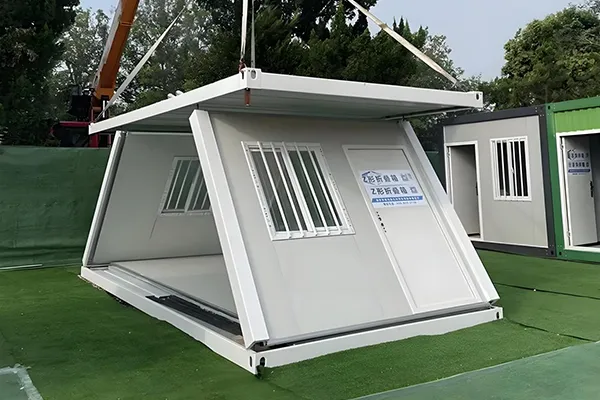
Summary
Importing mining camp buildings to Western Australia is a workable procurement route when the proposed factory package, local engineering review and destination delivery plan describe the same buildings. Before authorizing manufacture, the buyer should resolve the applicable approval pathway, evidence for the selected construction, consignment-specific biosecurity arrangements and the loaded transport configuration. A factory contract plus appointed Western Australian contractors can suit an owner with the team to coordinate these interfaces. An integrated delivery contract becomes more useful where that coordination remains unassigned. For an eastern Pilbara location considering Port Hedland, the decisive comparison is which arrangement can deliver the agreed camp functions through to installation, connected services and readiness for intended use.
Compare two delivery routes against one camp brief
Consider a hypothetical mine accommodation purchase in the eastern Pilbara, using a Roy Hill-area setting and Port Hedland as a proposed entry port. This is a procurement example, with no assumed KUBO customer, booked shipment or approved route. Its purpose is to make the location-specific decisions concrete enough for a mine owner or engineering, procurement and construction management (EPCM) team to evaluate.
Keep one owner-approved schedule covering dormitories, offices, dining and kitchen facilities, sanitation, laundry, welfare spaces and external service interfaces. Give both bidders the same intended uses, resident assumptions, target use window and handover condition. A factory offer covering building shells cannot be compared directly with a local proposal that also includes foundations, connected services and completion documentation.
The two routes differ principally in who integrates the work. Under separate contracts, the owner or EPCM team coordinates the overseas manufacturer with locally appointed specialists. Under an integrated local delivery contract, the lead contractor takes the expressly agreed coordination scope. That contractor may still procure buildings offshore; contractual integration and manufacturing location are separate choices.
| Decision interface | Factory package plus appointed WA team | Integrated local delivery contract |
|---|---|---|
| Design evidence and revisions | Owner or EPCM coordinates factory submissions with the local engineer and building surveyor. | Lead contractor integrates submissions where included. Confirm responsibility for obtaining missing supplier evidence. |
| Import and biosecurity arrangements | Buyer appoints the importer and clearance team; the factory provides agreed goods and packing information. | Require an explicit import scope, including applicable inspection arrangements and responsibility for resulting actions. |
| Loaded envelope and road access | Factory packing data must reach the appointed haulier before the transport basis is frozen. | Lead contractor coordinates package and transport design, subject to its stated exclusions. |
| Foundations, assembly and services | Local contracts cover the agreed site works and connections; interfaces need a coordinating owner. | Specify the complete installation and service boundary, including any owner-provided infrastructure. |
| Occupation and handover | Buyer assembles completion evidence across contracts and coordinates the applicable closeout process. | Define the lead contractor’s closeout deliverables and the same agreed readiness condition. |
Separate procurement can preserve direct control over factory configuration while using an established site team. Its schedule depends on that team’s ability to resolve interfaces promptly. Integrated delivery can reduce the buyer’s coordination workload when the lead contractor has accepted the relevant obligations. Neither arrangement makes an unresolved design or inaccessible site disappear.
A useful local precedent is Kerman’s historical Roy Hill rail construction camp installation account. Its scope included geotechnical investigation, surveying, clearing, building plates and modular installation. Those activities show the substance of a local execution package. The account does not establish the buildings’ factory origin or a KUBO involvement.
Connect the proposed building to the Western Australian review pathway
For the actual mine location, ask the relevant authority and appointed professionals to confirm jurisdiction, building classification and the approvals required. A regional description alone is insufficient to establish the pathway for a particular mining-tenement facility.
The Shire of East Pilbara’s building application guidance provides a useful procedural reference. Its planning team determines whether development approval is required. For certified applications, a registered building surveyor completes the Certificate of Design Compliance (CDC) before submission. Applications for Class 1b and Classes 2–9 must be certified. Planning, health and other applicable approvals remain separate considerations.
The procurement implication is to appoint the review team while the proposed construction can still be changed. Give that team the intended functions, site information and proposed building details so it can identify what the supplier must demonstrate. A request for an unspecified “Australian certificate” gives the manufacturer little direction about the evidence needed for the actual project.
Make the drawing schedule part of the supply agreement
East Pilbara’s certified building application checklist requires supporting plans and documents to be listed on the BA3 CDC with correct plan, sheet and revision references. Its document categories include the site plan, specifications, technical documents and structural engineer’s drawings.
Use this document relationship to structure the factory submission schedule. Each proposed building type should connect to an identifiable plan, construction specification and relevant supporting evidence. Nominate who answers reviewer comments, who approves substitutions and who communicates the resulting changes to production. This makes the reviewed design reproducible through manufacture and installation.
A hypothetical roof revision shows why coordination must precede production
Suppose the local review identifies a need to revise a proposed roof build-up and insulation arrangement. This is a hypothetical dependency trace, with no claim that a particular KUBO assembly has passed a Western Australian assessment.
The manufacturer would first describe the revised assembly and identify the supporting evidence available. The local design team would assess its suitability for the project, including affected structural connections and interfaces. If the evidence remains insufficient, the buyer may need a different assembly or building package before committing to manufacture.
A technical change can also alter physical delivery. Additional roof depth could increase the transported height of a completed module. A changed material or assembly could affect weight, handling details or the packing arrangement of components. These consequences depend on the actual revision and shipping format; they should be calculated from the proposed design.
Close the change through one coordinated instruction: update the technical submissions and the surveyor’s document schedule as applicable, issue the revised manufacturing specification, and have the transport and handling parties reassess affected data. Identify any change to site assembly work in the local contract. Production can proceed against that coordinated revision once the agreed release conditions are met.
This control protects useful progress. The factory can prepare an agreed solution while the buyer avoids paying for a construction detail that the local team later needs to replace.
Match KUBO product references to the evidence your project needs
KUBO is a manufacturer in Shunde, Foshan, China. Its mining camp accommodation supply scope covers project-based manufacturing and export supply for accommodation, offices, dining, welfare and support buildings. The buyer’s appointed Western Australian parties and agreed contracts determine destination engineering and execution.
Two published product families provide starting points for configuration: the flat pack worker dormitory module for sleeping accommodation and the detachable flat pack camp support module for defined support functions. Their suitability for a Western Australian project depends on the proposed adaptation and supporting evidence.
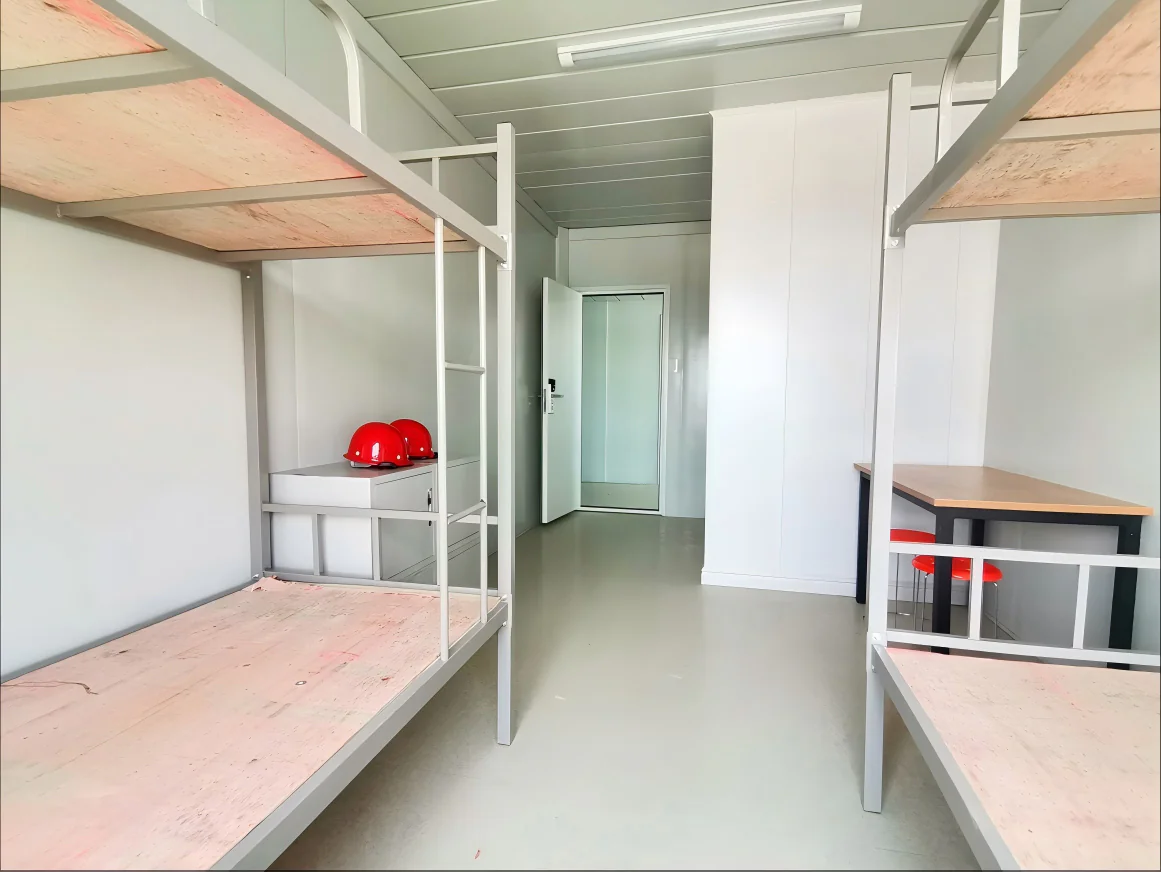
The photograph makes a layout discussion tangible: bunk frames flank a central aisle, with a partition and door toward the rear and a table within the room. It cannot establish usable dimensions, permitted occupancy or the performance of the wall and roof construction. Furniture shown should enter the proposed scope only where expressly included in the quotation.
| Reference or candidate | Useful starting point | Evidence or decision needed before commitment |
|---|---|---|
| Dormitory interior photograph | Discuss bed arrangement, circulation, storage and partition preferences. | A dimensioned proposed plan, intended use and occupancy, furniture schedule and reviewer assessment. |
| Flat pack dormitory family | Develop a repeatable sleeping-building proposal around the owner’s room brief. | Proposed construction details, applicable material and fire evidence, and structural and foundation design coordination. |
| Detachable camp support family | Explore separately defined welfare, changing, storage or support spaces. | Function-specific layout and fit-out, service interfaces, required evidence and local completion scope. |
| Selected shipping format | Allocate factory completion, packing and destination assembly. | Actual package dimensions and weights, import classification, handling method and a resourced assembly plan. |
The value of this comparison is an early fit decision. If a candidate can provide the required arrangement and evidence, the team can develop it into a quotation basis. Where a construction detail cannot be supported, revise that detail or evaluate an alternative package while procurement options remain open.
Flat-pack delivery may move enclosure assembly and finishing activities into Western Australia. A more complete arrival format may reduce some site assembly while creating a larger individual handling envelope. Compare the actual proposals: weather protection during assembly, available trades, connection access and inspection opportunities all influence which format suits the site.
For maintenance and eventual relocation, ask which components the operator expects to replace locally and what dismantling information will be available. These requirements can affect material selection and connection design before ordering. A detachable product name alone does not establish the work, equipment or condition of components after a future move.
Resolve the rural biosecurity arrangement for the actual consignment
The Department of Agriculture, Fisheries and Forestry (DAFF) identifies a specific distinction in its arrival guidance: prefabricated office or accommodation units built as, or shipped in, a sea cargo container fall outside industry Class 14.4 arrangements. For rural delivery, these units require a departmental rural tailgate inspection and are managed under the relevant Biosecurity Import Conditions system (BICON) case.
Have the importer determine the current conditions for the exact goods, packing and delivery address. An unassembled component consignment needs its own determination; the flat-pack label does not establish an exemption.
Before packing is fixed, agree what information the importer needs and how inspection access will be provided. Record who coordinates inspection, handles any resulting actions and communicates release status to the transport team. This gives factory packing decisions a defined destination process.
Test Port Hedland receiving and the loaded journey to the mine
Establish a receiving proposal that matches the cargo
Pilbara Ports lists general cargo and heavy lifts among the uses of PH No.2 berth, and containers and general cargo for PH No.3. These Port Hedland facilities make the port a candidate for assessment. A particular shipment still needs confirmation of suitable handling arrangements and acceptance.
The port’s berthing guidance requires a berth application, with berthing priority controlled by the Harbour Master. Build the receiving proposal around the actual vessel and cargo. Ask the logistics provider to identify discharge handling, temporary storage and the transfer to onward transport, including who controls each handover.
Give the haulier the vehicle-plus-load configuration
Main Roads Western Australia states that Restricted Access Vehicles (RAVs) operating on public roads require a permit or order. Its general RAV guidance includes width and height limits of 2.5 metres and 4.3 metres, alongside length, mass and axle criteria. These concern the vehicle or combination; they are not permissible standalone building dimensions.
For a completed module, the haulier needs the transported height including its support arrangement, overall width, weight and proposed trailer configuration. Packed components require their own loaded configuration. A catalogue’s deployed dimensions cannot answer either transport question.
The July 2026 Class 1 RAV Oversize Period Permit Operating Conditions address route assessment, clearances, operating restrictions, pilots and curfews, including provisions concerning the Port Hedland port precinct. The transport operator must establish the conditions applicable to the proposed movement. A listed road or historical delivery does not authorize a new load.
Join receiving, clearance and installation in one release sequence
The following sequence is a proposed procurement control for the hypothetical eastern Pilbara camp. Develop it before ordering, then update it with the actual shipment and site status:
- Define the consignment. Record whether each shipment contains components, assembled units or a mixture, with its packing description and destination. Obtain the importer’s determination of applicable conditions and inspection arrangements.
- Confirm the receiving method. Match the proposed port handling to package weights, dimensions and lifting information. Identify where cargo can be held if onward movement or installation is temporarily unavailable.
- Resolve the loaded road movement. Have the haulier assess the proposed combination, route and applicable access conditions. Include the transition from public roads to the mine’s access network and final unloading location.
- Prepare the installation area. Confirm that the foundations or assembly area, unloading equipment, access and responsible crew match the arriving package. Identify service connection work that must precede or follow placement.
- Authorize each onward handover. Use confirmed release status, receiving availability and site readiness to dispatch the load. Give the site team the package identifiers and placement sequence so receipt connects directly to the intended work.
Westlink Logistics’ historical Roy Hill WHIMS 1.5 project account illustrates port-to-mine coordination for industrial plant cargo in 2021. It describes China-origin structural steel, pipe racks, hoppers and tanks moving through Dampier and Port Hedland, with oversized haulage and site coordination for installation or laydown. This was plant cargo, separate from Kerman’s camp installation account. Its procurement lesson is the need to connect the receiving decision to the site’s installation sequence.
Authorize manufacture against an agreed completion plan
The order should identify what the factory will produce, what the Western Australian team will complete and what information each party needs from the other. Attach the coordinated technical revision and specify the submissions or inspections required before the relevant work proceeds. Distinguish manufacturing authorization from shipment release so a completed package does not move ahead of its receiving arrangements.
Set the site service boundary physically. For example, identify the agreed termination point for each supplied service and the party responsible for the connection beyond it. Apply the same discipline to external walkways, drainage and other shared infrastructure included in the camp brief. Otherwise, individual buildings may be complete while the facility remains unusable.
A separate historical precedent supports early engineering integration. RSA Engineering’s account of Chinese-manufactured Rio Tinto accommodation describes involvement in design, fabrication and installation review, including structural and foundation work for the Nammuldi expansion. It demonstrates an established type of offshore-manufacturing and Western Australian engineering relationship. It provides no evidence about KUBO products or appointments.
Agree the closeout responsibilities before award: installation records, applicable service testing, completion documents, defect resolution and the project’s occupation requirements. Schedule certainty improves when these deliverables have owners and dependencies, allowing the buyer to work backward from the intended use window.
For broader supplier assessment, use the workforce camp buying checklist. The modular building last-mile logistics guide provides supporting context for delivery planning. This procurement decision should remain focused on whether the selected package and appointed team can close the Western Australian interfaces.
Procurement FAQs
Can we commission design development before the complete supply package is ready?
Yes, a buyer can propose a separately defined design-development stage with agreed deliverables, commercial terms and decision points. Identify which information the supplier will provide, what the local reviewers will assess and which matters must be resolved before manufacturing authorization. This can keep the project moving while substantial commitments remain tied to an assessable proposal. Record how accepted development work will carry into the eventual supply contract so the same scope is neither omitted nor purchased twice.
Can later accommodation batches repeat the first approved configuration?
Repetition can support consistent procurement, but the later batch should be checked against its actual site position, intended use and current specification. Confirm whether foundations, service capacity, transport arrangements or material substitutions differ. Ask the appointed professionals which earlier documents remain applicable and which need updating. Preserve the first batch’s accepted configuration as a controlled reference, with a clear list of changes for the next batch. This is particularly useful when expansion occurs after different suppliers or contractors have joined the project.
Should fit-out and replacement items be purchased locally?
Compare items individually against installation responsibility and the operator’s maintenance needs. Locally purchased items may suit an established service network, while factory inclusion may simplify a defined assembly. Whichever route is selected, provide dimensions, connection requirements and installation access early enough to coordinate the building. Allocate responsibility for checking compatibility and resolving defects at the interface. For items expected to be replaced during camp operation, ask the operator to review availability and maintenance access before the specification is frozen.
Review your Western Australia camp supply scope
To discuss importing mining camp buildings to Western Australia, prepare the state and site region, camp use, estimated residents and target use window. Include the room and facility schedule if available, together with details of any appointed local engineer, building surveyor or site contractor. Identify Port Hedland as a proposed option where relevant, alongside known access constraints.
KUBO can use these inputs for a factory configuration and supply-scope discussion, including the proposed buildings, packing/export coordination and information needed from the destination team. Review Your Western Australia Camp Supply Scope to develop a proposal that your procurement and local delivery teams can assess together.
Sources and References
- Shire of East Pilbara: Building applications and approval process.
- Shire of East Pilbara: Certified building permit application checklist, supporting documentation items 1–4.
- Department of Agriculture, Fisheries and Forestry: Arrival of goods and rural tailgate inspection arrangements.
- Main Roads Western Australia: Permits, orders and schemes.
- Main Roads Western Australia: Class 1 RAV Oversize Period Permit Operating Conditions, July 2026.
- Pilbara Ports: Port Hedland port facilities.
- Pilbara Ports: Port Hedland berthing information.
- Kerman: Historical Roy Hill rail construction camp installation scope.
- RSA Engineering: Historical modular building design and engineering work for Rio Tinto accommodation.
- Westlink Logistics: Roy Hill WHIMS 1.5 industrial plant cargo project, 2021.