

Summary
Saudi camp procurement should compare imported building packages and local delivery against the same accommodation requirements, agreed handover condition and readiness for intended use. An imported package can suit a buyer whose appointed team can manage receiving, site completion, utilities and acceptance. A locally coordinated offer can provide better interface control when those responsibilities are expressly included. Neither origin nor a turnkey label establishes a complete scope. Fix the required room configuration, identify who completes each destination activity, and compare the combined commitments. Saudi owner examples show why resident capacity alone is insufficient: room occupancy, bathrooms, privacy and operating responsibility can materially change what the buyer needs to procure.
Define the Saudi project before comparing supply routes
The useful starting point is a particular site and intended occupation window. A northwest coastal construction camp and an accommodation requirement elsewhere in Saudi Arabia cannot simply inherit the same receiving arrangement. The owner’s accommodation brief, available site services and appointed construction team determine which supply route can be made workable.
For an owner or engineering, procurement and construction (EPC) contractor, the decision is therefore about purchasing and coordinating work. With imported supply, the factory package becomes one part of a wider delivery arrangement. With locally coordinated delivery, a contractor may combine building procurement with destination work. That contractor may still import buildings or components; a Saudi contracting address does not establish manufacturing origin.
Set one agreed handover condition: buildings completed to the specified configuration, required site connections and checks addressed, and the applicable conditions for intended use satisfied. Identify camp operation separately. An offer ending with goods at a port and an offer extending through site completion represent different purchases, even when both advertise the same bed capacity.
This comparison begins with four practical inputs: the Saudi site region, camp use, approximate resident population and target use window. Early estimates are enough to open a discussion, provided uncertainty remains visible. Before commitment, those inputs must develop into a shared accommodation schedule and assigned destination responsibilities. Otherwise, the apparent choice between suppliers conceals unresolved work that somebody will eventually have to price.
Normalize rooms and facilities before comparing prices
Red Sea Global’s 28 April 2021 account of its Construction Village described a maximum of three workers per room, en-suite bathrooms and privacy partitions. These details describe the accommodation configuration reported for that historical project; they do not establish a nationwide Saudi room standard or a current tender requirement. The procurement lesson is that room configuration can change the required building package before supplier origin enters the discussion. See Red Sea Global’s Construction Village accommodation description.
Consider an invented requirement for 300 residents. Use three people per room to illustrate the historical example’s reported occupancy limit, and compare it with an explicitly assumed four-person alternative. The arithmetic below is a buyer illustration, not Red Sea Global’s actual camp quantity, a KUBO quotation or a proposed compliant design.
| Comparison item | Three-person illustration | Assumed four-person alternative | Procurement meaning |
|---|---|---|---|
| Resident population | 300 residents | 300 residents | The same population must be accommodated. |
| Room-count calculation | 300 ÷ 3, rounded up = 100 rooms | 300 ÷ 4, rounded up = 75 rooms | The alternatives require different room counts. |
| Difference | 25 additional rooms | 75-room comparison base | 25 ÷ 75 × 100 = 33.3% more rooms in the three-person illustration. |
| Still unresolved | Room dimensions, bathroom arrangement, privacy provisions, accessible facilities, circulation and service spaces | Room count does not determine module count, floor area, site area or total cost. | |
The 33.3% difference applies only to rooms. A room may occupy part of a building or involve a different module arrangement, so that percentage cannot be transferred to containers, land, construction quantities or budget. Nor does the assumed four-person alternative establish an acceptable option for the actual project. That depends on the requirements applying to the buyer’s site.
Bathroom configuration adds another layer. En-suite rooms and rooms served by shared facilities create different factory work and destination connections. The factory needs to know which sanitary spaces, partitions and internal services belong in its package. The local team needs the corresponding connection information and the scope of external infrastructure. A low building price based on a different bathroom arrangement is not a saving against an unchanged accommodation brief.
Translate the owner’s requirements into a room and facility schedule that both bidders can price. Record occupancy, bathroom arrangement and privacy provisions alongside the supporting functions the project actually requires. Distinguish confirmed requirements from alternatives offered for review. This allows a supplier to propose a useful configuration without silently replacing the buyer’s intended living conditions.
If occupancy is unresolved, request separately identified options against the same remaining assumptions. The buyer can then see what changes in the building package and ask the destination contractor to identify the corresponding changes in connections and completion work. This is more informative than comparing two unqualified prices per bed.
Compare imported supply and local delivery at the same handover condition
A Saudi camp quotation comparison should expose where each offer stops. It need not become an exhaustive supplier audit: the immediate task is to determine whether the combined imported-supply arrangement reaches the same agreed handover condition as the local-delivery offer.
Use the following layers to reconcile scope. An excluded activity is not automatically a reason to reject a quotation. It becomes a procurement gap when there is no appointed party, priced scope or acceptance responsibility to close it.
| Scope and acceptance layer | Imported package plus assigned completion | Locally coordinated delivery | Decision consequence |
|---|---|---|---|
| Owner room and facility configuration | Factory offer follows the agreed room schedule and identifies alternatives. | Local offer follows that same schedule, including any subcontracted building supply. | A different accommodation configuration prevents a like-for-like price comparison. |
| Factory supply boundary | Define supplied components, factory-completed work and assembly information. | Identify the building source and what arrives incomplete. | Unpriced completion remains even when the offer is described as local. |
| Importer and shipment documents | Name the importer and allocate document preparation and review. | Confirm whether the local contractor undertakes import coordination. | An unnamed importer leaves a critical destination interface unresolved. |
| Port, receiving and laydown | Appoint handling, transport, unloading and storage responsibilities. | Check which of those activities the quoted delivery scope includes. | Port arrival alone does not establish a workable site delivery. |
| Assembly, civil work and external services | Local contractor prices the work left outside factory supply. | Confirm included foundations, assembly and external connections. | Missing site work changes both the comparison total and completion dependencies. |
| Local review, testing and use acceptance | Assign submissions, inspections and closeout to appropriate project parties. | Identify the contractor’s obligations and the buyer’s retained responsibilities. | Completed installation does not by itself establish permission to occupy. |
| Camp operation | Buyer separately appoints operating services unless expressly included. | Confirm whether delivery includes operation or only construction handover. | Accommodation buildings alone do not supply an operating camp service. |
Compare quoted totals only after adding the separately procured work needed to reach the agreed handover condition. Add each omitted activity once, and keep uncertain allowances visible rather than presenting them as firm commitments. Where a local quotation bundles activities without a usable breakdown, ask for inclusion and acceptance confirmation; do not invent a split between manufacturing and site work.
The buyer also needs a credible sequence. A factory dispatch commitment, a port arrival forecast and a site handover commitment are different milestones. Their relationship depends on transport arrangements, readiness and the remaining work. Evaluate the proposed sequence and accountable parties, rather than treating a shorter stated delivery period as evidence of earlier occupation.
Saudi examples show why construction, site work and operation differ
In its 23 July 2019 Construction Village award announcement, Red Sea Global named the ARCCO-Speedhouse joint venture and Saudi Al Majal Al Arabi as construction awardees while retaining operational control. The historical example illustrates that construction procurement and camp operation can sit with different parties. It does not establish any relationship between those firms and KUBO. See Red Sea Global’s construction award and operating responsibility announcement.
For a buyer, that distinction matters at handover. Decide who will manage the occupied accommodation and how that party receives building information, maintenance instructions and unresolved items. If operation is procured separately, its requirements should still inform the agreed facilities. Otherwise, the construction package can be complete against its own scope while the operating arrangement remains unprepared.
A separate, undated Byrne Technical Services case describes L&T’s AMAALA accommodation site between Duba and Al Wajh. Byrne reports factory-assembled modules, with corridor and stair structures installed on site, and coordination involving internal teams, the customer, transporters and customs. This is the contractor’s own account, not independent performance verification. It does not identify an entry port. See Byrne’s AMAALA accommodation case.
The relevant question is which parts of the offered building remain unfinished on arrival. Factory assembly can coexist with substantial destination interfaces. Buyers should obtain a package-specific completion description that a local contractor can price and execute, with the local engineer addressing project-specific technical review. This connects manufacturing scope to site delivery without assuming either party supplies the whole camp.
Develop a Saudi camp receiving plan around the actual site
For a hypothetical northwest-Saudi enquiry, Port of NEOM could be considered as a candidate entry port. Its published services identify modular housing as project cargo. Its information pages also describe port interfaces involving personnel induction, driver identification, vehicle permits, cargo documents and designated routes. These are port requirements, not site-access permissions or confirmation that a particular shipment can be handled. See the port’s cargo service information and access and operating information.
A separate Oxagon/Port of NEOM corporate article dated 30 December 2025 describes Red Sea Global cargo being stored until destination sites were ready and then transported onward by truck. It also mentions AMAALA construction-material deliveries. That supports a regional receiving practice, but does not establish that Byrne’s accommodation modules used this port. See the Port of NEOM account of Red Sea Global logistics.
The proposed receiving sequence below applies only to the hypothetical enquiry. It is a planning arrangement to confirm with project parties, not a record of a booked route or completed camp shipment.
- Confirm the importer and cargo basis. Identify the importer, shipment configuration, cargo dimensions and weights, and required documents. Obtain the information needed for an actual handling and transport assessment.
- Confirm port handling and any storage arrangement. Establish whether the proposed cargo can be received and how it would be held if the site cannot accept it. Allocate storage, handling and release responsibilities in the quoted scope.
- Authorize release against site readiness. The appointed site lead checks access, laydown space, foundation readiness and unloading arrangements before requesting agreed delivery batches. The release instruction should identify what the site can receive.
- Execute the agreed transport and completion scope. The named transporter and local contractor coordinate delivery, unloading and assembly responsibilities. Match the shipment sequence to the building areas the contractor can actually complete.
- Close installation and occupation requirements separately. Record completed work and outstanding items, then address the project’s applicable use acceptance and operating-service arrangements before residents move in.
For an actual order, the parties must confirm the entry port, inland route, permits, truck and crane capacity, sailing arrangements and responsibility for delay or storage charges. Port suitability does not establish inland feasibility. Detailed route assessment belongs in the project logistics work; KUBO’s last-mile logistics planning guide examines that separate task.
If buildings arrive ahead of usable foundations or receiving space, the buyer may need storage and additional handling. If the wrong batch reaches site first, available labour and unloading resources may not advance the intended accommodation area. Address this commercially by identifying who issues release instructions, who can revise them, and how resulting changes are recorded. A receiving plan is useful when it links the supplier’s packing and dispatch sequence to an accountable site decision.
Assign import responsibilities and accommodation acceptance
The Saudi Standards, Metrology and Quality Organization (SASO) publishes an importer-facing service for issuing shipment certificates for imported commercial products. Its service description establishes a document responsibility to investigate; it does not establish the classification, applicable technical regulation or exemption position of a particular modular building package. The importer should resolve the actual product treatment before the procurement commitments depend on it. See SASO’s imported commercial product shipment certificate service.
Accommodation acceptance is a different question from import documentation. The Ministry of Municipalities and Housing’s general collective-accommodation guidance addresses health, technical and safety requirements and licensing. Its English page displays an 8 June 2026 update; that update should not be treated as a new-rule effective date. See the ministry’s collective-accommodation programme guidance.
For the proposed site, identify the responsible authority and latest applicable owner and local requirements. The buyer and appointed local engineer should establish the review and acceptance path, including what building information the supplier must provide. A special-zone or project-specific arrangement cannot be inferred from general guidance alone.
This creates a practical division of work: the manufacturer supplies agreed configuration and product information; the importer addresses the shipment’s import requirements; the local contractor completes its assigned works; and the relevant project parties coordinate review, testing and use acceptance. Any local delivery proposal should make its role in those activities explicit.
Choose the arrangement your project can execute
Imported supply deserves consideration when the buyer already has a capable local EPC or appointed completion team. That team must be able to turn the factory package into a priced, coordinated destination scope. The comparison can then assess the building specification, local integration cost, receiving arrangement and evidence supporting the completion sequence.
A locally coordinated offer becomes particularly useful where the buyer lacks those destination resources and the contractor accepts meaningful responsibility for organizing them. Evaluate the actual coordination included: control of transport instructions, site work, interfaces and closeout. A contractor that merely forwards separate quotations leaves more coordination with the buyer than one that manages the combined delivery obligation.
Consider the intended service period as well. Maintenance access, replacement-component information and responsibility for defects across factory and site work should fit the operating arrangement. If relocation or later expansion is a real project requirement, include it in the building brief so bidders can address it. Neither sourcing route alone establishes lifecycle suitability.
A smaller first package may be appropriate when a defined accommodation area can genuinely be completed and accepted with the available site services. Its value comes from a usable scope, not simply a lower initial building quantity. Shared facilities or incomplete external connections can prevent an apparently self-contained package from serving residents.
Discuss the building package and destination scope with KUBO
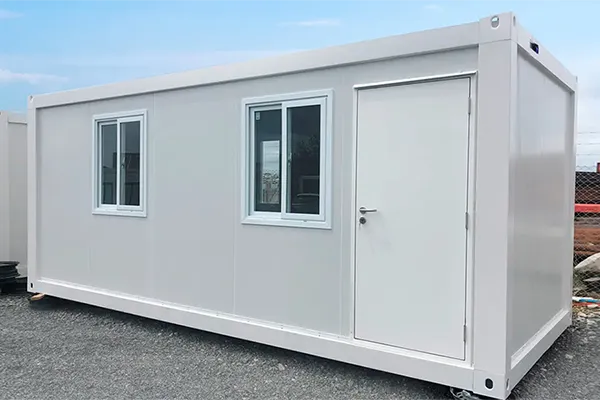
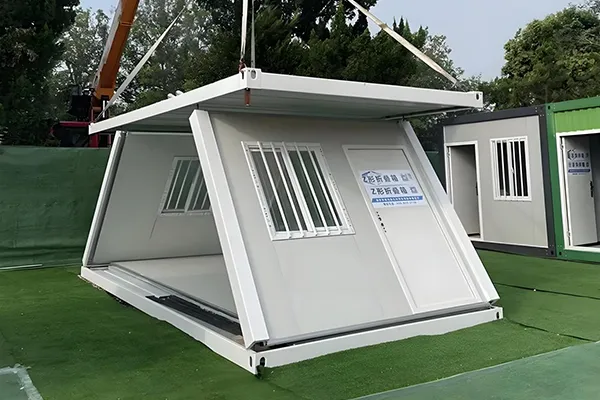
KUBO is a manufacturer in Shunde, Foshan, China. Its construction and engineering project building solutions provide a starting point for modular building supply and agreed configuration coordination. The flat-pack container house and detachable flat-pack container product families can be discussed against the accommodation brief, including factory-prepared components and destination assembly requirements.
For Saudi projects, frame the enquiry around what KUBO would supply. The Saudi buyer’s locally appointed parties and agreed contracts determine the destination work, including receiving, site completion and coordination of local review. Develop layout and specification choices alongside that allocation so the building package and local completion scope fit together.
Discuss Your Saudi Camp Supply Plan with the country and site region, intended camp use, approximate headcount and target time window. Include the owner’s room requirements and appointed local completion party if known. Ranges and open questions are acceptable for the initial discussion; detailed drawings and responsibility confirmation can follow as the scope develops.
Procurement FAQs
Can a local bidder change the manufacturing source after selection?
Address this in the purchase agreement before award. If the proposed factory, building system or materials formed part of the accepted offer, require a defined review of changes against that baseline. The issue is whether the substitution changes configuration, documentation, completion work or the receiving sequence. An unchanged local contracting entity does not make those consequences disappear.
Does single-point responsibility eliminate the buyer’s project obligations?
Only the obligations expressly transferred can be assessed as part of that promise. The buyer may still need to provide site access, owner decisions or information required for submissions. Ask the bidder to identify dependencies on the buyer and the remedy when an interface fails. This makes the coordination commitment assessable without assuming the contractor controls authorities or every project input.
Can the local completion contractor be changed after factory production starts?
It may be possible, but the replacement must accept the actual supplied configuration and remaining scope. Transfer drawings, component information, receiving plans and outstanding decisions, then reconcile any changed assembly or connection requirements. Establish who carries responsibility for inherited work and defects. A new contractor’s general experience does not demonstrate acceptance of the original completion obligation.
How should Saudi camp procurement proceed when headcount remains uncertain?
Request clearly separated headcount options using the same room standard and identify which shared facilities change between them. Before authorizing production, establish which quantities and interfaces are fixed and how later changes will be handled. If part of the scope is released early, its services and acceptance dependencies need to be understood; spare beds on paper do not establish a usable expansion plan.
Sources and References
- Red Sea Global: Construction Village accommodation, 28 April 2021
- Red Sea Global: Construction Village contract award, 23 July 2019
- Byrne Technical Services: AMAALA accommodation case, undated
- Oxagon/Port of NEOM: Red Sea Global logistics account, 30 December 2025
- Port of NEOM: Cargo services
- Port of NEOM: Port access and operating information
- SASO: Shipment certificate service for imported commercial products
- Ministry of Municipalities and Housing: Collective-accommodation programme guidance