


A modular building factory audit should do more than confirm that a supplier owns equipment and has products on the floor. The real purpose is to determine whether the factory can translate the buyer’s approved requirements into identifiable materials, controlled production information, inspected components, complete shipment packages and usable project records.
This modular building factory audit checklist is designed for overseas buyers preparing an on-site visit, live remote audit or document-based verification. It focuses on the factory walk itself: what to observe, which record to request, how to cross-check the two, how to close findings and how to make a bounded approval decision without treating factory qualification as approval of every future order.
Summary
The main conclusion is straightforward: physical activity is evidence that manufacturing takes place, but it is not sufficient evidence that a particular project will be manufactured correctly.
An effective audit connects four things:
-
The buyer’s released project requirements.
-
The physical material, component or process being observed.
-
The controlled record governing or recording that work.
-
The person authorized to resolve deviations and release the next stage.
A production line, cutting table or panel assembly station can establish that certain operations are physically available. It cannot, by itself, prove material grade, dimensional conformity, testing results, production capacity, current workload or compliance with the destination’s building requirements.
For that reason, the audit decision should be bounded. A buyer may approve a factory for a defined product category and contractual scope while keeping project drawings, first-article production, batch inspections, packing release, destination engineering and occupancy approval subject to separate gates.
This guide does not replace the broader commercial, technical and contractual checks covered in KUBO’s workforce camp buying checklist for project owners and EPC contractors. Its narrower purpose is to help an audit team walk through a modular building factory and convert observations into a defensible supplier-qualification decision.
What a Modular Building Factory Audit Must Establish
A factory visit can easily become a guided tour of impressive machinery, sample rooms and finished buildings. Those observations have value, but they answer only the first question: does a relevant physical manufacturing environment exist?
A procurement decision requires deeper answers:
-
Can project requirements reach the production floor without uncontrolled interpretation?
-
Can the factory identify the materials and purchased components used for a particular order?
-
Are drawing revisions and bill-of-material changes controlled?
-
Are inspections performed before work becomes inaccessible?
-
Are rejected parts separated, recorded and prevented from accidental use?
-
Can finished components be mapped to packages, containers, buildings and installation sequences?
-
Can the supplier produce the documents needed for buyer acceptance, destination review and site installation?
-
Are subcontracted processes and third-party responsibilities visible?
-
Does the proposed production and inspection plan apply to the buyer’s order rather than merely describing the factory in general?
-
Who has authority to accept, reject, repair, substitute and release work?
ISO 19011:2026 provides general guidance on audit principles, audit programmes, conducting management-system audits and auditor competence. It does not certify a supplier, approve a modular building or prescribe a universal factory-audit score. Buyers can nevertheless use its evidence-oriented approach to structure a supplier audit around defined objectives, relevant evidence and competent review.
The audit objective should therefore be agreed before the visit. Possible objectives include:
-
Initial qualification of a manufacturing source.
-
Verification of capability for a particular modular system.
-
Review of project-specific production readiness.
-
Witnessing a first article or representative assembly.
-
Investigation of a quality concern.
-
Verification before a major production release.
-
Review of corrective actions from an earlier audit.
Combining these objectives into one undefined “factory inspection” creates ambiguity. A supplier may demonstrate general manufacturing capability while the buyer mistakenly assumes that an unreleased design, an unproduced batch or an untested destination configuration has also been accepted.
Define the Audit Basis Before Entering the Factory
The buyer or EPC team should issue a short audit brief in advance. It need not disclose commercially sensitive information beyond what is necessary, but it should state the decision the visit is intended to support.
At minimum, prepare:
-
Project destination and intended building use.
-
Proposed modular building system.
-
Approximate quantity and building mix.
-
Supplier scope and known subcontracted scope.
-
Applicable client specifications and destination requirements.
-
Current drawing and specification status.
-
Critical materials, interfaces and purchased components.
-
Required inspection, testing and document deliverables.
-
Intended audit mode and participants.
-
Processes the team wants to observe.
-
Sample order, component or record to be traced.
-
Safety, photography and confidentiality restrictions.
-
Open technical deviations or commercial assumptions.
-
Expected finding categories and closure procedure.
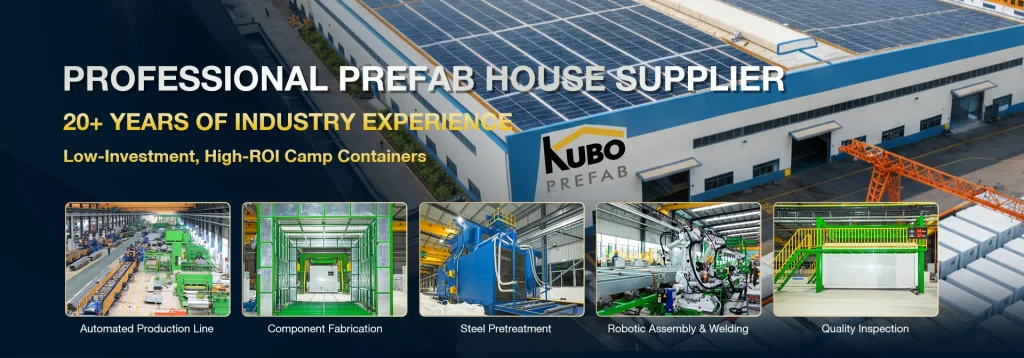
The auditor should also request a high-level process map before the visit. KUBO’s published factory and project-delivery overview describes a qualitative sequence covering steel preparation, forming and cutting, welding, surface treatment, panel and MEP integration, finished inspection and packing. That sequence can help organize a visit, but the audit still needs to determine which stages apply to the proposed system, which are performed internally and which project-specific records will govern them.
Select an audit mode that matches the decision
Not every qualification requires the same level of access. An on-site audit usually offers the strongest opportunity to follow material and information across departments. A live remote audit may be suitable for selected follow-up work. Documentary review can screen a supplier or close specific administrative points, but it provides limited evidence of actual workflow.
| Audit mode | What it can establish well | Important access limits | Appropriate use | Decision limitation |
|---|---|---|---|---|
| On-site factory audit | Physical workflow, segregation, equipment availability, storage conditions, identification practices and interaction between production and quality teams | Safety zones, active work, other customers’ information and concealed production stages may restrict access | Initial qualification, higher-risk projects, first-article review or investigation of significant concerns | Does not automatically approve future materials, batches, designs or shipments |
| Live remote factory audit | Current visual access to agreed stations, real-time staff interviews and review of selected records | Camera angle, connection quality, translation, restricted areas and limited sample selection reduce independence | Follow-up audits, schedule-constrained reviews and verification of visible corrective actions | Cannot provide the same freedom to select samples or observe peripheral activity |
| Documentary audit | Procedures, organization, drawing control, inspection forms, supplier controls, qualification evidence and record completeness | Documents may show the intended system without proving consistent implementation | Preliminary screening, low-risk follow-up or focused review of document controls | Should not be treated as proof of physical process execution |
| Hybrid audit | Documentary preparation followed by targeted physical or remote verification | Requires disciplined coordination between record review and factory access | Project-specific qualification where time on the production floor is limited | Findings remain limited to the samples, dates and processes examined |
A factory is entitled to protect employees, safe operations and other customers’ confidential information. Restricted photography or redacted records are not automatically warning signs. The parties should agree on alternatives, such as viewing a record without retaining a copy, masking another customer’s identity, selecting a non-confidential sample or using a buyer-approved third-party inspector.
The relevant question is whether sufficient objective evidence can still be reviewed—not whether the buyer receives unrestricted access to everything in the facility.
Reading a Production-Floor Overview Correctly
A production-floor overview can reveal steel coils, forming lines, staged materials and defined work areas. It may help the audit team understand physical flow, material movement, work-in-progress locations and possible interfaces between operations.
That scene proves only the photographed or observed physical arrangement at that time. It does not establish:
-
Factory floor area.
-
Numeric production capacity.
-
Workforce size or skill coverage.
-
Current order backlog.
-
Available capacity for the proposed schedule.
-
Material ownership or specification.
-
Completion status of any particular project.
-
Compliance of work-in-progress with a released drawing.
-
Effectiveness of the factory’s quality-management system.
To move from layout observation to an order-specific conclusion, ask how a released order enters the factory. Where is material assigned to the job? How do operators know which drawing revision applies? What prevents components for different systems or projects from being mixed? How are incomplete, accepted and rejected parts distinguished? What production-status information is passed to quality, packing and project management?
A neat factory may still have weak revision control. A busy factory may be well controlled or overloaded; the visual impression alone cannot tell you which. Capacity and schedule confidence require a project-specific review of material availability, shared resources, approvals, subcontract dependencies, inspection time and the production programme.
The KUBO modular building manufacturer overview presents factory production, quality control and export preparation as parts of its project supply model. During verification, an overseas buyer should test how those functions would be applied to the proposed order rather than treating a general capability statement as an order release.
From Steel Cutting to a Traceable Component

A multi-torch steel-cutting table with an operator demonstrates that steel-cutting activity can take place at the observed station. The photograph or live observation does not reveal the steel grade, sheet properties, released dimensions, equipment calibration status, tolerance achieved or inspection result.
The audit task is to follow an identifiable sample through the information chain.
Begin with a component or work order that the supplier is permitted to show. Record its visible identifier without assuming what it means. Ask the responsible employee to show the applicable production information and explain:
-
Which order or product configuration the component belongs to.
-
Which released drawing or cutting information governs it.
-
How the current revision is identified at the workstation.
-
How the material was issued to that job.
-
Where the material specification is defined.
-
How the cut component receives or retains identification.
-
Which characteristic is checked at this stage.
-
Where the inspection result is recorded.
-
What happens if the result is outside the specified acceptance criteria.
Now reverse the trace. Starting with the production record, ask the factory to locate the corresponding physical component or batch. A traceability system is more convincing when it can move in both directions: component to record and record to component.
A practical sample-tracing sequence
A buyer can use the following sequence without claiming that every modular component requires identical records:
-
Select one identifiable material batch, work order or component.
-
Locate the released drawing, work instruction or cutting file.
-
Verify that the revision at the workstation matches the controlled project baseline.
-
Locate the applicable bill-of-material entry or material requirement.
-
Review how the issued material is linked to the order.
-
Identify the inspection characteristic relevant to that operation.
-
Review the associated result, status and authorized disposition.
-
Follow the component to its next production or storage location.
-
Confirm how identification will survive forming, assembly or bundling.
-
Check how its final package or module reference will be created.
If a record is missing, do not immediately replace the gap with verbal assurance. Establish whether the record was required, whether it was never created, whether it exists elsewhere, or whether the factory’s planned control does not include that stage. Record the gap and its consequence.
A missing noncritical administrative field may be correctable without stopping qualification. Missing evidence for a critical material, structural component, concealed interface or required test may justify a hold on the affected work until the requirement and evidence are resolved.
Before the Enclosure Hides the Work
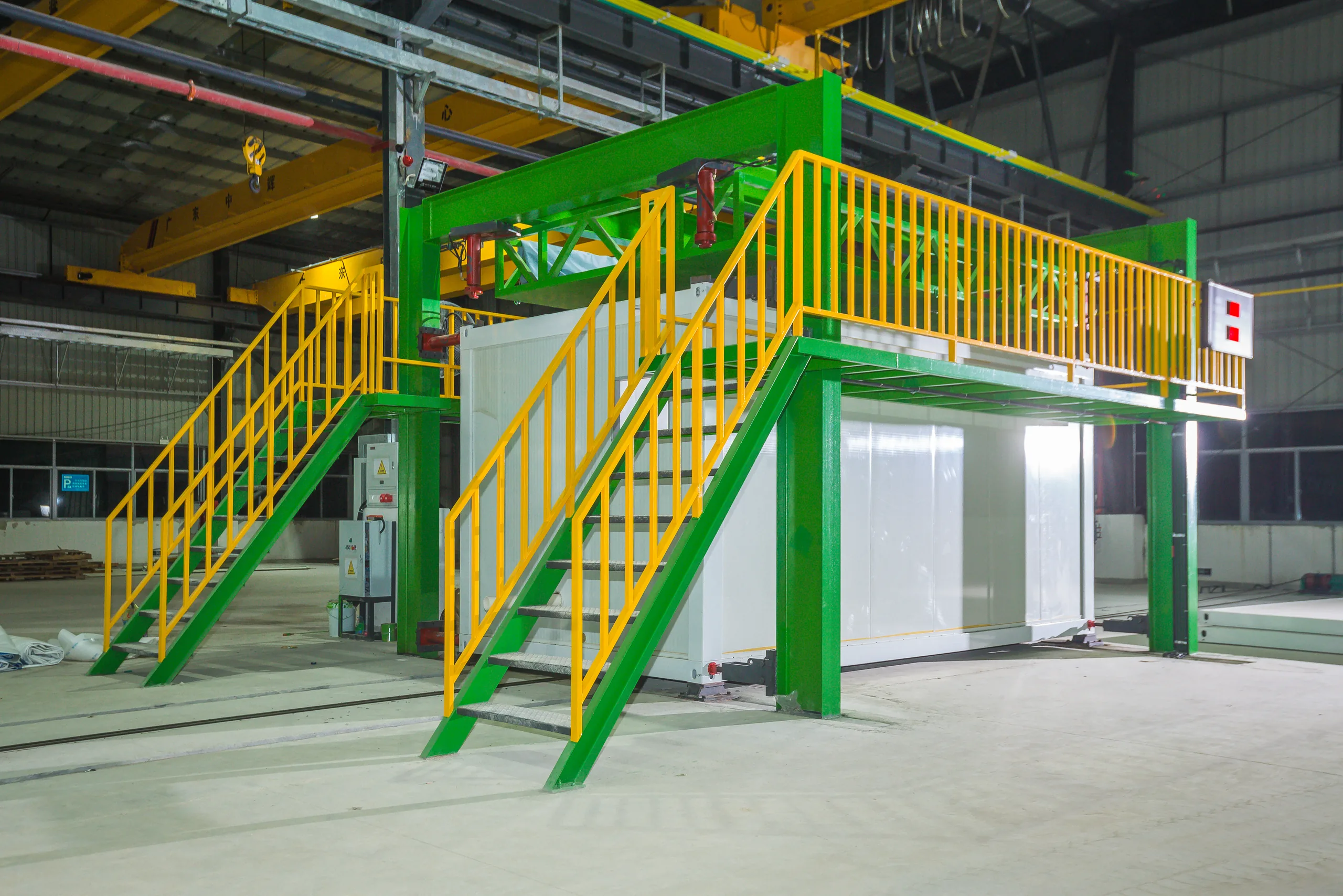
A wall-panel assembly station with an elevated access platform demonstrates physical access to work while assembly is in progress. It does not prove which insulation core, fire classification, sealing system, fastener arrangement or MEP configuration is present. Nor does it prove that any inspection or test has been completed successfully.
This distinction matters because modular production can make work inaccessible quickly. Once wall and ceiling finishes close the assembly, a later inspection may confirm appearance but not every concealed layer or connection.
The project quality plan should therefore identify which characteristics need to be reviewed before closure. Depending on the approved design and destination requirements, these may include:
-
Material identity and approved substitutions.
-
Layer sequence and orientation.
-
Support, fixing and connection details.
-
Openings and penetrations.
-
Seals, flashings and interface preparation.
-
Electrical or plumbing routing within the supplier’s scope.
-
Access provisions for future inspection or maintenance.
-
Required photographs, checklists or test records.
-
Hold or witness points assigned by contract.
A photograph can supplement this evidence, but it should be tied to an identifiable building, module, room, panel or batch. An undated close-up with no project reference may show workmanship while providing little traceability.
The audit team should ask what happens when the buyer or third-party inspector cannot attend a planned witness point. Does work stop, may the supplier proceed after notice, or can an agreed record package replace attendance? The contract and inspection plan should answer this before production begins.
Audit-Walk Matrix: Match Each Observation to Evidence
The following modular building factory audit checklist converts a factory tour into a sequence of cross-checks. It is a recommended buyer framework, not a universal compliance standard or a representation of records already reviewed for any particular manufacturer.
| Station or process | Physical observation | Document or record to request | Cross-check | Decision risk if unresolved |
|---|---|---|---|---|
| Order and engineering release | How production receives job information | Approved drawing register, BOM status and release authorization | Revision displayed or issued to production matches the approved baseline | Obsolete details, wrong openings, incorrect materials or avoidable rework |
| Incoming material area | Identification, storage, protection and segregation | Purchase requirement, receiving record and available material evidence required by contract | Physical label and batch reference correspond to the order requirement | Unverified material, mix-up, corrosion, damage or informal substitution |
| Cutting and forming | Workstation information and component identification | Released cutting/forming information and applicable inspection record | Sample component maps to current information and recorded status | Incorrect geometry propagates into assembly |
| Welding and frame assembly | Fit-up, access, identification and rejected-work controls | Applicable fabrication instruction, inspector status and nonconformity record where relevant | Physical frame or sample is linked to the correct project and inspection stage | Structural or dimensional problems discovered after finishing or shipment |
| Surface preparation and coating | Workflow, protection and environmental or process controls relevant to the specification | Approved system, product data and project-required process or inspection record | Product being used and recorded process correspond to the approved requirement | Premature coating failure, corrosion exposure or repair at destination |
| Panel and enclosure assembly | Materials, joints, penetrations and stage of closure | Approved assembly detail, material schedule and pre-closure inspection evidence | Visible work and record refer to the same configuration | Concealed omissions, leakage paths, thermal discontinuity or costly opening-up |
| MEP integration | Routing, terminations, interface points and identification | Approved MEP drawings, component schedule and required check or test record | Installed component and interface match system and destination requirements within supplier scope | Incompatible connections, failed testing, rework or delayed commissioning |
| Purchased components | Brand/model identification where contractually specified | Approved submittal, purchasing record and substitution approval if applicable | Installed or staged item matches the approved item or authorized alternative | Maintenance mismatch, noncompliance, unavailable spares or performance deviation |
| Nonconforming work area | Segregation, tags and disposition status | Nonconformity report, concession or repair approval and reinspection evidence | Rejected item cannot re-enter production without authorized disposition | Unapproved defects enter finished modules |
| Finished inspection | Access, configuration and visible completion | Inspection checklist, punch list and closure evidence | Inspected unit or component maps to the correct order and status | Incomplete or incorrect product reaches packing |
| Packing and marking | Protection, package identity, loose parts and sequence | Packing specification, package list, marking plan and loading plan | Package identity maps to building, shipment and installation sequence | Damage, shortages, customs delay or inefficient site assembly |
| Dispatch release | Container or shipment status and release authority | Final release checklist, outstanding-item register and approved shipping documents | Only accepted packages are authorized for loading | Shipment leaves with unresolved defects or incomplete documentation |
No single row proves complete project conformity. The value comes from sampling connected controls across the entire route—from released requirement to physical output and from finished package back to its governing records.
Control the Issues That Commonly Escape a Factory Tour
Drawing changes
Ask for one example of how a drawing revision is issued and how superseded information is removed or blocked. The audit should examine both the controlled register and the production-floor practice.
A robust change process should establish:
-
Who may request and approve a change.
-
Which documents and BOM entries are affected.
-
Whether production has already started.
-
How work-in-progress is assessed.
-
How commercial and schedule effects are communicated.
-
Whether previously completed items require reinspection.
-
How the new revision reaches operators, quality personnel and subcontractors.
A change log alone is not enough if an obsolete print remains usable at the station.
Material substitution
Not every proposed substitution is improper. Availability, destination compatibility or product discontinuation can justify alternatives. The control question is whether equivalence is defined and approval occurs before use.
The supplier should identify the requested change, affected requirement, technical comparison, approval authority and implementation date. The buyer or its engineer may need to review structural, fire, thermal, corrosion, MEP, warranty or maintenance consequences. “Similar” should not become a production decision made informally because the originally specified item is unavailable.
Subcontracted work
Subcontracting can add specialist capability and is not inherently a weakness. It becomes a risk when the scope, specifications, inspections and accountability disappear outside the visible factory boundary.
Confirm:
-
Which processes or components are subcontracted.
-
Who issues technical requirements to the subcontractor.
-
How changes are communicated.
-
What receiving or source inspection applies.
-
Which records are returned with the work.
-
Who manages nonconformities.
-
Whether the buyer has agreed access or third-party verification rights when needed.
-
Whether subcontracting changes any warranty or schedule responsibility.
The contracting supplier should remain clear about the obligations it retains, even when another organization performs the work.
Rejected parts and repairs
Look for physical status control. Accepted, awaiting inspection, rejected and repaired items should not depend solely on memory or floor location. Ask the team to explain how a rejected item is identified, segregated, evaluated and either repaired, accepted by authorized concession or scrapped.
For a repaired component, review whether the original nonconformity, approved disposition, repair action and reinspection result remain connected. A freshly repaired surface is not evidence that the original issue was technically acceptable.
Purchased components
Doors, windows, fittings, electrical devices, plumbing items, fixtures and other purchased products may carry a large share of destination-interface risk. The audit should not focus exclusively on factory-made steel.
Choose a component relevant to the proposed scope and compare its physical identity with the approved schedule or submittal. Where brand or model flexibility is permitted, review the performance criteria and substitution process. Consider future availability, replacement compatibility and the documentation the site team will receive.
Packing, labels and shipment sequence
Protective packaging and cargo securing are related but distinct. Packaging protects surfaces, edges, fittings and parts from foreseeable handling and exposure. Securing addresses movement and stability within the cargo transport unit and across the transport chain.
The non-mandatory IMO/ILO/UNECE CTU Code provides global guidance on packing and handling cargo transport units across the intermodal chain, including responsibilities relevant to those who receive and unpack them. It does not provide a project-specific modular-building loading design.
During the audit, ask how the factory converts the BOM and building schedule into packages. Labels should help the destination team determine what the package contains, which building or module it serves and when it is needed. Where permissible, compare a package list with a physically staged bundle. Also check how small loose parts, fragile finishes and replacement items are controlled.
Estimated container quantities used during tendering should not be mistaken for an approved loading plan. Final loading depends on the released configuration, dimensions, weights, package protection, handling method and transport arrangements.
Supplier-Finding Closure Matrix
An audit report should distinguish observations from unresolved risks. A finding does not always require factory rejection; it requires a proportionate disposition linked to the decision being made.
| Issue or finding | Evidence required for closure | Primary owner | Closure verification | Approval implication |
|---|---|---|---|---|
| Current drawing revision is unclear at a workstation | Revised distribution control, withdrawn obsolete copy and evidence that affected work was reviewed | Supplier engineering and document control | Auditor or buyer QA samples the register, workstation and affected work | Hold project production release until controlled information is demonstrated |
| Material identity cannot be connected to the order | Material identification, receiving evidence and order-allocation record required by the contract | Supplier procurement and QA | Trace a fresh sample from storage to work order and record | Limit or withhold approval for affected material-dependent scope |
| Proposed component substitution lacks authorization | Technical comparison and approval by the assigned authority | Supplier engineering initiates; buyer or local engineer approves where assigned | Confirm approved revision and correct implementation on the floor | Do not accept substituted component until authorization is complete |
| Concealed work has already been closed without required evidence | Agreed alternative evidence, engineering review or controlled opening-up where necessary | Supplier production and QA, with buyer decision | Review adequacy against the approved inspection plan | Affected units remain on hold unless evidence supports acceptance |
| Subcontracted process is not included in the quality plan | Defined scope, specifications, incoming/source inspection and record requirements | Contracting supplier | Review returned records and sample incoming verification | Factory may be qualified conditionally, but subcontracted scope is not yet released |
| Rejected parts are not reliably segregated | Implemented status-identification and disposition process | Supplier quality and production | Revisit area and trace one rejected or repaired item | Significant concern for batch integrity; production approval may remain conditional |
| Inspection record is missing | Locate valid record or perform an approved replacement inspection where technically possible | Supplier quality | Buyer or third party verifies new evidence and scope | Missing evidence is not closed by verbal confirmation |
| Package labels do not map to installation sequence | Revised package list, marking system and sample package cross-check | Supplier logistics and project team | Inspect staged packages against the approved list | Hold shipment release if site receipt or assembly would be compromised |
| Corrective action exists only as a revised procedure | Evidence of implementation on current work | Assigned supplier process owner | Sample the changed practice and resulting record | Documentary closure alone is insufficient |
| Destination approval responsibility is undefined | Contractual responsibility matrix naming designer, local reviewer and approval route | Buyer/EPC commercial and engineering teams with supplier input | Confirm incorporation into contract documents | Factory qualification should not be converted into project approval |
Every finding should include a factual description, relevant requirement, evidence reviewed, affected scope, responsible owner, target condition for closure and verification method. Avoid vague findings such as “quality control should improve.” They are difficult to close because neither the defect nor the required evidence is defined.
Responsibility and Approval Boundaries
Off-site construction divides work across factory, transport and destination activities. The International Code Council’s public off-site and modular construction abstract recognizes planning, design, fabrication, transportation, assembly, in-plant inspection, on-site final inspection, third-party inspection, approval and authority roles. The applicable route still depends on local adoption, the contract and the authority having jurisdiction.
A factory audit should expose these boundaries, not blur them.
| Party | Typical controllable scope | Inputs or approvals needed from others | What the factory audit should not transfer to this party automatically |
|---|---|---|---|
| Manufacturer or contracting supplier | Work within the agreed supply scope, production information, material purchasing, internal and subcontract controls, inspections, packing and agreed records | Approved requirements, timely decisions, site-interface data and destination criteria | Responsibility for buyer-controlled site data, foundations, local professional design or authority decisions unless expressly contracted |
| Buyer or EPC contractor | Project brief, specifications, commercial scope, design-responsibility allocation, inspection rights, acceptance criteria and coordinated programme | Supplier technical data, production status and deliverables | Detailed factory process execution that remains within supplier control |
| Site contractor | Foundations, access, lifting, storage, assembly, local utilities, protection, site workmanship and tests within its package | Installation drawings, package identification, delivery sequence and interface information | Factory conformity or design obligations not included in the site contract |
| Local engineer or competent professional | Destination-specific engineering review, adaptations, certifications or submissions assigned by law or contract | Manufacturer data, project conditions and authority requirements | Factory production control outside the professional’s commissioned scope |
| Third-party inspector | Independent witnessing, verification or reporting against an agreed inspection scope | Access, approved criteria, notification and records | Design approval, supplier management or buyer acceptance unless expressly authorized |
| Authority having jurisdiction | Permit, inspection and approval functions established by the destination’s legal framework | Required submissions from the responsible project parties | Commercial supplier qualification or buyer quality acceptance |
| Operator or owner’s facility team | Operational acceptance, maintainability review, training and handover within the project plan | Complete records, installed systems, testing and outstanding-item closure | Permission to occupy where that decision belongs to an authority |
An intermediary, exporter or project integrator may add legitimate value through specification coordination, consolidation, local service, documentation or commercial administration. The audit should make that contribution visible and contractually defined. It should also identify which entity owns the factory controls, signs the supply contract, approves technical changes and administers defects.
Five Decisions That Must Remain Separate
A common procurement mistake is to treat a successful visit as a universal approval. Five decisions should remain distinct.
1. Factory qualification
This determines whether the organization and observed facilities are acceptable for a defined product family, process and supply scope. Qualification may include conditions or an expiry and reassessment basis.
2. Project design and document approval
The buyer, EPC team and appropriate engineering parties review drawings, specifications, BOMs, interfaces and deviations for the particular destination and application. A qualified factory cannot manufacture an undefined project into compliance.
3. Batch or product acceptance
Inspections and tests determine whether the produced batch, first article, module or component meets the approved project requirements. A prior factory audit does not replace this evidence.
4. Shipment release
Shipment release confirms that the agreed inspection status, punch-list treatment, packing, identification and shipping documentation are acceptable for dispatch. It does not certify successful installation.
5. Destination completion and permission to occupy
Foundations, assembly, utility connections, site tests, fire and life-safety provisions, accessibility, local inspections and authority processes occur within the destination framework. Factory acceptance does not grant permission to occupy a modular camp, office, accommodation building or other facility.
This separation protects both buyer and supplier. It prevents the buyer from assuming that a factory visit resolved project-specific engineering, while preventing the supplier from being held responsible for undefined site or authority obligations outside its agreed scope.
Making the Audit Decision Without a Universal Score
A numerical pass score can create false precision. A factory might score well on housekeeping and presentation while failing a critical traceability or design-control requirement. Another factory might have several minor documentation findings but demonstrate strong control of the project’s highest risks.
Use a reasoned decision such as:
-
Qualified for a defined scope.
-
Qualified subject to stated corrective actions.
-
Qualified only for a pilot, sample or first-article stage.
-
Additional technical or quality verification required before production release.
-
Not qualified for the proposed scope at this time.
The decision should state:
-
Legal and manufacturing entity covered.
-
Factory location covered.
-
Modular systems or processes reviewed.
-
Audit date and mode.
-
Documents and physical samples examined.
-
Access restrictions.
-
Subcontracted work excluded or conditionally included.
-
Open findings and required closure evidence.
-
Project-specific gates that remain.
-
Conditions requiring reassessment, such as major process relocation or scope expansion.
Certification may form one part of supplier evidence, but it should be interpreted correctly. ISO explains that ISO 9001 addresses an organization’s quality-management system; certification, when chosen, is performed by independent certification bodies, not by ISO itself. A certificate does not by itself approve a building design, a destination requirement, an individual production batch or a shipment.
The audit should therefore examine how the management system reaches the proposed project: controlled requirements, defined responsibilities, documented information, process monitoring, nonconformity handling and evidence-based improvement.
Preparing for a KUBO Factory Verification
KUBO describes its role as a manufacturer-led supplier of modular accommodation, site facilities and project building systems. Its published manufacturing context includes material preparation, steel fabrication, enclosure and MEP integration, finished inspection and export packing.
A buyer considering KUBO should still define the audit against the proposed project. Useful information includes the destination, intended building use, modular system, building mix, quantity, audit objective, required standards and documents, inspection expectations and any process the buyer wants to witness.
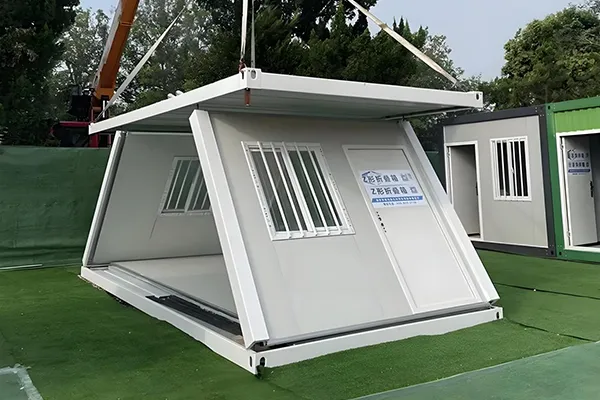
The audit can then focus on relevant evidence rather than attempting to inspect every activity in one visit. A structural-system buyer may prioritize drawing release, material identity, forming, fabrication and frame inspection. A project with extensive factory-integrated services may place greater emphasis on purchased-component control, concealed MEP work, interface records and pre-shipment testing. A detachable or component-packed solution may require deeper review of package identification and installation sequence.
To begin that discussion, Submit a project brief / arrange factory verification. Include the project destination, proposed system, intended supply scope, approximate quantity, audit objective and the standards or documents relevant to your review. These inputs allow the visit and requested evidence to be aligned with the actual procurement decision.
Frequently Asked Questions
1. What is the main purpose of a modular building factory audit checklist?
Its purpose is to connect factory observations with controlled project evidence. The audit should establish whether requirements can be released, traced, inspected, corrected and carried through to packing. It is not merely a checklist of machines a supplier owns.
The resulting decision should identify the product and process scope reviewed, any limitations, open findings and the later project-specific gates that remain.
2. Is an on-site factory audit always necessary?
No universal rule makes an on-site audit mandatory for every purchase. The appropriate mode depends on project risk, product complexity, previous supplier performance, value, destination requirements and the buyer’s contractual controls.
A documentary or live remote audit may support preliminary qualification or focused follow-up. An on-site visit provides stronger physical evidence when the buyer needs to sample workflow, storage, segregation and production-stage controls independently.
3. Can an ISO 9001 certificate replace a factory audit?
No. ISO 9001 concerns the supplier’s quality-management system, while a buyer’s factory audit can examine how that system applies to the proposed manufacturing and project scope. Certification may be relevant qualification evidence, but it does not approve project drawings, materials, individual modules, shipments or destination compliance.
Where certification is contractually required, verify its scope, issuing body and applicability separately. Do not describe ISO itself as the certifying organization.
4. What if the factory will not allow photography?
Photography restrictions can arise from safety, employee privacy or other customers’ confidentiality. Agree on alternative evidence: auditor notes, redacted documents, controlled viewing without copying, supplier photographs tied to traceable identifiers or third-party inspection records.
The limitation should be stated in the report. The decision turns on whether adequate evidence remains available, not on photography alone.
5. How should a buyer handle a missing inspection record?
Confirm whether the record was required and whether the relevant characteristic can still be verified. If a valid record exists elsewhere, establish its identity and connection to the item. If it was never created, the supplier may need to perform an approved replacement inspection, provide alternative evidence or open the work where technically necessary and proportionate.
Verbal confirmation should not close a material gap. If the characteristic is concealed and cannot be verified, the buyer’s engineer or authorized quality representative must determine the acceptance consequence.
6. Should a buyer reject every proposed material substitution?
Not automatically. A substitution may be technically acceptable, but it should be evaluated against defined criteria before use. The review may need to address dimensions, structural performance, fire properties, thermal behavior, corrosion exposure, MEP compatibility, maintenance and destination availability.
The key controls are transparent notification, technical comparison, approval by the assigned authority, revision of affected documents and verification that production used the approved alternative.
7. How can the audit verify production capacity without relying on headline claims?
Review capacity as a project-specific schedule question. Consider approved design status, material lead items, shared equipment, labor coverage, subcontracted operations, inspection resources, working calendars, packing constraints and concurrent orders.
Historical output or visible machinery can provide context, but neither guarantees capacity for a different system, specification or period. The contractual production programme should connect required quantities to resources, dependencies, approval dates and inspection gates.
8. What should be checked when part of the manufacturing scope is subcontracted?
Identify the subcontracted process, responsible organization, technical requirements, change-control route, inspection method and records returned to the contracting supplier. Review how incoming work is identified and accepted and how defects are managed.
The contracting structure should also state whether the buyer can witness selected subcontracted work and which party remains liable for conformity, schedule and warranty obligations.
9. Does passing a factory audit mean the modules may be occupied after delivery?
No. Factory qualification, project document approval, product acceptance, shipment release, site completion and permission to occupy are separate decisions.
Destination work may include foundations, assembly, utility connections, local engineering, site inspection, commissioning and authority approval. Responsibility depends on local law and the contracts between the buyer, supplier, site contractor and professional advisers.
10. When should a factory be audited again?
Reassessment may be appropriate when the supplier moves production, introduces a materially different modular system, changes a critical process, expands subcontracting, has repeated significant nonconformities or undertakes a project whose risk differs substantially from the previously reviewed scope.
The buyer can also use targeted follow-up verification instead of repeating the entire audit. The method should correspond to what changed and which earlier conclusion may no longer be reliable.