
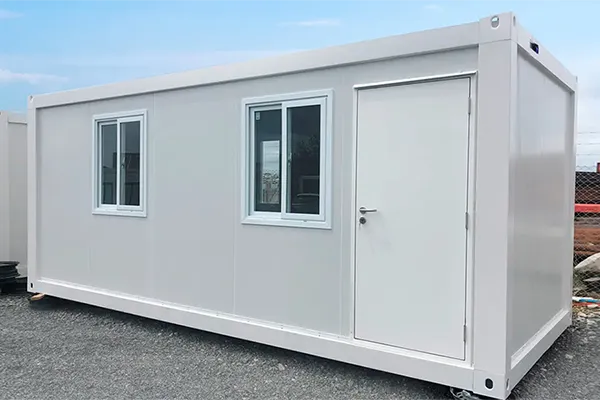


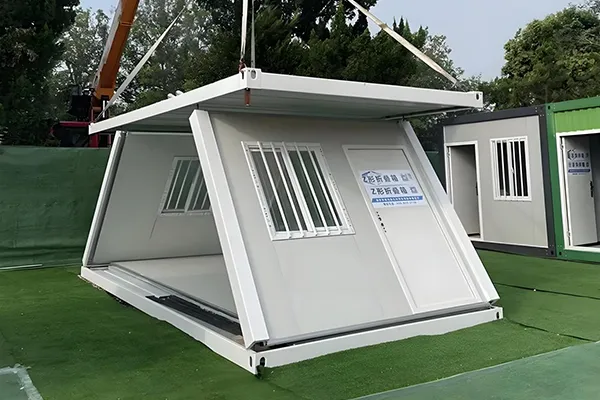

A modular building pre-shipment inspection checklist should determine whether a defined production batch is ready to leave the factory—not whether the manufacturer is generally qualified, and not whether the completed building has received destination approval.
That distinction matters. Once modules, flat-packed frames, panels, MEP components and accessories are protected and loaded, many surfaces and interfaces become difficult or expensive to inspect. A missing connector, incorrect opening, damaged coating or unidentified plumbing component may appear minor inside the factory but can stop an installation crew at a remote project site.
A reliable inspection therefore begins before the inspector walks onto the production floor. The buyer, EPC contractor and manufacturer must agree which batch is being presented, which document revisions govern it, which characteristics require 100% verification, how samples will be selected, who may classify defects and who has authority to release—or hold—the shipment.
Summary
The central conclusion of this modular building pre-shipment inspection checklist is straightforward: shipment readiness should be established through a controlled release process, not a general visual factory tour.
A defensible inspection has five connected parts:
-
An inspection-readiness gate that freezes the lot, governing documents, scope, sampling rules, witness points and decision authority.
-
A system-level inspection covering structure, enclosure, MEP, finishes, quantities, accessories, packing and required documents.
-
A risk-based verification method that distinguishes contract-defined sampling from 100% checks for identity, safety-related characteristics, critical interfaces and items that will become inaccessible.
-
A punch-list workflow that connects every finding to a specific unit, pack, lot and requirement, followed by correction evidence and reinspection.
-
A factory-to-logistics handoff that verifies identification, protection, packing lists, loading arrangements, cargo securing information and release status without confusing factory release with site receipt or local regulatory approval.
Pre-shipment inspection cannot repair weak design control or replace inspections that should have occurred during fabrication. It can, however, prevent unresolved defects, incomplete packages and undocumented substitutions from being exported to a site where correction is slower, more expensive and operationally disruptive.
What a Modular Building Pre-Shipment Inspection Is—and Is Not
A factory audit evaluates the organization: manufacturing capability, production controls, personnel, equipment, quality systems and supplier-management practices. Pre-shipment inspection evaluates a specific order or production batch presented for dispatch.
The difference can be expressed as three separate procurement decisions:
| Decision | Primary question | Typical timing | What it cannot prove |
|---|---|---|---|
| Supplier or factory qualification | Is this organization capable of executing the intended scope? | Before supplier approval or order award | That a particular shipment conforms |
| Production and hold-point inspection | Are controlled processes and concealed works being completed correctly? | During fabrication and integration | That all final quantities and packing are complete |
| Pre-shipment inspection | Does the identified batch meet the agreed release conditions? | After completion and before dispatch | That site installation, commissioning or local approval will be successful |
The International Code Council describes off-site construction as a lifecycle involving planning, design, fabrication, transport, assembly, inspection, approval and regulatory compliance. This wider context explains why a factory release is only one gate. It does not transfer responsibility for foundations, local utility connections, site assembly, commissioning, permits or authority inspections unless those responsibilities are explicitly included in the contract.
UK government research into volumetric modular construction also identifies the factory-to-site interface as a significant risk area. A module can leave the factory in acceptable condition yet arrive damaged, be installed incorrectly or fail to align with foundations and services that were built from a different drawing revision. Conversely, a site problem should not automatically be attributed to the manufacturing batch without tracing the governing documents, transport condition and installation responsibility.
The pre-shipment decision should therefore be written narrowly:
Is the identified production lot complete, conforming, documented, protected and authorized for the next logistics stage under the agreed contract and inspection plan?
Gate 1: Confirm Inspection Readiness Before the Visit
An inspector cannot make a reliable release decision when the lot is still changing, drawings remain under review or the manufacturer has not identified which items are actually included in the shipment.
The inspection-readiness gate should be completed before travel, remote witnessing or third-party booking. If the gate is incomplete, the buyer may still conduct an observation visit, but it should not be represented as a final pre-shipment inspection.
Inspection-readiness gate
| Readiness item | What must be defined | Why it matters | Hold condition |
|---|---|---|---|
| Order and shipment identity | Purchase order, project, shipment number and intended destination | Prevents evidence from another order or batch being used | The inspected shipment cannot be uniquely identified |
| Lot definition | Unit numbers, pack numbers, production batch, quantities and exclusions | Establishes the population from which inspection or sampling occurs | The presented lot changes during inspection without control |
| Completion status | Which units, loose components and documents are ready | Prevents inspection of unfinished items as though they were complete | Critical work, rectification or testing remains open |
| Governing revisions | Approved drawings, specifications, BOM, schedules and approved changes | Gives the inspector an objective comparison basis | Released and production-used revisions cannot be confirmed |
| Inspection scope | Included systems, tests, document review, packing and loading witness | Avoids disagreement about what “inspection” covers | Essential scope is omitted or unavailable |
| Defect classification | Contract definitions for critical, major, minor or other categories | Connects findings with action and release rules | Inspectors have no agreed basis for classifying findings |
| Sampling plan | Lot structure, selection method, sample size and escalation rules | Prevents convenient or biased sample selection | No contract-approved sampling method exists where sampling is proposed |
| Witness and hold points | Activities the buyer or third party must witness before continuation | Preserves access to critical or concealed evidence | A contractual hold point was bypassed |
| Decision authority | Who may accept, conditionally release, reject or hold the batch | Prevents loading before findings are formally resolved | Release authority is absent or ambiguous |
| Report format | Required photographs, measurements, test records and finding register | Makes the result traceable and usable by later teams | Evidence requirements cannot be met |
The manufacturer should declare the batch ready only after its internal checks are complete. The buyer’s inspection should not become a substitute for the manufacturer’s own finished-product acceptance.
KUBO publicly describes finished-product inspection followed by a pre-shipment recheck, protection, batch identification and loading supervision. It also states that buyer-appointed or independent inspection can be coordinated when required by contract. Those published process stages provide a useful starting point, but the project specification, contract, applicable code and agreed inspection plan remain the governing basis for a particular order.
Establish the Inspection Basis and Document Hierarchy
“Check the quality” is not an inspection instruction. The inspector needs a controlled set of acceptance references and a rule for handling conflicts.
A project-specific hierarchy may include:
-
Applicable laws, permits and authority requirements identified for the destination.
-
Executed contract and approved technical schedules.
-
Approved-for-production drawings and room data.
-
Approved bill of materials and equipment schedules.
-
Approved deviations, concessions and change orders.
-
Inspection and test plan, including hold and witness points.
-
Manufacturer procedures where the contract refers to them.
-
Reference samples, mock-ups or finish boards that have been formally approved.
The actual order of precedence must come from the contract. The inspection team should not invent it on the day of inspection.
This discipline becomes especially important when commercial documents, drawings and production records describe the same item differently. A quotation might use a general panel description while the approved material schedule defines thickness, facing, core type or finish. An early layout may show one door swing while the released room drawing shows another. Without revision control, an inspector may approve the wrong configuration simply because it appears on a document.
Documents to request before inspection
The required package depends on the project, but buyers commonly need:
-
Approved general arrangement, module and component drawings.
-
Room schedules and building-function schedules.
-
Bill of materials or approved material schedule.
-
Door, window, hardware and finish schedules.
-
Electrical single-line diagrams, circuit schedules and relevant layouts.
-
Plumbing layouts, fixture schedules and connection details.
-
Structural connection, lifting and assembly details within the supply scope.
-
Inspection and test plan with completed manufacturer stages.
-
Approved change, deviation and concession register.
-
Unit, pack and batch identification schedule.
-
Packing list and preliminary loading plan.
-
Agreed certificates, declarations, test reports and manuals.
-
Open nonconformity and punch-list register.
A document does not prove that the supplied component matches it. The inspection must connect records to physical identity through labels, unit numbers, model information, material markings or another agreed traceability method.
Modular-System Inspection Matrix
The following matrix can be adapted for volumetric modules, flat-pack systems and componentized modular buildings. It does not prescribe universal tolerances. Acceptance values must come from the project documents.
| Inspection area | Verification method | Useful evidence | Consequence if checked too late |
|---|---|---|---|
| Lot and unit identity | Reconcile serial, batch, module and pack identifiers with the release list | Marking schedule, photographs and quantity reconciliation | Wrong units or mixed revisions may be shipped |
| Structural frame | Review accessible dimensions, member configuration, connections, visible weld condition and specified protective treatment | Measurement record, drawing references and production-stage records | Misalignment may appear during stacking, joining or foundation placement |
| Module geometry | Measure agreed reference dimensions, openings, connection locations and relevant diagonals or levels | Calibrated measurement record tied to unit identity | Site interfaces may require rework, shimming or replacement |
| Roof, wall and floor enclosure | Inspect accessible joints, panels, seals, flashings, penetrations and visible damage | Unit-specific photographs and approved material references | Water or air paths may be hidden after wrapping or assembly |
| Doors and windows | Check type, location, handing, operation, hardware, glazing and protection | Opening schedule reconciliation and function record | Replacement at site may delay enclosure completion |
| Electrical scope | Verify component identity, labels, routing, panel schedules and agreed functional checks under safe test conditions | Test record, circuit schedule and equipment identification | Incorrect voltage, circuit allocation or missing devices may delay energization |
| Plumbing scope | Verify fixtures, pipe interfaces, accessible joints, labels, drainage direction and agreed tests | Test records, fixture schedule and connection photographs | Leaks or incompatible connections may be discovered after installation |
| Mechanical or specialist equipment | Confirm model, rating, quantity, mounting and interface requirements | Equipment schedule, nameplate evidence and manuals | Commissioning may stop because of incorrect equipment or missing interfaces |
| Interior finishes | Compare finish type, color, workmanship and room configuration with approved schedules | Approved sample reference and room photographs | Damage and mismatches become disputed after transport |
| Loose accessories | Count and identify fasteners, connectors, sealants, trims, stairs, canopies or other contracted loose items | Pack-level list and labeled bundle photographs | Installation crews may stop for small but essential missing parts |
| Spare parts and tools | Reconcile contracted spares and special tools separately from normal installation materials | Dedicated packing list and identification record | Operational handover may be incomplete |
| Packing and protection | Inspect moisture-sensitive surfaces, corners, openings, finished faces and component separation | Packing procedure, pack photographs and condition record | Damage may remain concealed until remote-site unpacking |
| Shipping quantity | Reconcile completed quantities with the purchase order, shipment split and packing list | Signed count sheet and controlled packing list | Short shipments create expensive emergency freight or site downtime |
| Documents | Review agreed records for correct project, component, revision and language | Document register with submission status | Authorities, site teams or commissioning personnel may lack required information |
| Loading interface | Compare pack identity, weight information where required, loading sequence and securing plan | Loading plan, load record and seal information where applicable | Unsafe distribution, damage or unloading delays may result |
Structure and geometry
Finished-product inspection can verify accessible dimensions and visible workmanship, but it should not be expected to reconstruct the entire fabrication history. If weld procedure compliance, concealed reinforcement, coating preparation or structural material identity is important, the inspection plan should capture that evidence during production.
A final visual check cannot prove what lies behind an installed panel. Likewise, measuring one finished module does not demonstrate that every repeated unit is identical. This is why in-process controls, traceability and final sampling must operate together.
Enclosure and weather-sensitive details
The inspector should focus on interfaces rather than judging panels only by appearance. Roof-to-wall transitions, openings, service penetrations, seal continuity, flashings and transport protection can determine whether the building remains weather-resistant after assembly.
Where the contract includes water testing or another enclosure test, the method, preconditions and acceptance criteria should be defined in advance. Spraying water informally onto a wall without controlling pressure, duration, exposure location and observation method rarely produces a defensible result.
MEP systems
MEP inspection must reflect the actual supply boundary. A factory may provide only internal wiring and connection points, while the site contractor provides external distribution, final connection and commissioning. Plumbing may stop at module connection points rather than extend to the project’s water and wastewater systems.
Checks should therefore answer three questions:
-
What was required to be completed in the factory?
-
What functional verification was contractually required before shipment?
-
What remains for site installation, connection, testing and approval?
The inspector should not energize or pressurize a system unless safe test conditions, equipment and authorized personnel are available. When a complete functional test is impossible, the report should state exactly what was and was not verified.
Decide What Requires 100% Inspection and What May Be Sampled

NIST explains acceptance sampling as a method for deciding whether a defined lot is likely to be acceptable based on a randomly selected sample. It is a middle path between no inspection and 100% inspection, and its purpose is lot disposition—not estimating the exact quality level of the entire batch.
This distinction has practical consequences for modular buildings. Sampling is not a casual decision to “check a few units.” A valid plan needs a defined lot, a selection method, acceptance and rejection rules, and known risks for both buyer and producer.
The buyer should not select an AQL during the factory visit. If an acceptance quality limit or another statistical plan is appropriate, it should be agreed by competent parties in the contract or inspection plan before production release.
Risk-based verification logic
| Verification approach | Suitable application | Examples | Required control |
|---|---|---|---|
| 100% identity and count check | Items whose omission or substitution can stop installation or invalidate traceability | Modules, packs, critical connectors, scheduled equipment, keys and specified accessories | Reconciliation against controlled unit and packing lists |
| 100% critical-characteristic check | Safety-related, legally required, contract-critical or irrecoverable characteristics | Required labels, lifting-point identity, critical interfaces or agreed safety devices | Explicit acceptance criteria and competent inspector |
| Contract-defined random sampling | Repetitive characteristics where statistical sampling is appropriate | Selected dimensions, appearance items or repeated hardware functions | Defined lot, random selection and acceptance/rejection plan |
| Targeted or stratified sampling | Batch contains different types, lines, shifts or configurations | Different room types, electrical variants or production sub-batches | Samples drawn from every relevant subgroup |
| Destructive or intrusive verification | Testing would damage the finished item or make it unavailable for shipment | Material or coating tests requiring destructive methods | Approved specimens, production coupons, prior-stage testing or certificates |
| Escalated inspection | Initial findings indicate possible repetition or process failure | Repeated missing fasteners, incorrect labels or finish defects | Predetermined increased sampling, containment or 100% screening rule |
Certain checks deserve 100% verification even when much of the visual inspection is sampled. Every shipping unit and pack should be identifiable. Contracted quantities should be reconciled. Critical loose items that cannot be sourced easily at the destination should be counted or otherwise controlled at pack level. Required documents should be checked for completeness against the document register.
Sampling should also reflect repetition risk. If a defect originates from one incorrect drawing, material substitution or production setup, it may affect an entire batch. Discovering the same error in multiple sampled units should trigger containment and expanded inspection rather than isolated cosmetic repair.
Conduct the Inspection in a Controlled Sequence
A practical modular building pre-shipment inspection checklist should follow the material flow of the shipment while protecting traceability.
Opening meeting
The opening meeting confirms:
-
The presented lot and current completion status.
-
Governing document revisions.
-
Safety rules and permitted inspection areas.
-
Available test equipment and calibration status where relevant.
-
Sampling selection and unit access.
-
Manufacturer, buyer and third-party participants.
-
Open deviations, concessions and previous findings.
-
Planned packing and loading activities.
-
Reporting and release authority.
The inspector should select samples from the defined lot rather than accepting only units chosen in advance by production personnel. If some selected units are inaccessible, the reason and replacement-selection method should be recorded.
Physical inspection
The sequence should minimize the risk of evidence becoming inaccessible:
-
Verify unit and lot identity.
-
Confirm configuration against released drawings and schedules.
-
Inspect accessible structural and geometric characteristics.
-
Inspect enclosure, openings and service penetrations.
-
Verify MEP components and agreed tests.
-
Review finishes, operation and visible workmanship.
-
Reconcile loose items, accessories and spares.
-
Review records linked to the inspected items.
-
Inspect protection before closure.
-
Verify pack identity and packing-list correlation.
Findings should be recorded as they are observed. An inspector should not rely on a later memory-based summary, especially when many similar modules are involved.
Closing meeting
The closing meeting should not become a negotiation over whether visible defects should be documented. Its purpose is to verify that each finding is understood, traceable and assigned a disposition path.
The parties should confirm:
-
Finding number and affected unit, pack or lot.
-
Requirement or acceptance reference.
-
Defect description and available evidence.
-
Proposed classification under the agreed definitions.
-
Whether the issue may affect additional units.
-
Required containment, correction or concession.
-
Reinspection method.
-
Remaining hold points.
-
Current shipment status.
Control the Punch List and Shipment-Release Decision
A punch list is useful only when it leads to controlled closure. Statements such as “factory will fix before loading” are insufficient because they do not identify what must be fixed, how completion will be demonstrated or who will approve closure.
Required finding fields
Each nonconformity or punch-list entry should contain:
-
Unique finding number.
-
Project, order and inspection date.
-
Unit, room, pack, component or lot identity.
-
Drawing, specification, schedule or contractual requirement.
-
Objective description of the observed condition.
-
Photograph or measurement where appropriate.
-
Agreed defect classification.
-
Containment required for potentially affected items.
-
Proposed correction or formal concession route.
-
Responsible party and target date.
-
Correction evidence.
-
Reinspection result.
-
Closure authority and date.
Punch-list and release workflow
| Stage | Required action | Evidence | Shipment status |
|---|---|---|---|
| Finding raised | Identify affected item and requirement | Finding record and objective evidence | Open |
| Extent assessed | Determine whether issue is isolated or repetitive | Containment or expanded-inspection record | Held as defined |
| Disposition agreed | Repair, replace, rework, accept by concession or reject | Authorized disposition | Not released unless rules permit |
| Correction completed | Implement approved action | Correction record and photographs or test results | Pending reinspection |
| Reinspection performed | Verify the requirement, not merely the presence of work | Reinspection result tied to finding | Closed or reopened |
| Batch status reviewed | Confirm all release conditions and permitted residual items | Final punch-list status and document register | Ready for decision |
| Release authorized | Named authority records accept, conditional release or hold | Signed or controlled release record | Released, conditionally released or held |
A conditional release should be used cautiously. It needs an explicit description of the remaining action, responsible party, deadline, impact on logistics and consequence of non-completion. It should not be used to disguise uncertainty about a critical requirement.
Formal concessions should also remain visible to the site and operations teams. A deviation accepted by procurement may affect installation dimensions, spare parts, future maintenance or local approval. Closing the factory punch list does not eliminate those downstream effects.
Verify Packing, Loading and the Factory-to-Logistics Handoff
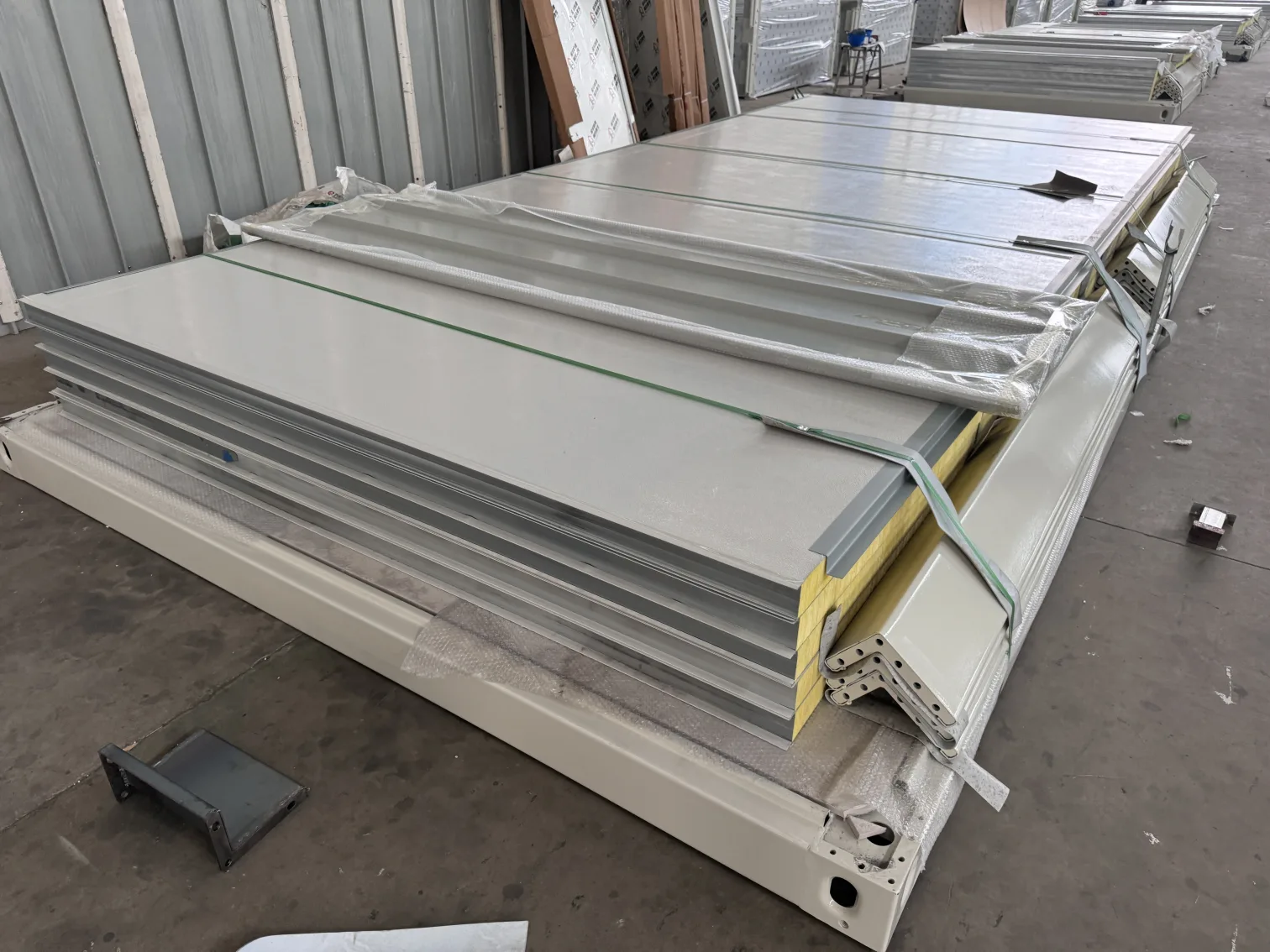
Finished-product acceptance and logistics release are related but separate. A module may conform technically but still be unfit for dispatch because protection, identification or loading arrangements are incomplete.
The IMO/ILO/UNECE CTU Code provides guidance on packing and securing cargo in containers and other cargo transport units across the intermodal transport chain. It addresses responsibilities beyond the factory gate, including those who pack, secure, receive and unpack cargo. A modular-building inspection can use this framework to identify interfaces, but the responsible logistics professionals must still develop and approve the project-specific loading and securing arrangements.
Protection and pack integrity
Inspection should consider:
-
Protection of finished faces, glazing, doors, openings and exposed connections.
-
Isolation of components that could abrade, impact or contaminate one another.
-
Moisture-sensitive materials and expected transport conditions.
-
Edge and corner protection.
-
Security of internal loose items.
-
Protection of electrical and plumbing interfaces.
-
Whether identification remains visible after wrapping.
-
Whether the package permits the intended lifting and handling method.
Packaging that looks substantial is not automatically appropriate. A heavy steel component may need movement restraint more than surface wrapping, while a light interior finish may require protection from pressure, moisture or vibration.
Identification and packing-list control
Every module, frame bundle, panel pack and accessory case should connect to the shipment records through an agreed identification system. Labels should remain readable throughout expected handling and should distinguish similar packs where installation sequence matters.
The packing list should identify, as applicable:
-
Pack or unit number.
-
Description and quantity.
-
Project or building allocation.
-
Module or drawing relationship.
-
Gross or net weight where contractually required.
-
Dimensions where required for logistics.
-
Handling or orientation information.
-
Container or transport-unit allocation.
-
Accessory and spare-part allocation.
A generic statement such as “installation accessories included” is not sufficient for complex projects. The destination team needs to know which fasteners, connectors, trims, sealants and specialist items are in each pack or shipment.
Loading and securing
Where loading supervision is included, the record should distinguish observation from engineering responsibility. The inspection team may confirm that identified packs were loaded according to the approved plan, but it should not certify structural securing adequacy unless that responsibility and competence are specifically assigned.
Relevant release evidence may include:
-
Transport-unit identity and apparent pre-loading condition.
-
Pack-to-container allocation.
-
Loading sequence.
-
Orientation and separation.
-
Agreed blocking, bracing or securing arrangements.
-
Condition of cargo immediately before closure.
-
Door closure and seal information where applicable.
-
Recorded departures from the loading plan.
The exact evidence package must be agreed contractually. Photographs are useful, but they do not replace calculations, procedures or responsible-person approval where these are required.
Define Responsibility Boundaries Before Shipment
UK government research highlights how fragmented accountability can create gaps between design, manufacturing, logistics and site work. A responsibility matrix should therefore accompany the inspection plan.
| Responsibility | Manufacturer | Buyer or EPC | Third-party inspector | Site contractor | Local engineer or authority |
|---|---|---|---|---|---|
| Declare batch complete and ready | Primary | Review | Verify declaration basis | — | — |
| Provide released production documents | Primary | Approve or confirm as contracted | Review applicable revisions | Receive relevant issue | Review where jurisdiction requires |
| Perform internal finished-product checks | Primary | Define contractual expectations | Witness or review when assigned | — | — |
| Define sampling and acceptance rules | Provide input | Primary contractual responsibility | Apply approved plan | — | May influence regulated characteristics |
| Grant inspection access | Primary | Coordinate | Conduct assigned inspection | — | May inspect where applicable |
| Classify and disposition findings | Propose correction | Approve under contract | Report and verify within mandate | Review site impact | Decide regulated matters within authority |
| Approve shipment release | As contract assigns | As contract assigns | Only if expressly authorized | — | Factory release usually does not replace approval |
| Develop packing and loading plan | As supply scope assigns | Review logistics interfaces | Witness when assigned | Review unloading needs | — |
| Arrange transport and cargo securing | As Incoterm and contract assign | As Incoterm and contract assign | Observe only unless otherwise appointed | Prepare receipt and unloading | Transport rules may apply |
| Inspect receipt condition | Support evidence | Oversee | Participate if appointed | Primary site role | — |
| Foundations and site interfaces | Provide defined interface data | Coordinate design ownership | — | Execute assigned work | Review or approve as required |
| Installation and connection | Provide instructions and defined support | Coordinate | — | Primary unless contract states otherwise | Inspect as required |
| Commissioning and local approval | Support supplied equipment scope | Coordinate | — | Execute assigned work | Primary regulatory authority |
An intermediary or project supplier may coordinate several of these activities effectively. The procurement issue is not whether an intermediary exists; it is whether its authority, technical contribution, inspection role and liabilities are visible in the contract.
Separate Shipment Release From Site Acceptance
The factory release should state the limits of the decision. Unless the contract establishes otherwise, it normally confirms only that the identified shipment has met the factory-stage release conditions.
It does not automatically confirm:
-
Transport without damage.
-
Quantity and condition received at destination.
-
Foundation conformity.
-
Correct lifting and installation.
-
Module-to-module connection quality.
-
External utility compatibility.
-
Site pressure testing or energization.
-
Weather sealing completed during assembly.
-
Fire stopping across site joints.
-
Final commissioning.
-
Occupancy approval or other local authorization.
The site team should receive the release report, packing list, open concession record, installation documents and unloading sequence before the shipment arrives. This allows it to plan cranes, storage, weather protection, unpacking and inspection resources around the actual load.
A site-receipt inspection should compare cargo condition with the factory loading record. Damage, shortage and seal discrepancies should be documented before responsibilities become obscured by unpacking and installation.
Common Pre-Shipment Inspection Failures
Inspecting an undefined batch
If production continues while inspection samples are being selected, the inspector may assess units that are later changed or replaced. Freeze the lot or control every change after inspection.
Using outdated drawings
An inspector may find apparent defects that reflect an approved change—or approve a configuration based on an obsolete layout. The revision used in production must match the revision used for inspection.
Treating appearance as complete acceptance
Clean finishes can distract from incorrect openings, missing interfaces, incomplete accessories or wrong component ratings. Configuration and traceability are as important as appearance.
Sampling without a formal plan
Inspecting whichever units are easiest to access introduces selection bias. Sampling needs a defined lot, random or otherwise agreed selection method, acceptance rule and escalation path.
Closing findings through photographs alone
A photograph may show that paint was applied, but not that surface preparation, thickness or specified material requirements were satisfied. Closure evidence must match the original requirement.
Packing before inspection access is complete
Panels, connectors and finished surfaces may become inaccessible after bundling or wrapping. The inspection schedule should preserve access until the relevant hold points are released.
Loading with an open critical finding
Shipping pressure should not override the agreed release authority. If the matter affects safety, identity, compliance or an irrecoverable site interface, the affected items should remain held until disposition and reinspection are complete.
Preparing an Inspection and Document Schedule With KUBO
Buyers considering KUBO should define the inspection structure during technical and commercial clarification—not after the shipment is already packed.
The project brief should include:
-
Destination and intended building functions.
-
Structural system and module or component quantities.
-
Approved room, finish and equipment schedules.
-
Destination codes and known authority requirements.
-
Buyer, EPC and site-contractor responsibilities.
-
Required production hold and witness points.
-
Proposed sampling and 100% verification categories.
-
Required third-party involvement.
-
Required certificates, reports, manuals and document language.
-
Shipment batches and site installation sequence.
-
Packing, handling, loading and unloading constraints.
-
Release authority and punch-list closure rules.
KUBO’s published factory information describes finished-product acceptance, pre-shipment rechecking, protection, batch identification and loading supervision while making clear that project documents take precedence over reference checkpoints. Buyers can use the KUBO factory and project-delivery capability page to begin defining a project-specific inspection and document schedule.
A useful request is not merely “send inspection photos.” It asks the manufacturer to confirm the lot, governing revisions, inspection stages, record package, packing sequence and proposed release process for the actual order.
Frequently Asked Questions
What is the purpose of a modular building pre-shipment inspection checklist?
Its purpose is to support a documented accept, conditional-release or hold decision for a defined production lot before dispatch. It checks finished configuration, accessible workmanship, quantity, accessories, documents, protection and logistics readiness against agreed requirements. It is not a substitute for supplier qualification, in-process control, site inspection or regulatory approval.
When should the pre-shipment inspection take place?
It should occur after the manufacturer has completed its internal finished-product checks but before packing removes necessary access or loading makes correction impractical. Some activities may need separate witness points: finished-unit inspection before wrapping, packing inspection during closure and loading supervision during containerization.
Should every modular unit receive a 100% inspection?
Not every characteristic necessarily requires 100% inspection, but sampling must follow an agreed plan. Identity, quantities, critical interfaces, safety-related items and irrecoverable characteristics may justify 100% verification. Repetitive appearance or dimensional characteristics may be sampled when the contract establishes the lot, selection method and acceptance rules.
What AQL should be used for modular buildings?
There is no universal AQL suitable for every modular-building project. The decision depends on defect definitions, lot structure, characteristic risk, inspection cost and contractual expectations. The buyer should not copy an AQL from an unrelated consumer-product inspection. Any sampling plan should be developed and approved before inspection by parties competent to assess its risks.
Can pre-shipment inspection verify structural compliance?
It can verify accessible dimensions, configuration, visible connections and relevant records within the agreed scope. It cannot retrospectively prove every concealed weld, material property, coating-preparation step or internal reinforcement detail. Those characteristics require production-stage inspection, traceability, testing or other evidence defined in the inspection plan.
What happens if defects are found?
Each finding should be tied to a unit, pack or lot and an applicable requirement. The parties then determine the extent, classification and disposition. Correction should be followed by evidence and reinspection. If the issue may be repetitive, the manufacturer should contain the affected batch and the inspection scope may need to expand.
Can an inspector approve a shipment with an open punch list?
Only if the contract permits conditional release, the remaining issues fall within the agreed release rules and an authorized party records the decision. The release should identify every open item, responsibility, completion deadline and downstream effect. Critical or safety-related uncertainty should not be hidden behind a general conditional approval.
Does a passed factory inspection mean the building is approved for use?
No. Factory release does not establish that transport, foundations, installation, external utilities, commissioning or local authority inspections will be satisfactory. Occupancy and use depend on the destination jurisdiction and the completion of responsibilities outside the factory supply scope.
Should packing and loading be included in the same inspection?
They can be included in one coordinated assignment, but the report should maintain separate status for product acceptance, packing release and loading completion. A unit may pass finished-product inspection yet remain held because identification or protection is incomplete. Loading supervision should also distinguish observation from responsibility for cargo-securing design.
What should the buyer send before arranging a KUBO inspection?
The buyer should provide the project and order identity, destination, approved drawings and specifications, shipment scope, defect definitions, proposed sampling rules, witness requirements, document list, third-party inspection needs, packing constraints and release authority. This allows the inspection plan to be aligned with the actual contract instead of relying on a generic checklist.