


Summary
Mining camp accommodation suppliers should not be shortlisted only because they can quote a recognizable module type, show an attractive camp layout or offer a competitive headline price. During technical prequalification, mine owners and EPCM teams need to determine whether each supplier can convert the same project inputs into a proposal that engineering, procurement and commercial teams can actually compare. That means freezing the relevant mine phase, resident groups, rotations, facility schedule, measurable climate and site conditions, utilities, delivery lots and responsibility boundaries before bids are normalized.
A strong shortlist process therefore tests both the proposed camp package and the evidence behind it: released drawings, material schedules, factory checkpoints, batch identification, inspection arrangements, packing logic, shipment sequencing and change control. It also separates factory scope from foundations, external utilities, permits, inland logistics, lifting, assembly and other local interfaces. The objective is a contract-ready comparison rather than a collection of quotations built around different assumptions.
Start the Supplier Comparison With the Mine Phase, Not the Building Catalogue
The most useful question in a mining camp supplier evaluation is not “What accommodation modules do you sell?” It is “What operating phase are we supporting, who will live and work there, what facilities must be available by each milestone, and what part of that requirement is the supplier expected to deliver?”
A mine can move through exploration, early works, construction, commissioning, ramp-up and steady operations. The resident profile may change substantially between those stages. Early works can involve survey, civil, infrastructure and owner teams. Construction may introduce multiple contractor groups and larger temporary peaks. Commissioning can change the ratio of engineering, vendor and operations personnel. Once the mine transitions into operations, camp population, room allocation and support functions may need another configuration.
That is why two proposals described as a “1,000-person mining camp” may not be technically comparable. One bidder may have interpreted 1,000 as the maximum simultaneous residents. Another may have used total project employment. A third may have allowed for contractors, visitors and shift overlap differently. Procurement teams should remove that ambiguity before evaluating price or production capacity.
KUBO’s Industrial & Mining Accommodation Solution asks project teams to define the mine stage, peak beds, operating pattern, required facilities, project duration, climate, altitude, access conditions, freight conditions, utilities and expected supply boundary. For prequalification, those inputs should become common bid information rather than supplier-specific assumptions.
| Project question | What the buyer should define | What the supplier should return | Evidence useful for prequalification |
|---|---|---|---|
| Mine phase | Exploration, early works, construction, commissioning, ramp-up or operations | Camp configuration aligned with the nominated phase | Facility schedule, layout basis and phased delivery logic |
| Resident groups | Owner, EPCM, contractors, operations, visitors and other defined groups | Room and support-facility allocation basis | Accommodation schedule and room-type breakdown |
| Peak occupancy | Maximum simultaneous beds required by phase | Proposed accommodation capacity | Bed calculation and module/building schedule |
| Support facilities | Dining, sanitation, offices, clinic, laundry, recreation and other required functions | Defined facility scope rather than generic camp wording | Function schedule, layouts and scope matrix |
| Site conditions | Measured climate, altitude, access, logistics, utilities and engineering inputs | List of design inputs used and information still required | Design-basis register and technical clarification list |
| Delivery strategy | Required-on-site dates and site-readiness milestones | Production and shipment-lot proposal | Batch plan, packing sequence and loading logic |
Translate Rotations and Resident Groups Into Facilities Before Calculating Beds
Employment headcount and required beds are different planning numbers. A project may employ more people over a month than it houses simultaneously. Rotations, day and night shifts, off-site residents, local employees, visitors, overlapping crews and transition periods all affect actual accommodation demand.
For that reason, an EPCM mining camp supplier checklist should require the bidder to show the occupancy basis used for each stage. A proposal becomes easier to verify when the supplier can explain how peak residents translate into room quantities, rather than simply repeating the employment figure provided in an early project brief.
The same discipline should extend to welfare and operational buildings. A camp is not technically defined by sleeping rooms alone. Procurement teams may need to compare sanitation, dining, offices, clinic functions, laundry, recreation, storage or other site-support requirements according to the project brief. The correct mix is project-specific, so the evaluation should focus on whether each bidder has converted the same facility schedule into a traceable proposal.
Rotations are particularly relevant because camp design decisions can affect rest conditions and the way facilities are used across shifts. The U.S. National Institute for Occupational Safety and Health notes that nonstandard work schedules can disrupt or shorten sleep and contribute to fatigue risk. That does not create a mining-camp building standard, but it illustrates why operating patterns should be treated as real planning inputs rather than an administrative detail. See the NIOSH fatigue information.
When comparing mining camp accommodation suppliers, ask each bidder to return the same occupancy and facility schedule. If one supplier has included a larger dining building, additional sanitation blocks or a different room allocation, that difference should be visible before the commercial comparison begins.
Replace Labels Such as “Cold,” “Remote” and “High Altitude” With Measurable Inputs
Descriptions such as remote mine, desert site, cold climate or high-altitude project are useful for initial communication, but they are not complete engineering inputs. Two sites described as cold can have different temperature ranges, wind exposure, snowfall, access limitations and logistics conditions. The same applies to altitude, rainfall, seismic requirements, transport restrictions and utility availability.
During prequalification, the buyer and appointed engineering parties should provide the measurable project inputs required for design development. A supplier should be able to identify which inputs have been received, which assumptions are being used for preliminary work and which values still need confirmation before design release.
Typical inputs can include project location, altitude, design temperatures, wind and snow criteria where applicable, seismic requirements where applicable, site access, available transport routes, freight constraints, utility interfaces, water and wastewater arrangements, foundation concept and local approval requirements. The exact list depends on the project and jurisdiction.
This approach prevents suppliers from competing on different interpretations. One bidder may otherwise price a basic preliminary configuration while another includes project-specific engineering changes. The price difference could appear commercial when the real difference is technical scope.
KUBO does not publish one universal wind, snow, seismic or thermal value for every mining project. These figures need to come from the actual project design basis and appointed engineering requirements. During supplier evaluation, that is an advantage rather than a gap: it encourages the procurement team to compare proposals against the same measurable conditions instead of generic marketing labels.
Evaluate the Manufacturer Behind the Proposal
A mining camp manufacturer evaluation should extend beyond renderings and quotation schedules. The procurement team needs to understand how the proposed buildings move from approved project information into controlled factory production and identifiable shipment lots.
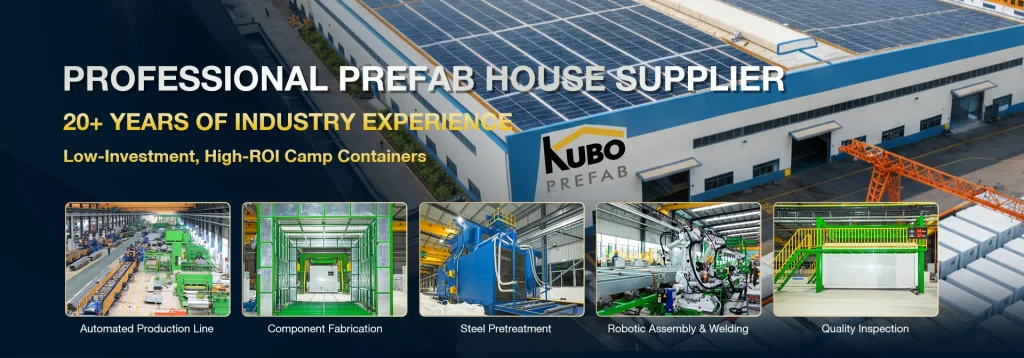
KUBO publicly presents itself as a modular building manufacturer and project supplier based in Shunde, Foshan. Its factory workflow includes drawing and BOM release, material verification, steel cutting and forming, welding and frame assembly, surface treatment, panel, opening and MEP integration, finished inspection, packing, batch identification, loading and release. Buyers reviewing KUBO can use the company and manufacturing information as a starting point for factory qualification.
The value of this information during prequalification is not the process description itself. The more important question is whether the project can be linked to controlled records and deliverables. For example, procurement and engineering teams may want to know which drawing revision governs fabrication, how the approved material schedule is controlled, how units or packages are identified, and how packing information corresponds to shipment batches.
Documents Worth Requesting During Technical Prequalification
- Drawing register: showing the project drawings expected for review and release.
- BOM or material schedule: identifying the agreed project materials and purchased components at the appropriate stage.
- Inspection and quality plan: defining the intended control points and acceptance records for the contracted scope.
- Material verification records: where required by the project specification or contract.
- Unit, package or batch identification method: so physical goods can be related to production and shipment information.
- Packing list structure: showing how the supplier plans to identify packed items and shipment lots.
- Loading and release records: appropriate to the agreed project and contractual requirements.
- Change-control method: explaining how approved drawing, BOM or scope revisions are communicated before production.
KUBO’s public quality approach includes supplier and material verification, in-process control, finished-goods acceptance and pre-shipment or loading supervision. Client or third-party inspection can also be coordinated when it is required by contract. The relevant prequalification question is therefore what inspection access, records and hold points the project requires, so they can be incorporated into the contractual quality plan rather than assumed later.
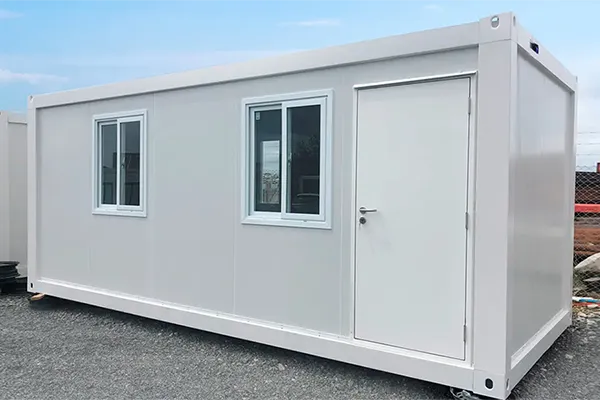
The signed quotation, approved drawings, BOM or material schedule and contract ultimately control the actual KUBO supply scope. Panels, doors, windows, electrical and plumbing components, HVAC, furniture, appliances and specialist items may be externally procured and integrated when they are included in that scope. Procurement teams should therefore distinguish between factory-manufactured elements and purchased components without treating either category as automatically included.
Normalize Every Bid Before Comparing Commercial Values
One of the most common reasons camp bids become difficult to compare is that the supply boundaries are different. A supplier may quote factory-produced buildings only. Another may include purchased furniture or appliances. A third proposal may contain inland freight, site assembly or selected external works. If the commercial team compares only total values, the lowest number may simply represent the narrowest scope.
Bid normalization converts all offers into a common responsibility matrix. Each line should identify whether the item is included in the bidder’s price, excluded, provisional, supplied by another party or still subject to clarification.
| Scope/interface | Bidder A | Bidder B | Normalization question |
|---|---|---|---|
| Modular building factory supply | Confirm | Confirm | Are the same buildings, quantities, room types and facility functions included? |
| Panels, doors and windows | Confirm specification | Confirm specification | Are comparable materials and quantities included in each approved schedule? |
| Electrical/plumbing integration | Define factory scope | Define factory scope | Where does the building package terminate and the external system begin? |
| HVAC, furniture and appliances | Included / excluded / optional | Included / excluded / optional | Which purchased components are included and to what specification? |
| Foundations and civil works | Define responsibility | Define responsibility | Who designs and constructs foundations, roads, drainage and external civil works? |
| External utilities | Define interface | Define interface | Where are water, wastewater, power and other utility connection points? |
| Permits and local approvals | Define responsibility | Define responsibility | Which approvals remain with the owner, EPCM or local professional parties? |
| International freight | Define commercial basis | Define commercial basis | Are both bids based on the same delivery and freight boundary? |
| Customs and inland delivery | Define responsibility | Define responsibility | Who manages import processes and transport from port to mine? |
| Lifting and assembly | Define responsibility | Define responsibility | Who provides cranes, labour, equipment, supervision and temporary works? |
| Testing and handover | Define scope | Define scope | What records, checks and handover documents are included? |
KUBO’s mining project approach separates factory supply, jointly coordinated interfaces and buyer or local-contractor work. During a competitive tender, the same structure can be used across every bidder. This gives commercial teams a more meaningful basis for comparison because price differences can be linked to specific scope differences.
Compare Delivery Lots Against Site Readiness
A mine camp rarely needs every building at exactly the same moment. Early site offices, initial accommodation, sanitation and support functions may be required before the main construction workforce arrives. Later phases may add accommodation, dining, clinic, recreation or operations-related facilities. Procurement teams should therefore compare delivery logic as well as production scope.
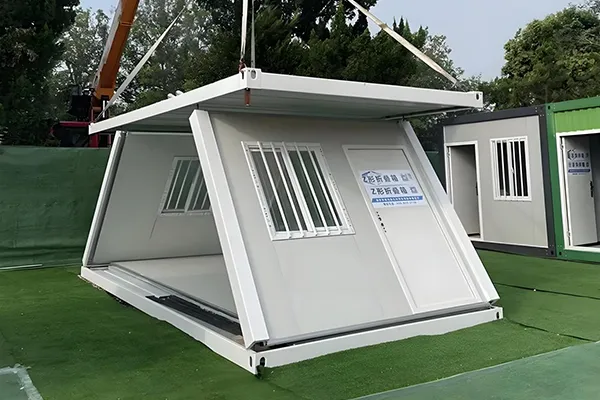
A useful supplier proposal should explain how buildings and components can be grouped into identifiable production and shipment lots that correspond to project priorities. Those lots should be checked against site readiness, foundation progress, access windows, import procedures, laydown capacity, lifting availability and the sequence in which local teams can receive and assemble the package.
This does not mean a supplier should invent a fixed delivery period during prequalification. The schedule should be developed from actual project quantities, design release dates, factory scope, purchased items, transport conditions and site requirements. What matters at shortlist stage is whether the bidder can demonstrate a logical method for converting the project schedule into controlled production and shipment batches.
Change control also matters. Mining projects can evolve between early works and peak construction. A phased package should make it clear which facilities belong to each lot, which drawings govern them and how later approved changes are incorporated without creating ambiguity between already released and future production.
Use Comparable References Carefully
References can help a technical team understand whether a supplier has experience with project scale, climate context or workforce-camp delivery, but the reference should be described accurately. A completed project that shares some conditions with the current mine is not automatically the same type of mining delivery.
KUBO’s published remote mining camp project-context page discusses a cold, mountainous and high-altitude mining camp scenario. The closest completed KUBO reference identified on that page is a Russia cold-climate industrial workforce camp rather than the same mining site. The published reference scale is 110,000 m² across 84 accommodation and site-support buildings, and the project record states a 42-day production plan.
For prequalification, the useful point is not to turn that reference into a universal schedule or performance promise. Instead, buyers can use comparable project information to ask more specific questions about package scale, factory planning, building mix, batch organization and the supplier’s approach to project documentation.
Build the Shortlist Around Pass/Fail Requirements and Weighted Criteria
A single total score can hide critical shortcomings. A better mining camp supplier evaluation usually separates mandatory prerequisites from weighted technical and commercial criteria.
Pass/fail items are project-specific, but they may cover basic eligibility, ability to accept required contractual conditions, submission of mandatory technical information, capacity to work with the specified engineering inputs, required quality documentation or agreed inspection access. If a bidder cannot satisfy a mandatory requirement, a high score elsewhere should not automatically compensate for it.
Weighted criteria can then distinguish between compliant suppliers. The weighting should be established by the owner’s or EPCM’s project team rather than copied from a generic checklist.
| Evaluation area | Example questions | Possible evaluation type |
|---|---|---|
| Project interpretation | Has the bidder correctly translated mine phases, resident groups and facility quantities? | Weighted technical |
| Design-input discipline | Are climate, altitude, utilities, logistics and local interfaces treated as measurable inputs? | Pass/fail plus weighted technical |
| Drawing and BOM control | Can production be linked to released drawings and agreed material schedules? | Weighted technical |
| Quality and inspection | Are process checkpoints, inspection records and required third-party access clearly defined? | Pass/fail or weighted technical |
| Scope clarity | Are factory supply, purchased items and local responsibilities separated? | Weighted technical/commercial |
| Delivery-lot logic | Does the proposed batching approach match site priorities and readiness? | Weighted project-delivery |
| Commercial comparability | Can the bid be normalized without major unresolved exclusions or assumptions? | Weighted commercial |
| Change control | Can later approved project changes be controlled through revisions and release status? | Weighted technical/project controls |
The result should be a shortlist that can be explained to engineering, procurement, project controls and commercial stakeholders. A supplier advances because its proposal is technically understandable, evidence-based and commercially comparable, not simply because it submitted the shortest lead-time statement or lowest initial total.
Prepare a Decision-Ready RFQ Package
Supplier responses improve when the RFQ removes avoidable ambiguity. Before issuing the package to shortlisted mining camp accommodation suppliers, consolidate the core project information into one controlled set of inputs.
RFQ Information to Provide
- Project country and mine location.
- Current mine stage and the stages covered by the RFQ.
- Resident groups and peak simultaneous bed requirement by phase.
- Rotation and operating pattern relevant to accommodation planning.
- Required room types and accommodation allocation.
- Facility schedule covering sanitation, dining, offices, clinic, laundry, recreation and other required functions.
- Measured climate and site-design inputs available at the current engineering stage.
- Altitude and other relevant environmental conditions.
- Access, port, freight, road or transport constraints known to the project.
- Available utilities and required external connection interfaces.
- Target project dates and required-on-site milestones.
- Expected delivery-lot or phased handover strategy.
- Factory supply boundary and expected purchased components.
- Local civil, foundation, utility, lifting, assembly and commissioning responsibilities.
- Required inspection, documentation and third-party access provisions.
- Applicable project specifications and local engineering or approval requirements supplied by the project team.
Supplier Returns to Request
- Design-basis summary listing received inputs and open technical clarifications.
- Facility and accommodation schedule corresponding to the RFQ quantities.
- Preliminary layout or configuration suitable for technical review.
- Scope matrix identifying included, excluded and locally provided items.
- Drawing and document register appropriate to the tender stage.
- Material or BOM structure sufficient to understand the proposed supply.
- Quality and inspection approach for the proposed project scope.
- Production, identification, packing and shipment-lot logic.
- List of purchased components and their proposed scope where applicable.
- Commercial exclusions, qualifications and assumptions presented in a consistent format.
For teams that are still defining camp capacity and procurement scope, KUBO’s workforce camp buying checklist provides a broader set of planning questions. The supplier-evaluation stage covered here begins once the project has enough definition to compare bidders against common requirements.
Procurement FAQs
How many mining camp accommodation suppliers should an EPCM team prequalify?
There is no universal number. The appropriate shortlist depends on project procurement procedures, market availability, schedule, risk strategy and the complexity of the package. The more important objective is to ensure each shortlisted supplier has been evaluated against the same mandatory inputs and can submit a technically comparable proposal.
Should employment headcount be used as the camp bed quantity?
Not automatically. Camp beds should be based on simultaneous accommodation demand after considering rotations, resident groups, local versus fly-in or drive-in personnel, visitors, overlap periods and the mine phase. Procurement teams should provide the occupancy basis used in the RFQ so every bidder calculates from the same requirement.
What factory evidence is most useful before supplier shortlist approval?
Useful evidence can include the proposed drawing and BOM control process, material verification approach, production checkpoints, inspection plan, unit or batch identification, packing structure, loading documentation and change-control method. The exact submission requirements should match the project’s risk level and contract strategy.
How should EPCM teams compare bids when each supplier includes a different scope?
Create a responsibility and scope-normalization matrix before comparing totals. Separate factory buildings, purchased components, foundations, roads, drainage, utilities, permits, freight, customs, inland transport, lifting, assembly, testing and handover. Commercial values become meaningful only after major inclusions and exclusions are aligned.
Should delivery time be a major supplier-selection criterion?
Schedule is important, but it should be evaluated together with design release, quantities, purchased components, production batches, freight conditions and site readiness. A useful bid explains the scheduling basis and shipment-lot logic rather than presenting an isolated delivery promise that cannot be connected to the project programme.
What should a mine owner send KUBO before requesting a comparable proposal?
Send the project country, mine stage, peak simultaneous beds, resident groups and rotations, facility schedule, available climate and site inputs, target period, proposed delivery lots and the expected division between KUBO factory supply and local or buyer-managed work. That information allows the discussion to move from a generic camp concept toward a defined project package.
Move From Supplier Longlist to a Comparable Mining Camp Proposal
Technical prequalification works best when every bidder receives the same project basis and returns the same categories of information. By defining the mine phase, real accommodation demand, support facilities, measurable site conditions, factory evidence, shipment sequencing and responsibility boundaries before commercial comparison, mine owners and EPCM teams can reduce hidden assumptions and create a shortlist that is easier to defend internally.
KUBO can review a defined camp brief and develop the discussion around layouts, building functions, factory supply, coordinated interfaces, quality controls, export preparation and delivery support. To begin a project-specific evaluation, contact KUBO with your country, mine stage, peak beds, resident rotations, facility schedule, available climate and site inputs, target project period, required delivery lots, and expected factory versus local scope. These inputs give both sides a clear basis for preparing and comparing a technically relevant proposal.