

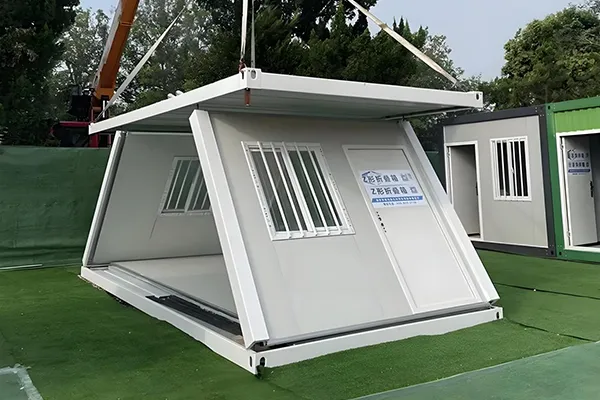
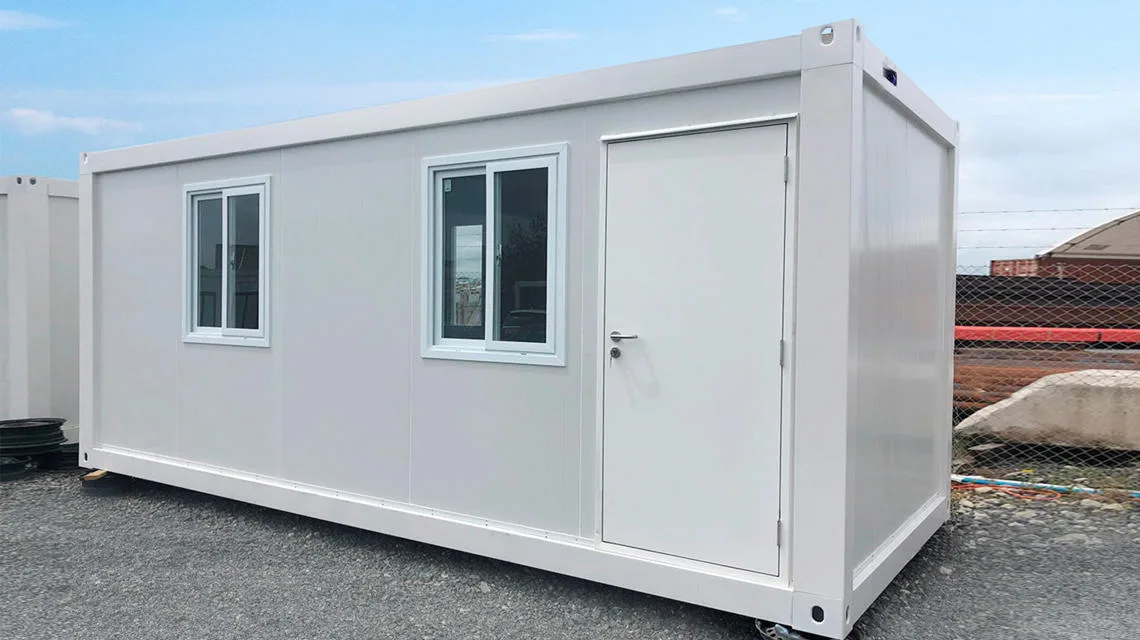
Summary
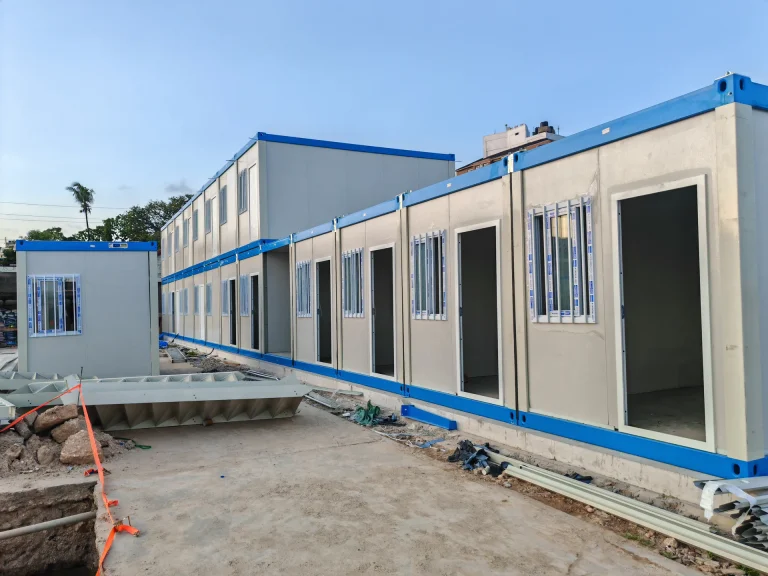
For a workforce camp, replacement planning should begin before the first building order is released, not after a damaged door, panel, trim item or service component is discovered on site. The practical decision is not simply how many modular camp spare parts to buy. The project team needs to decide which project-specific items should travel with the initial shipment, which items may be sourced locally after compatibility is confirmed, which items should return to the factory supply route, and which identification records must be preserved so a later request can be matched to the installed camp.
Why Modular Camp Spare Parts Should Be Planned With the First Camp Order
Many camp procurement packages concentrate understandably on room count, building use, layout, MEP scope, logistics and installation. Those questions determine whether the initial building package works. Replacement continuity addresses a different stage of the same asset lifecycle: what happens when a component is damaged, lost, worn, modified or needed again months or years after the first shipment?
That distinction is important because identifying a building component is not the same as identifying a compatible replacement. KUBO’s article on flat-pack container house components explains how the building is assembled from coordinated parts. For replacement procurement, however, the critical issue is the installed configuration behind that part.
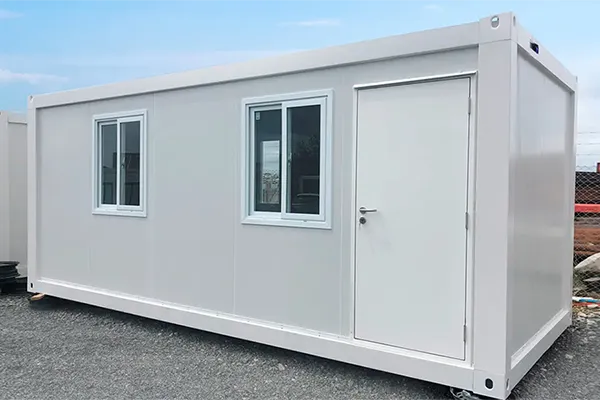
Two components can look similar while differing in details that affect installation or operation. A door can differ by handing, opening dimensions, frame arrangement, hardware or finish. A panel can differ by thickness, core, facing, finish, color or project-specific cut-outs. Electrical or other service items may depend on voltage, frequency, termination arrangements or the defined testing boundary. These examples do not form a universal KUBO parts catalogue; they show why a generic component name or a single photograph may be insufficient for a reliable replacement decision.
Lifecycle guidance for modular construction points in the same direction. The Construction Industry Council’s practical guidance for modular integrated construction recommends considering inspection and maintenance planning, access for repair or replacement, spare-parts availability and user guidance during building planning rather than treating these issues only after handover. The European Commission Joint Research Centre has likewise discussed component and material coding, standard components, spare-part compatibility and interchangeability as repair and lifecycle design considerations. These are general design principles rather than KUBO-specific promises, but they reinforce a useful procurement habit: preserve enough identity information to support repair and replacement later.
The KUBO Record That Makes a Later Replacement Request More Specific
KUBO processes project configurations against approved documentation and unit identity. For the buyer, that creates an opportunity to preserve a replacement record around the same project references used during manufacture and packing.
The aim is not to create unnecessary paperwork. It is to give a maintenance manager, camp operator, EPC procurement team or local distributor a repeatable way to answer a simple question: which installed item are we trying to replace?
A later enquiry becomes much easier to evaluate when it connects the physical component on site with the relevant site, block, module code, original purchase reference and approved drawing or schedule revision. That record helps distinguish an identical replacement request from a request for a compatible alternative or a change to the original configuration.
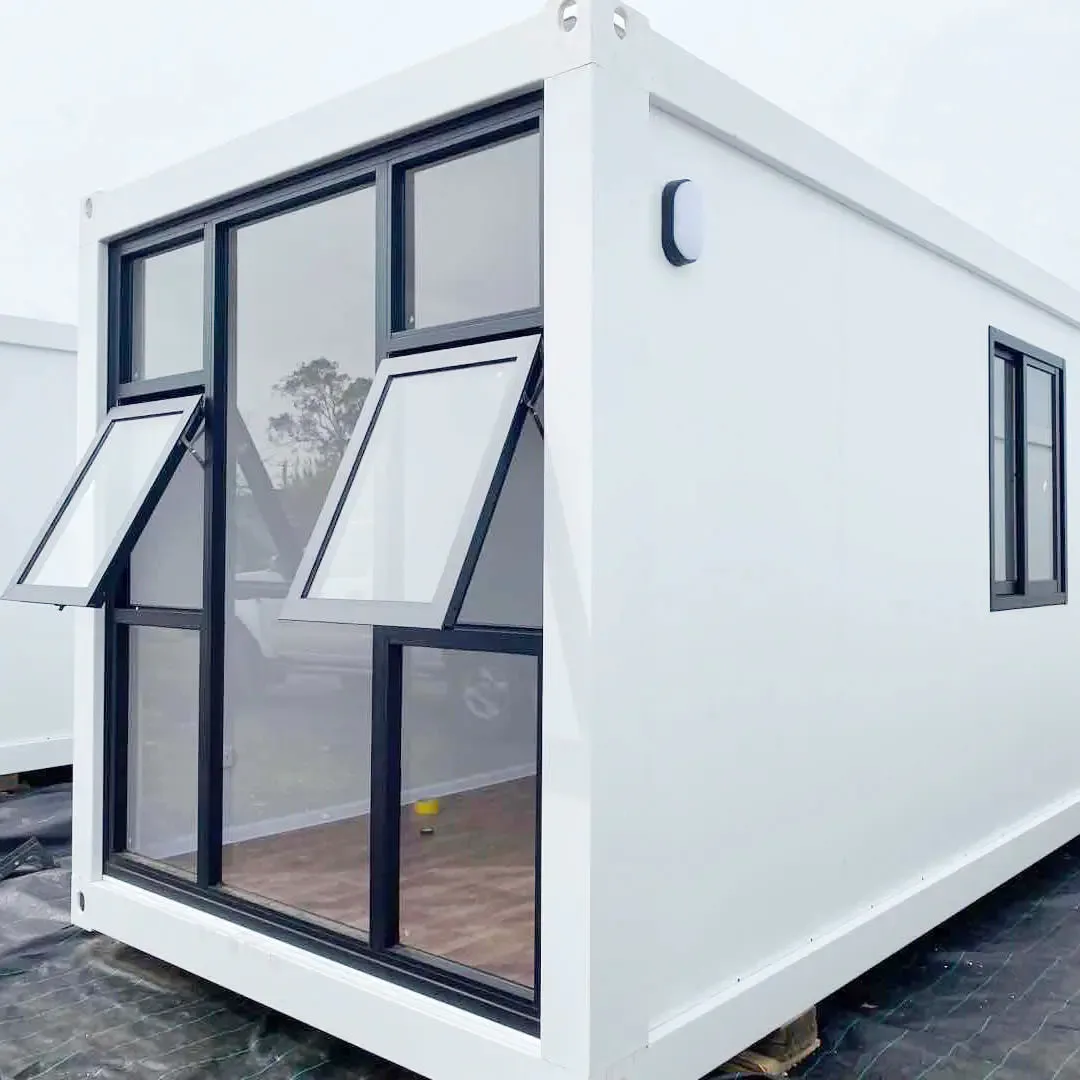
Installed Asset and Compatible-Part Register
The following worksheet can be adapted by the buyer and KUBO for the approved project. It is designed as an identification record, not as a standard catalogue or promise that every recorded item will remain permanently available.
| Register Field | What to Record | Why It Helps Later |
|---|---|---|
| Site | Project or camp site identification | Separates similar assets deployed to different projects or destinations. |
| Building / block | Dormitory block, office block, shared facility or other building identity | Locates the replacement within the camp rather than only within the overall purchase. |
| Module / unit code | The relevant module or unit identification used for the supplied package | Connects the physical asset with controlled project records. |
| Building use | For example, accommodation, office or another approved use | Provides configuration context when several module variants exist. |
| KUBO system family | The applicable KUBO building system | Prevents a request from being treated as a generic component enquiry detached from the installed system. |
| Purchase order / quotation reference | Original commercial or order reference, when available | Helps locate the relevant supplied configuration. |
| Approved drawing and component-schedule revision | The released revision applicable to the installed module | Reduces the risk of matching a replacement against an earlier or superseded version. |
| Installed location and function | Where the component sits and what it does | Distinguishes apparently similar items used at different interfaces. |
| Original part / schedule name and markings | Recorded name, label, marking or other available identity | Provides a stronger reference than an informal site description alone. |
| Dimensions | Relevant measured dimensions | Supports a compatibility check when the original identity is incomplete. |
| Handedness | Left-hand / right-hand orientation where applicable | Especially important for doors and other orientation-dependent assemblies. |
| Finish / color | Installed finish and color information where relevant | Helps avoid functional or visual mismatch. |
| Panel build-up or service rating | Panel characteristics, voltage, frequency or other applicable rating | Supports checks where compatibility depends on material or service conditions. |
| Whole-item photograph | Photo showing the complete installed component and surrounding context | Helps identify function and location. |
| Interface photographs | Close views of connections, openings, terminations or adjacent parts | Shows the interface that the replacement must fit. |
| Installed quantity | Quantity presently installed in that application | Provides asset context. |
| Requested quantity | Quantity now required | Separates installed population from the current purchasing need. |
| Delivery destination | Country and relevant project destination | Allows the replacement supply route and packing discussion to be scoped for the actual request. |
The register becomes particularly valuable when several batches of camp buildings have been purchased over time. A site may use the same general room type while drawings, openings, finishes or service details differ between approved batches. Recording the revision and unit identity prevents the maintenance team from assuming that a component fitted to one block must automatically fit another.
This is also why photographs should support the identification record rather than replace it. A photograph may show a damaged door, but it may not prove the handing, exact opening, frame arrangement, hardware specification or revision under which the assembly was produced. Combining photographs with project references and measured details gives the supply team a better basis for review.
Split Replacement Supply Into Three Procurement Paths
Not every camp replacement item should follow the same sourcing route. Shipping every possible future item with the initial order can create unnecessary inventory, while assuming everything can be purchased locally can create compatibility problems. Treating every later requirement as a new factory order can also increase logistics effort for items that could have been managed more efficiently.
A practical solution is to agree a project-specific matrix covering three routes:
- First-order spares: selected project-specific or operationally important items supplied with the original building package when their absence could delay enclosure completion, commissioning or later operation.
- Approved local sourcing: commercially available items that may be procured near the site after the required rating, material, finish, substrate and interface compatibility have been checked.
- Factory replenishment: fabricated, project-cut, opening-related or system-specific items that need the released project record before a replacement can be evaluated and quoted.
The category does not determine a universal quantity. A mining camp with difficult logistics, a renewable-energy construction site with a short installation window and a project close to an established industrial supply base may reasonably make different first-order spare decisions even when their building systems are similar.
First-Order / Local / Factory Replenishment Worksheet
| Component or Consumable Group | Failure / Shortage Consequence | Identity Needed | Possible Local Sourcing | First-Order Spare Decision | Information Needed for Later Factory Replenishment | Record Owner |
|---|---|---|---|---|---|---|
| Small project-specific items that can stop enclosure completion or operation | A small missing item may hold up completion or return-to-service even when its individual value is low. | Project, module, schedule identity and relevant dimensions or markings | Only where a compatible equivalent is confirmed | Consider with the original order when project-specific, low-volume or difficult to obtain quickly | Original order reference, module identity, applicable revision, photos, quantity and destination | Buyer / EPC asset or maintenance record |
| Standardized locally available consumables | May be easier to replace without international shipment if compatibility is clear | Rating, material, finish, substrate and interface requirements | Potentially, after compatibility approval | Depends on site availability and project requirements | Only required from the factory when local compatibility cannot be established or the agreed supply route requires it | Site maintenance / procurement team |
| Fabricated frames and opening assemblies | Incorrect geometry, handing or interfaces can prevent installation | Released drawing or schedule revision, opening details, dimensions, handedness, finish and hardware context | Not assumed; requires project-specific review | Evaluate according to operational criticality and project logistics | Full installed-asset identification and current delivery requirement | Buyer plus KUBO or agreed supply contact |
| Project-cut panels | Mismatch can affect fit, openings, finish and adjacent interfaces | Panel build-up, dimensions, finish, cut-outs, installed location and revision | Only after compatibility is established | Project-specific decision | Relevant module, schedule revision, component identity, photos and dimensions | Buyer plus KUBO or agreed supply contact |
| System-specific service kits or rated service components | Incorrect rating or interface can prevent correct operation or introduce rework | Service rating, voltage/frequency where applicable, termination/interface and project revision | Only when all required compatibility conditions are confirmed | Depends on criticality, local availability and project logistics | Installed identity, ratings, markings, photos, quantity and destination | Buyer / site technical team plus supply contact |
This worksheet is most useful before the original camp package is finalized. At that point, the buyer can identify items that are cheap to include but expensive to be without, while also avoiding the assumption that every component deserves a stocked spare.
The schedule consequence should be considered as well as component price. A low-cost item can have high project impact if its absence stops a room from being enclosed or prevents an installed service from returning to operation. Conversely, a component that is readily available near the project may not justify international spare inventory if its material, rating and interface can be confidently approved.
How to Decide What Should Travel With the First Camp Shipment
The first-order spare decision should be based on replacement difficulty and consequence rather than a fixed percentage of the building quantity.
Useful questions include:
- Would the absence of this item stop enclosure completion, room handover or operation?
- Is the item project-specific or dependent on an approved module revision?
- Can its critical dimensions, finish, rating and interfaces be obtained reliably near the project?
- If sourced locally, can compatibility be checked before installation?
- Would a later international shipment be disproportionate to the physical size or value of the item?
- Is the component likely to be needed during installation, commissioning or early operation rather than only as a long-term maintenance item?
- Who will keep the identification record when the camp transfers from the EPC construction team to the operator or facility-maintenance team?
These questions usually produce a more defensible spare-parts package than copying quantities from another camp. Remote logistics, local industrial supply, building configuration, construction sequencing and operating responsibility all change the answer.
When Local Camp Building Replacement Parts Can Make Sense
Local procurement can shorten the physical supply chain, but “available locally” and “compatible with the installed building” are not the same test.
For standardized consumables, the buyer may be able to use a local source after the required specification is confirmed. The check can include rating, material, finish, substrate and the way the item interfaces with the installed system. Where electrical or other services are involved, service characteristics such as voltage, frequency, termination and the applicable test boundary may also matter.
The correct approach is therefore approved local substitution, not uncontrolled substitution.
A site maintenance technician may find an item that appears identical. Procurement may find a lower-cost alternative. A local distributor may know a faster regional source. Any of these routes can create value when the relevant compatibility conditions are visible and agreed. The problem arises when appearance becomes the only selection criterion.
The broader repair literature supports this discipline. The European Commission Joint Research Centre discusses compatibility with commonly available spare parts and interchangeability as lifecycle considerations. That does not mean every building component is interchangeable. It means interchangeability is something to establish deliberately rather than assume.
When Factory Replenishment Needs the Released Project Record
Fabricated frames, project-cut panels, opening assemblies and system-specific service items are different from a general consumable because the installed configuration matters directly to the replacement.
For these items, the released project record should be the starting point. The enquiry should identify the original order or quotation where available, the site and block, the module or unit, the applicable drawing or component-schedule revision, the component location and function, and the physical details visible on site.
KUBO can then discuss the replacement against the relevant project information and determine whether the requirement is:
- an identical replacement of the originally supplied configuration;
- a compatible approved alternative because the original item has changed or another suitable solution is proposed; or
- a project change that requires broader technical review rather than a like-for-like spare-parts quotation.
That classification matters commercially. A replacement request should not quietly turn into an uncontrolled redesign. If the new item changes the opening, interface, service requirement or other approved building condition, the project team needs to treat that difference explicitly.
Current availability, price and lead time should also be reconfirmed for the actual request. A record improves identification; it does not create a promise of permanent stock or indefinite availability.
A Worked Modular Camp Spare Parts Replacement Path
Consider an illustrative scenario. It is not presented as KUBO project history.
An operator reports one damaged left-hand dormitory door set and two missing trim pieces. Instead of sending only a photograph and asking for “the same parts,” the maintenance or procurement team prepares a controlled request containing:
- site and camp identification;
- building or block;
- module code;
- original purchase-order or quotation reference;
- released drawing or component-schedule revision;
- installed location;
- door dimensions and handing;
- hardware details;
- finish;
- available markings;
- whole-item and interface photographs;
- trim identification and dimensions;
- required quantity; and
- delivery destination.
KUBO or the agreed supply contact can review that information against the applicable project record. The review determines whether the requirement can be treated as the same configuration, whether a compatible alternative needs approval, or whether the requested change affects the project definition.
The quotation can then identify the matched configuration, included components, exclusions, packing basis, destination basis and the current lead time applicable to that request.
When the replacement arrives, receiving personnel can compare the labels and quantity with the request before installation. Once the replacement is fitted, the operator updates the asset register. If an approved alternative has replaced the original item, the register should preserve that supersession so the next maintenance team does not repeat the same identification exercise from the beginning.
This creates a closed replacement loop:
- identify the installed asset;
- match the component and applicable project revision;
- classify the request as identical, compatible alternative or project change;
- quote the current supply requirement;
- check the delivered identity and quantity; and
- update the installed record after replacement.
The benefit is cumulative. Each properly recorded replacement improves the quality of the next request.
Do Not Confuse a Spare-Part Reorder With a Complete-Module Repeat Order
For operators managing several camp phases, the same historical documents may support both spare procurement and repeat building procurement, but the information required is not identical.
| Decision | Replacement-Part Request | Complete-Module Repeat Order |
|---|---|---|
| Primary objective | Match a specific installed component or approved replacement path | Manufacture another complete module or building batch for a defined project requirement |
| Core identity | Site, block, module, component location, original order and applicable revision | Original configuration may be a reference, but the new batch still needs its current project basis confirmed |
| Physical information | Part identity, dimensions, handing, finish, markings, ratings and interface photographs as applicable | Room use and layout, module configuration and interfaces for the new batch |
| Project information | Requested quantity and delivery destination | Quantity / batch, structural and environmental basis, MEP scope, foundation / site interfaces and delivery program |
| Technical review | Identical replacement, compatible alternative or change | Confirm whether the previous module configuration remains suitable for the new project conditions |
| Main risk if records are incomplete | Wrong component, interface mismatch or repeated identification work | An old module specification may be reused without confirming whether the new project basis has changed |
This distinction is particularly important for repeat buyers. Standardizing a modular camp portfolio can make future purchasing easier, but spare-parts records should not become a shortcut around the information required for a new complete-building order.
Teams still defining the initial camp scope can use KUBO’s workforce camp buying checklist for broader procurement inputs. The spare-parts process discussed here begins once the buyer wants to preserve the identity of what will actually be installed.
Who Should Own the Replacement Record?
A replacement system works only when the record survives changes in project personnel. Construction teams demobilize. EPC responsibility may transfer to the owner. Local maintenance contractors change. A distributor may become the day-to-day purchasing contact. The records therefore need an explicit owner.
| Party | Useful Role in Replacement Continuity |
|---|---|
| KUBO | Provide the project-specific manufacturing and documentation scope agreed for the building package; discuss component or spare-parts guidance within the agreed scope; review later requests against available project identity and current supply conditions. |
| Buyer / EPC procurement team | Preserve the order reference, released project documents and initial spare-parts decisions; define who receives the record when the project moves into operation. |
| Camp operator / facility team | Maintain the installed-asset register, record replacement history, capture photographs and markings, and identify the actual delivery requirement for later orders. |
| Site contractor / maintenance team | Confirm physical location, dimensions, orientation, installed interfaces and site observations needed to identify the replacement accurately. |
| Local engineer or project technical authority where applicable | Review project-specific technical implications when a proposed replacement changes an approved interface, service characteristic or other condition requiring local engineering review. |
| Distributor or other commercial intermediary | Can consolidate local demand, preserve project identification and coordinate the supply route when its commercial and technical responsibilities are defined clearly. |
This is also where a local commercial partner can add real value. The useful question is not whether the transaction includes an intermediary; it is whether the intermediary maintains accurate project identity, understands the compatibility approval path and makes responsibility for technical confirmation visible.
Document Revision Is Part of Spare-Parts Compatibility
A camp may contain several visually similar modules while different approved revisions exist behind them. Replacement control should therefore preserve both the physical identity of the installed unit and the document revision used for that unit.
Without revision control, a later buyer may locate the original project name but still select an obsolete schedule. That can recreate the same mismatch the register is intended to prevent.
A practical record-control loop is:
- retain the released drawing or component-schedule revision associated with the installed module;
- record the module or unit identity that connects the physical asset to that revision;
- use that combination when a replacement request is raised;
- record any approved replacement or supersession after installation; and
- retain the updated information with the camp’s maintenance records.
Where the original identity is incomplete, the project team should compensate with better physical evidence: dimensions, handedness, ratings, finish, markings, whole-item photographs and detailed interface photographs. The objective is not to reconstruct the entire original project. It is to provide enough verified information to make the compatibility review specific.
What Can Go Wrong Without Compatibility Control?
The direct risk is receiving a part that does not fit. The wider project consequences can include repeated freight, delayed room return-to-service, additional site modification, unnecessary labor, duplicated technical clarification and uncertainty over which version is now installed.
Different component types create different mismatch modes:
- A door with the wrong handing can arrive in the correct nominal size but still be unsuitable for the installed opening or operational route.
- A panel with the wrong build-up, facing, finish or cut-out can create both installation and visual problems.
- An opening assembly based on the wrong revision may conflict with the frame or adjacent component arrangement.
- A service-related item with an incorrect rating or termination can require technical rework rather than simple replacement.
- A locally purchased item selected only because it “looks the same” may shift interface risk from procurement to the installation team.
Good replacement planning does not eliminate every maintenance problem. It reduces avoidable uncertainty at the moment a replacement has to be identified and purchased.
Build the Spare-Parts Discussion Into the First-Order Review
The best time to establish replacement continuity is while the first camp order is still being defined and the relevant project records are current.
During that review, the buyer and KUBO can discuss:
- which building or module identities should be preserved in the operator’s asset register;
- which agreed documents will support future component identification;
- which project-specific items may justify travelling as first-order spares;
- which standardized consumables could potentially use an approved local sourcing route;
- which fabricated or system-specific items should return to the project-record-based factory replenishment route; and
- who will own the register after construction, handover and operator transition.
The output does not need to be a large spare-parts catalogue. A concise, project-specific register and sourcing matrix can be more useful because they tell future personnel how to identify a requirement and where that requirement should go.
Plan Replacement Parts for Your Camp Order
If you are preparing a new KUBO camp order or managing an existing KUBO building package, you do not need to complete a full spare-parts engineering package before starting the discussion.
Send the basic project identity available now: company, market or project, KUBO system or original order reference if available, site / block / module identification, component photographs and markings, and delivery country. For a first-order project, indicate which items you are concerned may be difficult to replace locally.
KUBO can use those inputs to discuss the appropriate identification record, whether the requirement should be considered for first-order spares, approved local sourcing or later factory replenishment, and what further compatibility information is needed before a supply path is confirmed.
Plan the replacement-parts and long-term supply path for your camp order with KUBO.
Procurement FAQs
Should every modular camp order include the same spare-parts percentage?
No universal quantity should be assumed. The decision depends on the installed configuration, operational consequence of a shortage, whether an item is project-specific, local availability, logistics difficulty and whether a compatible substitute can be confirmed. A low-cost item that can stop enclosure completion may justify first-order spares in one project while being readily available near another site.
Can we buy camp building replacement parts locally instead of ordering them from KUBO?
Potentially, when the component is suitable for local sourcing and its compatibility has been confirmed. The review may need to cover rating, material, finish, substrate, dimensions and interfaces; service-related items may also require confirmation of electrical or other operating characteristics. Local availability alone is not sufficient evidence that an alternative matches the installed system.
What if the original component label or part marking is missing?
Use the remaining project and physical evidence together. Provide the site, building or block, module code if available, original order reference, applicable drawing or schedule revision, installed location, dimensions, handedness, finish, relevant ratings and clear photographs of both the whole item and its interfaces. The objective is to rebuild enough identity for a compatibility review rather than guess from appearance.
Can we use the same records to reorder complete KUBO modules?
The installed-asset record can provide a useful reference, but a complete-module repeat order requires a wider project confirmation. Room use and layout, quantity or batch, structural and environmental basis, MEP scope, foundations or other site interfaces, and the delivery program may need to be reconfirmed. A spare-parts request should not become an uncontrolled complete-building redesign.
What happens if the original replacement item is no longer the appropriate supply option?
The request should be reviewed as a compatibility decision rather than automatically treated as a like-for-like reorder. KUBO or the agreed supply contact can determine whether a current option can be accepted as a compatible alternative or whether the difference constitutes a project change requiring broader review. If a new approved item is installed, the camp’s asset register should record that supersession for future orders.
Sources and References
- KUBO Flat Pack Container House — project-specific module documentation, controlled production identity, packing and agreed maintenance or spare-parts guidance.
- KUBO Flat Pack Container House Components — relationship between approved module variants, component schedules and configuration variables relevant to replacement identification.
- Construction Industry Council — Practical Guide on Modular Integrated Construction Adoption — maintenance planning, repair and replacement access, spare-parts availability and user guidance considerations.
- European Commission Joint Research Centre — lifecycle and repair considerations for component coding, standardisation, compatibility and interchangeability.
- Bobrick replacement-parts process — external building-product example illustrating the use of model and part identity in replacement ordering.