

Summary
A lower purchase price does not by itself make a used mining camp the lower-cost or lower-risk choice. At pre-bid asset screening, the useful comparison is used mining camp vs new camp on the same deployed basis: the same peak resident target, complete facility schedule, destination site, target occupancy date and intended service period. The used option should carry every buyer-side recovery item that is necessary to make the acquired assets usable at the new site. The new option should carry the agreed factory-supply scope plus the same destination-side interfaces.
What Must Be Proven Before a Used Camp Purchase
For a used camp, start by confirming exactly what is included: accommodation rooms, kitchen and dining, laundries and sanitation, offices and training spaces, welfare and recreation, first-aid or clinic space, storage, utility-related assets and any other buildings required for the operating brief. Then separate four questions that are often blended together in an attractive sale headline: what exists, what condition it is in, what must be repaired or replaced, and what is still missing. Demobilisation, decommissioning, cap-off, lifting, transport, refurbishment, installation, destination connections and commissioning should remain visible as individual work packages until quotations prove otherwise.
Remaining service life also needs its own decision test. A building described as being in good condition today is not automatically proven suitable for a buyer’s entire future service period. Age, construction type, previous moves, maintenance history, observed defects, concealed areas, mechanical and electrical condition, refurbishment scope and the intended destination environment all affect that judgment. A condition survey can support the decision, but its scope, access limitations, exclusions and any required specialist investigations must be clear.
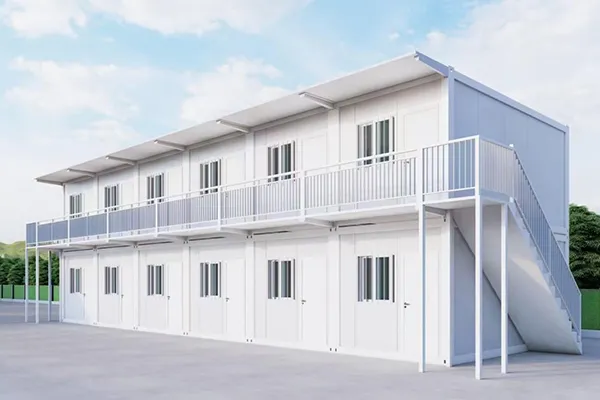
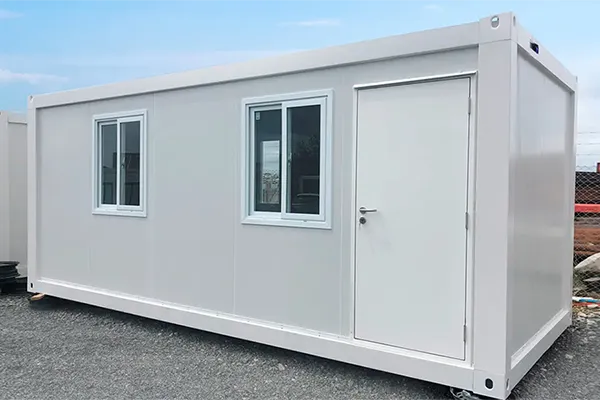
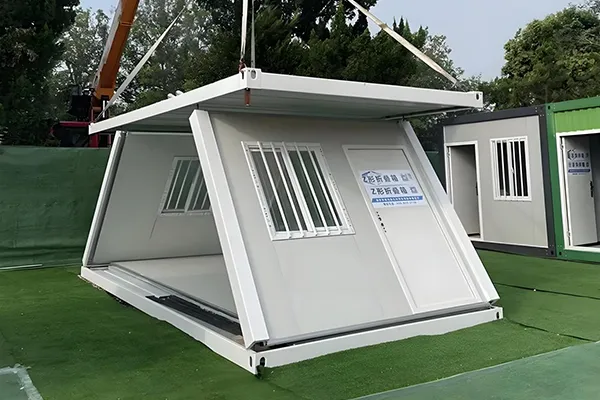
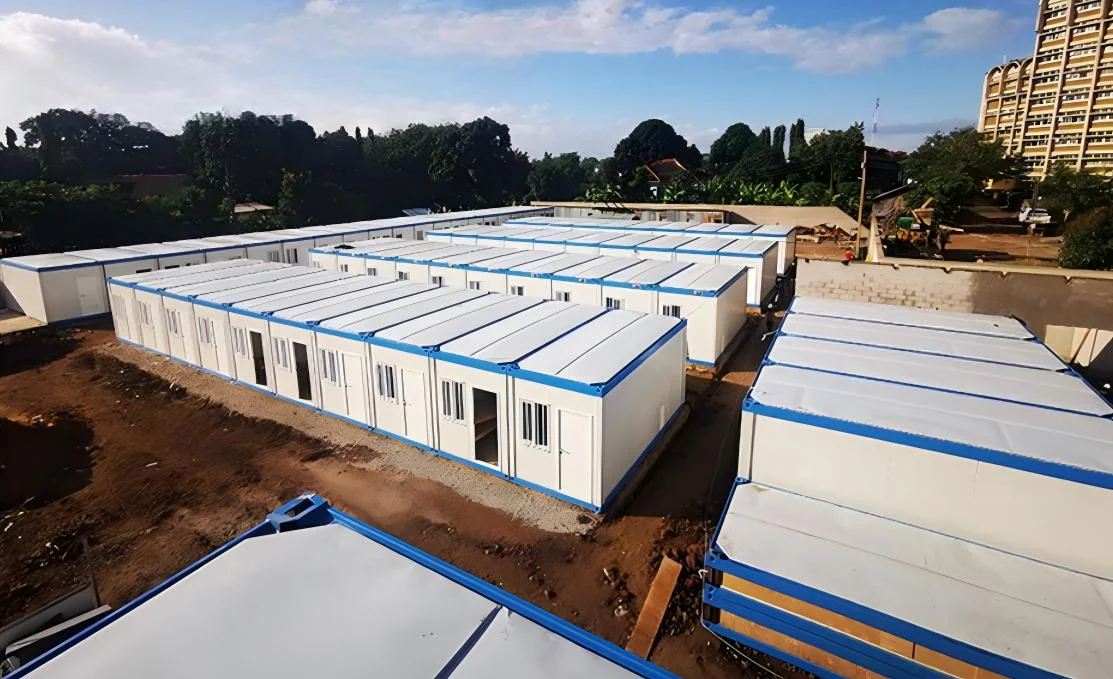
A new purpose-configured camp creates a different comparison path. KUBO can configure a new modular mining-camp package around project inputs such as workforce, mine stage, room standards, dining, sanitation, laundry, offices, welfare, medical/support spaces, climate, freight and the agreed supply boundary. Depending on the delivery model, flat-pack, detachable flat-pack, detachable or folding systems may be considered. For larger repeatable accommodation and support blocks, flat-pack or detachable systems can provide a controlled new-supply basis with project drawings and specifications, factory manufacture and inspections, export packing and shipment documents, and agreed assembly support. The correct comparison is not “old modules versus new modules”; it is one complete operating camp versus another complete operating camp.
For a capital-screening decision, the practical rule is simple: do not approve the used asset on acquisition price alone. Approve or reject it only after the used package has been converted into a complete deployed scope with visible unknowns. If the used option still aligns with the required facility schedule, occupancy date, service period and acceptable project risk after those additions, it remains a valid procurement route. If the gaps are material or still unpriced, a new-camp quotation provides the reference needed to compare the decision on a common basis.
Used Mining Camp vs New Camp: Start With One Common Operating Brief
The most common comparison error is to place a seller’s advertised room count beside a manufacturer’s quotation and assume the two numbers describe equivalent camps. They usually do not. A room count is only one component of a workforce village. The buyer may also need food preparation and dining capacity, laundry, bathrooms or ensuites, offices, HSE and induction space, welfare, storage, medical support and utility interfaces. A “226 PAX camp” and a “226-bed new camp” can therefore have materially different contents unless the facility schedule is normalised before pricing.
Before asking whether a used mining camp purchase is attractive, freeze a simple comparison brief. It does not need to be a final engineered package. It does need to be specific enough that both options are answering the same operational requirement.
| Comparison input | What procurement should fix before comparing | Why it changes the decision |
|---|---|---|
| Peak residents | Peak people on site, not average headcount; identify whether rooms are single, twin or shared. | Drives room quantity and the peak load on dining, sanitation, laundry and welfare facilities. |
| Mine or project stage | Exploration, construction, expansion, steady operations or another defined operating phase. | Changes how much temporary capacity, future expansion and long-term amenity are required. |
| Complete facility schedule | List every required building and support function, not only accommodation rooms. | Prevents missing buildings from appearing later as an unplanned capital addition. |
| Destination | Country, site, access route, staging constraints and known climate or environmental inputs. | Changes transport, lifting, site integration, engineering interfaces and suitability checks. |
| Target occupancy | The date or period when the required resident capacity must be usable. | For a used camp, recovery and refurbishment can sit on the critical path; for a new camp, design release, manufacture, shipping and site readiness must align. |
| Intended service period | The period the buyer expects this camp configuration to remain in service. | Creates the basis for assessing remaining-life evidence, maintenance exposure and replacement planning. |
| Deployment boundary | Define what sits in asset/factory supply, logistics, local site works, utilities, approvals, installation and commissioning. | Makes quotations comparable and exposes scope gaps before capital approval. |
This common brief is the control document for the rest of the screening exercise. It also prevents the decision from drifting into a broader “prefabricated versus local construction” or “buy versus rent” debate. Those are different procurement questions. If you are deciding between accommodation methods, KUBO’s separate guide on mining camp cost and bid normalisation addresses common capacity and package assumptions. The present decision is narrower: whether a specific third-party used camp should be acquired instead of procuring a new purpose-configured camp.
Convert Advertised Capacity Into a Complete-Camp Gap Map
A used-camp listing can be accurate and still be incomplete for your project. “Full package” is a sale description, not a substitute for an asset schedule. In a 2026 expression-of-interest sale, Pickles marketed two full-package transportable accommodation camps, while directing bidders to attachments for the included contents and requirements. The same sale stated that the buyer had to organise and cover demobilisation and decommissioning to a cap-off stage.[4] The procurement lesson is not that every used-camp sale has the same terms. It is that the headline capacity and the recoverable scope need to be reconciled before the bid value is meaningful.
Build the reconciliation at asset level. Each line should end in one of three commercial outcomes: verified reusable asset, buyer-priced recovery/refurbishment, or missing scope to be newly supplied. Unknown items remain unknown until the seller’s documents, inspection or quotations resolve them.
| Camp function | Evidence to obtain for the used package | If present but not ready for reuse | If absent or insufficient |
|---|---|---|---|
| Accommodation rooms | Asset register, room count, room type, bathroom arrangement, dimensions, age/construction information, photos and condition findings. | Price repair, replacement of damaged elements, cleaning, fit-out renewal and any required destination modifications as separate scope. | Add new accommodation modules sized to the target room/PAX requirement. |
| Kitchen and dining | Building list, usable areas, included fixed assets, service points, condition and suitability for the intended meal-service model. | Define refurbishment, equipment replacement and service-interface work before treating the facility as available capacity. | Add a new kitchen/dining package or other agreed food-service solution. |
| Sanitation and laundry | Included bathroom, ensuite, ablution and laundry buildings; fixtures; mechanical/electrical condition; visible water damage and service interfaces. | Separate fixture replacement, repairs and service work from the asset price. | Add facilities sized against peak residents, shifts and operating pattern. |
| Offices, meetings and training | Building schedule, layouts, condition, electrical/communications interfaces and intended reuse. | Price repairs, internal reconfiguration and services where required. | Add offices, meeting, HSE, induction or document-control spaces required by the project brief. |
| Welfare and recreation | Gym, recreation, social or quiet-space assets and condition evidence. | Identify refurbishment or replacement before assuming the amenity is operational. | Add only the welfare buildings included in the owner’s approved facility schedule. |
| Medical / first-aid support | Included rooms/buildings, current fit-out and project health-service requirements. | Define repair, fit-out replacement and project-specific adaptation. | Add the required clinic, first-aid or isolation support scope if part of the camp brief. |
| Storage, security and maintenance support | Included stores, gatehouse/security, maintenance or utility-support buildings and their condition. | Price recovery, repair and destination-side interfaces. | Add the missing support buildings that are necessary for the operating model. |
| Utility-related assets | Confirm exactly what equipment is included, ownership, condition, connection points and whether it can be reused at the destination. | Price overhaul, replacement and reconnection separately; do not assume utility capacity transfers with the camp. | Define the new utility equipment or local site infrastructure required for the destination. |
| Demobilisation and cap-off | Sale terms, isolation boundary, owner/buyer obligations, hazardous-material or specialist requirements where applicable, lifting and access constraints. | Obtain contractor quotations and programme the work before the transport date. | Not applicable to a new factory-supply asset, but the new option still requires its own loading, freight and destination deployment scope. |
The gap map is valuable because it separates “included in the sale” from “available for operation.” A dining building that needs major refurbishment is not equivalent to a ready new dining building. A block of bedrooms without the required laundry or office capacity is not a complete camp. Conversely, a well-documented used package with suitable support facilities should receive credit for those assets; the model should not assume replacement where inspection and project requirements support reuse.
Condition Is Not the Same as Remaining Service Life
A used modular camp inspection should answer the buyer’s current-condition questions, but remaining service life requires an additional project-specific judgment. The distinction matters because procurement is not only asking, “Can this building be used now?” It is asking, “Can this asset, after defined remedial work, support our intended service period at the destination with an acceptable maintenance and replacement plan?”
Capricorn Metals provides a useful third-party example of why evidence quality matters. In its 2018 Karlawinda update, the company reported that the existing accommodation and mining-service facilities it had secured had been professionally inspected, were described as well maintained and in good condition, and ranged from three to ten years old.[1] Those facts supported that specific buyer’s decision process. They should not be converted into a universal age rule for other used camps.
For the inspection brief itself, a non-mining source offers a useful methodology principle. The UK Department for Education’s 2026 condition-survey guidance describes a condition survey as a visual, non-intrusive inspection combined with desktop research, with the report identifying current condition, past repairs and recommended remedial work. It also requires scope and limitations to be recorded, notes that concealed areas are not opened unless included, and allows structural or specialist investigations to be added where necessary.[5] The guidance applies to school and college buildings in England, not mining camps, so its value here is methodological: procurement should know what was inspected, what was not, and what additional investigation is still required.
Make the inspection output commercially usable
For acquisition screening, ask the surveyor or technical team to structure findings by asset or building ID rather than producing only a narrative overview. Each material defect should link to a proposed action: monitor, repair, replace, investigate further or exclude from reuse. Where the survey cannot see a concealed area or cannot access a building, record that limitation against the relevant asset instead of allowing it to disappear into a general disclaimer.
The same discipline should apply to mining camp refurbishment cost. Do not use a blanket percentage of purchase price unless it comes from a specific, supportable project estimate. Build refurbishment from identified actions and quotations. A room block may need one scope; a kitchen, laundry or office may need another. Mechanical and electrical work, water-damaged finishes, doors and windows, sanitary fixtures, floor systems, roof or wall panels, fixed furniture and other elements should be assessed according to observed condition and the intended reuse. If intrusive or specialist investigation is required, carry that as an open item until the result is known.
Test the intended service period, not a generic “remaining life” percentage
Remaining service life is best handled as an evidence-backed planning question rather than a universal percentage. Start with known age and construction type, maintenance and repair records, previous relocation history where available, present condition, required refurbishment and destination conditions. Then identify which components are expected to require replacement during the buyer’s intended service period. The conclusion may differ across the same camp: structural frames, envelope elements, sanitary fixtures, mechanical equipment and interior fit-out do not need to share one assumed remaining-life figure.
This approach also improves the new-versus-used comparison. A new camp should not receive an artificial “100% remaining life” score, and a used camp should not be discounted by an arbitrary age factor. Procurement instead compares the service period it actually needs, the maintenance and replacement scope expected within that period, and the evidence available at the approval date.
Compare Installed and Deployed Scope, Not Purchase Prices
Once the gap map and condition actions are available, convert both routes into a deployed-scope model. The formulas below are deliberately made of buyer-supplied quotations and explicit placeholders. They are not market-cost estimates.
Used camp deployed basis = used-asset purchase + due diligence/inspection + demobilisation/decommissioning + recovery and refurbishment + replacement of non-reusable items + missing facilities/new modules + loading and transport + destination installation + site/interface works + testing/commissioning + clearly identified project allowances.
New camp deployed basis = agreed new factory-supply package + export packing/loading + freight and inland logistics as applicable + destination assembly/installation + site/interface works + testing/commissioning + clearly identified project allowances.
Use the same treatment of site roads, foundations, drainage, external power, water, sewage, communications, local engineering, approvals and other project-specific works on both sides. If one quotation includes an interface and the other does not, normalise it before comparing totals. The same applies to taxes, duties, inland haulage, cranes, accommodation for installation crews and any other commercial item material to the project.
| Decision dimension | Used third-party camp | New purpose-configured camp | Evidence needed before capital approval |
|---|---|---|---|
| Base scope | As-is assets actually included in the sale. | Agreed building and factory-supply schedule. | Used asset list and sale attachments; new quotation and scope schedule. |
| Completeness | May contain surplus, missing or mismatched facilities. | Can be configured around the target room and facility schedule. | One common facility matrix showing included, missing and excluded items. |
| Condition / quality status | Asset-specific inspection and limitations required. | Manufacture and inspection against agreed new-supply documents. | Condition report for used; approved drawings/specifications and inspection plan for new. |
| Refurbishment / replacement | Buyer prices identified repair, replacement and specialist work. | Not a used-asset refurbishment item; changes are handled through the new design/supply scope. | Used remedial schedule and quotations; new technical and commercial deviations. |
| Demobilisation / decommissioning | Can be a material buyer work package depending on sale terms. | No previous-site demobilisation; factory loading and shipment still require planning. | Seller terms, contractor quotes, isolation/cap-off boundary, access and lifting plan. |
| Logistics | Existing dimensions, condition, origin access, lifting and destination route control recovery logistics. | Packing and shipment can be planned around the selected modular system and batch sequence. | Route study, loading assumptions, packing/listing data and transport quotations. |
| Local labour dependency | Removal, repair, sorting, reassembly and site connections can create several labour packages. | Assembly intensity depends on selected system and agreed support. | Work breakdown, crew responsibilities, equipment needs and site sequence. |
| Site readiness | Must match the recovered assets’ layout, foundations/anchorage interfaces and service points. | Can be coordinated with the new layout and approved interface documents. | Survey, layout, foundation/anchorage basis, staging plan and utility interface schedule. |
| Utilities | Included utility assets may or may not be reusable or correctly sized for the destination. | Module-side interfaces can be defined around the approved project utility concept. | Capacity assumptions, equipment list, connection points and local infrastructure scope. |
| Approval pathway | Existing assets still need destination-specific review and applicable local approvals. | New design also needs the destination’s engineering and approval pathway. | Appointed local engineer/consultant, authority requirements and design inputs for both routes. |
| Target occupancy | Depends on access to assets, demobilisation, recovery, transport, refurbishment, installation and commissioning. | Depends on design release, manufacture, inspection, shipping, site readiness, assembly and commissioning. | Integrated programme with dependencies rather than a seller or supplier headline date. |
| Maintenance during service period | Starts from verified condition after refurbishment and may include earlier component replacements. | Starts from a new-supply baseline but still depends on operating conditions and maintenance. | Asset/component maintenance assumptions tied to the intended service period. |
| Future relocation | Requires evidence that recovered assets remain suitable for another move if future redeployment is part of the plan. | System selection can consider planned dismantling, reuse or relocation from the outset. | Asset strategy, module system, packing/recovery plan and future-site assumptions. |
| Interface risk | Highest where sale terms, condition, missing facilities or recovery boundaries remain unresolved. | Highest where project inputs, local works or design interfaces remain unresolved. | Open-item register with owner, due date and commercial treatment for each unknown. |
This table is not intended to produce a generic winner. It creates a common measurement basis. In some projects, a well-documented used package may align closely with the target brief and justify the recovery work. In others, missing facilities, uncertain condition or a difficult relocation sequence can materially change the apparent purchase-price advantage. The model should show that difference rather than assume it.
A Third-Party Mining Example: Used Camp Acquisition Is a Project, Not a Single Purchase
The Karlawinda Gold Project provides a useful evidence sequence because public updates show several steps between identifying an existing camp and occupying it. This was a Capricorn Metals project, not a KUBO project, and it should be read as one documented example rather than a standard cost or schedule benchmark.
2018: review, inspection, asset scope and recovery planning
Capricorn reported in August 2018 that, after reviewing suitable existing accommodation camps, it had secured a camp and mining-service facilities from the former Nullagine project. The accommodation package included 306 ensuite rooms plus recreation facilities, laundries, kitchen and mess, gymnasium, first-aid, ice rooms and a reverse-osmosis water-treatment facility; the mining infrastructure included offices, workshops, first-aid, ice and training rooms.[1]
The same announcement stated that the facilities had been professionally inspected and were described as well maintained and in good condition, with ages ranging from three to ten years. It also identified removal, relocation, refurbishment and installation as a contracted scope. The initial plan was to install 60 rooms and a temporary kitchen/mess, then progressively commission more facilities as the construction workforce increased.[1] That sequence is directly relevant to acquisition screening: purchase, condition evidence, recovery scope and phased occupancy were separate decisions.
2019: relocation became a construction-ramp dependency
In July 2019, Capricorn reported that it had acquired the 306-room camp and associated mining infrastructure and had awarded a relocation contract. The company also stated that availability of village accommodation was a determining factor in the ramp-up of project construction.[2] For procurement teams, this demonstrates why target occupancy belongs in the commercial comparison. A used camp may already exist physically, but it is not available to the new project until the recovery, transport, installation and site-interface sequence is complete.
2020: occupation began while installation work continued
By the June 2020 quarter, Capricorn reported significant progress on installation of the 306-room village, including plumbing, electrical and concreting work, and stated that the construction workforce had commenced occupying the village in April 2020. The same quarterly report described the village as operational while broader project development continued.[3] The value of this example is not the dates themselves; the value is the evidence chain from asset review through condition assessment, contracted relocation/refurbishment, phased installation and eventual occupation.
If your used-camp opportunity cannot yet be described with the same kind of sequence—what is included, what was inspected, what recovery work is required, who performs it, when each facility becomes usable and how the camp reaches full target capacity—there is still material work to complete before comparing it with a new-camp proposal.
When a Used Camp Route Is Ready for Serious Commercial Comparison
A used camp does not need to be perfect before procurement can evaluate it. It does, however, need to be defined. The route is ready for a serious new vs used mining camps comparison when the following questions can be answered with documents, inspection findings or priced assumptions:
- Capacity: does the package meet the required room/PAX count after excluding non-reusable rooms and allowing for the intended occupancy model?
- Completeness: are all required shared and support facilities present, or has each missing building been identified and priced?
- Condition: is there an asset-level inspection with stated limitations, remedial actions and any further specialist work required?
- Recovery: are demobilisation, decommissioning, cap-off, dismantling, lifting, packing and loading responsibilities defined?
- Transport: are origin access, destination access, route constraints, staging and logistics quotations known?
- Destination integration: is there a plan for foundations or anchorage interfaces, external utilities, drainage, roads, local engineering and applicable approvals?
- Programme: can the recovery and installation sequence meet the target occupancy date, including phased opening if required?
- Service period: is the expected maintenance and replacement exposure during the intended use period supportable from the available condition and history?
- Commercial boundary: are all exclusions and buyer-supplied items visible rather than buried in assumptions?
If one or more answers remain unknown, keep them open in the comparison model. Do not automatically reject the used route and do not convert the unknown into a favourable zero. The purpose of pre-bid asset screening is to show decision-makers where the commercial exposure still sits before a purchase offer or capital approval.
Build the New-Camp Reference Around the Same Facility Schedule

A new option becomes useful only when it mirrors the same project brief. KUBO’s modular mining-camp solution is structured around the mine stage, workforce, facilities, climate, site access and agreed commercial boundary rather than a single catalogue room. For this comparison, the new quotation should therefore follow the used-camp gap map: accommodation, dining, sanitation, laundry, offices, welfare, medical/support spaces, security/storage and other agreed buildings needed to reach the target operating camp.
KUBO can consider flat-pack, detachable flat-pack, detachable and folding modular systems according to project scale, freight route, local assembly conditions, lifecycle and intended reuse. For a larger accommodation or support-building package, flat-pack or detachable systems can be used to create repeatable room and bay types while keeping the factory supply tied to an approved building schedule. The specific system should be selected after the project inputs are defined; it should not be chosen only because it has a lower unit shipping volume or a familiar module name.
What KUBO can place on the new-supply side of the comparison
Within an agreed contract boundary, the new-camp basis can include system and building-schedule coordination, module drawings and specifications, factory production and inspections, export packing and shipment documents, assembly manuals and agreed assembly support. Packing lists, unit coding and shipment batches can be aligned with site readiness so the receiving team can connect the physical deliveries to the approved room and facility schedule.
Project-specific site work still needs to be integrated into the comparison. Local survey and geotechnical inputs, foundations, roads and drainage, external power/water/sewage/communications, locally authorised engineering, permits and approvals, customs and inland movement are defined according to the project and contract. These interfaces should appear on both sides of the used-versus-new table so neither route gains an artificial price advantage from an omitted responsibility.
| Comparison interface | KUBO new factory-supply contribution | Project-side input / coordination required |
|---|---|---|
| Camp configuration | Coordinate the agreed building schedule, room types and modular system. | Peak residents, mine stage, room standards, required facilities and intended service period. |
| Design documents | Module drawings, specifications and agreed technical documentation for the factory scope. | Destination design basis, local engineer/authority inputs and site interface requirements. |
| Manufacture and inspection | Factory production and inspections against released documents. | Agreed inspection points, approvals for changes and any buyer/EPC witness requirements. |
| Packing and shipment | Export packing, unit identification, packing lists and shipment documentation within the agreed scope. | Freight plan, port/inland route, customs arrangements, site receiving and staging readiness. |
| Assembly and site interfaces | Assembly manuals and agreed support. | Foundations/anchorage interfaces, lifting, local labour, external utilities, roads, drainage and local approvals unless specifically contracted otherwise. |
This is also where procurement can separate the acquisition decision from a future redeployment strategy. If you already own the camp and are deciding whether to dismantle, store or redeploy your own assets, use the separate guide on camp downsizing and relocation planning. A third-party purchase has an additional acquisition problem: the buyer must establish title/sale scope, actual condition, recoverable contents and the recovery burden before those assets enter its own portfolio.
Use Approval Gates Before You Negotiate the Final Purchase Offer
Pre-bid screening becomes more efficient when the team agrees on approval gates before entering final price negotiation. The gates do not need numerical scores. They need clear pass conditions and open actions.
Gate 1: Complete-camp scope
The used package and new package must both map to the approved resident target and facility schedule. Surplus used assets can be shown separately; missing assets must be added. If the seller’s schedule is still incomplete, the acquisition is not yet ready for a complete deployed-cost comparison.
Gate 2: Condition and remedial scope
The inspection must identify what was seen, what could not be inspected, what repairs are recommended and what specialist investigation remains. Each material remedial action should have either a quotation or a clearly labelled allowance pending quotation. This gate prevents a favourable purchase price from hiding a later refurbishment package.
Gate 3: Recovery and destination feasibility
Confirm that buildings can be safely recovered under the sale conditions, moved through the origin and destination routes, staged, installed and connected at the destination. The technical and commercial responsibilities for demobilisation, cap-off, lifting, transport, foundations, anchorage and utilities should be visible.
Gate 4: Target occupancy
Build one integrated programme for each route. For the used camp, include access to the assets, isolation/decommissioning, removal, transport, refurbishment, destination installation and commissioning. For the new camp, include design alignment, document release, manufacture, inspection, packing, freight, site readiness, assembly and commissioning. Compare the date when the required operating capacity becomes usable, not when assets leave the old site or the factory.
Gate 5: Intended service period
Check whether the used assets, after planned remedial work, support the required service period with an acceptable maintenance and replacement plan. For the new option, confirm that the selected system and specification are being developed around the same service intent and destination inputs. Avoid universal remaining-life or refurbishment percentages; the approval should follow project evidence.
Gate 6: Common commercial basis
Normalise exclusions, taxes/duties where relevant, inland haulage, local works, utilities, approvals, cranes, labour and commissioning. Unknowns should appear in an open-item register with an owner and a date for resolution. This final gate turns the comparison from two headline prices into two procurement scopes that decision-makers can actually evaluate.
Procurement FAQs
Can we use the seller’s room count as the camp capacity in a used mining camp vs new camp comparison?
Use it only as the starting accommodation count. Confirm how many rooms are included, their occupancy type and condition, then separately verify the shared facilities needed for your target resident load. Dining, sanitation, laundry, offices, welfare, medical/support and utility interfaces can determine whether the advertised room count is operationally usable at the destination.
How should we treat a sale described as a “full package” transportable camp?
Reconcile the description against the sale attachments and an asset register. Confirm inclusions, exclusions, fixed equipment, utility assets, condition, access, demobilisation/decommissioning obligations and the handover boundary. A 2026 Pickles EOI, for example, required bidders to refer to attachments for contents and placed demobilisation/decommissioning to cap-off on the buyer. That is a transaction-specific example, not a universal sale condition.[4]
Does a condition report prove the remaining service life of a used modular camp?
No single condition statement should be treated as a universal remaining-life certificate. Use the report to establish present condition, defects, remedial work, limitations and further investigation. Then assess the intended service period using age/construction information, maintenance and movement history where available, destination conditions, refurbishment scope and component replacement planning. The result should be project-specific.
What should we send KUBO if we want a new-camp comparison without a complete engineering package?
Start with the country/site, intended use or mine stage, peak residents, target occupancy and intended service period. Add the required facility list if available. If you already have a used-camp asset schedule or inspection summary, it can help align the comparison categories, but the KUBO discussion remains a new-camp configuration and factory-supply comparison basis rather than an appraisal of the third-party asset.
Request a New Camp Option for Comparison
If a third-party used camp is under consideration, you do not need to finish every refurbishment quotation before establishing a new-supply reference. Share five inputs now: country/site, intended use or mine stage, peak residents, target occupancy and intended service period. KUBO can use those inputs to discuss a purpose-configured modular camp basis and the facility schedule needed for a like-for-like commercial comparison.
The most useful next step is to keep the two scopes side by side. Your used-camp team can continue verifying the asset list, inspection findings, recovery work and refurbishment, while KUBO develops the new-camp configuration around the same operating brief. This gives procurement a common basis before a purchase offer or capital approval, without treating the new quotation as a valuation of the used asset.
Request a New Camp Option for Comparison
Sources and References
- Capricorn Metals, Karlawinda Progress Update, 13 August 2018 — existing-camp scope, professional inspection, facility age range, removal/relocation/refurbishment/installation and phased initial camp.
- Capricorn Metals, Karlawinda Village Relocation Update, 1 July 2019 — relocation contract and the relationship between accommodation availability and construction ramp-up.
- Capricorn Metals, June Quarter 2020 Activities Report — continuing village installation and construction-workforce occupation.
- Pickles, Expression of Interest for full-package transportable accommodation camps — attachments defining included contents and buyer responsibility for demobilisation/decommissioning to cap-off.
- UK Department for Education, Condition surveys for school and college buildings: guidance for responsible bodies, 2026 — non-mining condition-survey methodology covering scope, limitations, remedial actions, access restrictions and optional specialist investigations.
- KUBO modular mining-camp solution — new-camp configuration scope, modular system options, factory documentation, packing and project interface structure.