


Summary
A Canton Fair factory visit for modular camps is worth adding to your trip when it can resolve a configuration, supply-scope or partnership question before your next internal decision. An earlier meeting leaves more time for clarification; a later meeting lets you bring more developed fair comparisons. KUBO’s office and production factory share a site in Shunde, Foshan, where prospective visitors can request a meeting. Project buyers should seek a common basis for the next quotation, while prospective distributors should explore a realistic first application and local responsibilities. Confirm reception arrangements and any essential product or production access before relying on the visit in your evaluation plan.
Choose the Visit Around a Decision You Need to Make
Before adding Shunde to your itinerary, complete one sentence: “After this meeting, we need to be able to decide whether to…” The answer might be to request a budgetary quotation, develop a particular configuration, clarify a manufacturing boundary, or investigate a first distribution opportunity. Each purpose calls for different preparation and a different conversation.
A broad introduction can be useful during early supplier exploration. A project approaching evaluation needs a narrower discussion: which unresolved issue prevents the team from comparing proposals? A prospective distributor may need to test whether its customer base and local service capabilities fit a plausible product application.
Select a primary decision and identify secondary topics that can wait. Combining every objective into one meeting can leave the buyer with extensive notes but insufficient attention to the question that determines whether procurement or partnership discussions can progress.
Where the Autumn 2026 Fair Fits Into Your Plan
The 140th Canton Fair in Guangzhou is scheduled for Phase 1 on October 15–19, Phase 2 on October 23–27, and Phase 3 on October 31–November 4, 2026. The intervals are October 20–22 and October 28–30. Phase 2 includes building and decorative materials, sanitary and bathroom equipment, and prefabricated house and courtyard facilities, making it relevant to this sourcing trip. See the official consular notice announcing the autumn fair schedule and sectors.
Those dates provide itinerary context; they do not establish KUBO’s reception availability. A gap between exhibition phases is a possible date to request, subject to confirmation.
The useful comparison is between information available before the meeting and time available afterward. Fair attendance may help you refine questions, while an earlier factory discussion may help you make more focused comparisons during the exhibition. Your internal evaluation deadline determines which advantage matters more.
Before, During or After Phase 2?
Before Phase 2: An earlier meeting can help a first-time buyer identify a relevant system direction and understand which questions to carry into subsequent sourcing conversations. It also leaves more time for follow-up before an end-of-month decision. The tradeoff is that your team has not yet gathered its Phase 2 comparisons, so some questions may emerge later.
During Phase 2: A meeting within the phase can combine emerging comparisons with a focused discussion of your own requirements. It may suit a defined project whose team already understands its principal use and scope. The limitation is competing itinerary priorities: reserving time on your calendar does not establish that the requested factory meeting can take place.
After Phase 2: A later meeting can begin with a more developed shortlist and clearer differences between offers. This may suit a buyer whose decision falls later. It becomes less useful when the remaining review period cannot accommodate clarification, especially if the meeting is expected to resolve questions that affect proposal comparability.
No window is universally best. For a fixed evaluation gate, an earlier briefing followed by focused clarification may be more useful than postponing every question until the fair has finished.
Calculate the Latest Useful Meeting Date
Work backward from the decision the meeting must support. The calculation needs only a deadline and realistic allowances for the work between the conversation and that deadline. It concerns the buyer’s evaluation process, not manufacturing or delivery lead time.
Consider this hypothetical example using calendar days:
- Buyer’s internal decision date, D: October 30, 2026.
- Supplier clarification allowance, Q: 2 calendar days.
- Buyer’s internal review allowance, R: 1 calendar day.
- Optional further clarification iteration, I: 2 calendar days.
The latest useful meeting date without the extra iteration is M = D − Q − R = October 27. If the buyer wants room for the additional iteration, it becomes M = D − Q − R − I = October 25. These are planning assumptions, including the supplier clarification allowance, and do not represent KUBO response commitments.
| Candidate meeting date | Fair context | Calendar days remaining to October 30 | What the assumed allowances permit |
|---|---|---|---|
| October 22 | Before Phase 2 | 8 | Fits Q + R + I, with 3 additional calendar days; Phase 2 comparisons are still ahead. |
| October 25 | Within Phase 2 | 5 | Fits Q + R + I exactly, with no additional allowance. |
| October 27 | Final day of Phase 2 | 3 | Fits Q + R exactly, without the further clarification iteration. |
| October 28 | After Phase 2 | 2 | Falls short of Q + R by 1 calendar day. |
The figures measure elapsed calendar days between dates, rather than counting both endpoints inclusively. An October 28 meeting followed by two calendar days for clarification reaches October 30; adding one calendar day for internal review reaches October 31, one day after the decision deadline.
An October 25 meeting can accommodate two days for initial clarification, two for another iteration and one for review, reaching October 30. An October 22 meeting leaves eight days, but the buyer must weigh that additional time against holding the conversation before its Phase 2 comparisons.
In a real plan, replace these allowances with confirmed availability and your team’s actual review requirements. If the organization works in business days, rebuild the calculation using its working calendar. Working hours, holidays and transport arrangements require separate checks; switching silently between calendar days and business days would make the result misleading.
If the remaining time is insufficient, move the meeting, move the decision where possible, or narrow the decision being requested. Missing technical information does not become resolved because an internal deadline has arrived. A limited decision to continue configuration work may still be possible when a final procurement decision is not.
When a Shunde Meeting Earns Its Place in the Trip
For first-time supplier exploration, the useful outcome is a better-defined enquiry. If your team knows the intended application but has not selected a system, a discussion can focus on the reasons to investigate one direction further. Trying to obtain a final price at this stage may simply hide unresolved assumptions.
For a defined project approaching an evaluation deadline, bring the issue that could change the decision. Perhaps two proposals assume different levels of factory completion, or your team needs to clarify an interface before requesting a revised quotation. The meeting earns its place when the relevant topic can be addressed and the follow-up still fits the evaluation calendar.
For a prospective distributor without a committed order, a representative enquiry can anchor the discussion without being presented as secured demand. Use it to explore a plausible first application and the division between supply and local tasks.
These are illustrative buyer situations, not customer case studies. If the purpose depends entirely on seeing one particular item, establish whether that request can be accommodated before treating the visit as essential.
Use Different Agendas for Project Procurement and Distribution
KUBO’s published visit and partnership information supports discussions about modular system selection, configuration, manufacturing scope and related coordination. The matrix below proposes two focused agendas. It describes requests and desired outputs, rather than a fixed meeting package.
| Discussion point | Project procurement agenda | Distributor agenda |
|---|---|---|
| Starting context | Country, intended use, capacity range and project time window. | Main market, customer type and local service capability. |
| Initial selection | Identify a system or configuration direction relevant to the project. | Identify a plausible first product and customer application. |
| Scope discussion | Compare proposed factory completion with site interfaces; identify the scope KUBO should assess. | Use one opportunity or representative enquiry to distinguish supply tasks from local tasks. |
| Focused observation | Request a relevant detail, sample or packing example, if available, to answer a named question. | Discuss a repeat configuration and potential customization limits relevant to the market. |
| Readiness for follow-up | Identify drawing maturity and approval questions affecting the next technical or quotation step. | Identify information needed for a pilot or first-order review, including local service assumptions. |
| Desired next decision | Proceed to configuration clarification, a budgetary quotation request or a separate technical review. | Pursue project supply, repeat wholesale or a deeper partnership discussion. |
Project Buyers: Establish a Common Basis for the Next Quotation
A modular camp procurement meeting should connect the intended use to the scope being assessed. “Worker accommodation” alone may leave the proposed building configuration and site responsibilities unclear. Explain the project context and ask which additional input is needed to assess the unresolved requirement.
Keep responsibility questions connected to that uncertainty. Ask KUBO to clarify what it can assess within the proposed manufacturing scope. The buyer or engineering, procurement and construction (EPC) team should identify who consolidates project requirements and who can accept changes. Where foundations, utility connections or other site work affect the discussion, identify the relevant site contractor or coordination owner. Ask the project team to establish the local engineer’s review role and which questions require an authority’s determination.
This is enough to prevent a meeting observation from being mistaken for complete project approval. It does not require recreating a full tender specification during the visit.
If an input remains unresolved, record how it affects the quotation or technical assessment. For example, a configuration may be suitable for further assessment while the site connection scope remains open. Preserving that distinction is more useful than requesting an apparently complete price built on different assumptions.
Prospective Distributors: Test One Application Before Expanding the Discussion
A modular building distributor meeting becomes more useful when it starts with the customers the prospective partner can realistically serve. Describe their typical applications, how enquiries are developed, and what local coordination or services your organization can contribute.
KUBO’s published partnership information covers system selection, customization feasibility, quotation, relevant layouts and drawings within agreed manufacturing scope, production, packing and export coordination. Local partners contribute market knowledge, customer relationships and agreed local coordination. Use the meeting to explore how those contributions could fit a specific opportunity.
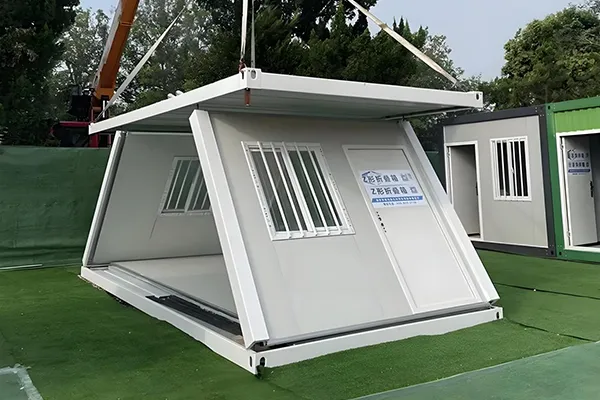
The six systems listed on the partnership page are Flat Pack, Detachable Flat Pack, Detachable, Expandable, Folding and Z-Type Folding. Treat them as discussion options, rather than an agenda requiring every system to be examined or displayed.
Explore repeat configurations alongside customization requests. If each prospective customer needs a substantially different arrangement, that affects the information and coordination needed for future enquiries. Discuss local service economics qualitatively: which tasks would your organization undertake, which would require others, and which assumptions remain untested?
Ongoing cooperation models and enquiries belong on KUBO’s modular building dealer and distributor partnership page.
Make Any Factory Observation Answer a Specific Question
An available configuration might help explain an opening, an assembly relationship or a packaging concept. Ask what the item represents and how it relates to your intended application. Seeing a detail does not, by itself, establish the specification or price of the future order, or resolve local compliance requirements.
Depending on the agreed agenda and availability, discussion requests may concern steel fabrication, panel or enclosure assembly, doors and windows, mechanical, electrical and plumbing (MEP) interfaces, workflow, packing or shipment preparation. Select the topic that addresses the unresolved requirement instead of trying to cover every production activity.
If the critical sample or operation is unavailable, there are three sensible choices: review agreed reference material, change the agenda, or reschedule the specific inspection. Reference material may explain a concept, but it should not be treated as proof of a missing project-specific item. Customer-confidential work is not available for inspection.
For a buyer commissioning formal supplier qualification, use the separate modular building factory audit checklist to prepare that assignment. A project conversation and a formal audit have different purposes; identify which one you are requesting so the expected result is clear.
Agree the Purpose Before Building a Detailed Visit Pack
The initial meeting request can stay short: preferred date, company and country, project or partnership direction, and visitor count. A rough capacity or quantity is welcome if known. Detailed drawings and schedules can follow once the intended discussion is understood.
After initial coordination, prepare only the material that helps resolve the priority question. A project buyer might provide a current layout and explain which elements are fixed and which remain options. A prospective distributor might describe a representative customer requirement and the local tasks it expects to handle. Label assumptions so they are not mistaken for approved requirements or committed demand.
Tell KUBO if the meeting depends on a particular technical participant, detail or reference item. Ask for that requirement to be considered explicitly. This allows your team to distinguish a useful general discussion from an inspection whose essential subject has not been confirmed.
Align your own participants too. Procurement may want a comparable offer, engineering may want an interface clarified, and management may want to evaluate a partnership direction. Agree which participant can accept the proposed next step and which matters need wider review. Otherwise, the same conversation may produce incompatible interpretations of what was agreed.
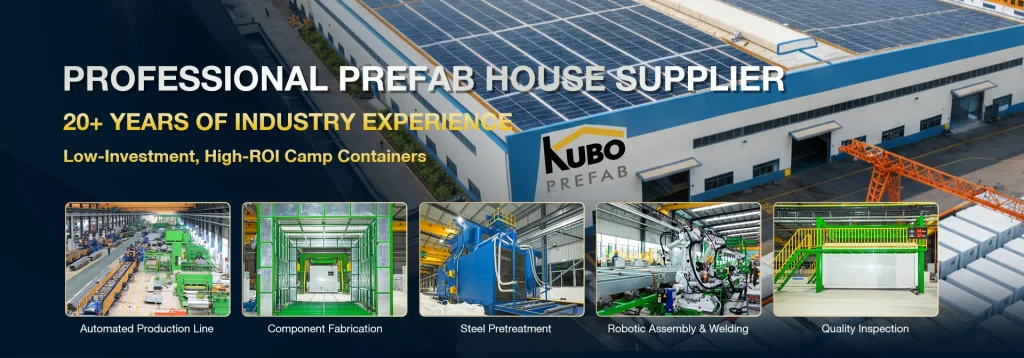
KUBO’s office and production factory share a site in Shunde, Foshan. Use the KUBO factory visit page for arrival details and the existing meeting request form, keeping practical arrangements tied to the confirmed visit.
Leave With a Next Step That Someone Can Act On
A useful meeting note identifies the unresolved input and the action needed to address it. “Please send more information” is difficult to act on. A request to clarify a particular configuration against an identified use and scope gives both teams something concrete to address.
Separate observations from agreements. An assembly detail seen during the visit is an observation. A request to assess whether that detail belongs in the proposed configuration is an action. It becomes part of the procurement basis only when the relevant specification and scope are agreed.
Record the selected follow-up from the agenda matrix and who needs to contribute. For project procurement, that may require coordinated input from the buyer’s technical team before a quotation request is ready. For distribution, it may require the prospective partner to clarify local responsibilities before developing the representative enquiry further.
Assign an owner to each unresolved action and agree realistic dates with the people involved. Recheck those dates against the buyer’s evaluation deadline. If the resulting sequence no longer fits, make that visible while the team can still adjust the decision or meeting plan.
Arrange Your Shunde Factory Meeting
Planning a Canton Fair factory visit for modular camps? Arrange Your Shunde Factory Meeting by submitting your preferred date, company and country, project or partnership direction, and visitor count through the existing form.
Add your rough capacity or quantity if available, plus the question you most want the meeting to resolve. KUBO can use that starting point to discuss the proposed agenda and reception arrangements.
Procurement FAQs
Should We Bring a Competing Quotation to Discuss Differences?
Use a requirement-based summary where possible, and share third-party documents only when you have permission. Identify the configuration, included scope and unresolved difference without asking the meeting participants to infer another supplier’s intentions. If a bundled offer does not reveal whether a particular item is included, mark that point as unknown. The meeting can help clarify KUBO’s proposed scope, but the competing supplier must clarify its own offer. This keeps the comparison useful without turning incomplete information into an assumed difference.
Can a Contractor Visit Before Winning the End-Customer Tender?
Yes, a pre-award discussion can be framed around a potential project, provided its status is clear. Identify which requirements come from the tender and which are your own developing assumptions. Ask for the next response to match that maturity, rather than presenting unconfirmed quantities or configurations as an order basis. If several tender alternatives remain open, select the one that most needs clarification and explain the others briefly. The useful outcome may be better proposal preparation without any commitment to purchase.
How Should We Structure the Meeting If an Intermediary Is Involved?
Identify each participant’s role before the discussion: who represents the buyer, who coordinates technical questions, who develops the local opportunity, and who is expected to communicate the follow-up. An intermediary can contribute sourcing, language or local coordination value when those responsibilities are understood. Avoid leaving commercial authority implicit. A person arranging the visit may not be authorized to accept a specification change or partnership term. Capture any proposed responsibility allocation for later agreement by the relevant parties.
What If the Person Who Approves the Purchase Cannot Attend?
Agree the attending team’s decision limits in advance. Ask the approver which evidence or clarification would allow the next internal review, and make those questions central to the agenda. The visitors can document observations and proposed actions without presenting them as final approval. Keep a short list of matters reserved for the absent decision-maker, particularly changes to scope or commercial direction. This reduces the chance that the team returns with a promising discussion that the approver cannot use.
Sources and References
- Consulate-General of China in Cebu: Introduction of the 140th Canton Fair, published July 14, 2026. Official event schedule and exhibition sectors.
- KUBO factory visit information. Shunde location, shared office and production site, potential discussion topics and meeting requests.
- KUBO dealer and distributor partnership information. Published systems, manufacturing support topics and potential partner responsibilities.
The calendar-day example and proposed meeting agendas provide a practical framework for early project planning. Its hypothetical allowances should be replaced with project-specific inputs and do not represent customer results or supplier service commitments.