


Summary
EPC buyers should compare construction camp suppliers against one normalized facility package, not against headline module counts or total bid values. The comparison basis should define every required function—accommodation, offices, sanitation, welfare, dining or other support spaces—together with occupancy, room standards, fixtures, phased delivery needs, factory deliverables, local works, and the condition required at each project milestone. Once that Facility Schedule is fixed, every bidder can return the same scope in a form that exposes inclusions, exclusions, delivery lots, evidence, and interface responsibilities.
This matters because two proposals can appear to cover the same construction camp while allocating engineering, packing, freight, foundations, utilities, lifting, assembly, testing, or locally regulated work very differently. For EPC commercial managers and site-facility procurement teams, the decision standard is therefore straightforward: normalize the package first, normalize the responsibility boundary second, and compare commercial totals only after both are aligned.
Why Construction Camp Supplier Bids Often Describe Different Projects
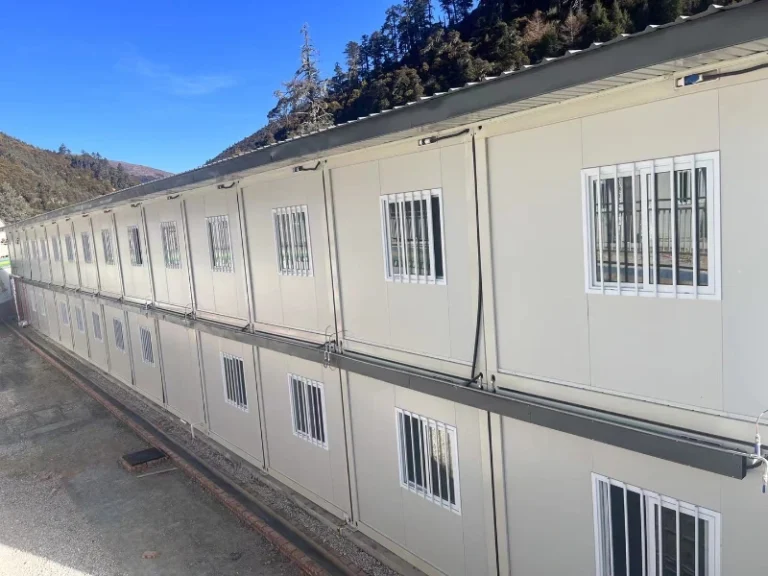
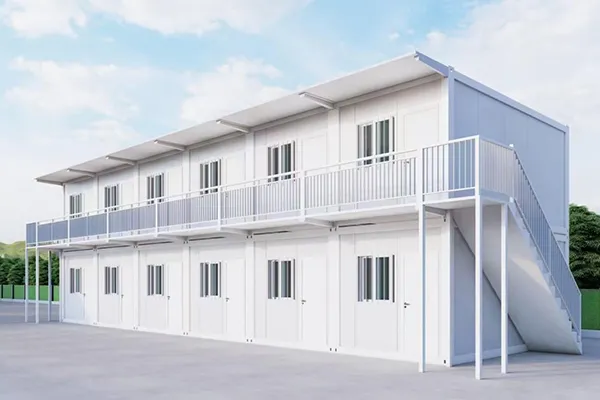
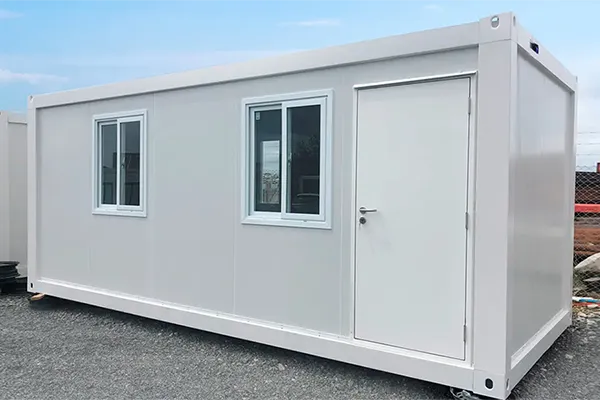
A construction camp is rarely one repeatable product. On an EPC project, the site-facility package may combine project headquarters, engineering offices, meeting rooms, induction and HSE space, toilets and showers, changing areas, workforce accommodation, first-aid rooms, security, storage, dining or welfare functions, and other agreed support buildings. The mix changes with workforce level, construction phase, site geography, utility readiness, and the operating model.
That makes supplier comparison more difficult than comparing a single modular building. One bidder may price accommodation and offices only. Another may include sanitary buildings, loose furniture, internal MEP items, packing and technical installation documents. A third may appear more expensive because its offer covers a wider factory scope or different shipment basis. Unless procurement normalizes these differences, a commercial comparison can reward the bidder that omitted the most work rather than the supplier offering the strongest package.
The wider industry context supports this system-level view. The IFC and EBRD guidance on workers’ accommodation treats worker housing as a subject involving planning, construction, and management, not merely sleeping capacity. Likewise, the International Code Council’s off-site and modular construction standards overview spans planning, design, fabrication, transport, assembly, inspection, approval, regulatory compliance, and MEP interfaces. For procurement teams, the practical implication is clear: compare the complete facility and delivery system that the project needs.
KUBO’s Construction & EPC Project Solutions route follows the same project logic. We manufacture and supply modular site buildings for EPC projects, while the actual package is defined through an agreed facility schedule, phased configuration, export planning, and clear factory/local interfaces.
Define the Complete Facility Package Before Comparing Suppliers
The first procurement control is a complete Facility Schedule. It should describe what the camp must do, not simply how many modules the buyer expects to purchase. Module quantity becomes meaningful only after the required functions, occupancies, room standards, and delivery phases are understood.
For example, “200-person camp” is not a sufficient bid basis. Procurement still needs to know how many people stay overnight, how many office users work on site, whether personnel operate in shifts, which welfare functions are shared, how sanitation is sized, whether management and workforce accommodation use different room standards, and which facilities are required during mobilisation rather than only at peak construction.
| Facility Schedule field | What the buyer should normalize | Why it changes the bid |
|---|---|---|
| Accommodation | Resident capacity by phase, room occupancy, bed/room assumptions, sanitary arrangement, furniture scope | Changes room count, module count, internal fit-out, and support-facility demand |
| Project offices | Users by department, private/open-plan rooms, meetings, document control, reception, furniture assumptions | Changes space planning, partitions, doors, glazing, power/data provisions, and furniture |
| Sanitation and changing | Toilets, showers, lockers, changing functions, peak users, shift pattern, accessible requirements where applicable | Changes plumbing density, fixture quantity, hot-water assumptions, drainage interfaces, and local utility load |
| Welfare and dining/support | Function, simultaneous users, seating, serving or preparation boundary, loose equipment, storage | Prevents a bidder from treating an empty room as equivalent to an operational support facility |
| HSE, induction and first aid | Room functions, user capacity, furniture/equipment boundary, access arrangement | Changes layout and the distinction between factory-supplied space and buyer-furnished equipment |
| Security and storage | Gate/reception functions, controlled access, stores, maintenance/support rooms | Changes the building list and site circulation assumptions |
| Project phases | Mobilisation, ramp-up, peak construction, close-out; additions and removal dates | Changes production release, packing sequence, shipment lots, and site installation priorities |
| Technical basis | Destination, climate inputs, structural/design criteria, voltage/frequency, water/drainage interfaces, finish level | Changes materials, engineering inputs, MEP provisions, and local acceptance work |
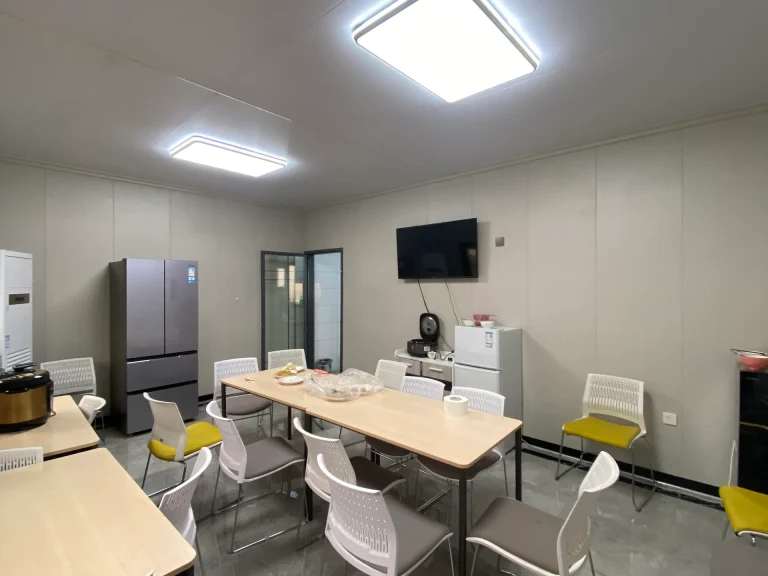
A normalized schedule also prevents a common commercial error: comparing different service levels under the same room label. “Dining room,” for instance, can mean a furnished seating space, a dining hall with serving interfaces, or a broader kitchen-and-dining package. Kitchens, catering equipment, appliances, and specialist service equipment should never be assumed from the room name. The RFQ should state what is factory-installed, loose-shipped, locally procured, or by others.
The same discipline applies to offices, sanitation, and accommodation. Specify the functional result and the expected supply boundary. This gives every construction site camp supplier a consistent basis from which to configure modules rather than encouraging each bidder to solve a different version of the brief.
Normalize the Facility Schedule Into a Bid Return
Once the facility list is fixed, convert it into a controlled bid return. Procurement should not rely on each supplier’s own quotation structure because different formats hide different assumptions. Instead, ask bidders to return building-by-building quantities, occupancies, areas or module arrangements, finishes, internal services, furniture or equipment assumptions, and explicit deviations from the issued basis.
For each facility, the buyer should be able to answer four questions without interpreting sales language: What physical building is being supplied? What is installed or packed with it? What project work remains outside the factory package? Which document or schedule proves the offered scope?
This is where KUBO normally works from released project documents rather than a generic product list. Building schedules and module drawings define the agreed arrangement; materials, finishes, and fixtures are tied to the confirmed scope; factory checks and change control follow the released package; packing lists and installation documents support the export and site handoff. The exact result remains project-specific, but the procurement structure is repeatable.
Compare Factory Deliverables, Not Just Building Shells
For modular EPC camps, “factory supply” should be decomposed into deliverables that procurement can verify. The comparison should cover the building package itself, approved material and finish scope, internal electrical and plumbing work within the defined module boundary, factory-integrated fixtures where quoted, loose-shipped items, identification and packing, drawings, schedules, inspections or checks, and installation documentation.
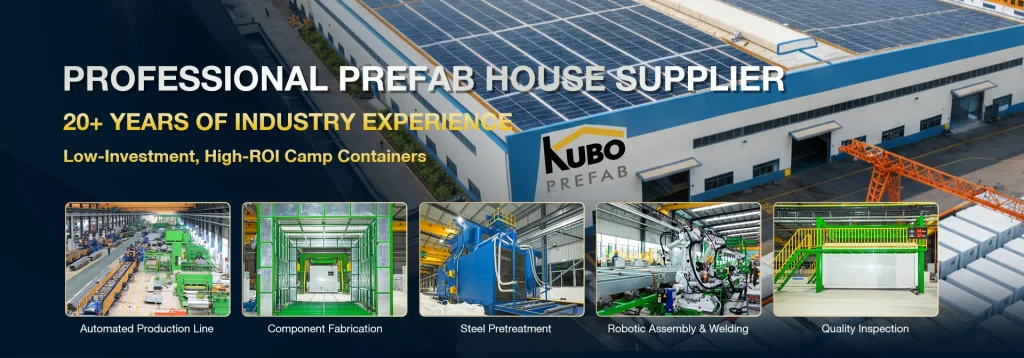
Where manufacturing evidence is relevant, buyers can review KUBO’s public factory and project-delivery information. KUBO fabricates and assembles contracted modular systems against released drawings and material schedules and integrates purchased components within the confirmed quotation and BOM scope. For supplier comparison, that distinction matters: a proposal should show which items are fabricated, which are purchased and integrated, which are loose supply, and which are outside the factory boundary.
| Bid comparison item | Comparable return expected from each supplier | Evidence or document to request |
|---|---|---|
| Facility package | Building list, quantities, occupancies, module arrangement, room functions | Facility Schedule and layout/module drawings |
| Materials and finishes | Structure, envelope, internal finish, doors/windows, specified options | Material schedule, BOM, finish schedule, approved submittals |
| Internal MEP scope | Module-side electrical/plumbing provisions, fixtures, termination points, exclusions | MEP schedule, drawings, interface points |
| Furniture/equipment | Factory-installed, loose-shipped, locally sourced, or excluded items | Room data/furniture/equipment schedule |
| Factory checks | What is checked before release and how deviations are closed | Agreed inspection/check records and release documentation |
| Packing and identification | Unit coding, protection, packing list structure, shipment sequence | Packing plan, packing lists, identification schedule |
| Delivery lots | Lot contents, release logic, destination basis, dependency on site readiness | Phased shipment schedule and lot register |
| Installation support | Documents, technical clarification, guidance, and any expressly included site service | Installation documents and responsibility matrix |
| Exclusions | Explicit list of work, materials, services, taxes/charges, and local responsibilities not included | Deviation/exclusion schedule linked to commercial offer |
| Interface responsibility | Factory, buyer, local contractor, and jointly coordinated tasks | Responsibility/interface matrix |
A supplier does not need to use KUBO’s terminology, but every proposal should be reducible to these fields. If one bidder cannot state where its scope ends, the buyer cannot reliably price the work that begins after that boundary.
Compare Phased Delivery Lots Against the Construction Programme
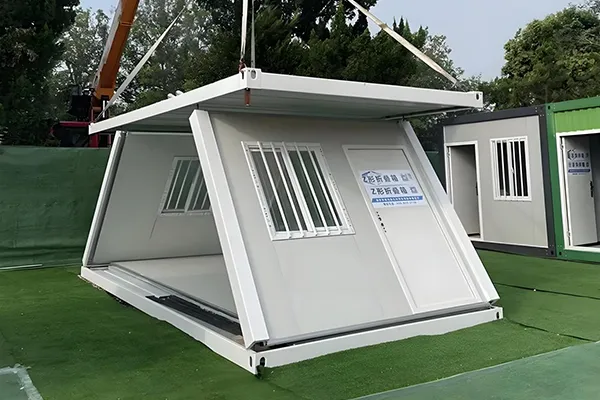
EPC projects rarely need every site facility on the same date. Mobilisation may require a project-control office, meeting/induction rooms, basic sanitation, and first aid before the peak workforce arrives. Accommodation, larger welfare buildings, additional offices, security points, or satellite facilities may follow later. Close-out can require a different sequence again as temporary assets are removed, retained, or prepared for reuse.
That means a supplier’s logistics proposal should be evaluated as a series of controlled delivery lots, not one undifferentiated shipment. Each lot should identify which buildings or module components it contains, what drawings or packing records accompany it, what site conditions must be ready, and which subsequent work depends on its arrival.
KUBO uses export batch planning and unit identification so shipment sequence can be aligned with the agreed site sequence. A practical bid comparison should therefore ask all suppliers to map their lots to the same required-on-site milestones. Procurement can then see whether two suppliers proposing different shipment patterns actually support the same mobilisation plan.
The buyer should also distinguish “shipment date” from “usable facility date.” Between those points may sit port handling, customs procedures, inland transport, unloading, lifting, assembly, anchorage, external utility connection, local inspections, testing, fit-out by others, or approval activities. The supplier should state which of these activities are included and which are dependencies outside its scope.
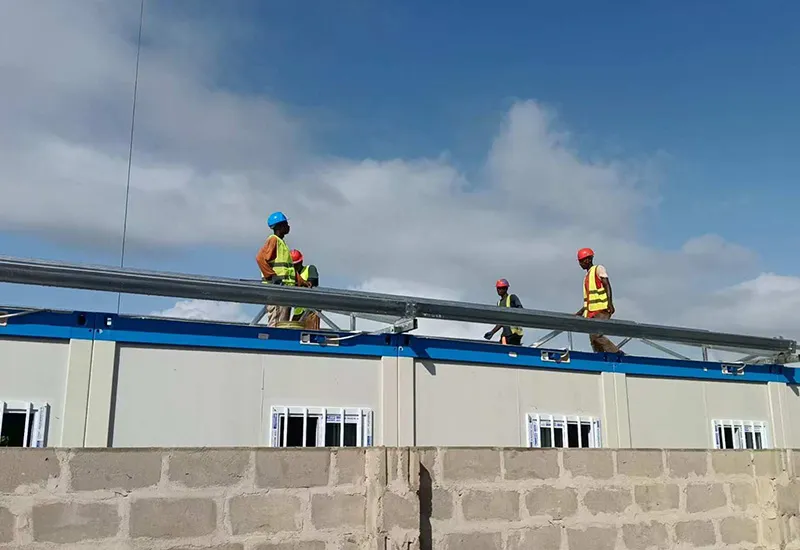
KUBO’s published Tanzania EPC site camp provides one bounded example of this pattern: the project combined site offices and workforce accommodation, with factory build, staged logistics, and supplier/local-contractor interfaces. It is useful as evidence of a delivery pattern, not as a template for another project’s layout, materials, climate response, installation model, programme, or performance.
Allocate Factory, Local and Site Responsibilities Before Comparing Price
The responsibility matrix is where many apparently similar bids become visibly different. Modular buildings may be manufactured off site, but the completed project still depends on local site conditions, civil works, utilities, access, lifting, assembly, regulatory processes, and testing. ICC’s off-site construction framework similarly recognizes that planning, fabrication, transport, assembly, inspections, approvals, and MEP work interact across factory and final site.
For KUBO EPC projects, the agreed modular boundary can include building schedules and drawings, confirmed materials/finishes/fixtures, factory checks and change control, packing lists, and installation documents. Local or statutory work such as surveys, geotechnical and civil works, permits, fire strategy, roads, drainage, external utilities, unloading, lifting, assembly, and local testing normally sits with the buyer or local contractor unless expressly included in the contract. Interfaces between those scopes must still be coordinated.
| Workstream | Typical factory/supplier side | Joint interface to define | Typical buyer/local side unless expressly included |
|---|---|---|---|
| Building package | Manufacture and export supply within agreed modular boundary | Approved Facility Schedule, layouts, openings, module coding | Final site integration outside supplier boundary |
| Foundations/anchorage | Module/interface information where agreed | Loads, connection geometry, tolerances, release timing | Survey, geotechnical work, civil design/work, foundations |
| MEP | Internal module-side services and fixtures where quoted | Connection points, voltage/frequency, water, drainage, external capacities | External networks, site distribution, final connections and local testing |
| Logistics | Packing, identification, export documents within agreed scope | Lot sequence, destination, route constraints, readiness dates | Local access, unloading, laydown and site handling as allocated |
| Installation | Installation documents and technical guidance where agreed | Sequence, tolerances, information requests, release gates | Cranes, local crews, lifting, assembly and site controls as allocated |
| Statutory/local acceptance | Project documents within contracted factory scope | Information required by local professionals or authorities | Permits, fire strategy, locally regulated design and approvals |
This matrix should be completed before commercial ranking. Otherwise, a bidder that excludes foundations, unloading, lifting, external utilities, or local assembly can look cheaper than a bidder whose price includes some of those items. The right procurement question is not “Who has the lowest supplier total?” but “What is the comparable cost to reach the same defined project condition?”
Normalize Commercial Totals to the Same Delivery Boundary
After technical scope and interfaces are aligned, normalize the commercial return. Start by selecting the same pricing basis and destination point for all bidders. The International Chamber of Commerce explains that Incoterms rules clarify tasks, costs, and risks in delivery of goods. They are valuable for commercial comparison, but an Incoterms rule does not replace the project-specific Facility Schedule, responsibility matrix, or site-interface allocation.
Procurement should therefore build a comparison total that adds known buyer-side work required to reach the defined handover condition. If Supplier A quotes a factory price, Supplier B includes freight to a destination port, and Supplier C includes another set of logistics activities, the three headline totals should not be ranked until the gaps are converted to a common basis.
The same applies to loose furniture, appliances, specialist equipment, local installation labor, cranes, foundations, drainage, external electrical or water networks, customs-related costs, testing, and approval work. Some may remain owner or EPC responsibilities by design. That is acceptable. The purpose of normalization is not to force every activity into the modular supplier’s contract; it is to make the commercial consequence of each boundary visible.
A useful commercial schedule separates: supplier base scope; specified options; freight/delivery basis; buyer-side allowances; local contractor packages; taxes/duties where applicable to the buyer’s model; and exclusions or unresolved provisional items. Only after those fields are aligned does the evaluated total support a meaningful supplier decision.
Issue a Comparable RFQ Package
The fastest way to improve bid quality is to issue a controlled RFQ pack that requires the same return from every bidder. It should be detailed enough to stop bidders from inventing their own project assumptions, but structured enough to allow each supplier to propose a technically suitable modular configuration.
For construction camp suppliers, the RFQ should include the project country and site context, project stage, phased workforce information, complete Facility Schedule, required-on-site dates, climate and utility inputs, access and freight constraints, design basis, expected room and finish standards, responsibility matrix, pricing basis, and returnable schedules. If the project has drawings, a reference plot plan, site logistics plan, or utility information, issue them under revision control.
Ask each bidder to return the same core package:
- completed Facility Schedule with offered quantities, room functions, occupancies, and deviations;
- preliminary layout or module arrangement showing how the schedule is satisfied;
- material, finish, MEP, furniture, fixture, and equipment schedules within the offered scope;
- factory deliverables and document list;
- phased production/packing/shipment logic linked to required-on-site milestones;
- packing and identification approach for each delivery lot;
- factory/local/site responsibility matrix;
- explicit inclusions, exclusions, assumptions, and clarifications;
- commercial return on the required delivery basis; and
- evidence relevant to the proposed supply scope.
Broader supplier qualification still matters, but it is a separate task from this package-comparison exercise. For legal identity, supplier verification, warranty, and award-stage checks across camp projects, use KUBO’s Workforce Camp Buying Checklist. Keeping the two evaluations distinct helps procurement teams avoid turning a technical package comparison into an unfocused supplier audit.
Choose the Supplier on a Comparable Project Basis
Once bids are normalized, the strongest proposal is the one that gives the EPC team the best controlled route from the defined facility requirement to the required site condition—not necessarily the proposal with the fewest modules, the shortest quotation, or the lowest unadjusted total.
Commercial managers can evaluate the normalized total and exclusions. Engineering teams can compare layouts, interfaces, materials, services, and deviations. Construction teams can review delivery lots, lifting and assembly assumptions, site-readiness dependencies, and the information required for local works. Project controls can test whether the proposed sequence supports mobilisation and peak-construction milestones.
KUBO’s role in this decision is to translate the agreed project brief into a defined modular building package, factory execution scope, export plan, and documented interface with the destination team. We do not treat the camp as a collection of identical boxes. The relevant comparison is whether the proposed package covers the required facilities, whether its delivery sequence matches the construction programme, and whether the factory/local boundaries are clear enough for the EPC team to manage the remaining work.
Before award, close all material deviations that affect occupancy, facility function, shipment sequence, site work, or evaluated cost. If a difference is intentionally retained, record it as an accepted commercial or technical decision rather than allowing it to remain hidden in quotation notes.
Procurement FAQs
How should EPC buyers compare construction camp suppliers when module counts differ?
Compare the Facility Schedule first. If two bidders meet the same accommodation, office, sanitation, welfare, support, and phased-capacity requirements with different module arrangements, the module-count difference may be legitimate. Check usable function, occupancy, room standards, internal services, delivery lots, and interfaces before treating the lower module count as an advantage.
Should dining, kitchens, furniture, and appliances be assumed to be included?
No. Define each item in the RFQ and require the supplier to classify it as factory-installed, loose-shipped, locally sourced, or excluded. A room name does not establish equipment scope. This is especially important for kitchens, catering equipment, appliances, specialist fixtures, and utility-intensive support functions.
How should phased mobilisation be reflected in supplier bids?
Issue required-on-site milestones for mobilisation, ramp-up, peak construction, and close-out where relevant. Ask each supplier to identify which buildings and components are included in each lot, how units are coded, what documents accompany the lot, and which site-readiness conditions must be complete before unloading, lifting, assembly, or connection.
Does an Incoterms rule define the complete supplier responsibility?
No. Incoterms rules help clarify delivery tasks, costs, and risks for the sale of goods, but the EPC package still needs a project-specific scope and responsibility matrix. Foundations, local utilities, unloading, cranes, assembly, testing, permits, and local approvals should be allocated explicitly rather than inferred from the trade term.
What should buyers request before making a final supplier selection?
Request a normalized Facility Schedule, module/layout drawings, material and finish schedules, MEP and equipment boundaries, delivery-lot plan, packing/identification approach, responsibility matrix, explicit exclusions and deviations, relevant factory/document evidence, and a commercial return on the same pricing basis. The decision should be made from that controlled comparison set.
Send KUBO a Comparable EPC Camp Brief
If you are comparing construction camp suppliers for an active EPC project, send KUBO the same controlled inputs you expect every bidder to price. Include the project country and destination, project type and stage, phased workforce or resident numbers, complete Facility Schedule, room and finish requirements, required-on-site milestones, climate and utility information, access/freight constraints, any available site or reference drawings, preferred delivery basis, and your proposed factory/local responsibility split.
Send KUBO your EPC camp RFQ package. We can review the modular building scope against those inputs and prepare a project-specific proposal that makes the facility package, factory deliverables, delivery lots, and site interfaces visible for commercial and technical comparison.