


Summary
For buyers comparing flat pack container house suppliers for bulk projects, the decisive issue is not a factory-capacity slogan. It is whether the supplier can convert an approved commercial and technical scope into controlled first production, identifiable shipment batches and later repeat orders without losing configuration control. A workable procurement process therefore begins by normalizing quotations, freezing the module schedule and governing documents, defining a first-article or representative-unit gate where appropriate, and linking each production batch to inspection, packing and release records.
KUBO uses this workflow to connect approved drawings and material/component schedules with batch production, quality control, protective packing and loading documentation. For the buyer, the practical test is simple: can every change, package and shipment be reconciled back to the approved baseline? If the answer is yes, price, logistics and repeat procurement become easier to compare on the same basis. If the evidence chain is incomplete, a low unit price may hide scope differences, packing gaps or future compatibility work.
Evaluate Executable Order Capacity, Not a Headline Factory Claim
When procurement teams ask about factory capacity, they are often trying to answer a more specific question: can this supplier execute our order in the required phases while maintaining the approved configuration? A general production-capacity figure does not answer that by itself.
An executable order plan needs a defined module schedule, quantity by building type, required factory fit-out, approved drawings, purchased-component scope, inspection gates, packing method, shipment sequence and target delivery phases. It also needs clarity on what the destination team must provide. For flat pack projects, local unloading, protected staging, lifting, assembly resources, foundations and utility interfaces can affect the practical delivery sequence just as much as factory output.
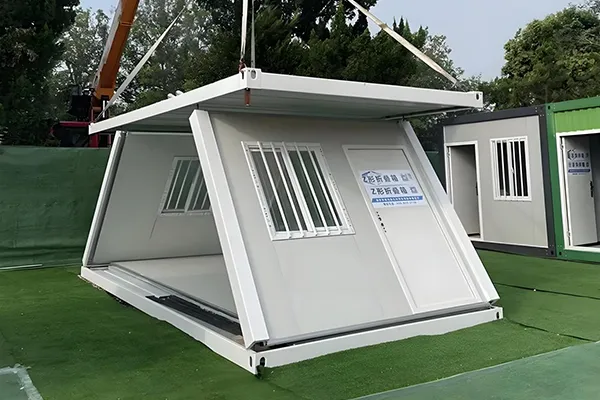
KUBO’s public workflow for its flat pack container building system separates requirement review, design freeze, batch production, quality control, packing and release. That sequence is useful for procurement because it turns “capacity” into a series of controlled commitments. The buyer can ask what information must be frozen before production, how batches will be identified, what inspection evidence will be issued and how each shipment will be mapped to the approved module schedule.
Normalize Quotations Before Comparing Price
Two suppliers can quote the same number of flat pack modules while pricing materially different scopes. Before unit prices are compared, the buyer should normalize the quotation into a common project basis. The comparison should cover the module schedule and configuration, structural and environmental design inputs, panels and coatings, door and window openings, MEP preparation, interior items, loose accessories, required documents, inspection scope, packing, Incoterm and local work boundaries.
This is where the question “how to evaluate flat pack container house suppliers” becomes practical. Procurement should require evidence that is specific enough to reconcile with the proposed order, rather than accepting broad statements such as “standard specification,” “complete accessories” or “export packing.”
| Decision area | Evidence to request | What to compare | Red flag or hold point |
|---|---|---|---|
| Module schedule | Room/module list, quantities, drawing references | Same functions, dimensions and variants | Price based on an undefined “standard unit” |
| Design inputs | Climate, project loads, code inputs, interfaces | Assumptions used for the offered configuration | Important site inputs left open after quotation |
| Materials and components | BOM or material/component schedule | Panel build-up, coatings, openings, hardware and MEP scope | Key items described only by generic category |
| Factory scope | Scope matrix and approved drawings | What is factory-prepared, factory-installed or shipped loose | Site work presented as factory-completed supply |
| Inspection | Inspection plan, checklist, sample rules, witness points | Acceptance basis and release authority | No defined lot, records or closure process |
| Packing | Packing concept, labels, package mapping, loading plan | Protection, package quantities and destination handling needs | Catalogue packing quantity copied without configuration review |
| Documents | Document register and revision status | Drawings, lists, inspection and shipping records by batch | Documents promised without issuer, timing or revision control |
| Commercial boundary | Incoterm and responsibility matrix | Freight, customs, unloading, storage, assembly and local works | Low price created by omitted responsibilities |
For buyers evaluating KUBO specifically, the KUBO factory and project-delivery capability page explains how released drawings and material schedules move through steel preparation, frame fabrication, enclosure and component integration, inspection, batch identification, protective packing and loading supervision. That factory evidence should be read together with the project quotation and approved scope, because the project documents—not a generic capability statement—control what will actually be supplied.
Freeze a Controlled Baseline Before Repeated Production
A bulk order becomes easier to manage when both sides agree what the “approved version” actually contains. The controlled baseline should normally include the approved module schedule, released drawings, BOM or material/component schedule, interface list, approved deviations and a document revision register.
The module schedule defines what each repeated unit is supposed to be. Drawings define dimensions, openings, layouts and interfaces. The BOM or component schedule connects those drawings to the materials, panels, doors, windows, hardware, MEP preparation and scheduled interior items. The interface list separates factory supply from foundations, external utilities, site connections, lifting and other local works. Approved deviations prevent informal exceptions from disappearing into email chains. The revision register makes later changes visible.
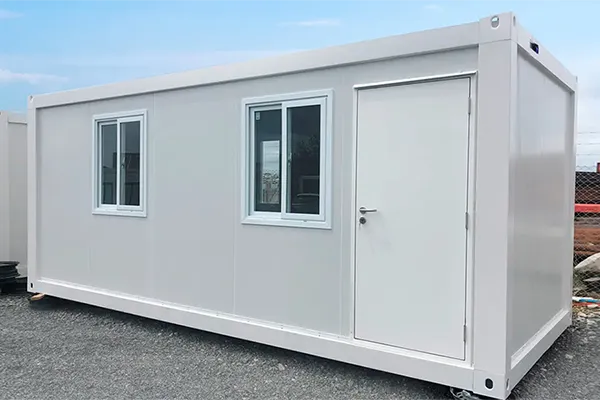
KUBO prepares steel frame members, floor and roof assemblies, wall panels and specified door/window openings before shipment. Module-side electrical preparation and interior items are included when they are scheduled in the order. This is why the buyer should freeze not only the room layout but also the component and interface scope that sits behind it.
Use a First-Article Gate Before Releasing Repeated Production
For a project with repeated modules, a first article or representative unit can provide a practical approval gate before the same configuration is reproduced across a larger batch. The exact method should follow the contract and inspection plan: some projects may use an assembled representative module, others may review a defined subassembly, trial fit, mock-up, sample room, document package or another agreed control point.
The purpose is to verify the approved configuration before repetition creates a larger correction problem. Buyers may use the gate to confirm opening positions, visible finishes, panel interfaces, hardware, MEP provisions, labels, loose-item allocation, assembly logic and the documents that will accompany production. Any approved correction should be incorporated into the released drawings or schedules before repeated production continues.
This gate should be distinguished from final batch inspection. A representative unit confirms an agreed configuration at a defined stage; it does not automatically release every future unit. Each shipment batch still needs its own identity, production status, inspection findings, corrective-action closure, packing list and loading/release status.
Give Every Batch an Identity the Buyer Can Reconcile
Bulk procurement becomes difficult when physical goods, inspection reports and shipment records use different naming systems. A practical flat pack supplier batch documentation structure should link unit, pack or batch codes across production, inspection, packing and loading records.
The buyer should be able to start with a building or module reference and trace it forward to the applicable drawing revision, production batch, inspection status and physical package. The same chain should work in reverse at destination: a receiving team should be able to identify a package, find what it contains, determine which module or building it belongs to and confirm which technical revision governs it.
KUBO’s public workflow includes batch identification, packing-list preparation, loading plans and inspection/photo records by agreed scope. For detailed release controls, buyers can use KUBO’s separate modular building pre-shipment inspection checklist rather than duplicating the entire inspection method inside the purchase comparison.
Apply Risk-Based Sampling Without Treating a Sample as the Whole Batch
Not every check needs the same verification method. Some project characteristics may justify 100% verification—for example, identity, package quantity, critical loose items, labels or selected safety- and interface-related features where the contract defines them as such. Other characteristics may be checked through an agreed sampling plan.
NIST guidance on acceptance sampling explains the principle clearly: a random sample is used to inform acceptance or rejection of a defined lot. Its purpose is lot disposition, not to calculate the exact quality of every item in the lot. For a modular-building buyer, that means the sampling plan needs a defined lot, selection method, acceptance rule and response to findings. A passed sample should not be interpreted as proof that every unsampled unit is identical.
The inspection plan should therefore state which items receive 100% checks, which are sampled, who selects the sample, how defects are classified and what happens when a finding requires correction or expanded inspection.
Treat Packing as Part of the Technical Handoff
A flat pack container house packing checklist should do more than count bundles. Packing is the point where the approved building configuration is converted into physical packages that freight and site teams must later reconstruct into the correct buildings.
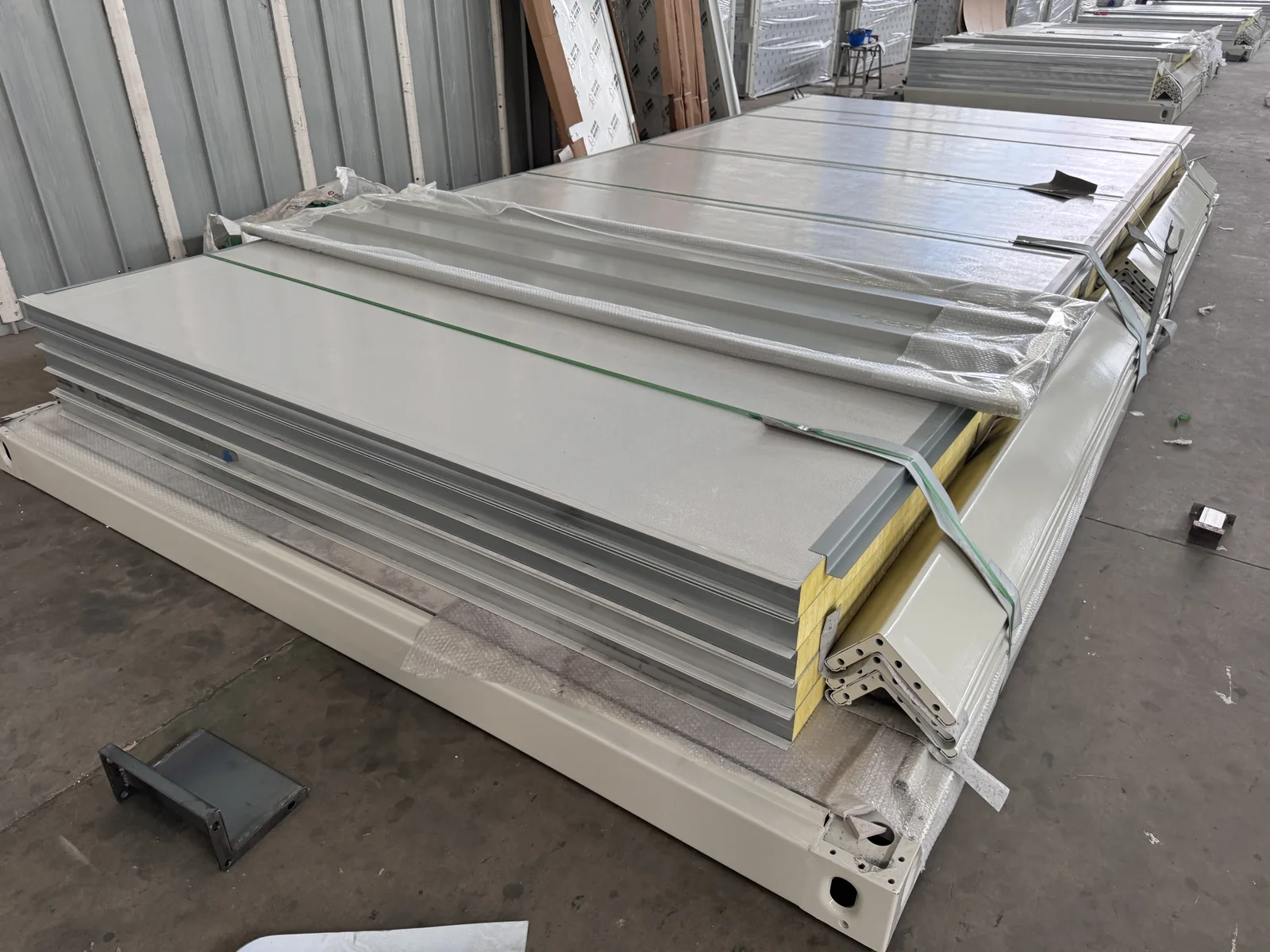
The packing plan should map components to package IDs, keep labels visible, define protection appropriate to the agreed transport route, identify package quantities, record net and gross mass fields where required, and support the loading sequence. The final packing quantity must follow the confirmed configuration. Panel thickness, openings, loose accessories and other scheduled items can change how many modules or component sets fit into a shipment, so a catalogue reference should not be copied into a new project without review.
Export documentation has a related but separate role. The U.S. International Trade Administration guidance on common export documents distinguishes the commercial invoice, export packing list and transport documents. Its packing-list guidance includes package type, quantities, descriptions, weights, marks and dimensions. The actual document set should follow the importer, freight forwarder, carrier and destination requirements for the transaction.
For packed containers moving under applicable SOLAS requirements, the IMO verified gross mass requirements make the shipper responsible for providing verified gross mass in time for ship stowage planning. VGM is a condition for loading where SOLAS applies; it is not a guarantee that a container will be loaded. This distinction matters when procurement teams assign responsibilities between factory packing, the contractual shipper, freight forwarder and carrier.
KUBO’s separate guide to modular building shipping documents explains how buyers can reconcile approved scope, physical packages and shipment records without treating one document as a substitute for the others.
Control Repeat Orders Through a Delta Register
Flat pack container house repeat orders should not rely on the phrase “same as last time.” Even when the room layout is unchanged, components, site conditions, code inputs, destination requirements or packing needs may change. A repeat-order delta register gives both buyer and supplier a controlled way to identify what remains unchanged and what needs new approval.
| Controlled item | Original baseline | Permitted change path | Compatibility check | Required approval and record |
|---|---|---|---|---|
| Module layout | Approved module schedule and drawing | Formal drawing revision | Room function, interfaces, stacking and site grid | Buyer-approved revision and updated register |
| Structural or load input | Original project design criteria | Engineering review before release | Frame, connections, anchorage and local interface | Revised design input and released documents |
| Panel or coating | Approved material schedule | Documented substitution or specification change | Thickness, finish, joining and environmental suitability | Approved deviation plus BOM/material update |
| Door, window or hardware | Opening/component schedule | Controlled component revision | Opening size, fixing, operation and replacement compatibility | Updated component record and affected drawing |
| MEP preparation | Approved interfaces and factory scope | Interface revision | Voltage, routing, connection points and local work | Approved interface list and drawing revision |
| Loose accessories | Original BOM and package mapping | Quantity or component change against schedule | Fit with module, installation sequence and spares | Revised BOM, packing list and package mapping |
| Packing configuration | Approved packing/loading plan | Logistics review for the new batch | Package size, mass, protection and unloading method | New packing list/loading plan by batch |
| Site condition | Original country/site inputs | Project review before repeat release | Climate, loads, code, access, lifting and local resources | Updated project brief and approved downstream revisions |
The delta register should state the original approved baseline, proposed change, reason for the change, affected drawing/BOM/component/package, compatibility impact, approval status, implementation batch and final as-built or as-supplied record. This keeps procurement from accidentally mixing old and new revisions across one site or dealer inventory.
Compare Evidence Quality and Responsibility Boundaries
The stronger supplier is not necessarily the one presenting the longest specification sheet. For a batch-based project, evidence quality matters more: does the quotation identify the configuration being priced; do drawings and schedules share consistent revision references; are inspection records connected to a defined lot; can packages be mapped to modules; and can repeat-order changes be traced to approval?
Responsibility boundaries are equally important. KUBO’s flat pack project scope can include system selection and layout coordination, project-specific module drawings, factory manufacture, in-process checks, final packing, packing lists, loading plans and shipment documentation according to the agreed commercial scope. Site survey data, local approvals, foundations, civil works, external utilities, customs, inland transport, unloading, lifting and site storage typically need clear assignment to the buyer, EPC contractor or other local parties unless the contract includes them.
This boundary should be written into the RFQ and quotation rather than discussed only after award. It protects the comparison from false savings created when one bidder includes a task and another leaves it to the destination team.
Use Project Evidence to Test Coordination, Not to Copy Another Project
Case studies are most useful when they show how a supplier coordinates real project interfaces. KUBO’s Tanzania EPC site-camp case records supply of modular offices and workforce accommodation with technical installation guidance, while delivery batches were coordinated with site readiness and lifting capacity. For a new flat pack procurement, the useful lesson is the coordination method: building functions, delivery phases and destination resources need to be planned together. The buyer should still approve the configuration, packing, inspection and repeat-order controls for the current project rather than transferring another project’s details.
Build a Returnable RFQ Package
A strong RFQ allows every shortlisted supplier to quote the same decision basis and makes the returned proposal easier to reconcile. For bulk flat pack procurement, issue a package that asks suppliers to return both commercial pricing and the evidence that defines what the price covers.
- Project brief: country, site, building functions, intended use and project phases.
- Module or room schedule: module types, room functions, quantities and repeated variants.
- Design inputs: climate, project loads, applicable code inputs and required engineering interfaces.
- Factory fit-out: panels, coatings, openings, electrical/plumbing preparation, sanitary items, furniture or other scheduled interior scope.
- Delivery plan: target port/site dates, shipment phases, preferred Incoterm and receiving constraints.
- Inspection requirements: first-article expectations, buyer or third-party witness points, 100% checks, sampling rules and release authority.
- Document requirements: drawing register, BOM/material schedule, inspection records, packing list, loading plan, installation guidance and shipment documents.
- Local resources: unloading, storage, cranes/forklifts, assembly labor, foundations, utilities and local contractor responsibilities.
- Repeat-order reference: any existing KUBO configuration, drawing number, BOM revision or previous batch that the new order must match.
Ask each supplier to mark exceptions and assumptions against this package instead of hiding them in a separate proposal format. That creates a cleaner commercial comparison and gives engineering, logistics and site teams the same baseline before award.
Procurement FAQs
What should buyers freeze before mass production?
Freeze the approved module schedule, drawings, BOM/material or component schedule, openings, finishes, MEP interfaces, labels, inspection requirements, packing basis, approved deviations and document revisions. The exact gate should match the contract and project risk.
Does every unit need 100% inspection?
No single inspection method fits every project. Identity, quantity, critical loose items or specified interfaces may require 100% checks, while other characteristics may follow an agreed sampling plan. The inspection plan should define the lot, method, acceptance rule and response to findings.
How should buyers compare packing quantities between suppliers?
Compare packing against the offered configuration, not a catalogue number alone. Module dimensions, panel thickness, openings, accessories, protection and package limits can change the final loading quantity. Require the supplier to issue the project packing basis and final loading plan.
Which records should follow each shipment batch?
The batch should be traceable through applicable drawing/document revisions, batch or package IDs, inspection findings and closure status, packing list, loading plan, shipment documents and any agreed photo or release records. The exact register should be agreed before dispatch.
How can a repeat order remain compatible when components or project conditions change?
Start from the original approved baseline and use a delta register. Record the proposed change, reason, affected drawing/BOM/component/package, compatibility impact, approval, implementation batch and final record. Recheck site inputs when the destination, loads, codes, lifting or assembly conditions change.
Send KUBO a Bulk Project Brief
To evaluate a new bulk order or a repeat procurement against an existing configuration, send KUBO the project country and site, building functions, module or room schedule, quantities and delivery phases, climate/load/code inputs, required factory fit-out, target port or site dates, inspection and document requirements, local assembly resources, and any existing KUBO configuration or revision the repeat order must match.
Send the project brief to KUBO so the quotation, drawings, factory scope, packing approach and repeat-order controls can be reviewed against one defined procurement baseline.